

Why Every Porsche Feels Like a Porsche: The Three Cornerstones of Chassis Development
Published:

コンテンツ
I’ve bought and owned every current Porsche model except the Macan.
Over the years, I’ve often wondered what sets Porsche’s driving dynamics apart from those of other automakers—and why, no matter which model you drive, it still feels unmistakably like a Porsche.
I believe the answer lies in the “three cornerstones” of chassis development, a concept I once read about in Porsche technical materials.
These aren’t just technical categories. They’re a framework for the driving principles Porsche has refined over more than half a century.
Every model is put through its paces on the racetrack during development and fine-tuned down to the smallest detail. Behind that work is a consistent development philosophy: even the most sophisticated mechatronic systems can’t reach their full potential without a solid foundation. That idea is at the heart of Porsche chassis development.
Cornerstone One: The Overall Vehicle Concept
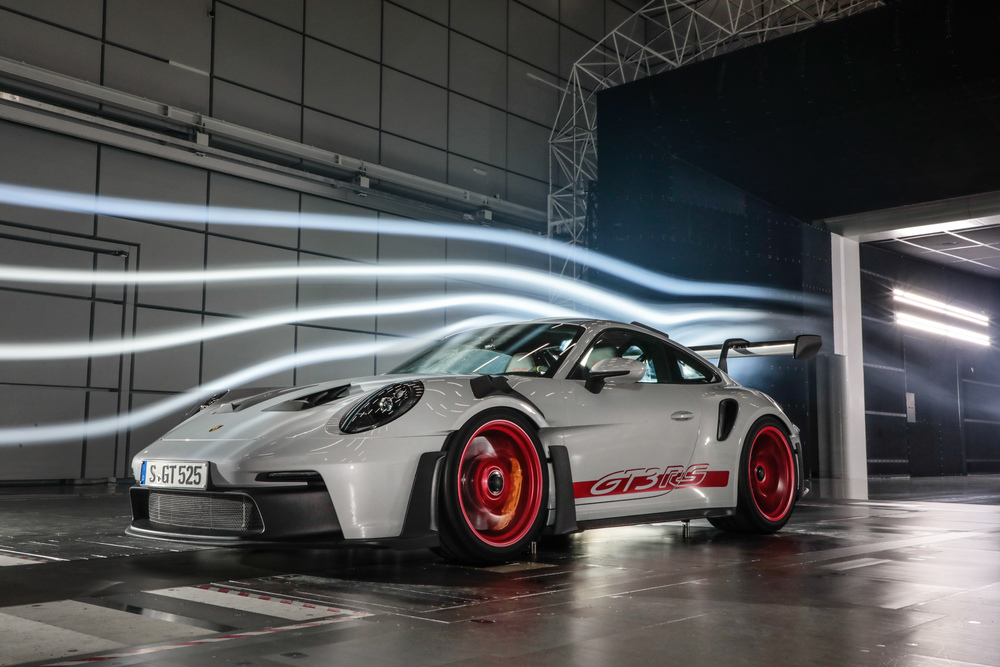
The first cornerstone of Porsche chassis development is the “overall vehicle concept.” This means more than a design philosophy: it encompasses the physical characteristics that form the basis of a car’s driving performance. The importance of a solid foundation can’t be overstated. Fundamental dimensions such as a long wheelbase, wide track, and low center of gravity provide the basis for outstanding handling.
Why do these factors matter?
They improve cornering stability and help the car withstand high lateral G-forces. The laws of physics are clear: a lower center of gravity and wider track make a car more stable. Porsche pursues these fundamentals relentlessly.
Balanced axle loads and rear-biased torque distribution are also part of this cornerstone. Weight distribution is critical to achieving optimal traction and neutral steering characteristics. Too much weight over the front can lead to understeer; too much at the rear can cause oversteer. Drawing on decades of experience, Porsche has found the right balance.
What’s especially interesting is that these requirements are built into the vehicle concept at a very early stage of development. For example, space for high-performance brakes—and the airflow needed to cool them—is accounted for at the concept stage. True performance can’t be added as an afterthought.
This philosophy carries through every Porsche model. From the 911 to the Cayenne, each is built on the same fundamental principles. That’s why every Porsche feels unmistakably like a Porsche.
Cornerstone Two: Chassis Mechanics
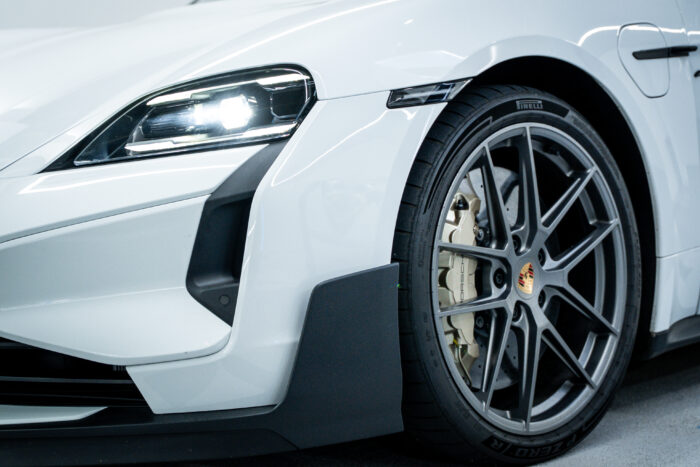
The second cornerstone, “chassis mechanics,” covers all the physical components that connect a car to the road. Fundamental components such as tires, axles, and brakes directly underpin the Porsche driving experience.
When it comes to tires, most models use a staggered setup, with wider tires at the rear than at the front. This helps increase grip at the driven wheels. It’s especially important on the rear-engined 911, where the rear tires’ contact patches are crucial for putting its immense power down on the road.
Porsche works closely with tire manufacturers. Over the past decade, tire technology has made remarkable progress, cutting rolling resistance by around 20% while improving grip. This isn’t just a technical upgrade; it’s a clear response to the challenge of combining environmental efficiency with sports-car performance.
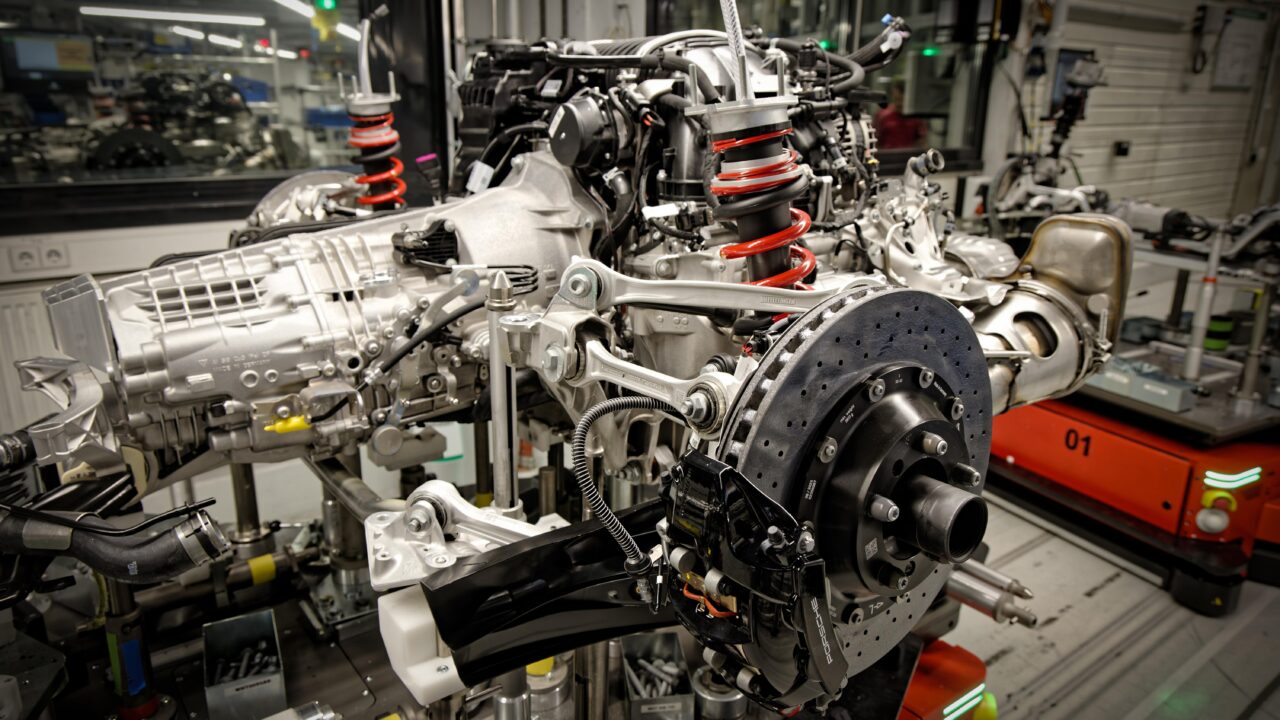
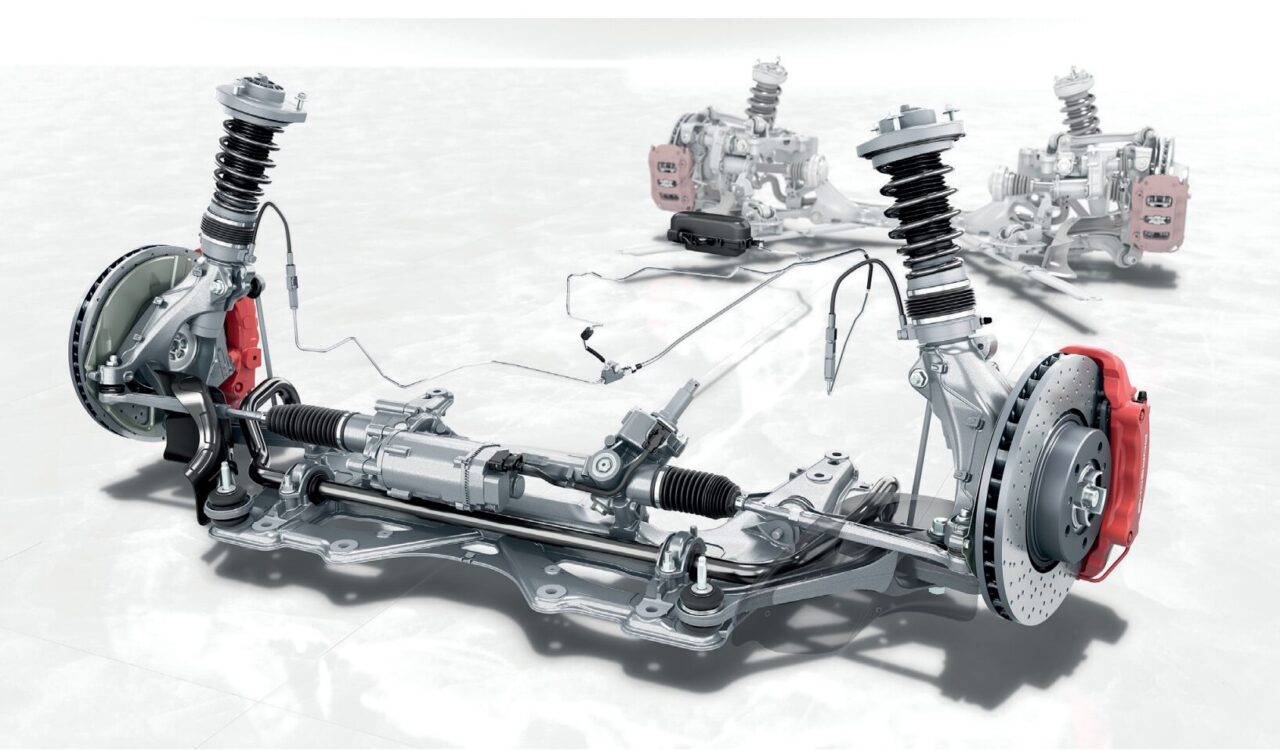
The precision of Porsche’s axle designs is another defining feature. In every driving situation, they help keep the tires at the optimal angle to the road and transmit power as effectively as possible. That may sound simple, but achieving it requires sophisticated engineering and exacting manufacturing tolerances.
Porsche’s philosophy also extends to its braking systems. Every model features fixed-caliper brakes on the front axle, delivering excellent braking performance and stability. Fixed calipers cost more than floating calipers, but offer a clear performance advantage.
For customers seeking even greater performance, Porsche also offers Porsche Ceramic Composite Brakes (PCCB), known for their low weight and stability. More than just an option, PCCB is a showcase of Porsche engineering. Developing ceramic brakes takes an enormous investment of time and money—but Porsche is willing to make it.
Cornerstone Three: Mechatronic Systems
The third cornerstone, “mechatronic systems,” is one of the most important elements of a modern Porsche. Electronic controls are playing an increasingly vital role in improving the balance between performance and comfort—two qualities that have traditionally been at odds. But Porsche’s approach is distinctly different from that of other automakers.
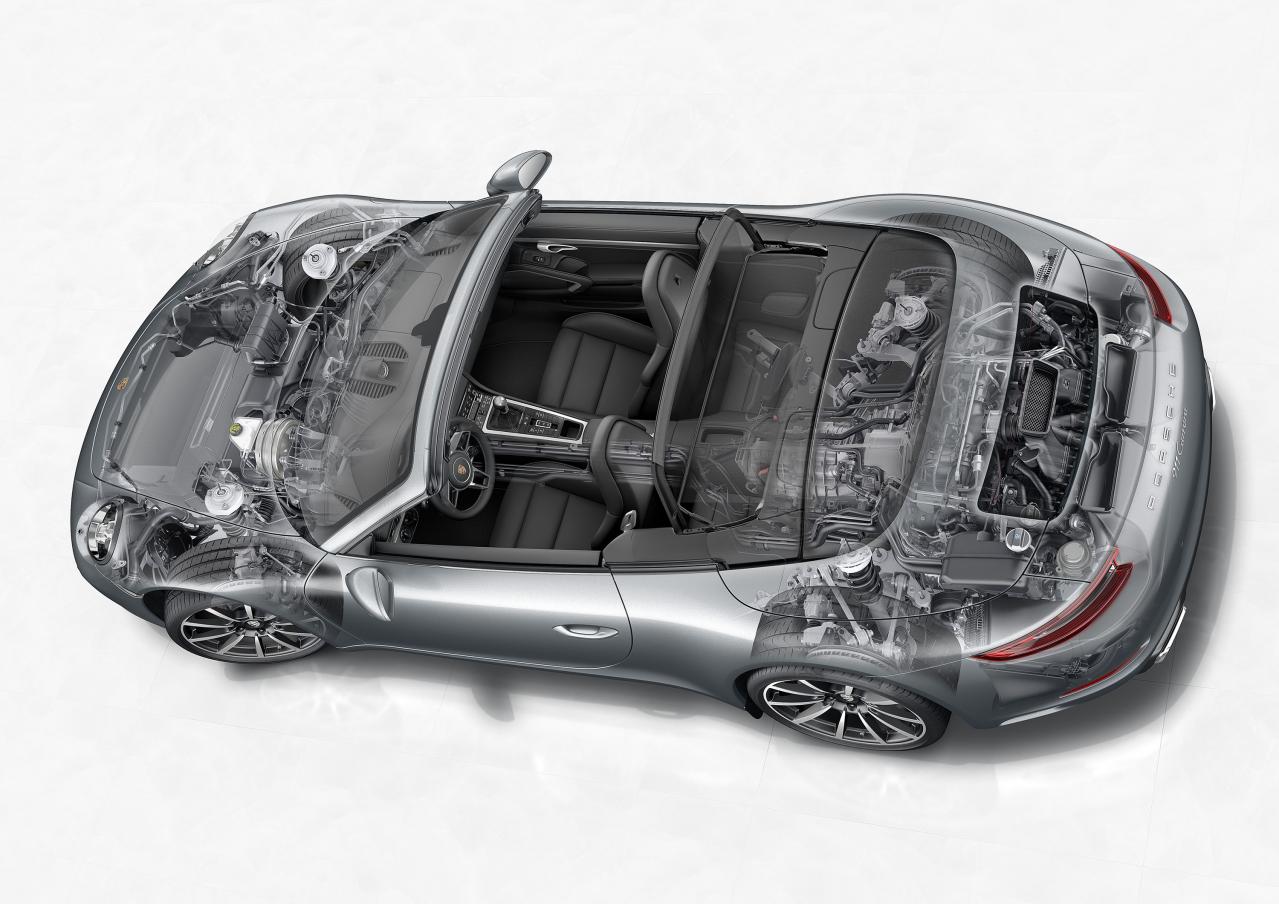
Rather than maximizing a single performance attribute, Porsche uses innovative technology to improve the balance of the car as a whole. You could call it a “philosophy of balance.” Porsche aims not for a car that’s simply fast or exceptionally comfortable, but for one in which every quality comes together at a high level.
Systems such as PASM and PDCC, for example, improve not only stability through fast corners but also comfort on long journeys. This isn’t simply a technical achievement; it’s the natural result of Porsche’s development philosophy.
The real value of mechatronic systems lies in their ability to reconcile opposing demands. With traditional mechanical systems, improving sporting performance often meant sacrificing comfort, and vice versa. Electronic controls make it possible to select the right settings for the conditions.
Porsche’s mechatronic systems interpret the driver’s inputs and adjust their settings instantly in response. By reading the driver’s use of the accelerator, steering, and brakes, they determine the kind of driving experience the driver wants and provide the appropriate setup.
These systems work because the first and second cornerstones are already firmly in place. Electronic controls can deliver their full potential only when they’re built on a solid vehicle concept and excellent mechanical components. Without those fundamentals, even the most advanced electronics can’t deliver true high performance.
How the Three Cornerstones Create the Porsche Feel
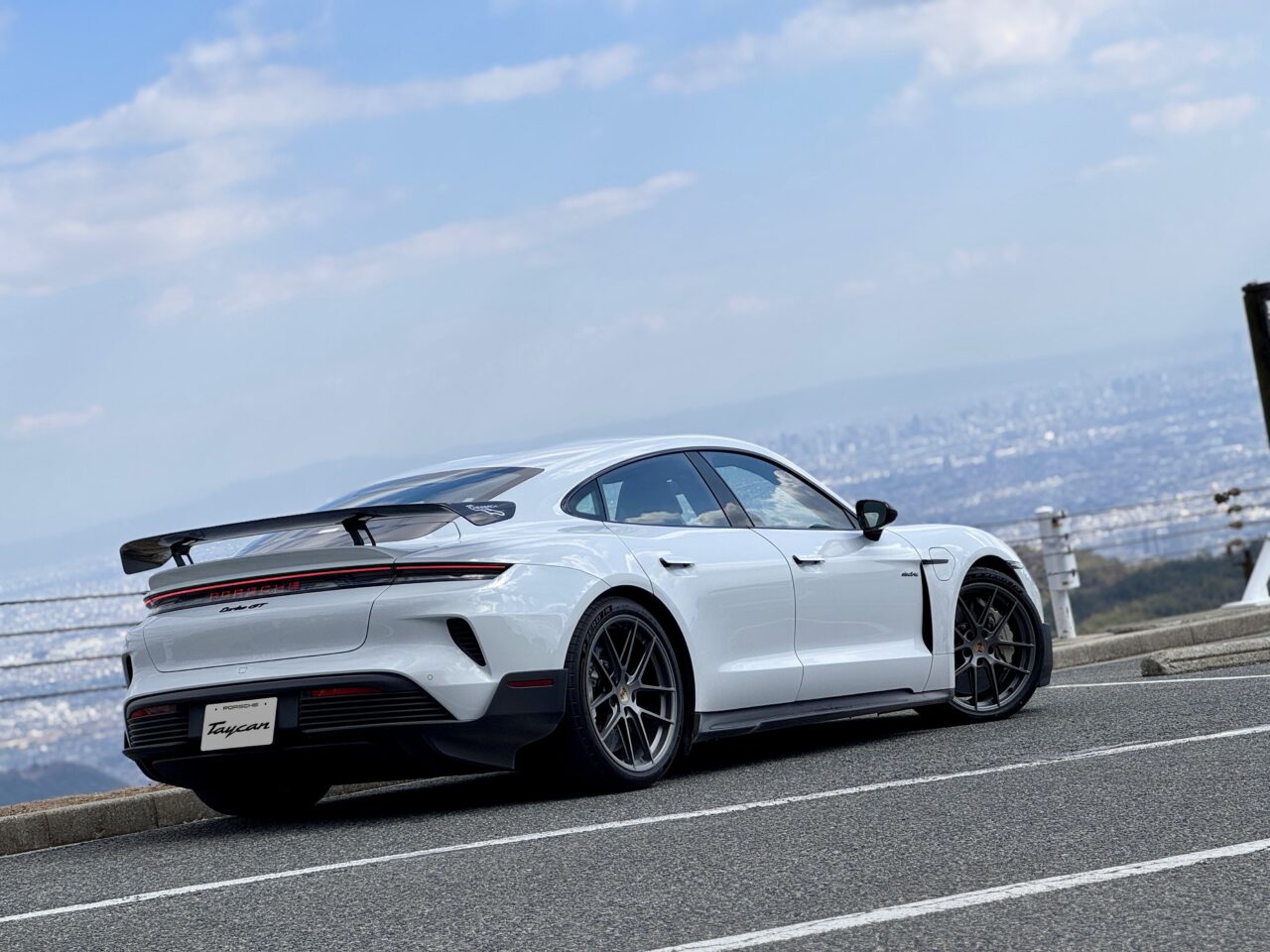
These three cornerstones don’t work in isolation. They’re interconnected, forming a single, integrated system. The overall vehicle concept—the first cornerstone—provides the foundation. Chassis mechanics, the second, are built on top of it. Finally, mechatronic systems, the third, bring the elements together and take performance to an even higher level.
When all three cornerstones work in perfect harmony, the distinctive Porsche driving experience comes to life. It’s about more than speed; it’s the feeling that driver and car are working as one. Turn the steering wheel and the car goes where you expect. Press the accelerator and it accelerates as you expect. Hit the brakes and it stops as you expect.
This sense of connection is the ideal Porsche continues to pursue. Technical figures and performance data matter, but ultimately, what matters most is how the car feels to the driver. Porsche engineers continue to refine these three cornerstones in pursuit of that feeling.
This is the DNA that makes a Porsche feel like a Porsche, whatever its powertrain—gasoline, hybrid, or electric. Even as electrification reshapes the automotive world, these three cornerstones remain unchanged, continuing to underpin the Porsche driving experience.

If you enjoy this blog, follow along.
Comment ( 0 )
Trackbacks are closed.
No comments yet.