

Test-Driving the Porsche Taycan GTS: How Does It Compare with the 4S Cross Turismo?
Published:

コンテンツ
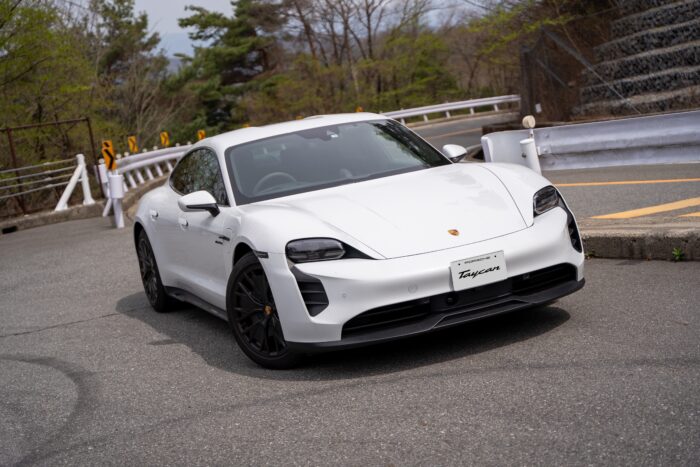
A friend recently bought a Porsche Taycan GTS and invited me along for a drive. Here’s my impression from behind the wheel—and how it compares with the Taycan 4S Cross Turismo we have at home.
How My Friend Ended Up Buying a Taycan GTS
My friend had been driving a BMW 320i for five years and 50,000 km, and was thinking about moving up to a BMW 4 Series M440i Coupe. But then, he found himself becoming curious about the Porsche Panamera, too.
He asked for my advice. I’d driven an M440i before, but told him that a Porsche offered a higher level of driving performance—and that the Panamera, in particular, delivered an exceptional drive with all the qualities you’d expect from a Porsche.
As we talked about his lifestyle and what he wanted from a car, I suggested, “If that’s what you’re looking for, why not consider the all-electric Taycan?”
I’d only recently bought a Taycan myself, so I was quick to sing its praises: “The Taycan is genuinely excellent. It drives even better than the Panamera.” Before long, he was hooked.
After searching used-car listings, he found a Taycan GTS with a very attractive set of terms. Apparently, the discount was almost too good to believe. Even just hearing that, it sounded like a terrific deal.
Taycan 4S Cross Turismo vs. GTS: What’s the Difference?
So, what did I think after getting a ride in his Taycan GTS? Comparing the two from the outside, our Taycan 4S Cross Turismo looks bigger overall than the GTS four-door coupe, thanks in part to its wagon-style body. The front and rear fender bulges shouldn’t be all that different in size, but on the Cross Turismo they look considerably more substantial.
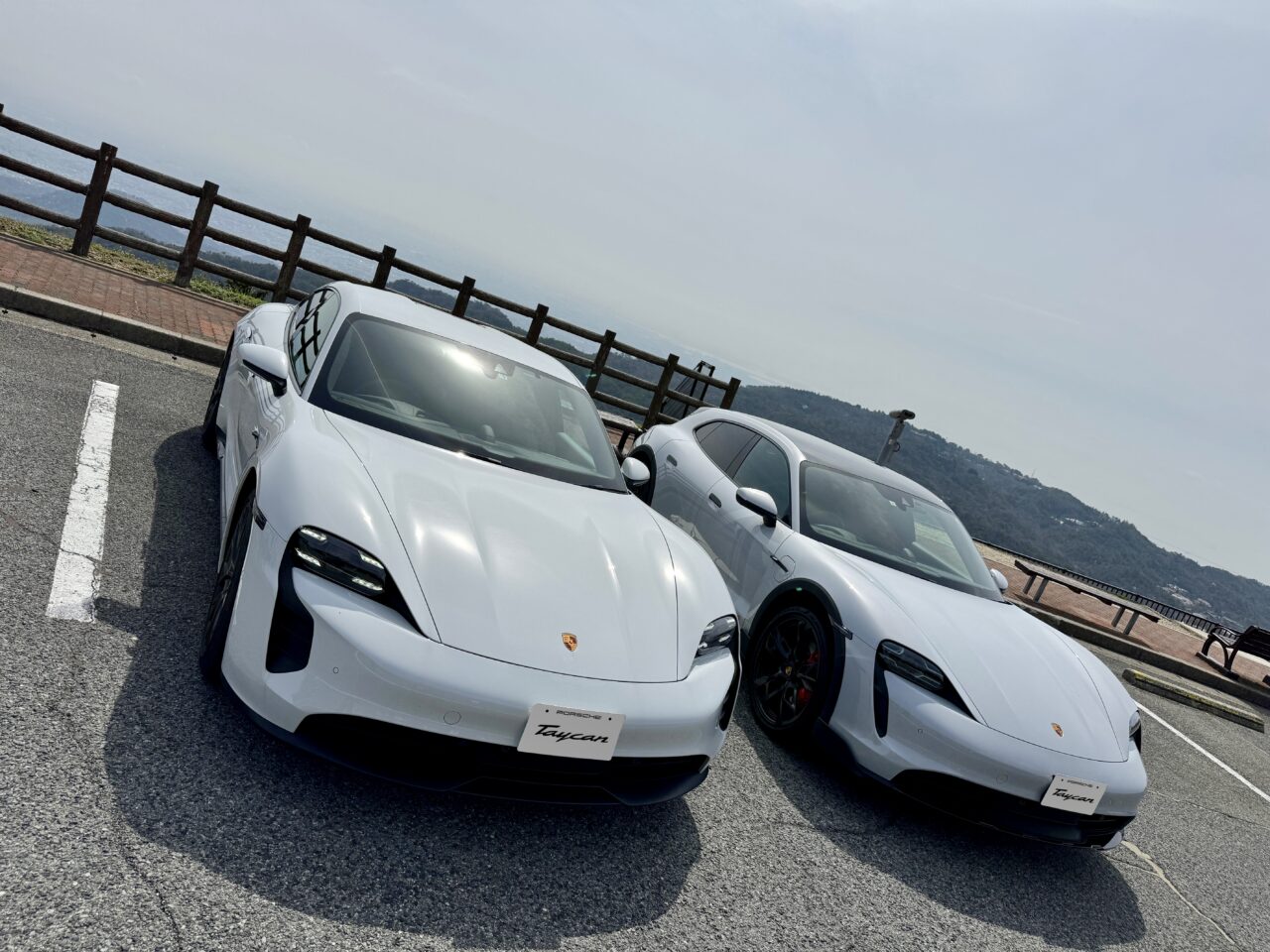
By contrast, the GTS feels compact and looks sportier. My friend seemed to like the Cross Turismo’s styling, too. “That’s sharp! It feels like the grown-up Taycan,” he said—and even joked that we should swap cars.
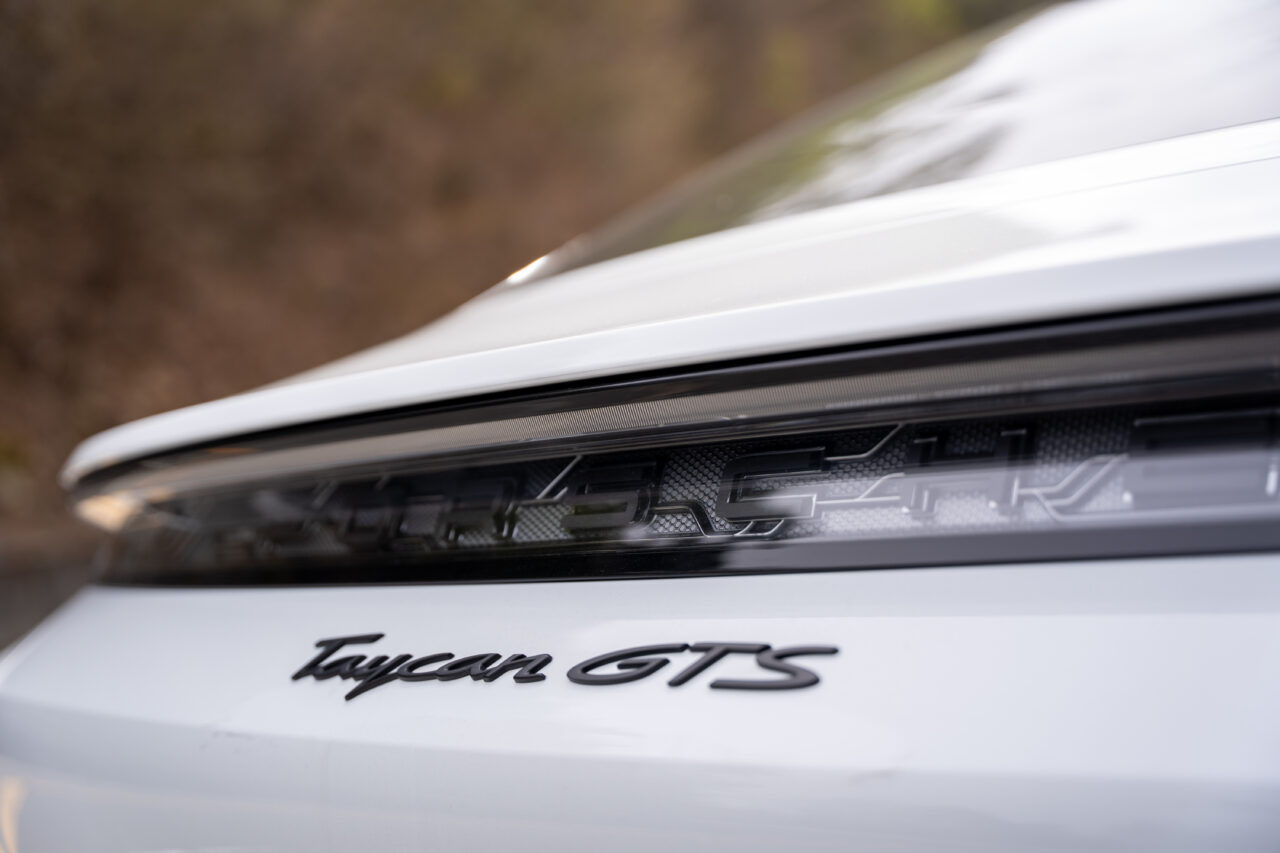
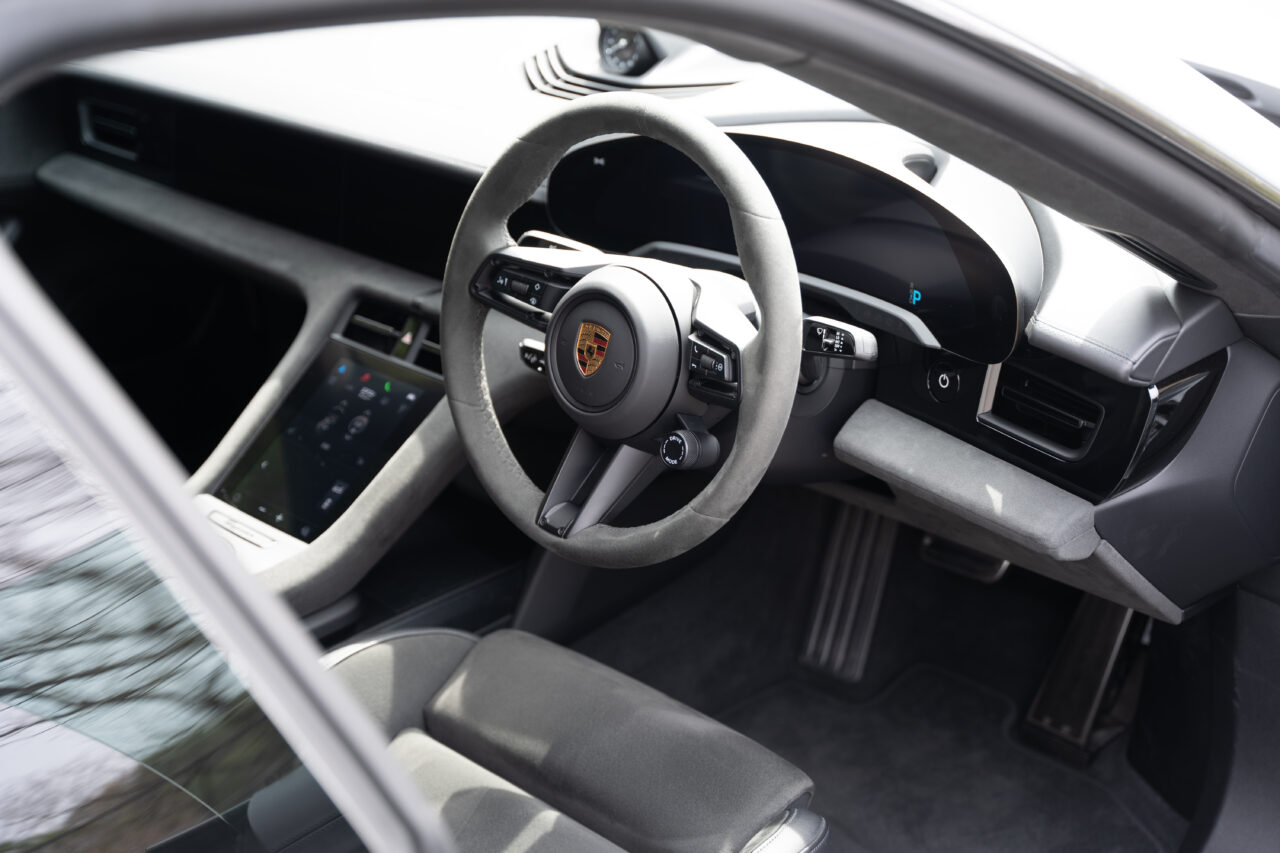
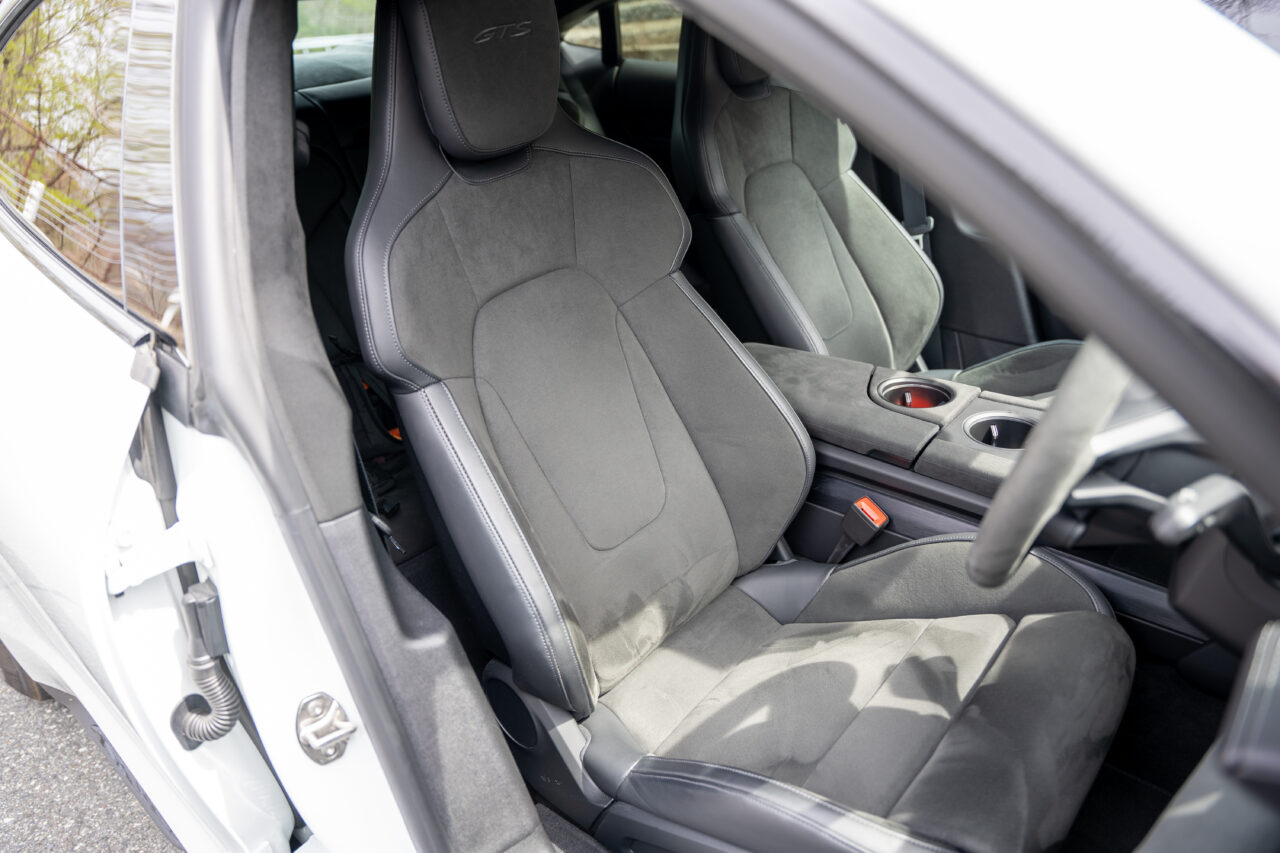
One of the Taycan GTS’s standout exterior features is its model-specific aerodynamic bodywork. Finished in black, it gives the car a more aggressive look. The cabin also has the GTS-specific interior package, and it looks absolutely fantastic. It feels every bit the GTS.
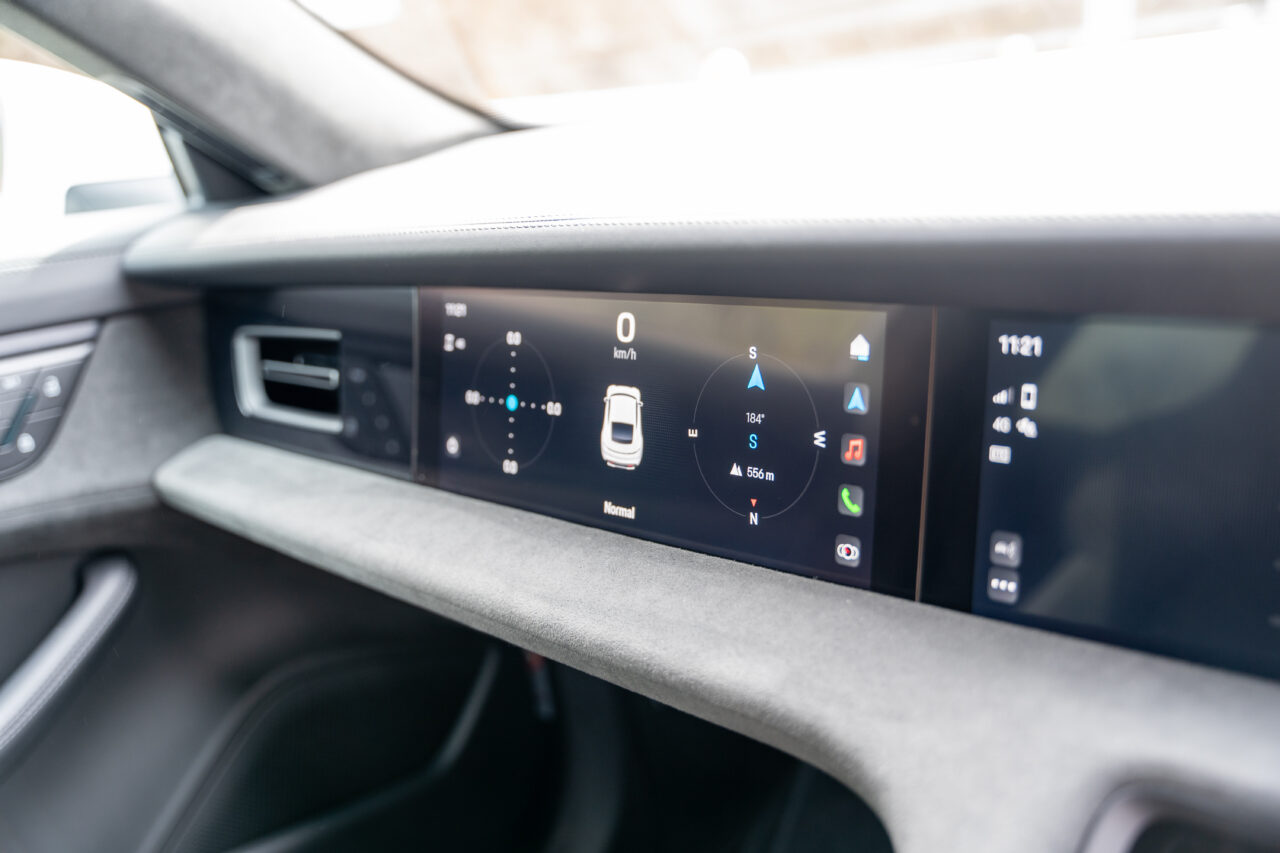
Optional passenger display
How Do They Compare on the Road?
Overall, the Taycan GTS feels more nimble than the 4S. There are probably several reasons for that, including the difference in power. The Taycan GTS produces 517 PS in normal driving and up to 598 PS with Launch Control. The 4S, meanwhile, delivers 490 PS normally and 571 PS with Launch Control. Unsurprisingly, the GTS is also quicker from 0 to 100 km/h.
In everyday driving, though, the power difference doesn’t feel particularly significant. The biggest difference in how the two cars feel on the road comes down to their wheels and tires. Our 4S Cross Turismo has 21-inch wheels, while the GTS rides on 20-inch wheels. The GTS felt lighter on its feet, and seemed to absorb small bumps better, perhaps thanks to its smaller wheels.
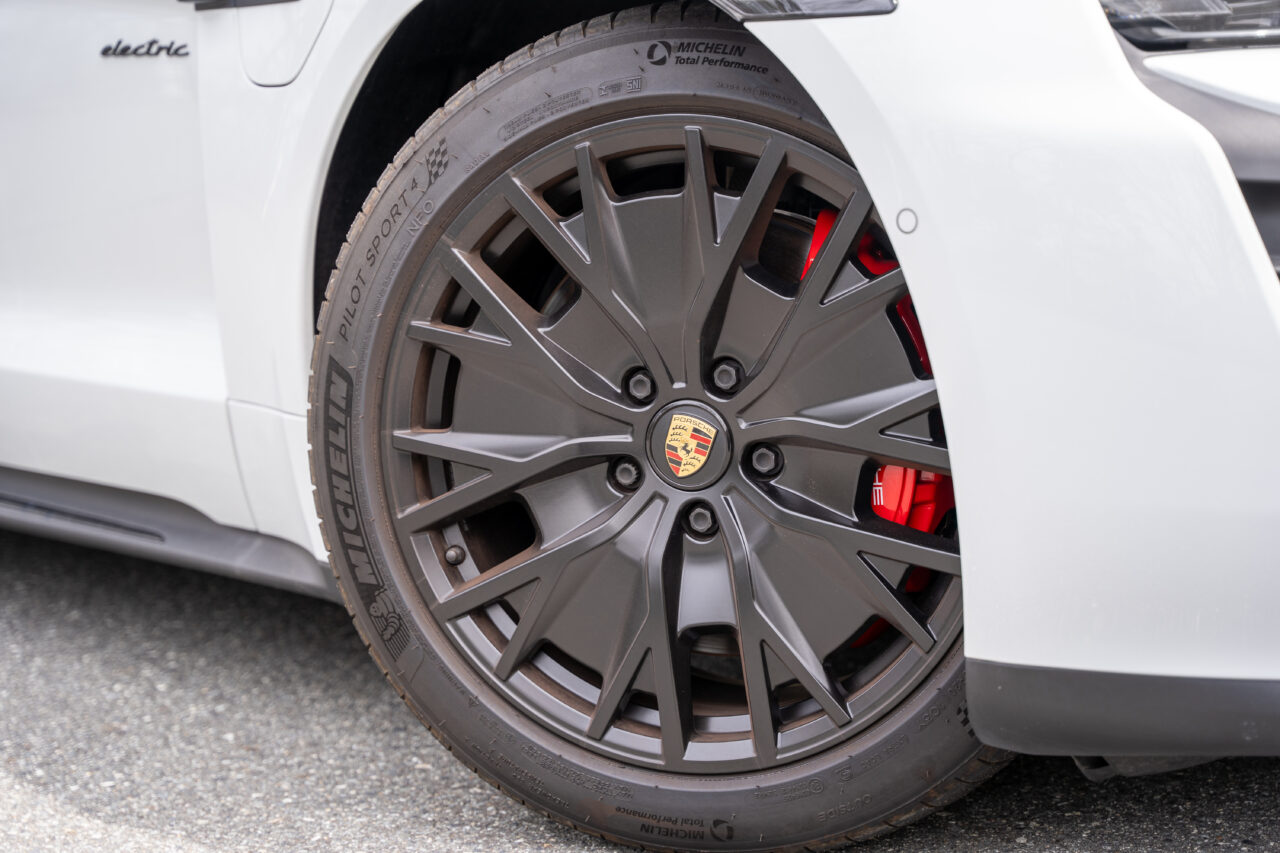
A notable feature of the GTS is PDCC (Porsche Dynamic Chassis Control). Its active anti-roll system keeps body lean in corners to a minimum, helping the car feel almost glued to the road. Our 4S Cross Turismo doesn’t have this feature, making it one of the GTS’s distinctive advantages.
Of course, the 4S Cross Turismo is already impressively composed and stable. But the GTS takes that a step further. Put it in Sport Plus mode, lower the ride height to its lowest setting, and take it through a twisty road, and it feels remarkably cohesive—almost like a race car. Turn the wheel, and it darts into the corner, grips hard, and powers out.
Among Porsche’s four-door models, its handling performance is in a class of its own. Few, if any, other four-door Porsches are set up to feel this sporty.
How Body Style Changes the Driving Experience
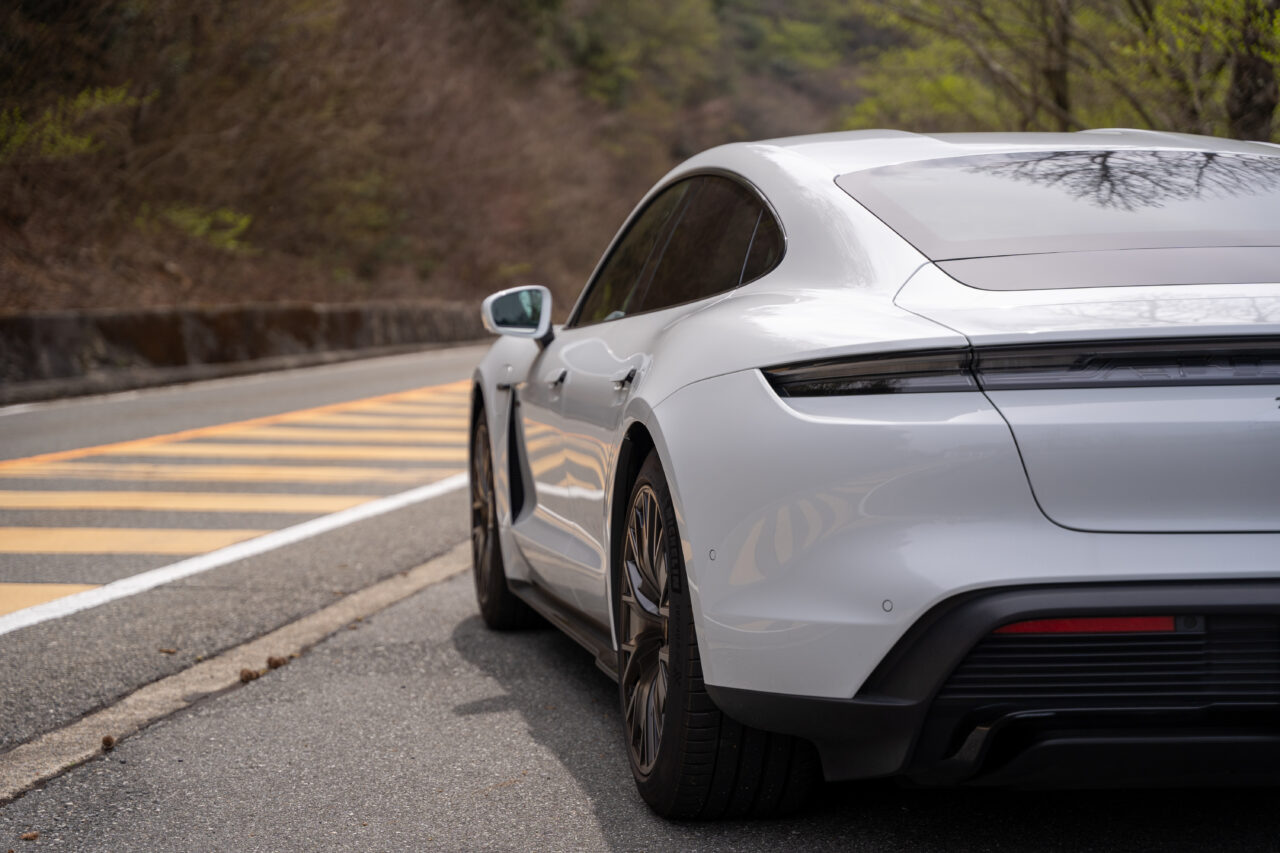
What stood out on this drive was that the difference between the coupe and Cross Turismo body styles was even more noticeable than the difference between the 4S and GTS.
The GTS coupe has a lower roofline and is slightly narrower. With a lower seating position and hip point, it feels more like a sports car. The Cross Turismo, on the other hand, has a larger body and a somewhat higher center of gravity.
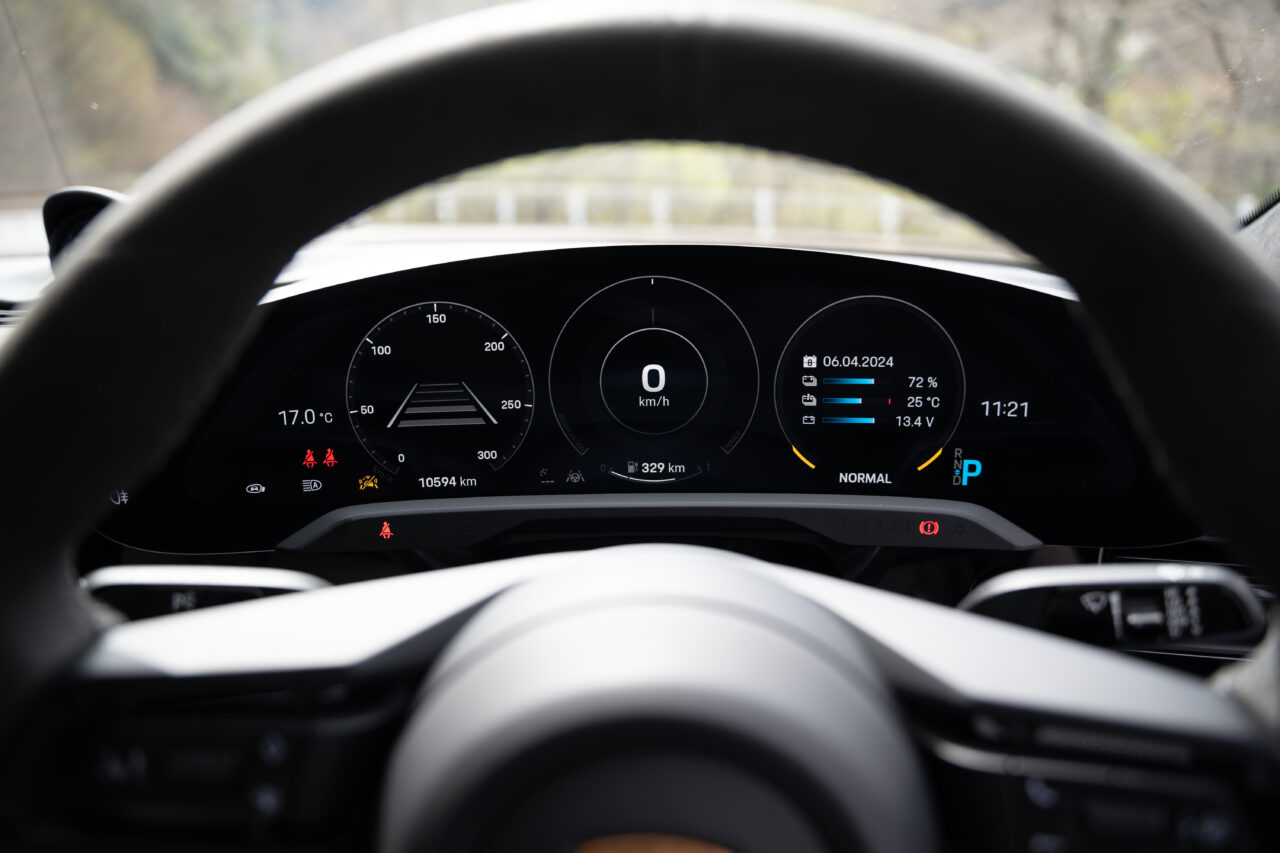
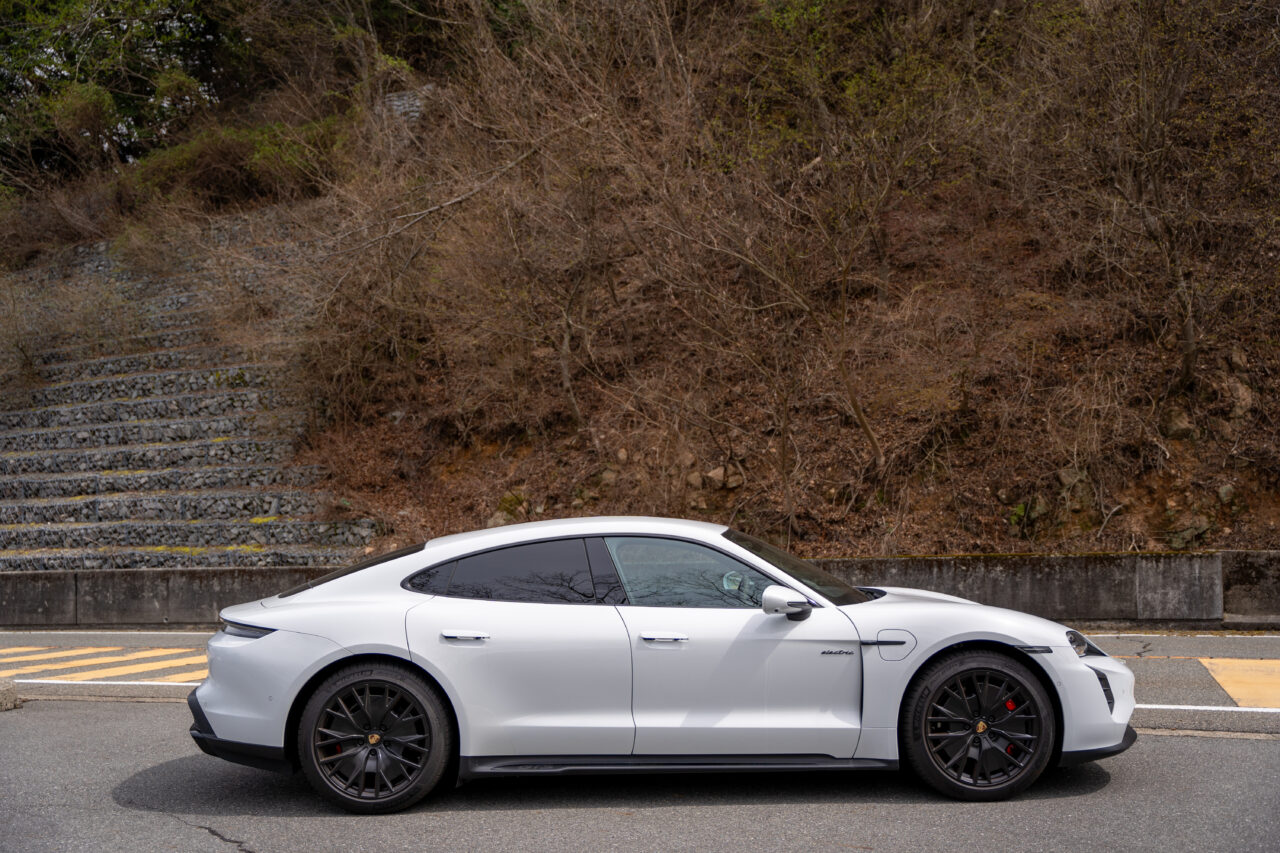
The Cross Turismo drives beautifully, of course. It gives me the impression of a car that feels like a luxury vehicle in everyday use, but is really a sports sedan underneath. Its appeal lies in being more relaxed than the coupe while still being seriously quick.
The GTS coupe, meanwhile, has the unmistakable feel of a pure sports car. It seems to bring you closer to the 911 and 718. It’s a car that makes you especially aware of the act of driving.
Final Thoughts
The Taycan GTS is a four-door EV engineered to deliver outstanding sports-car performance. With PDCC, it offers handling that stands out even among Porsche’s four-door models. Its instant EV acceleration and impressive cornering ability make for a truly thrilling drive.
The Taycan 4S Cross Turismo, meanwhile, strikes an excellent balance between everyday practicality and relaxed performance. It never feels short on power, and should shine on long-distance trips, too.
This drive gave me a fresh appreciation for just how much depth there is to the Taycan lineup.
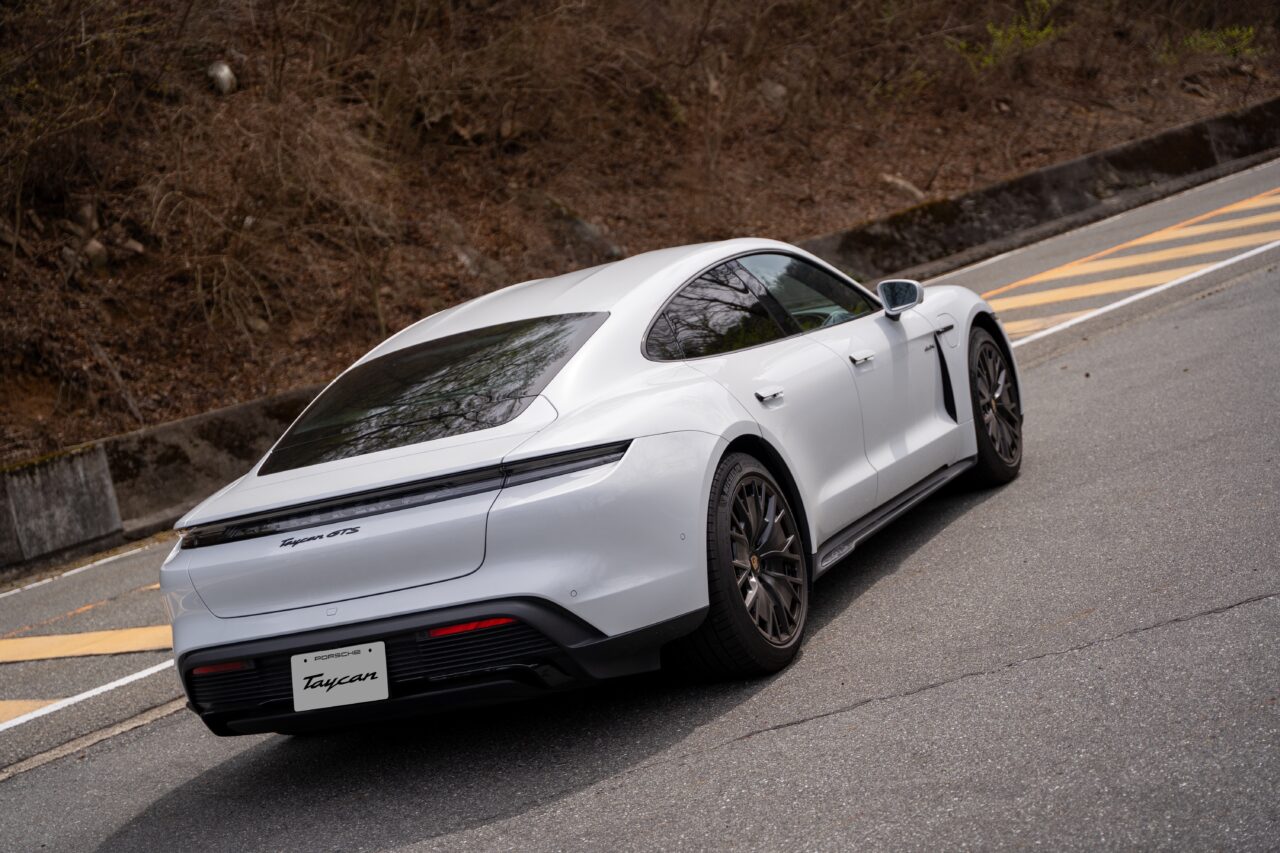
It’s a testament to Porsche that two EVs can have such distinct personalities.
If you’re considering buying a Taycan, it’s worth thinking carefully about how you plan to use it. If everyday versatility is your priority, the Cross Turismo is a great choice. If you want to fully enjoy the car on winding roads, the GTS may be the better fit.
Either way, there’s no doubt that the Taycan is a true Porsche. Enjoy the soul of Porsche, electrified.

If you enjoy this blog, follow along.
Comment ( 0 )
Trackbacks are closed.
No comments yet.