

Driving on Snow with Tesla and Pirelli All-Season Tires: Real-World Impressions from an 1,100 km Road Trip
Published: 2025.01.24

コンテンツ
Driving on Snow with All-Season Tires
I previously wrote about fitting my Tesla with Pirelli’s all-season tires, the Cinturato All Season SF 3. This time, I’m following up with a report on how they performed on snowy roads.
ピレリの新型オールシーズンタイヤ「Cinturato All Season SF 3」を購入 – テスラモデル3に履かせてみた
First, let me get this out of the way: in Japan, any mention of driving on snow with all-season tires is likely to draw comments like, “That’s irresponsible!” “It’s dangerous!” or “You need winter tires on icy roads.”
I want to be clear from the outset that I’m fully aware of those concerns.
I’ve never been a fan of studless winter tires—a tire type that has become something of a Japanese specialty.
I understand how well they perform on ice, but I find their high-speed stability, rigidity, and grip and braking performance on dry and wet roads too compromised. On a high-performance car, they can take away much of what makes the car special. That’s why I generally opt for all-season tires or European winter tires instead.
In my own winter driving, more than 95% of the time, the roads are cold, dry, or wet. In those conditions, the soft, squirmy feel of studless tires can mean less grip, longer stopping distances, and a less enjoyable driving experience. They can take much of the fun out of a high-performance car.
So what do I do when the road is icy? I drive very carefully. I watch out for dangerous patches such as black ice and avoid them whenever possible. If I know the road is frozen, I steer clear of polished wheel tracks and try to place the tires on snow-covered or packed-snow sections to preserve as much grip as I can.
People often criticize this approach by saying, “You’d only say that if you’ve never driven on real ice.” But I grew up and lived in a snowy region, started driving to ski resorts soon after getting my license, and spent much of my winters at ski resorts in Nagano while I was a student. I have plenty of experience driving on snow, as well as extensive experience with studless tires.
With all that in mind, I’ve still chosen to use all-season tires.
Testing Pirelli All-Season Tires on Snow
At the end of the year, I took my Tesla—fitted with Pirelli all-season tires—on a road trip. The drive gave me the chance to experience a wide range of winter conditions, from highways and Nagano Prefecture’s Venus Line to the Myoko area of Niigata Prefecture and roads along the Sea of Japan.
The average temperature during the trip was around 3.5°C, including the warmer conditions in the Kansai region.
In the mountains, I often drove in temperatures of -7 to -9°C and encountered wet roads hovering around freezing—conditions where ice can easily form. To cut to the chase, the tires caused no problems at all throughout the trip. In fact, I never felt uneasy, even when driving at a reasonably brisk pace.
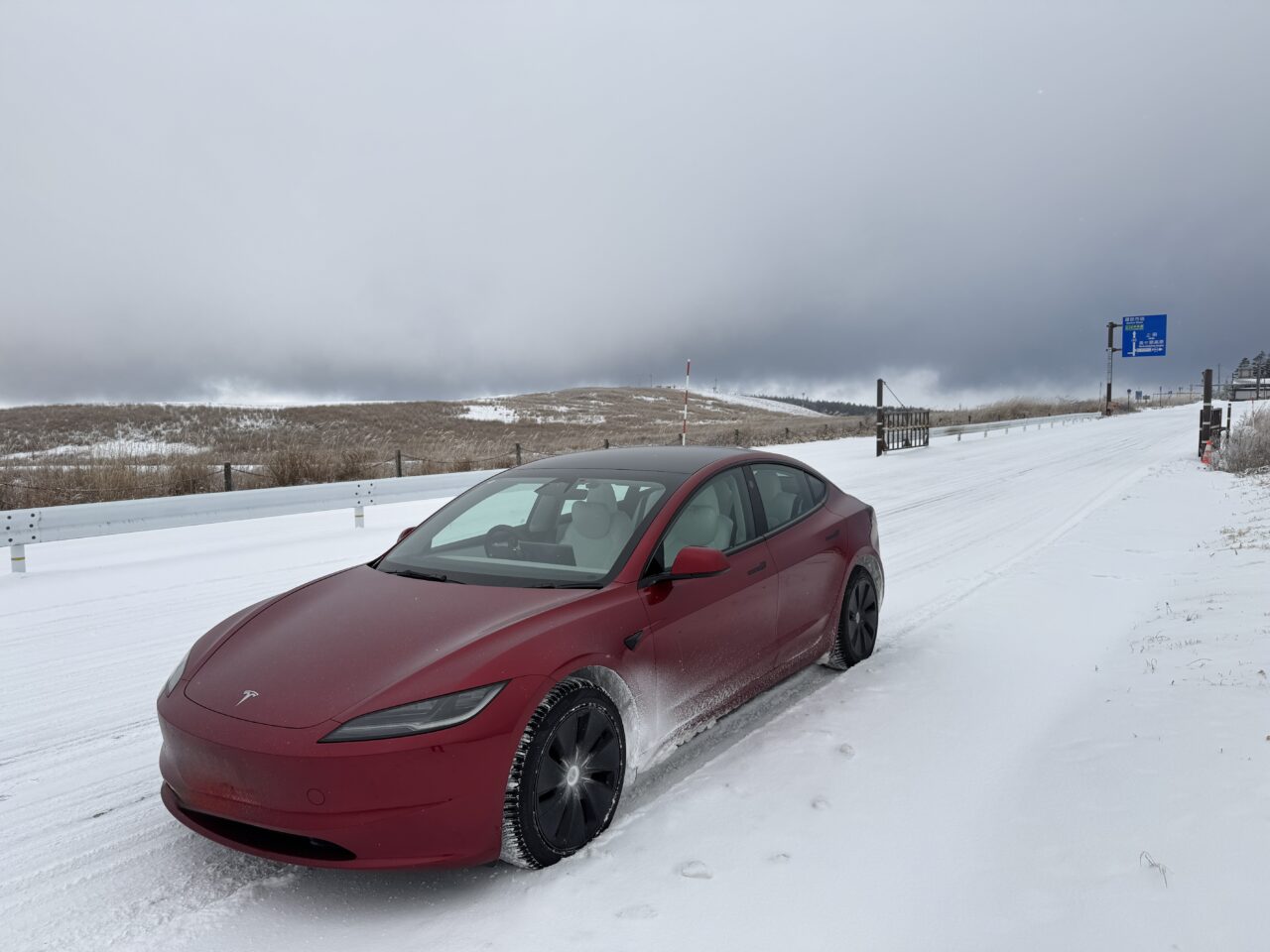
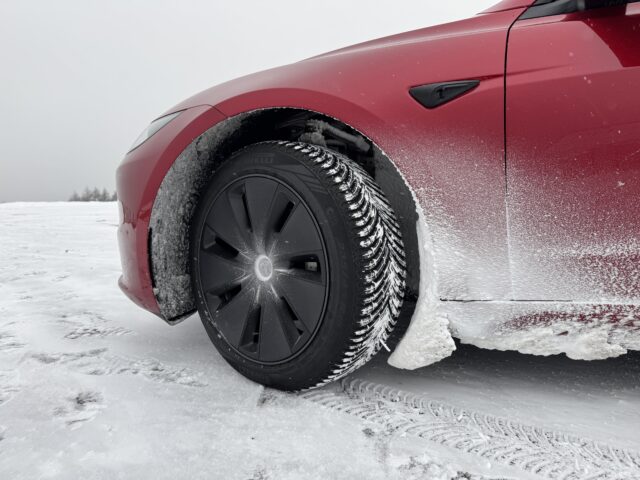
All-season tires have V-shaped grooves, so they don’t offer as much traction on snow as studless or dedicated winter tires. Even so, they deliver ample grip on packed snow and can climb hills without difficulty. For drivers living south of the Kanto region who occasionally go skiing in winter, or who mainly need to commute during a heavy snowfall, I think all-season tires are more than adequate.
They’re especially well suited to drivers in urban areas who spend most of their time on dry or wet roads. Compared with the soft, squirmy feel of studless tires, all-season tires feel more stable and rigid, offer stronger braking in an emergency, and make driving more enjoyable.
How Tesla’s Characteristics Pair with All-Season Tires
The Tesla’s electric powertrain also played a major role in how it handled the snowy roads.
Tesla’s highly precise motor control makes it difficult to lose traction. I’ve driven a wide range of cars, but I’ve never experienced traction control this finely tuned.
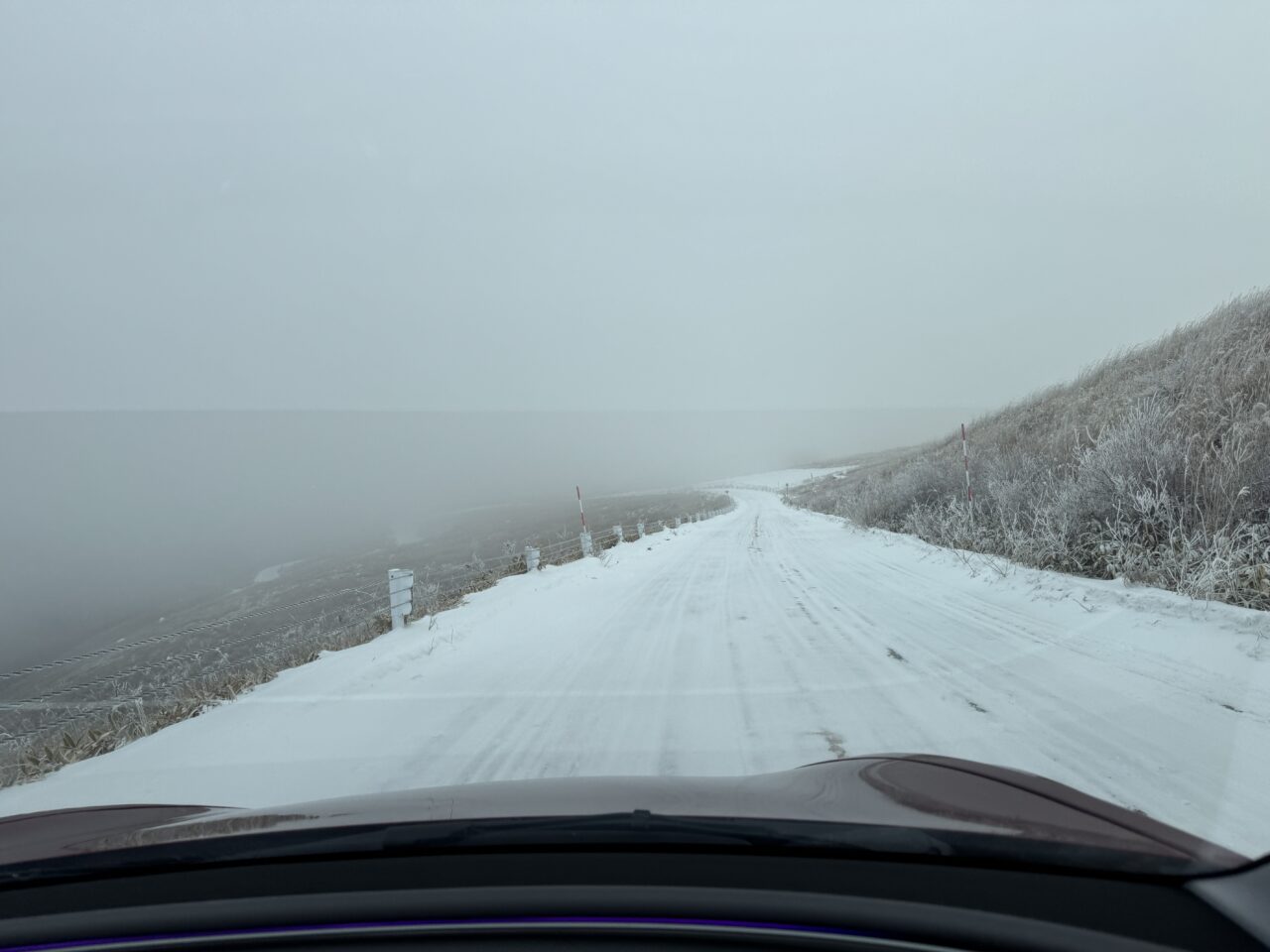
Its regenerative braking system is also remarkably effective.
Tesla’s regenerative braking isn’t simply a way to recover energy. It also uses control logic similar to ABS, intelligently making the most of the tires’ available grip. On surfaces where a light press of the regular brake pedal could easily cause the tires to slide, regenerative braking slowed the car down almost unbelievably well.
In this respect, I found the combination of a Tesla and all-season tires particularly effective.
Driving in Challenging Snow Conditions
On Nagano Prefecture’s Venus Line, I made several runs over snowy roads, deliberately driving around corners in the shade where the surface had frozen.
Of course, I couldn’t drive as if I were on summer tires, but I never once felt that the situation was dangerous. I noticed some slipping, naturally, but the tires quickly regained grip when I moved slightly out of the wheel tracks or onto a patch of remaining snow. More than anything, I was surprised by just how capable modern all-season tires are.
I put the all-season tires on my Tesla Model 3 (Pirelli CINTURATO ALL SEASON SF3) to the test on snow.
No problems on snowy roads at all. More than enough traction and handling.
Honestly, the Model 3’s control systems are incredibly precise.Even where the ABS kicked in with the foot brake, regenerative braking slowed the car down with ease. pic.twitter.com/VBPyv96kzu
— Hiro@Welcome Home, PORSCHE (@boxster_gts) December 27, 2024
We didn’t encounter a truly polished, mirror-like sheet of ice this time, and all-season tires would likely struggle in those conditions. That said, even studless tires have a hard time in such extreme situations.
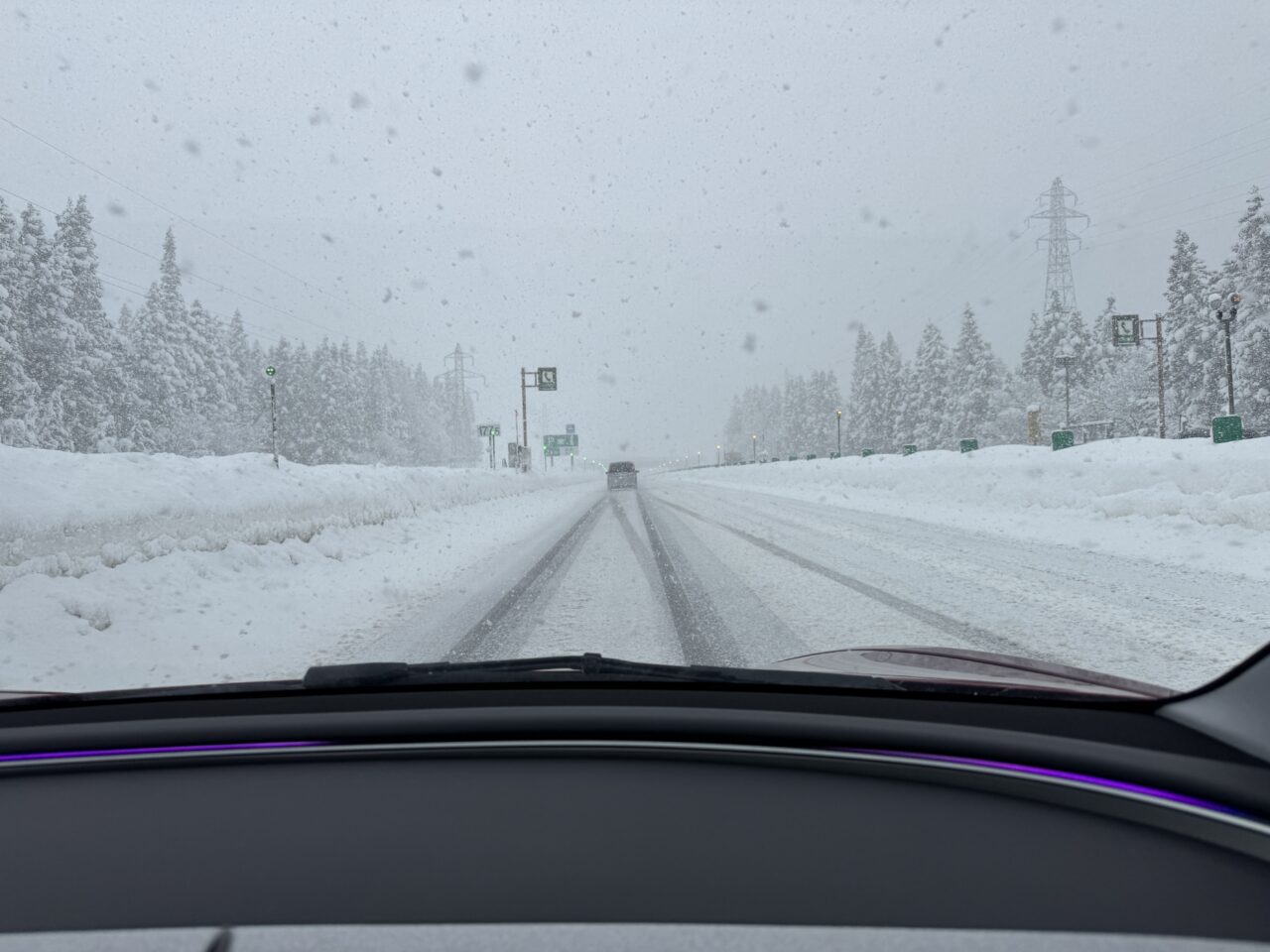
I also drove through heavy snowfall in Myoko and on highways where snow was falling continuously, but I never felt uneasy.
Naturally, the deep snow pulled the car from side to side in the wheel tracks, but that’s true with any tire. Whether on packed snow or in heavy snowfall, the tires never left me unable to move or stop. The car handled it all without issue.
The Strengths and Limitations of All-Season Tires
By contrast, all-season tires really come into their own on slushy roads—often almost as wet as ordinary pavement—as well as on rain-soaked roads. Studless tires are particularly weak in wet conditions, while all-season tires excel. They also offer strong braking performance, which contributes to safety.
Ultimately, it comes down to what matters most to you. If you need to drive in extreme conditions, such as on a completely frozen, mirror-like surface, you should choose studless tires rather than all-season tires. But for most drivers, the more typical conditions are slush, packed snow, or roads with only occasional icy patches. All-season tires can handle those conditions well.
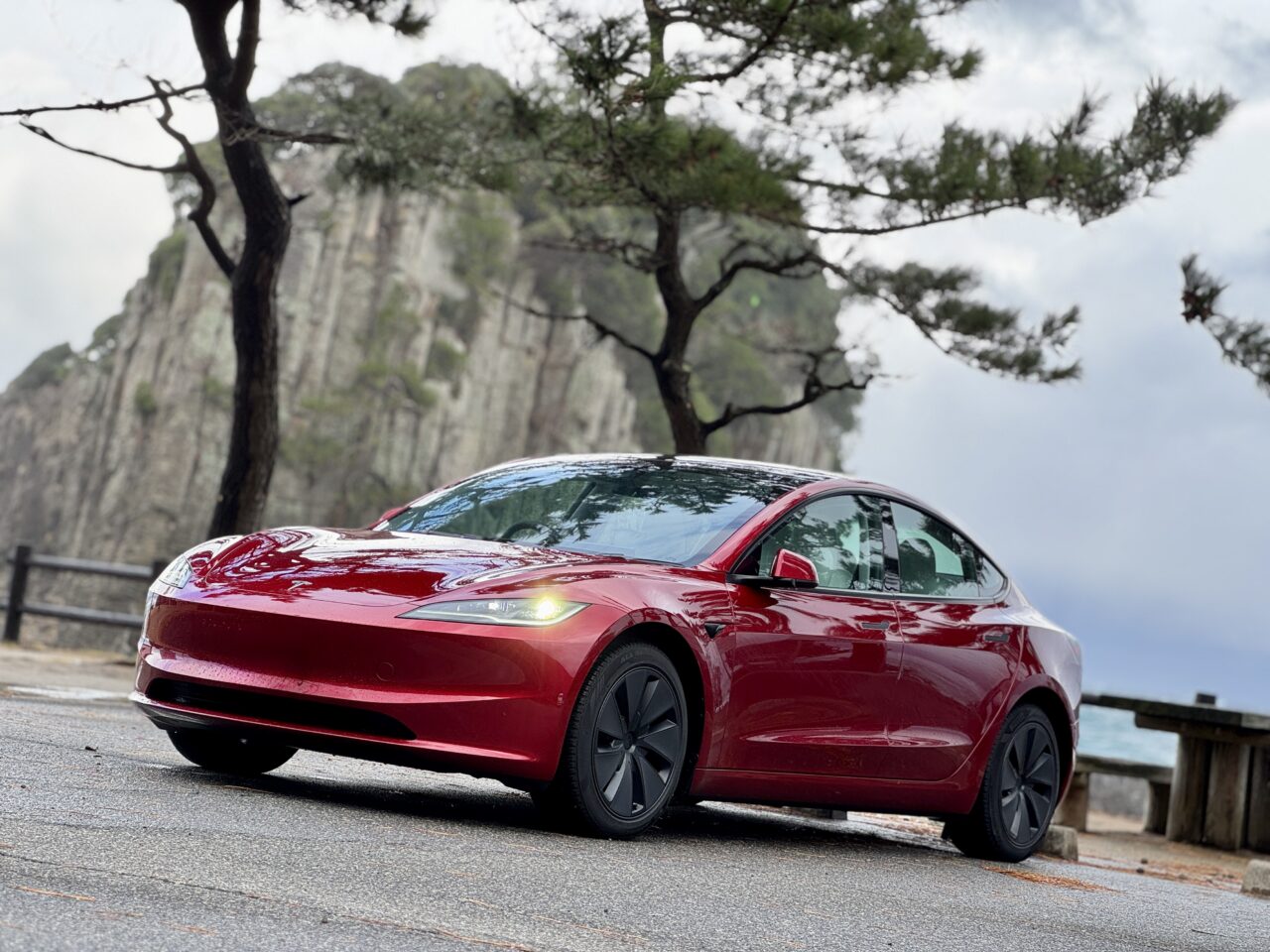
There was heavy snowfall along the Sea of Japan coast, and plenty of local cars fitted with studless tires were on the road. My Tesla kept pace with them without difficulty, and the all-season tires proved especially capable on slushy roads that were almost wet. Their strength on wet surfaces stood out even more than their performance on snow itself.
On coastal roads along the Sea of Japan, I could even enjoy cornering much as I would on summer tires. The tires had enough grip to let me make full use of the car’s performance.
The Verdict on Choosing All-Season Tires
To sum up, I wouldn’t recommend all-season tires for drivers in areas where mirror-like ice is common. But for people who live in cities and find it a hassle to swap to studless tires every winter, all-season tires are a perfectly viable option.
Incidentally, Japan is one of the few countries where studless tires are commonly used.
In other countries, all-season tires or winter tires are more common, even in similar conditions. While mirror-like ice may not be as widespread as it is in Japan, it does occur overseas, depending on the season and location. Drivers there manage those conditions with all-season or winter tires.
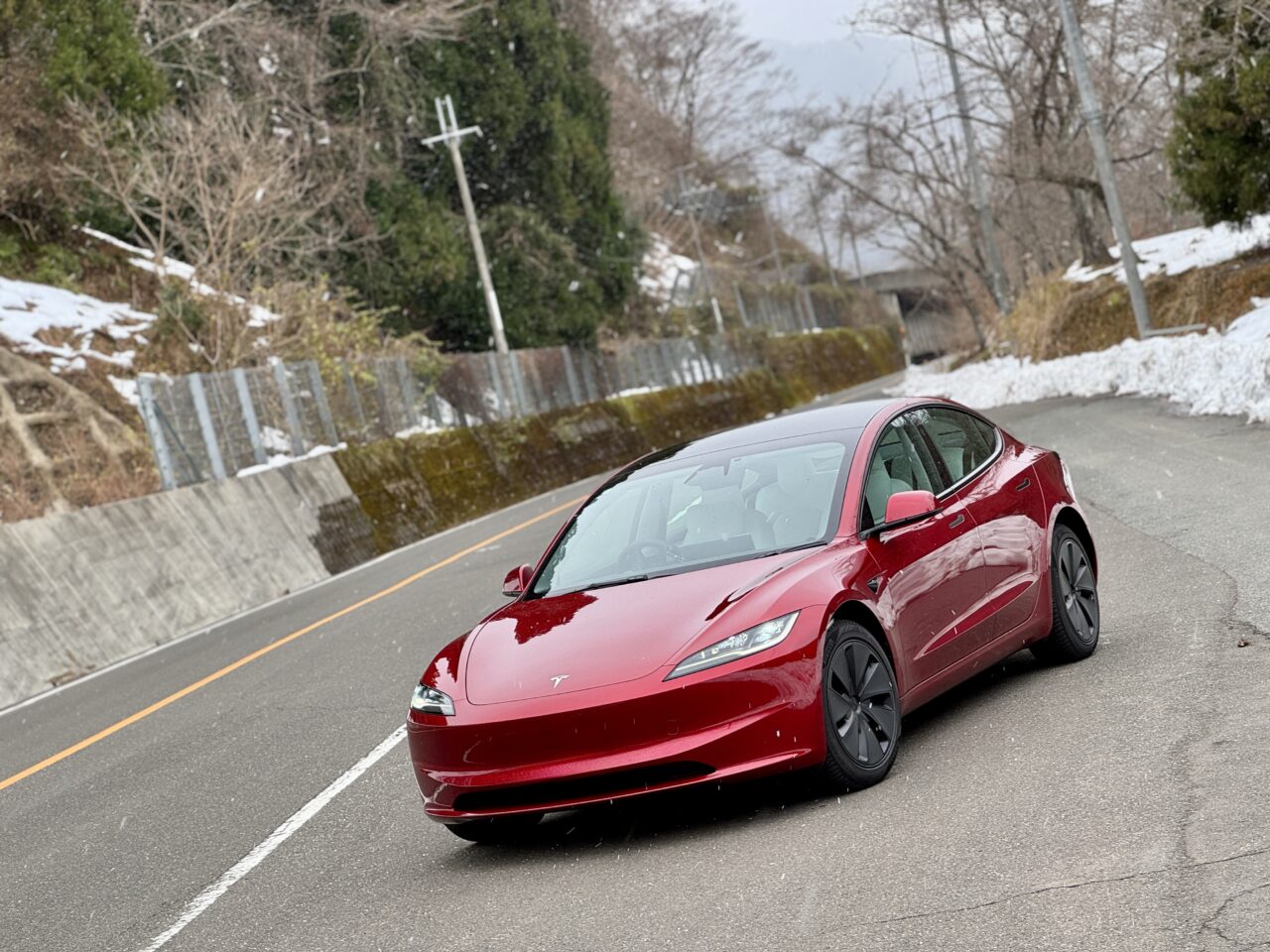
If you enjoy driving and getting the most out of your car, I hope you’ll consider all-season tires as one option. However, if you prioritize maximum grip in extreme icy conditions as a precaution, you should choose studless tires. Personally, I prioritize grip and driving feel in the more than 95% of situations I’m likely to encounter over performance in rare conditions, so I choose all-season tires.
For drivers who want to make the most of their car’s performance while balancing safety and driving enjoyment, all-season tires can be an appealing choice. The key is to assess your own driving conditions and priorities carefully before choosing the right tires.

If you enjoy this blog, follow along.
Comment ( 0 )
Trackbacks are closed.
No comments yet.