

My Week with the Porsche Macan: How Does It Compare with the Cayenne and 911?
Published: 2022.04.29

コンテンツ
Macan S
The other day, I took my early 991 Carrera 4 GTS to the dealership for its inspection.
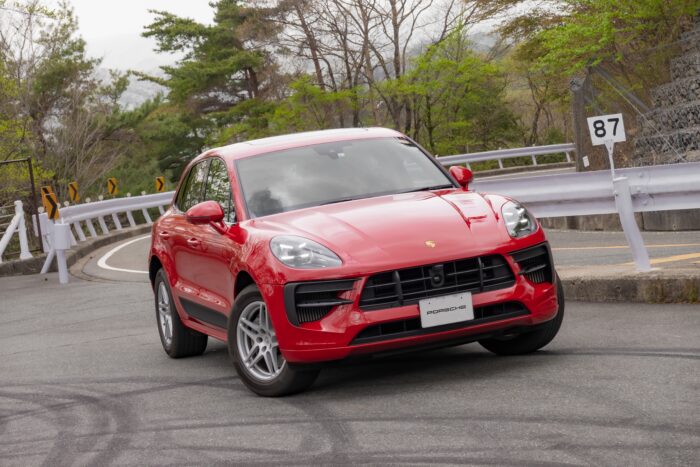
While it was there, I was lucky enough to borrow a Macan S as a loaner, so I’d like to share my impressions. This Macan was from before the current interior’s touchscreen setup. It was the 2019 facelift model, identifiable by its full-width rear light bar, and is often referred to as the second-generation or mid-cycle model.
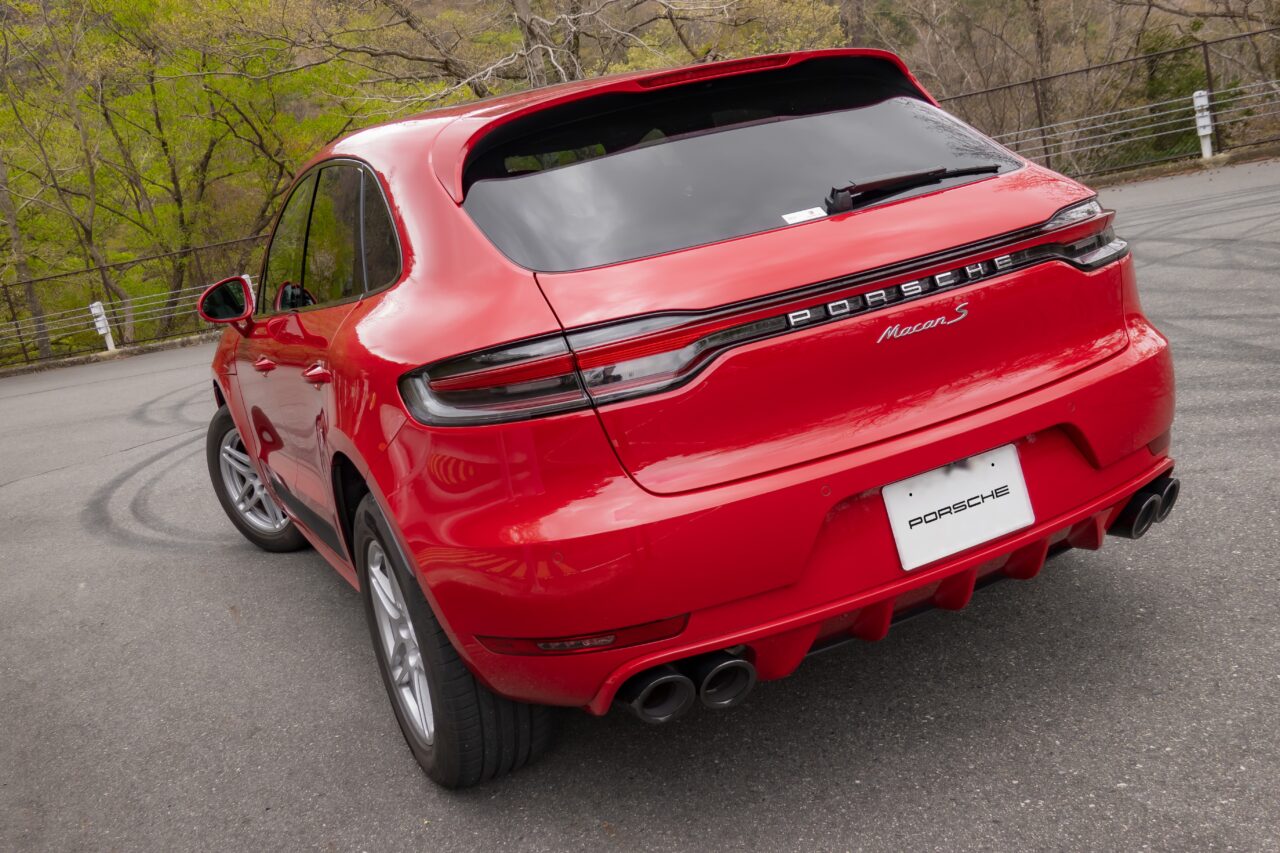
The full-width rear light bar arrived with the facelift model.
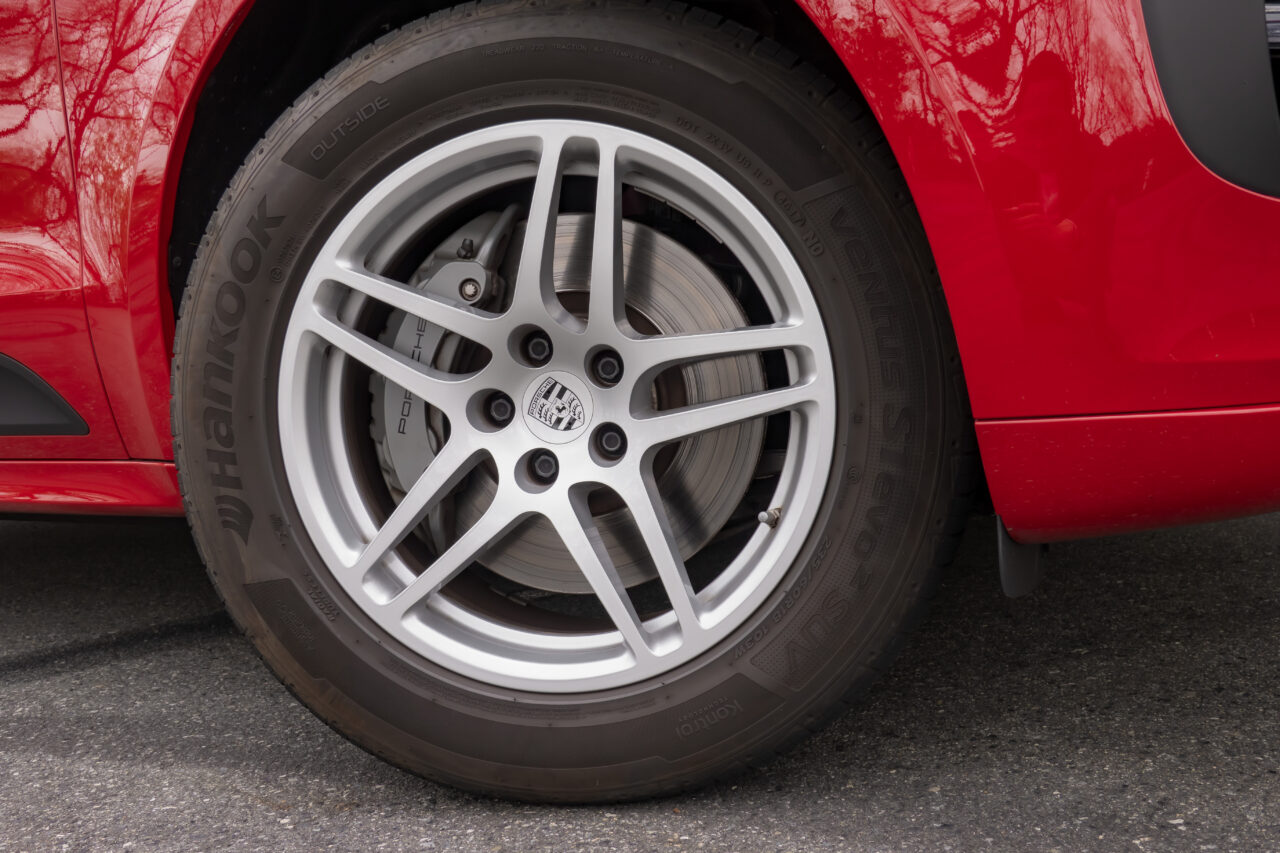
Hankook tires approved by Porsche
Under the hood is a 3.0-liter (2,995 cc) turbocharged V6. It’s the same displacement as the engine in the base Cayenne of the current generation, and differs from the 2.9-liter (2,894 cc) unit in the Macan GTS and Turbo.
Output is a healthy 354 PS (260 kW) at 5,400–6,400 rpm, with 480 Nm (48.9 kg-m) of torque from 1,360 to 4,800 rpm. With the Sport Chrono Package, it can accelerate from 0 to 100 km/h in 5.1 seconds—seriously quick for an SUV.
This example had the standard 18-inch wheels and conventional coil springs with PASM, rather than air suspension.
Cabin Space: Macan vs. Cayenne
I opened the front door, finished in gorgeous Carmine Red, and settled into the driver’s seat.
The raised seating position gives you a good view of the road and makes it easy to judge the car’s edges. Looking across to the passenger side, the door felt closer than it does in a Cayenne. Turn around to check the rear seats, though, and the Macan is clearly tighter than its bigger sibling.
That said, there’s about as much room as you’d find in a C-segment hatchback or wagon. The rear seats are about as spacious as those in the already-comfortable VW Golf, if not a little roomier.
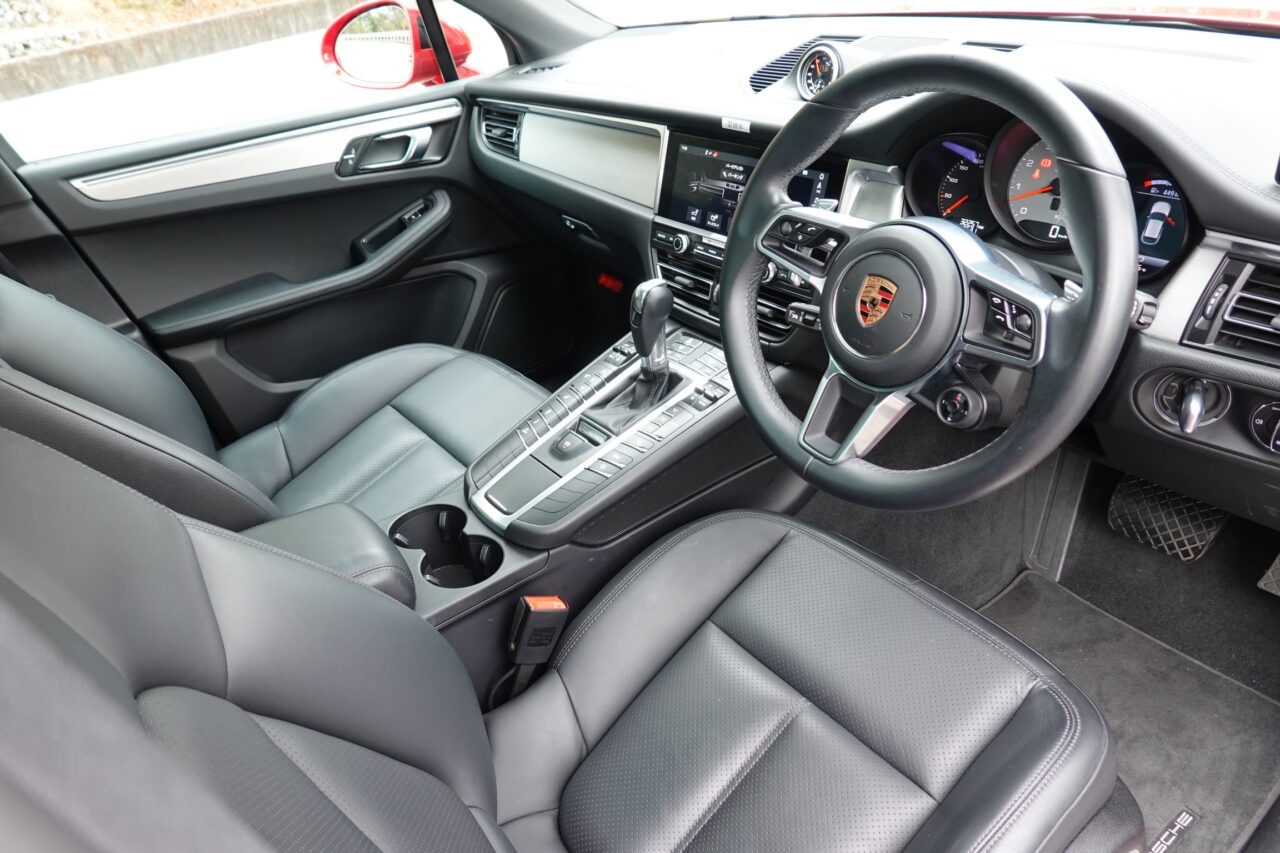
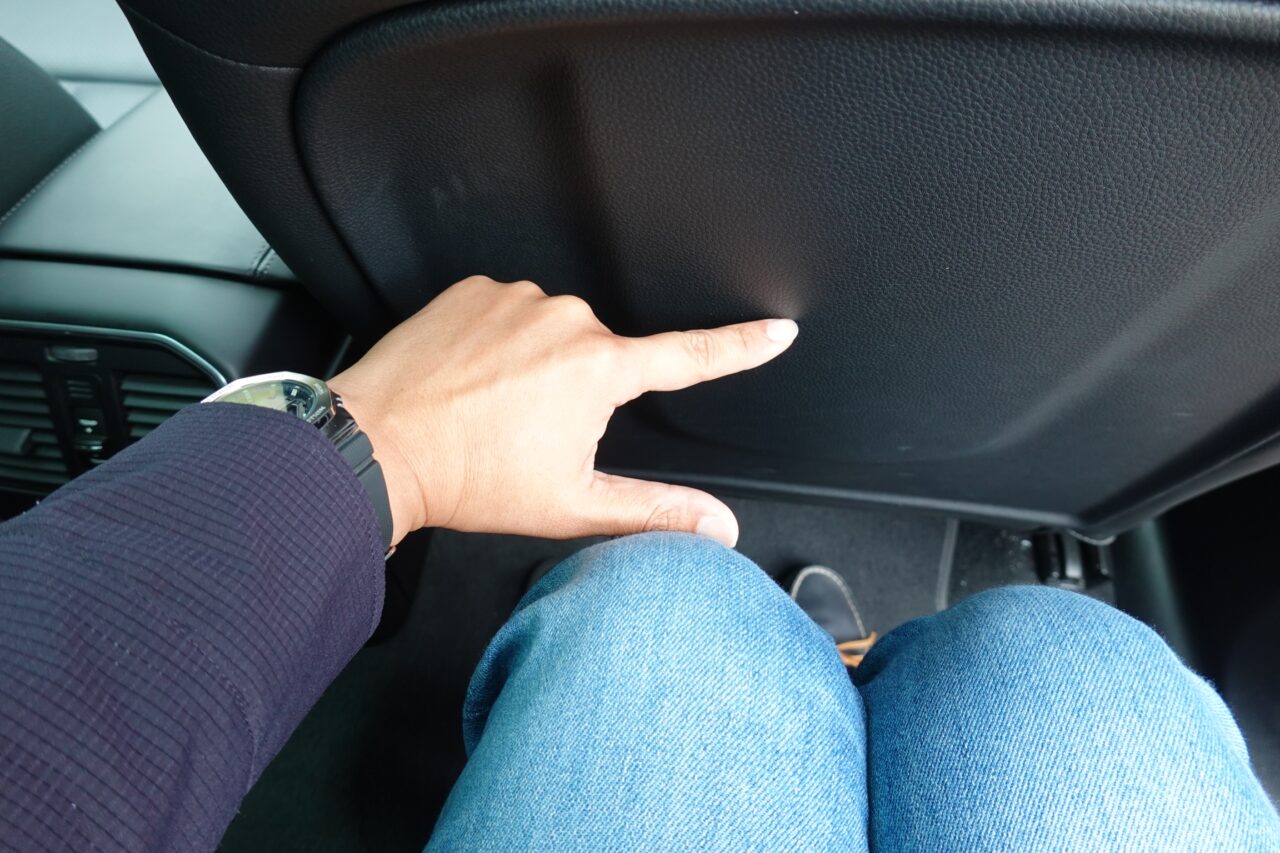
The Cayenne offers more room here.
If you want all five family members to travel in comfort, the Cayenne is the better choice. For a family of four, though, the Macan should be more than adequate. The biggest difference is the space between the rear seats and the front seats.
Ride Comfort: First Impressions
The engine starts quietly. As with other Porsches, the tachometer needle rises to around 2,000 rpm on startup, but the sound inside the cabin is subdued. Even without the Sport Exhaust, this Macan feels noticeably quieter than the early model.
Outside, however, the startup and exhaust notes sound pretty assertive. They give the Macan a character that sets it apart from other SUVs—a fitting reminder of the Porsche badge.
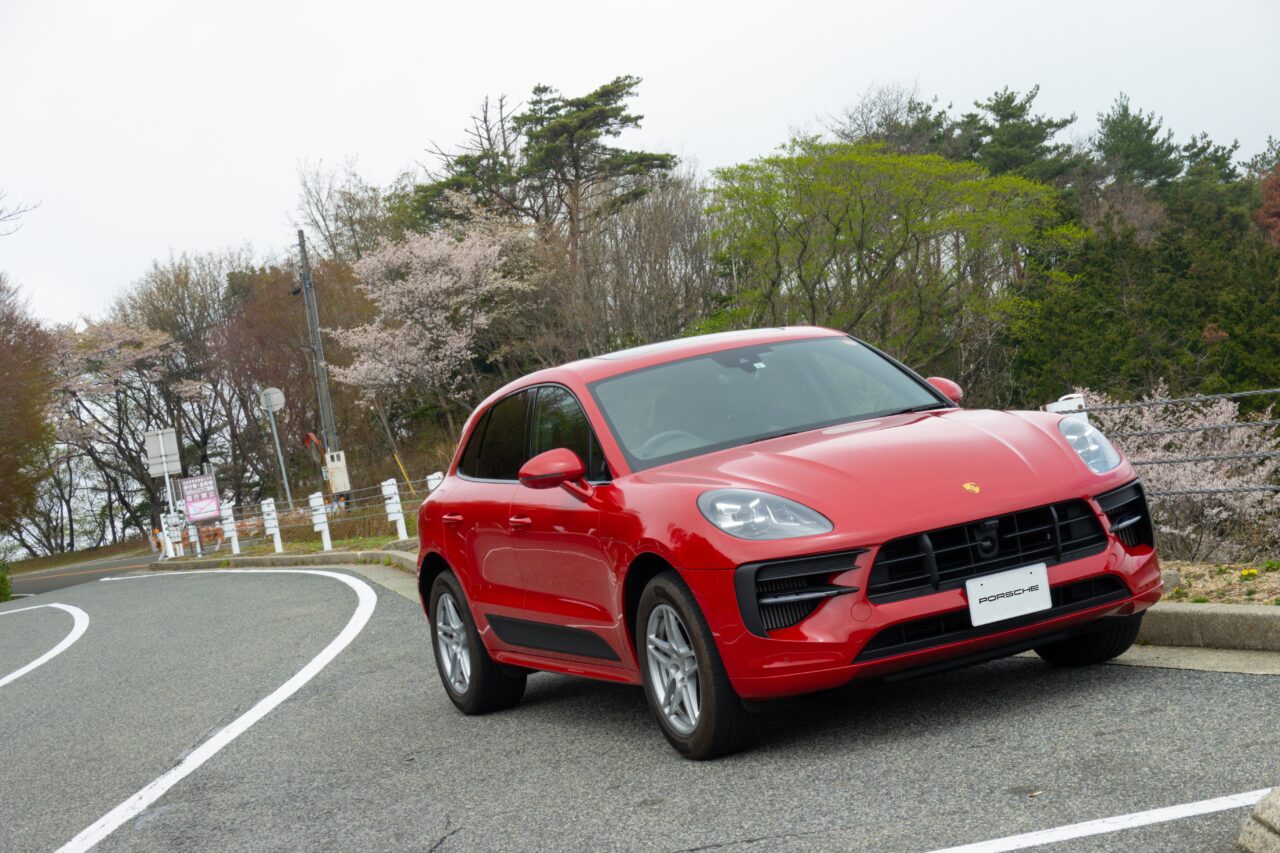
Pull away gently, and the tires don’t roll as smoothly or quietly as they do in a Cayenne. But over bumpy roads at low speeds, the Macan moves around less and feels flatter. As your speed builds, the balance shifts: the Cayenne’s superior smoothness and composure come to the fore.
The Cayenne is a large SUV designed with serious off-road use in mind, so at very low speeds it can sometimes rock gently in a way that feels distinctly SUV-like. The Macan, by contrast, handles bumps more like a sports car—absorbing and controlling road imperfections with ease. That’s the most noticeable difference at low speeds.
Still, don’t take these impressions as a blanket verdict.
As is often the case with Porsche, ride quality can vary significantly depending on the options—air suspension, coil springs, or PASM—as well as wheel size. Take my observations as a guide, rather than a definitive comparison.
Based on my experience with both models, the Cayenne does a better job of suppressing road noise and keeping the cabin quiet. Wheel size makes a difference, but the ride quality of a current-generation Cayenne on coil springs is on a par with a Macan on air suspension. The Macan on coil springs delivers a firm, sports-car-like ride that’s still very comfortable—and certainly not harsh.
If you’re after a more refined ride or the Cayenne’s signature smoothness, though, I’d recommend air suspension.
City Driving: The Macan’s One Real Weakness
Next, I took the Macan through town, where stop-and-go traffic is the norm.
A light press on the accelerator is enough to get the Macan S moving briskly. The PDK shifts smoothly, too, and feels even more refined than the earlier version—so much so that you could almost mistake it for a conventional torque-converter automatic.
But there’s one thing about this Macan that I have to call out.
This is a challenge shared by many high-performance, turbocharged Porsches of recent years; it’s not unique to the Macan S. The 992 S models, Cayenne S, and Panamera S and above all exhibit similar behavior to varying degrees, as far as I can tell. (It’s one reason I often say I prefer the base models.)
Imagine cruising at 50–60 km/h on a national road with a clear flow of traffic. The car ahead signals left to pull into a convenience store, or slows to make a careful left turn at a crosswalk.
As the car ahead slows, you brake and drop to around 20 km/h. The PDK, which had been in fifth or sixth gear, downshifts to second or third. Engine speed falls to somewhere around 1,000–1,100 rpm.
Then the road ahead clears, and the Macan S tries to accelerate again.
Here’s the problem: it doesn’t pick up speed. The Macan S delivers peak torque from 1,360 rpm, which is low for a turbo engine. But after slowing in this situation, the engine has dropped below its torque band.
A difference of just 200 or 300 rpm might not sound like much, but it matters. This is a high-performance turbo engine: the turbo takes a little time to spool, then torque comes on sharply, so depending on how you press the accelerator, the power delivery can feel very jerky.
If you ease into the throttle, it’s not much of an issue—but that’s easier said than done. When you’re used to the satisfying surge of power at 50–60 km/h, it’s natural to unconsciously expect the same response and press the accelerator accordingly.
But the Macan doesn’t respond as quickly as you expect. You think, “Huh?” and press harder.
At that point, the engine is right at the steep part of the torque curve shown in the red circle below. The PDK has also dropped into second gear, so the Macan suddenly surges forward. From behind the wheel, your reaction is more like, “Whoa, I didn’t need that much acceleration!”
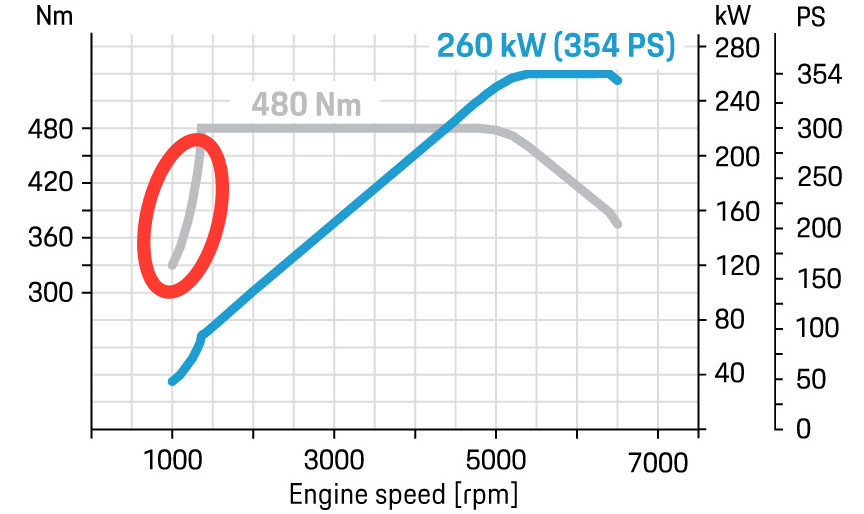
Decelerating in Normal mode around town can leave the engine in the area marked in red. When you accelerate again, turbo lag and the sudden surge in torque can make the response feel jerky.
It’s a minor but persistent frustration. I got somewhat used to it over the course of a week, but I’d still prefer a smoother, more seamless response.
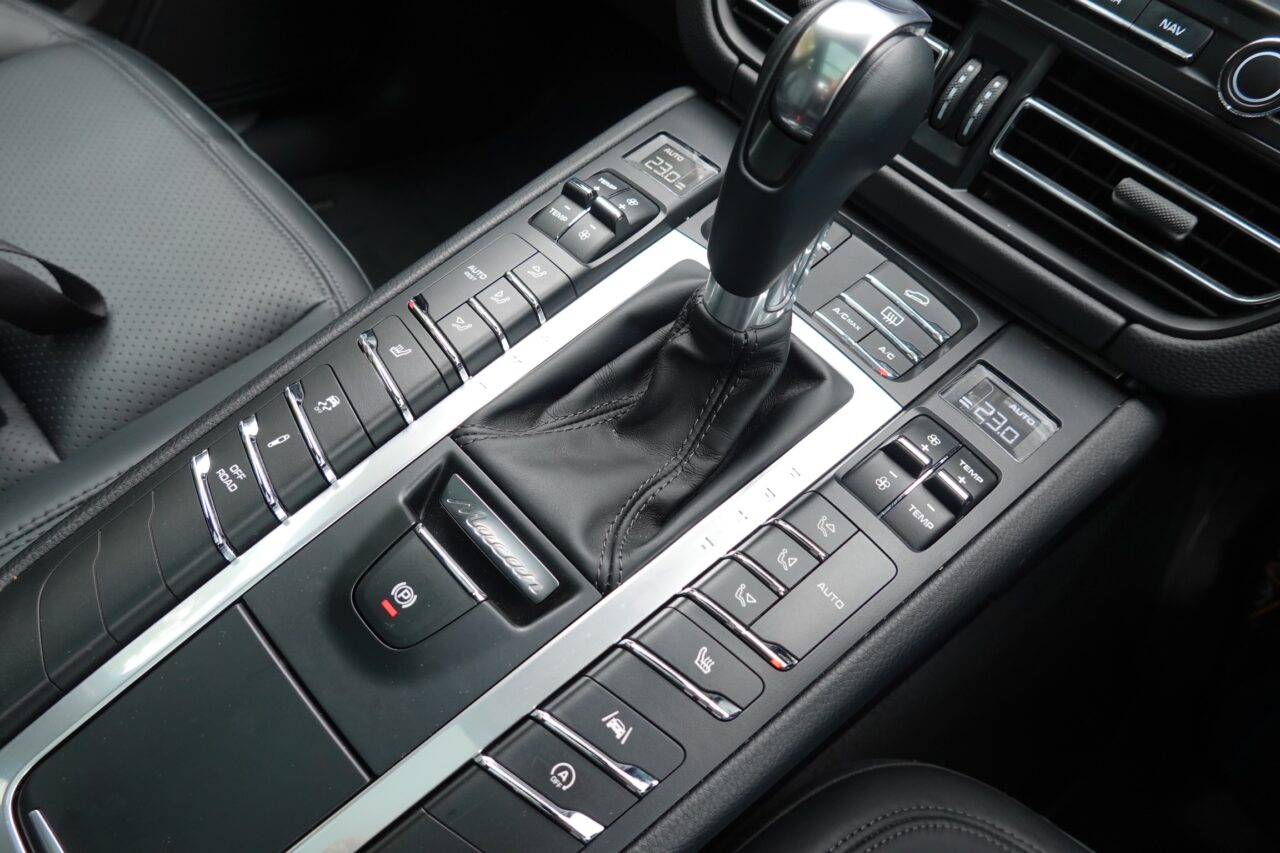
This only happens in Normal mode, so if it bothers you, switch to Sport or above, or shift the PDK manually. In Sport mode, the engine speed stays within the torque band, making the car much easier to drive.
It seems that the Normal-mode programming and gearing in Porsches from this era onward are too focused on efficiency. Regulations undoubtedly play a part, but Porsche owners expect a direct, intuitive connection between their right foot and the tires.
On the Highway
On open rural roads and highways, the Macan is a delight to drive. Its outstanding stability and reassuring tire contact inspire confidence, making it easy to trust the car and enjoy the drive.
I took it on a short road trip toward Wakayama, and the experience gave me plenty to say about how it performs on longer, faster stretches.
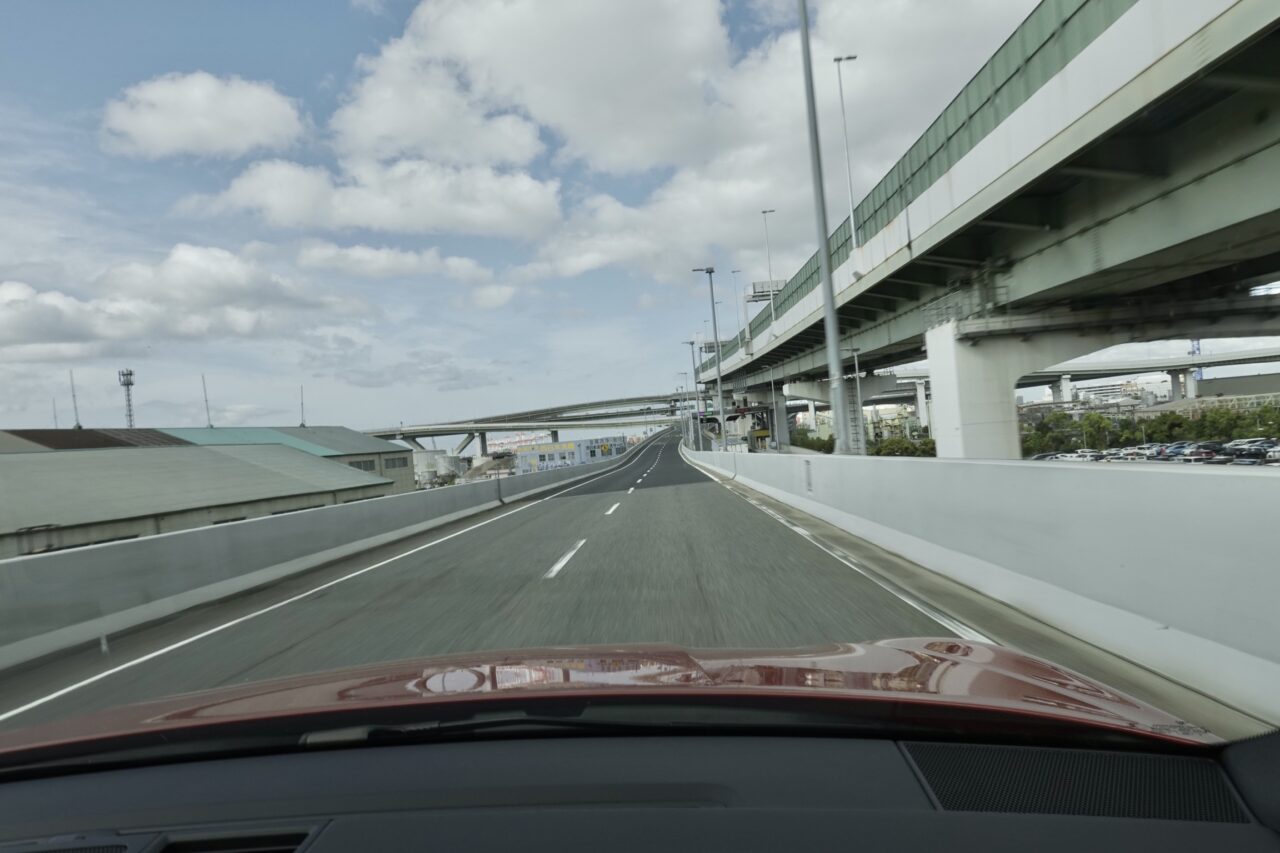
On the highway, there’s very little to complain about. The straight-line stability is superb, and the car feels planted through fast corners—it can seem almost unstoppable. There’s plenty of passing power, too, so few drivers are likely to find the ride or performance lacking.
If you’re buying a Macan as a luxury car, though, or simply want a more refined, smoother ride, it’s true that you may be better off choosing air suspension or stepping up to the Cayenne.
That said, unless you’re comparing them back to back, the PASM-equipped Macan on coil springs is perfectly comfortable.
How Does the Macan Handle on Winding Roads?
Leaving the highway, I headed south on Route 424 in Wakayama before turning onto Prefectural Route 198. This is where the Macan really comes alive. Its cornering is so good that I found myself thinking, “Is this a Cayman with a higher ride height?!” With Sport Plus engaged, the PASM dampers turned up to their firmest setting, and the paddle shifters at the ready, it moves through corners in a way that’s hard to believe from an SUV.
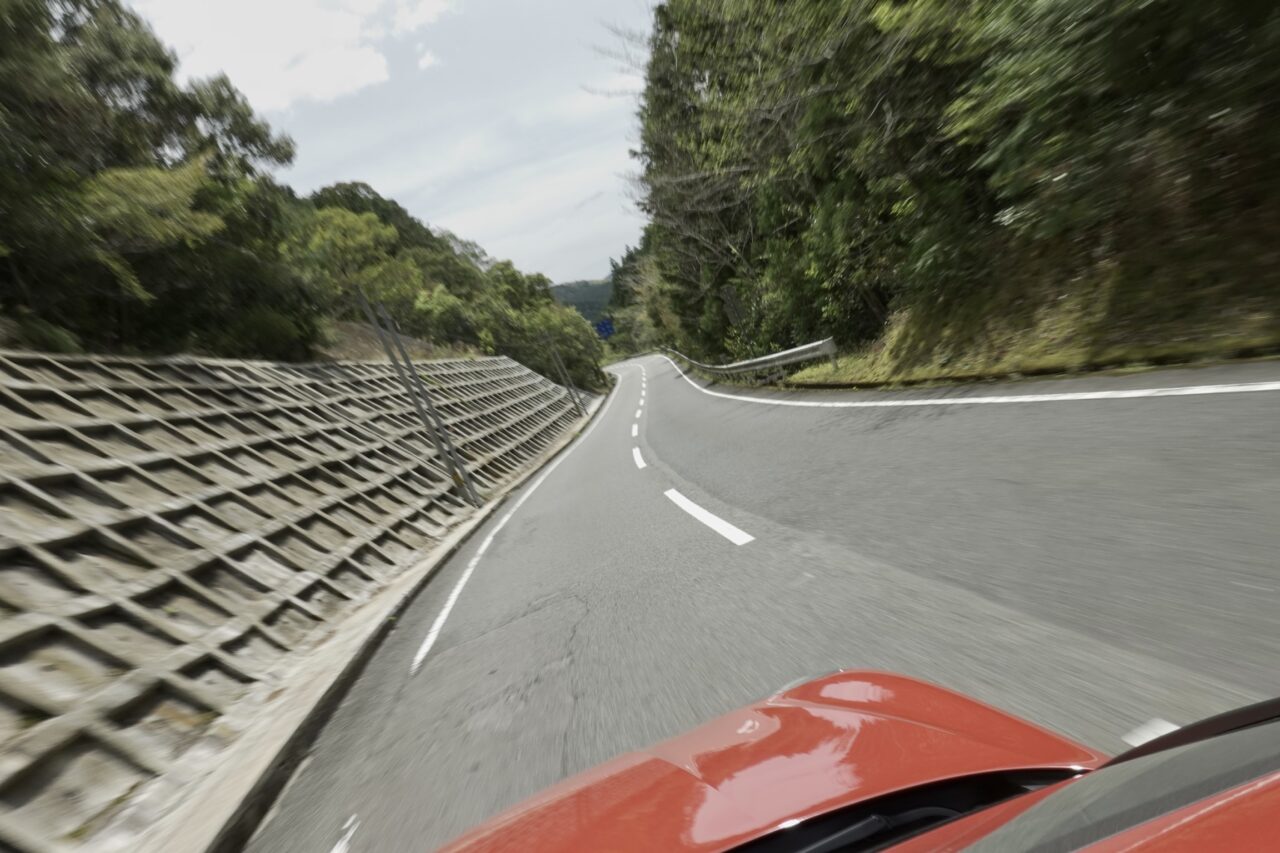
I’m not saying it can keep up with a Cayman or Boxster, but the Macan operates on a different level from most other SUVs. It feels as if it was built for a different purpose altogether. At times, it’s almost like driving a high-performance hatchback.
I once described the Panamera as feeling smaller the harder you push it on a winding road. The Macan gives me a different impression: the harder you push, the lower it seems to sit. With air suspension, you can actually lower the ride height, bringing the center of gravity down and sharpening the car’s responses even further.
The steering feels unmistakably Porsche. It isn’t overly quick; instead, the response builds naturally in proportion to how much you turn the wheel. The 911, Cayenne, Panamera, and Macan all share this character. It’s pure Porsche steering feel.
I sometimes hear that people mistake the Macan for a “cheap Porsche” because its starting price is relatively low and it costs about the same as many other SUVs, including Japanese models. But when it comes to driving performance, I don’t think those cars are in the same league.
Macan All-Wheel Drive and Brakes
The Macan shares its platform with Audi and is based on a front-wheel-drive architecture. Even so, under normal conditions it sends more torque to the rear wheels, with a front-to-rear split of 2:8.
In other words, it has a rear-biased character.
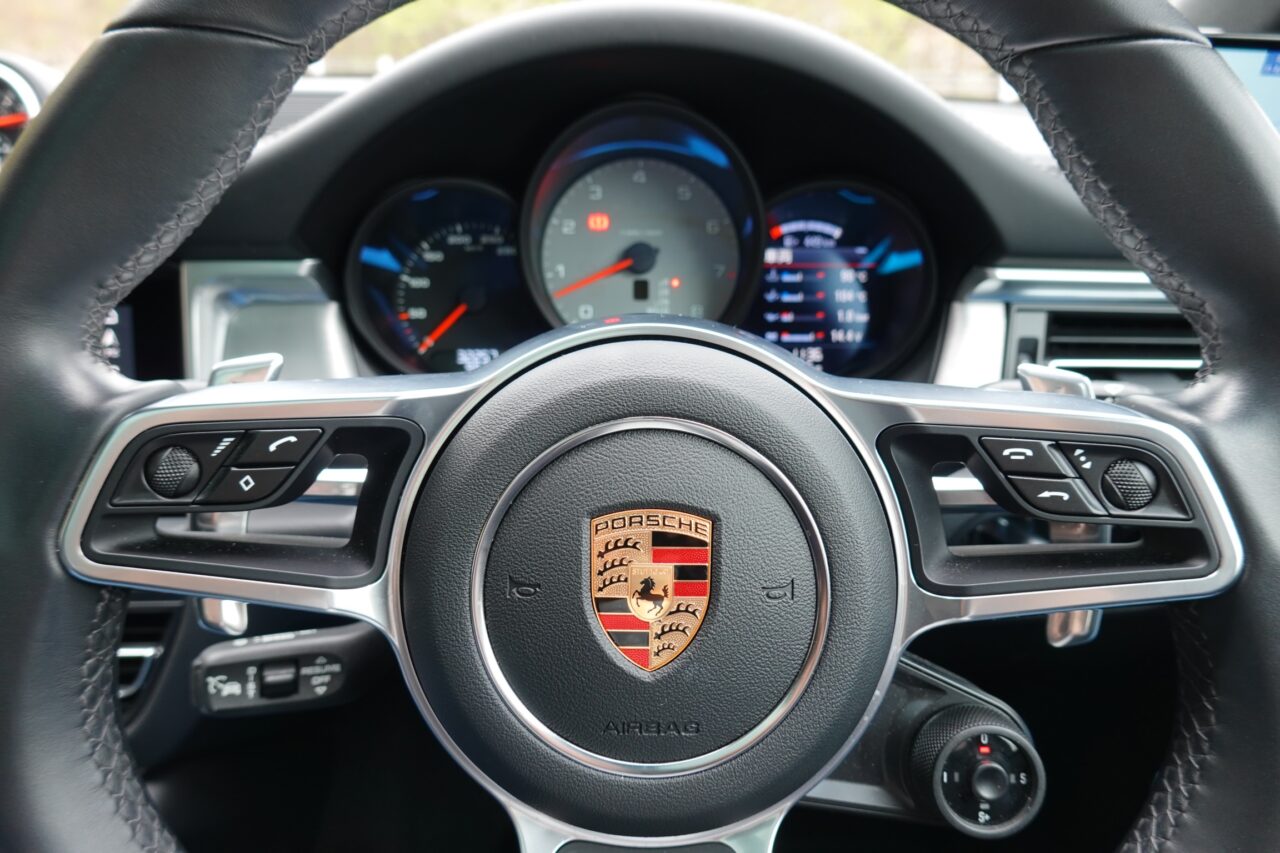
Watching the all-wheel-drive torque display in the instrument cluster, I noticed that the Macan seems to send more torque to the front wheels than a 911 Carrera 4 model does. In situations where I’d expect the 911 to be distributing torque at around 30:70, for example, the Macan sometimes showed a 50:50 split. It seems to favor the front wheels more readily.
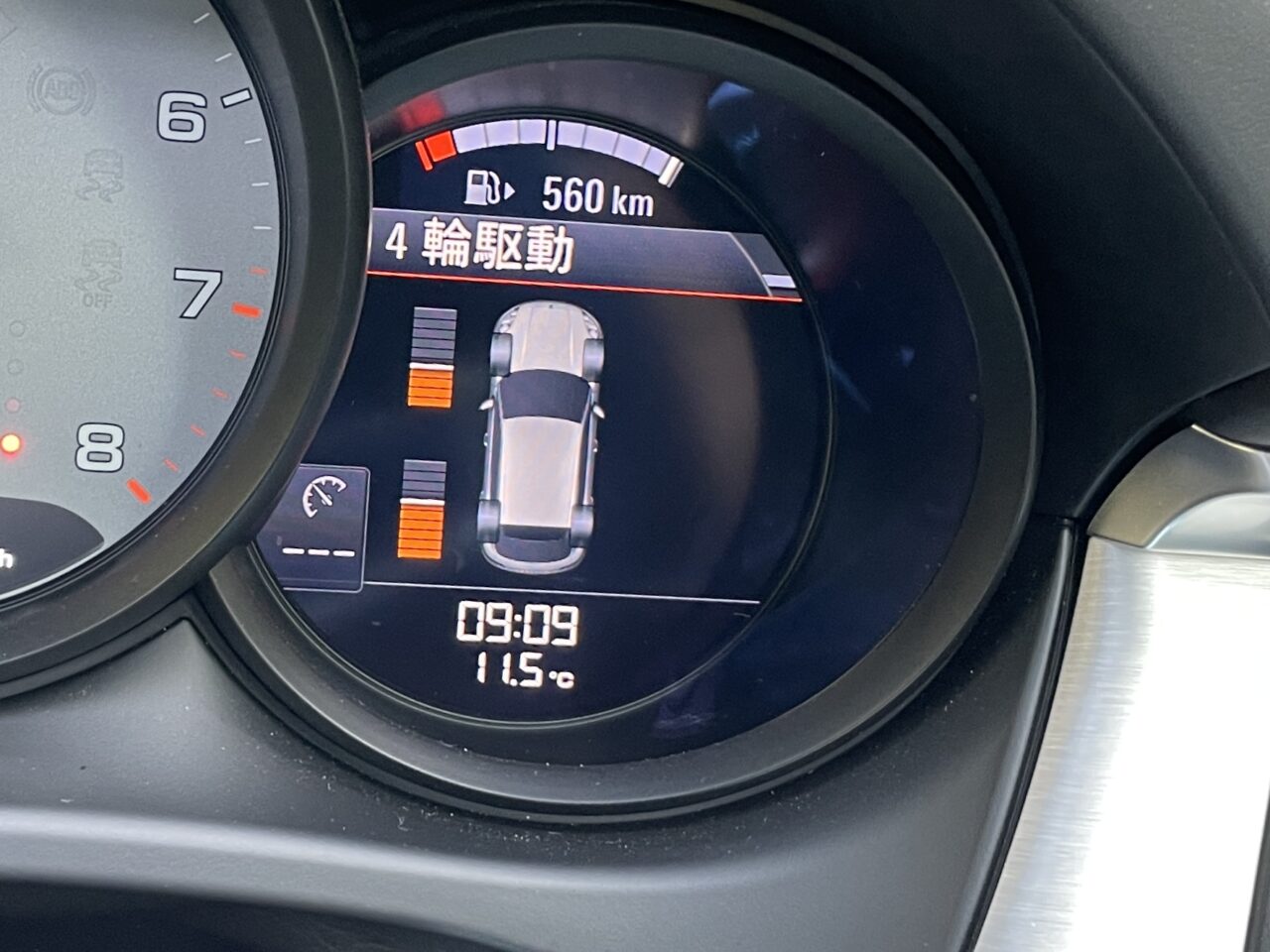
I didn’t notice any real downsides in the handling as a result, but unlike in a 911, the Macan does make you somewhat more aware that you’re driving an all-wheel-drive car. You sense it in the high level of stability and in how little the handling seems to be affected by weight transfer.
The brakes are excellent—not just powerful, but easy to modulate. They deliver the performance you’d expect from a Porsche, making the act of slowing down feel surprisingly rewarding.
A Note on the PDK
When it comes to the PDK, I’ll be honest: I prefer the earlier version.
It’s not that this PDK is inferior—in fact, it’s smooth and beautifully calibrated. But the shift sounds and rev-matched downshifts are so subdued that the earlier Macan’s dramatic “Is that a 911?!” gear-change cracks and its almost snarling blips are now a thing of the past.
Your view will depend on what you want from a Macan. But as someone who puts driving enjoyment first, I have to admit that this leaves me a little disappointed.
Final Thoughts
I found myself on a quiet stretch of Route 311, driving through fresh green scenery.
This was my first road trip in an SUV, but the Macan never felt boring. It’s genuinely fun to drive, and the kind of car you can spend hours behind the wheel of without getting tired of it. In fact, when traffic slows and you’re stuck behind a slower car, the Macan can seem to urge you on: “Come on, let’s move!” That’s one way it differs from the Cayenne.
So if you’re planning a road trip in a Macan, it’s worth choosing a route with plenty of open, flowing roads.
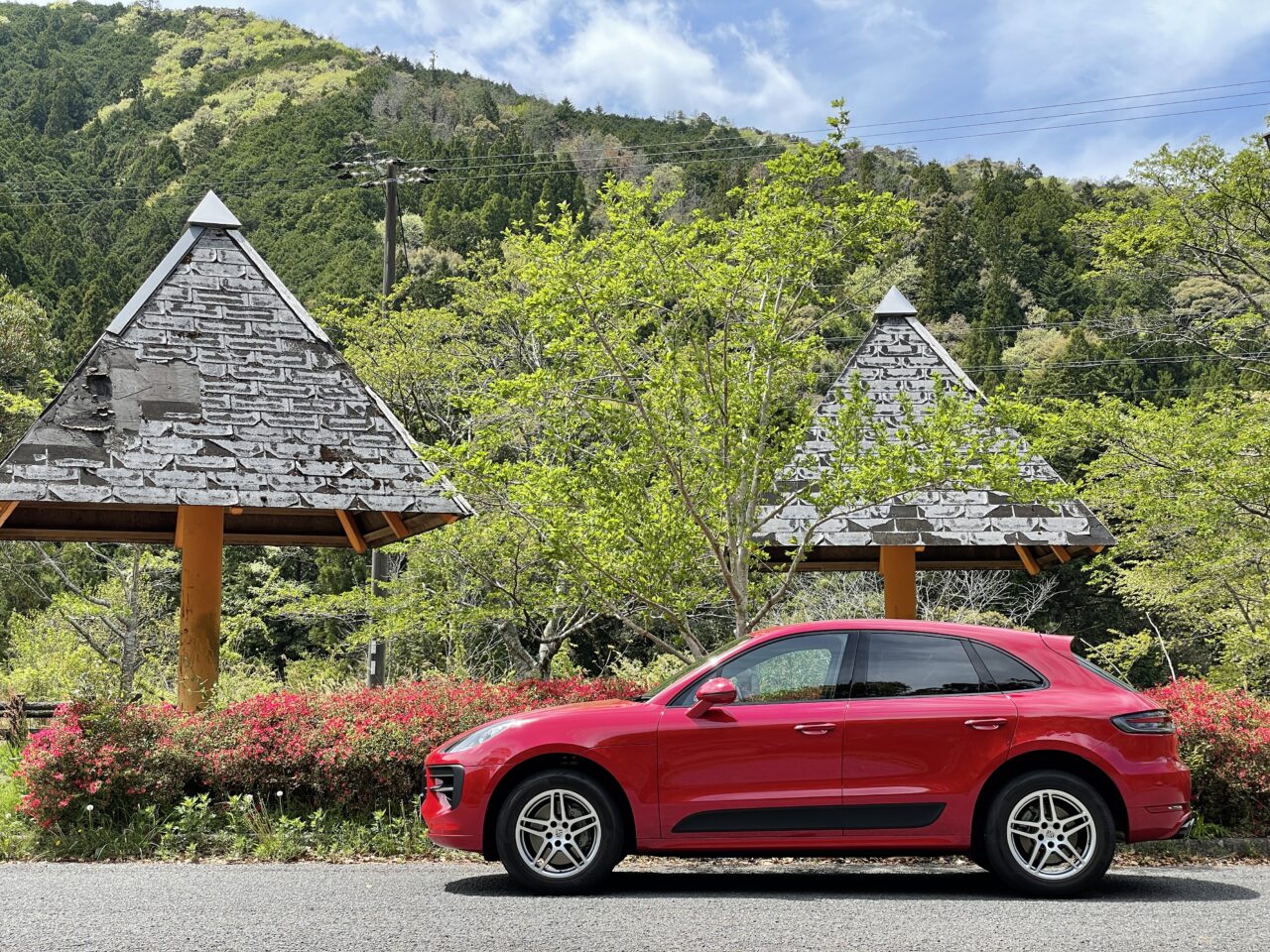
Can one Macan deliver the full Porsche driving experience? Not quite. It has plenty of Porsche character, but it still can’t match the driving thrills of a 911, Cayman, or Boxster.
That’s only natural, of course.
The differences come down to physical limitations on cornering speed and grip, as well as the way the engine’s location affects the car’s behavior.
Think of the Macan as a highlight reel or greatest-hits collection of Porsche. It offers more than enough to enjoy the story, but if you want the full feature, there’s always the 911, Cayman, or Boxster.
And if you’re in the mood for a different kind of story, the Cayenne and Panamera offer their own spin-off versions, with a stronger emphasis on luxury.
If I were buying a Macan, I’d use it like a personal coupe—commuting, running errands, and covering long distances for work. It’s versatile enough to handle just about anything, while still giving you the Porsche experience.
A Cayenne can feel a little too big, a Panamera a little too formal, and a 911, Cayman, or Boxster more focused on driving thrills than everyday versatility. The Macan strikes just the right balance for enjoying what makes a Porsche special.
That, to me, is the Macan.

If you enjoy this blog, follow along.
Comment ( 0 )
Trackbacks are closed.
No comments yet.