

What It Means to Travel in a Porsche | A 1,100 km Weekend Road Trip in a Porsche 911 (964), Part 2
Published: 2021.04.19
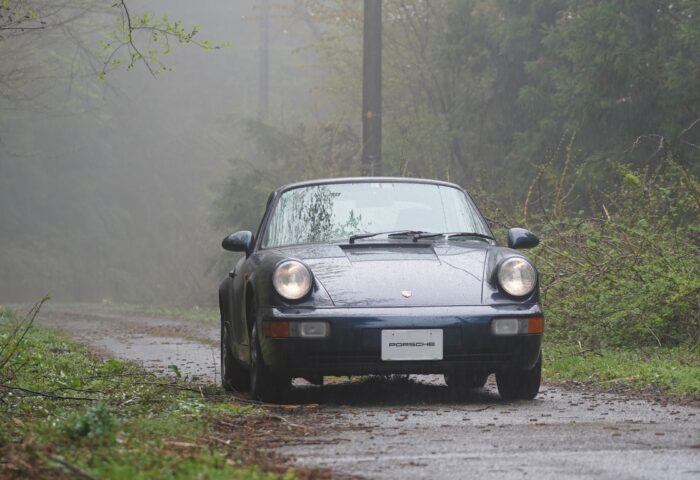

My husband recently took a road trip through Shikoku and the Chugoku region in an air-cooled Porsche 911 (964 C2), and he’s written the second part of the story. We hope you enjoy it.
Behind the Wheel of an Air-Cooled Porsche 911 (964)
The morning we woke up in Fukuyama brought less-than-ideal weather. The sky was heavy with clouds. The forecast called for torrential rain, but for now, it was still dry.
As soon as I’d finished breakfast at the hotel buffet, I got ready and set off before the rain began.
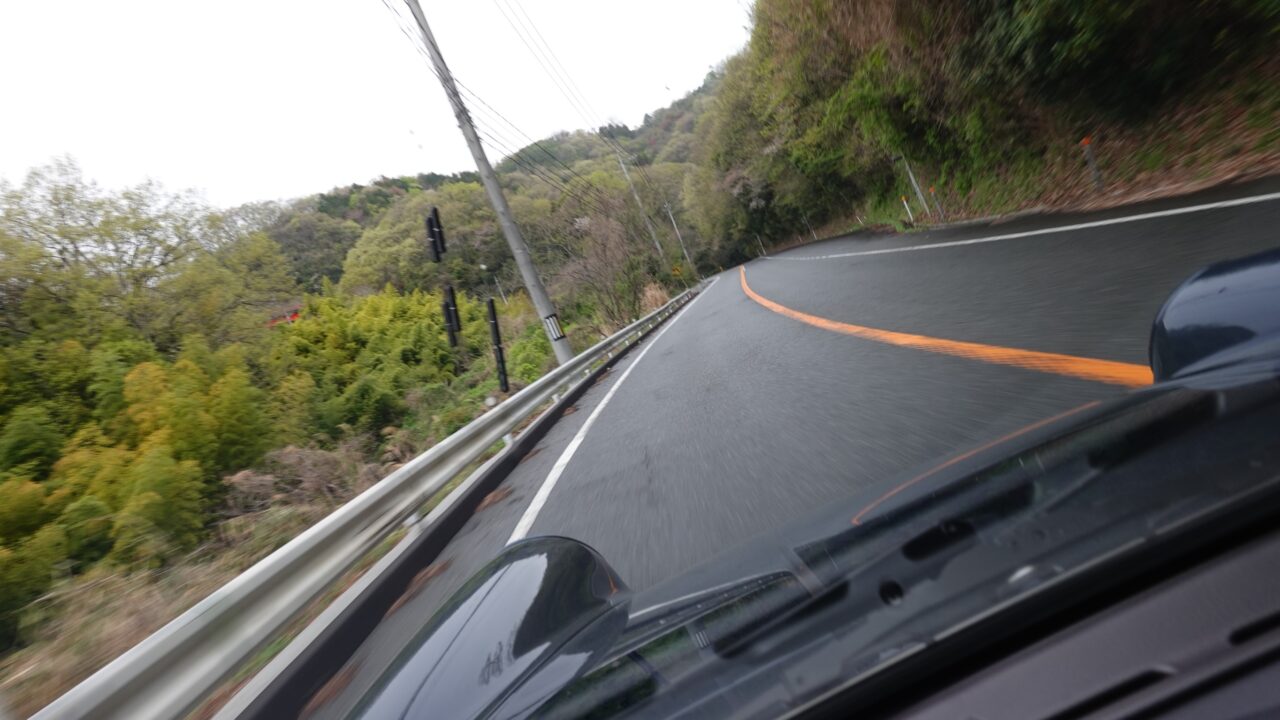
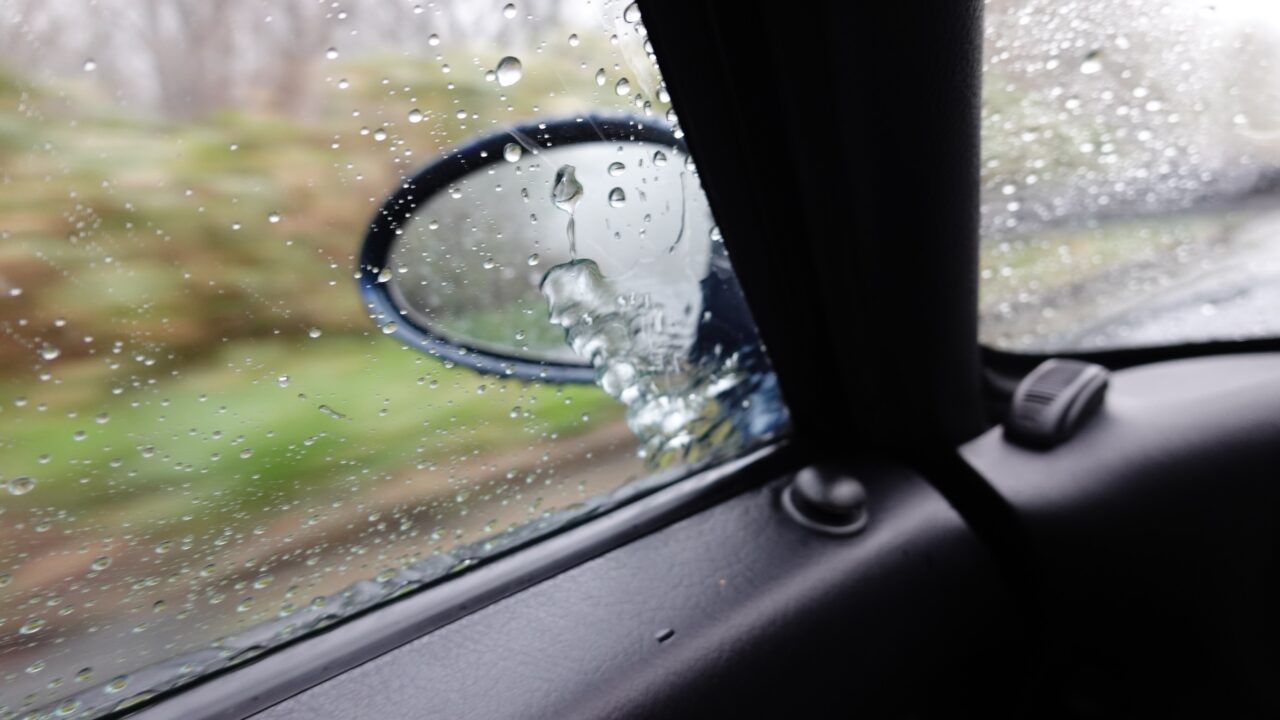
First, I headed toward Mount Daisen via Route 182. Route 182 is a fantastic road. Traffic is light, the pavement and road width are good, and the rolling elevation changes make it a pleasure to drive.
Along the way, the rain grew much heavier, with large drops pelting the windshield. Rather than worry about fuel economy, I locked the Tiptronic in third gear. I kept to my own pace and headed north along this superb country road in the pouring rain.
Near Tojo Interchange, I followed the Chugoku Expressway. The roads around here are a joy to drive, too. After turning left onto Prefectural Route 8, traffic all but disappeared, leaving the road feeling like it was mine alone.
This was another superb winding road.
I swept through the bends, working the Tiptronic so often that it felt almost like driving a manual. But the Tiptronic is impressively well engineered. For an automatic transmission of its era, it’s remarkably durable, and shifts are smooth, too.
It can’t match a modern automatic for shift speed, but there’s hardly any noticeable power loss. I’ve driven a manual 964 as well, and I honestly couldn’t feel anything like the difference suggested by the two cars’ published 0–100 km/h times.
That makes sense, since owners of the manual version have also told me they can barely feel a difference in power.
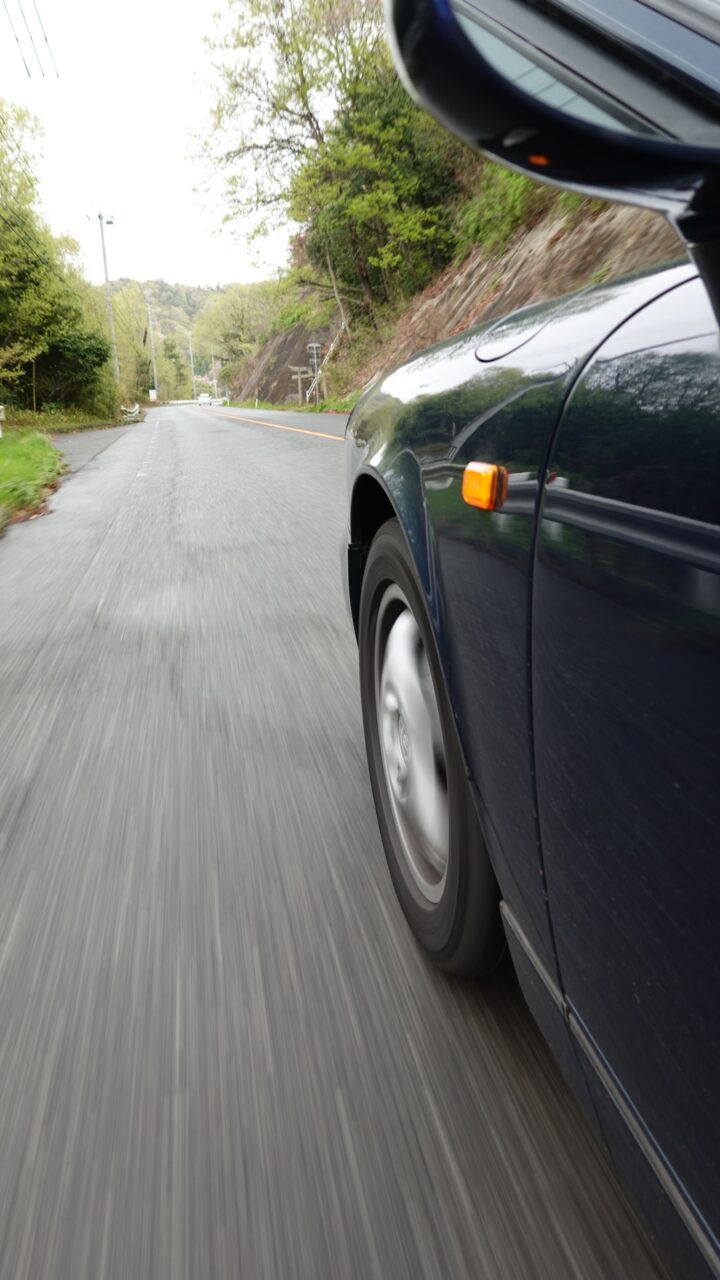
From Prefectural Route 8, I turned right onto Prefectural Route 210. Another excellent road. It felt like one you might find in Gifu or Nagano, and I’d love to drive it in the Boxster on a clear day. I stopped for a break at a wide pull-off. The rain was getting heavier still, and the parking area was filling with water.
Naturally, there was no one else around in weather like this.
How Does an Air-Cooled Porsche 911 (964) Handle in the Wet?
A question suddenly crossed my mind. The 964 had been handling the heavy rain with complete composure, but just how far could I push it before it started to slide?
With no one around, I locked the Tiptronic in first gear, then accelerated into a gentle turn to see how the car would respond. I’d tried this a few times in the Boxster and 992, but this was my first time doing it in a 964, which has neither PSM nor traction control.
In the Boxster and 992, turning off PSM and getting on the throttle will eventually bring on oversteer, and the car can spin. I expected the 964 to break traction even sooner.
But the 964 surprised me.
It actually held on better than the Boxster or 992. I’d expected the rear to step out sooner and the resulting oversteer to be difficult to control, but that wasn’t the case. The rear did slide, but it never swung around sideways. Instead, the car was remarkably easy to manage.
I was amazed.
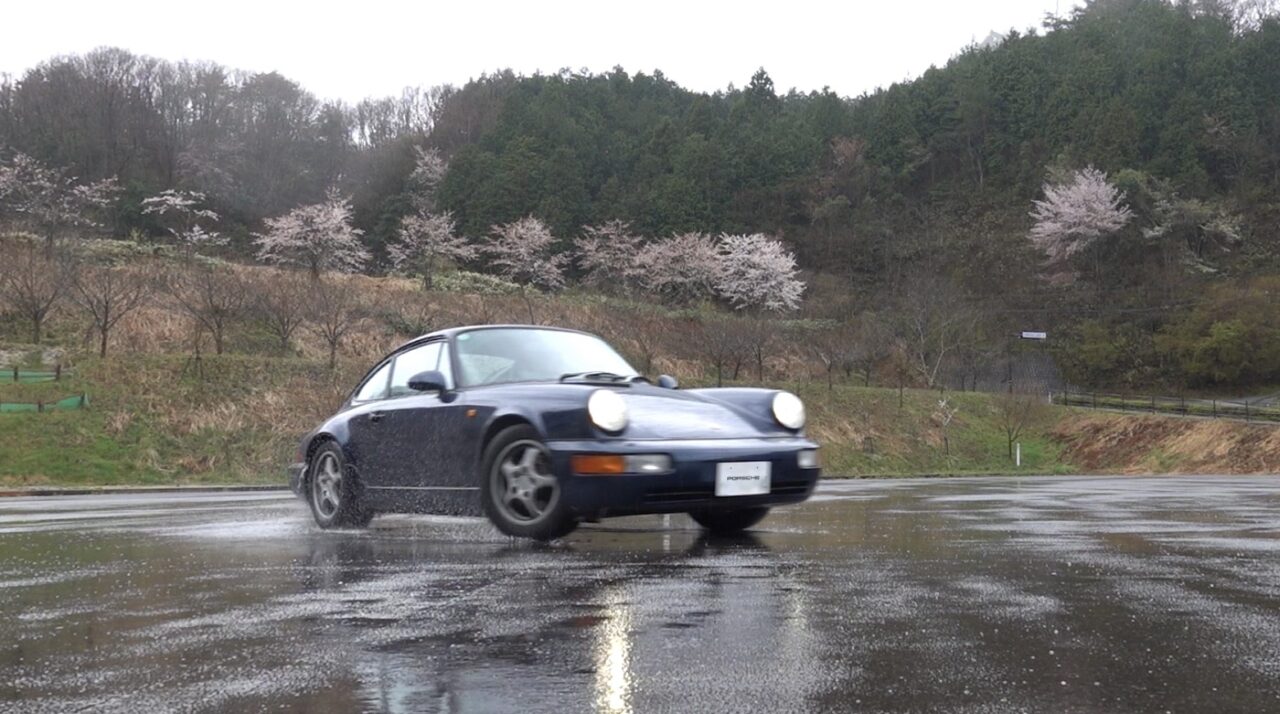
At first, as I gradually increased speed, I could feel the front tires begin to slide and the car push into understeer. Easing off the throttle shifted weight onto the front tires, and the car began to turn in sharply. You might expect the heavy rear end to swing outward on a soaking-wet surface, but it wasn’t that easy to unsettle.
I tried a few different things, but getting the car to turn fully sideways was extremely difficult. Even once it started to slide, applying the throttle brought it back to stability, and even if I just left it alone, it was surprisingly reluctant to spin.
The 964’s stability and ease of control were astonishing, despite having neither PSM nor traction control. It finally clicked why the car had felt so reassuring, even in such heavy rain.
For context, the car was running 16-inch Michelin Pilot Exalto 2 tires, Porsche-approved, with about 60–70% of their tread remaining. The suspension had been almost completely replaced and was close to new-car condition. It hadn’t been lowered; the setup followed the specifications recommended by Porsche’s Weissach Development Center, so these were the car’s characteristics in essentially factory-standard trim.
An Air-Cooled Porsche 911 (964) Heads for Hiruzen
Next, I joined Route 180, following the Hino River with the Hakubi Line running alongside. I kept enjoying the drive, but there are almost too many great roads around here. Every one is easy to drive and a pleasure to be on. I continued north, taking it all in, until I finally reached the Daisen Loop Road.
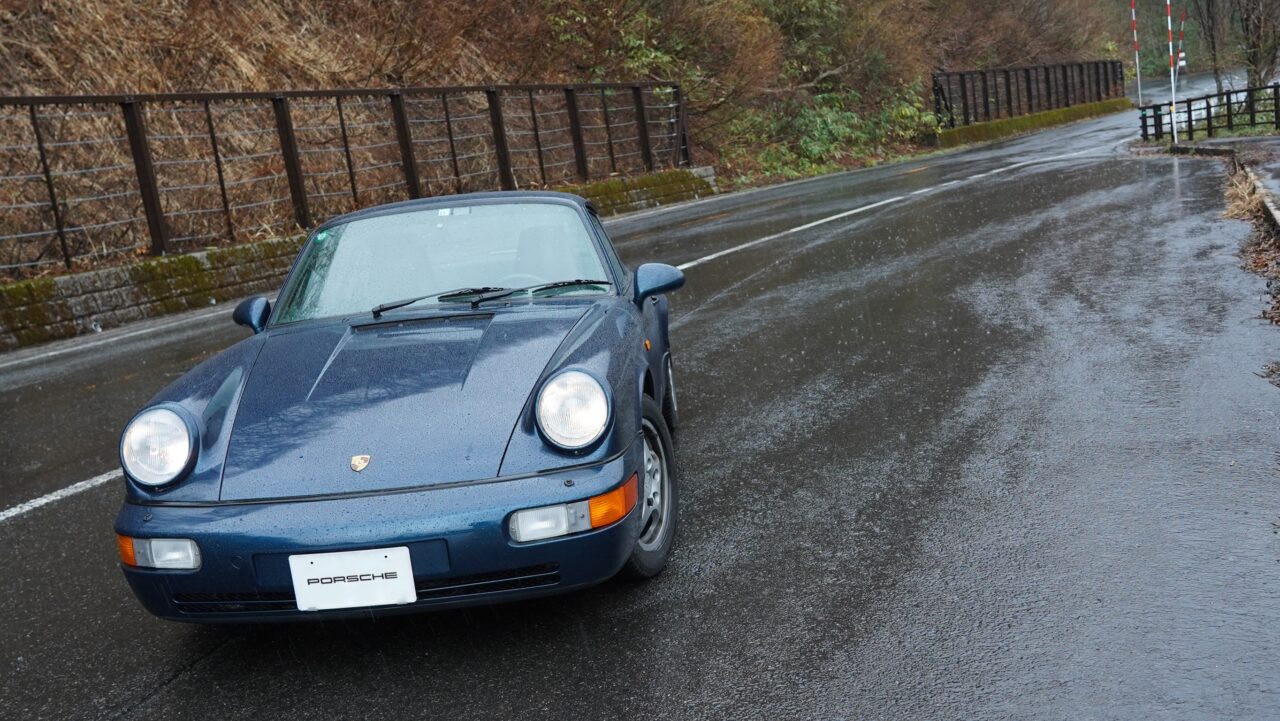
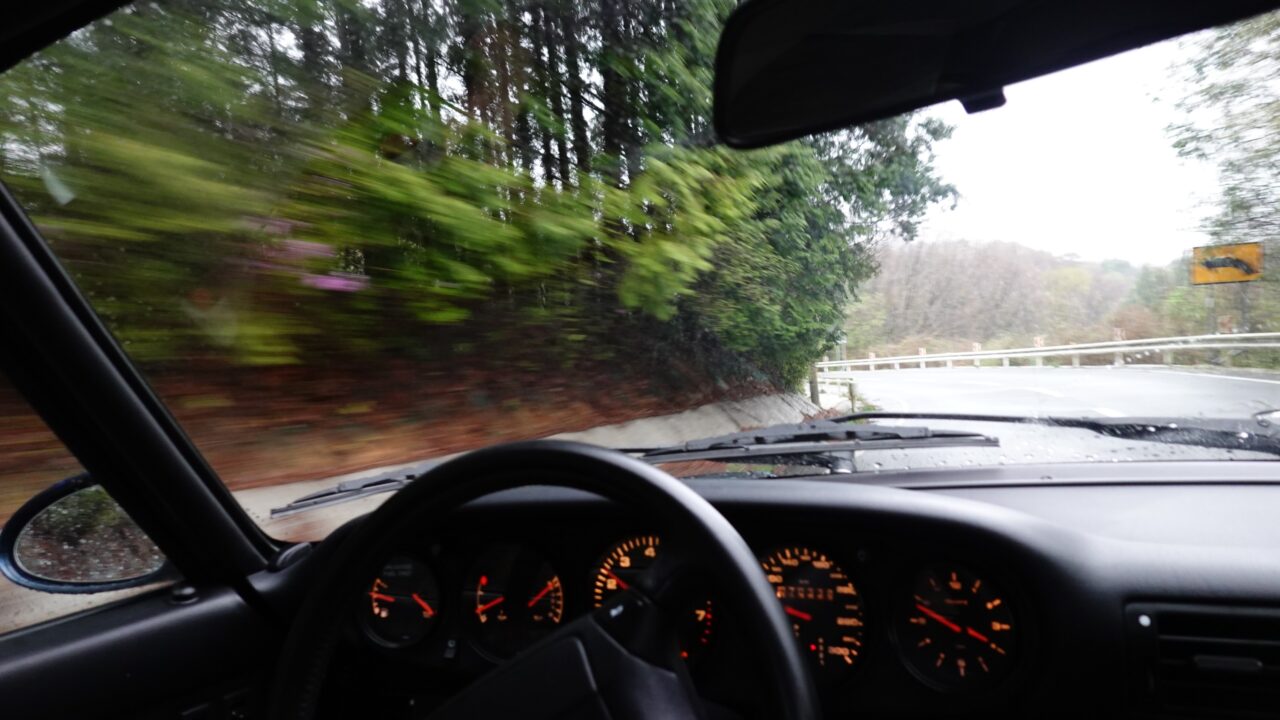
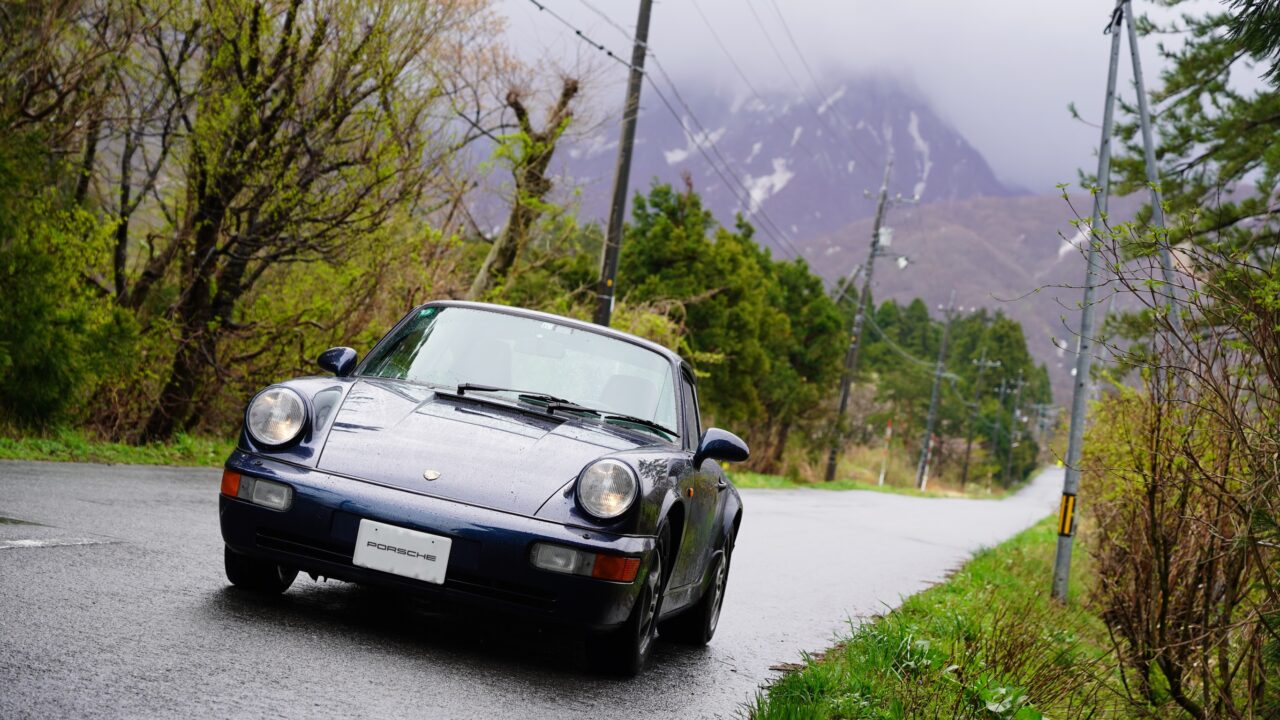
On a typical weekend, this road is packed with tourist traffic and almost impossible to enjoy properly. But apparently, not many people are keen to drive in rain like this. So I had the road practically to myself.
I’d often thought, “This would be such a fun road if there were just fewer cars.” Now that wish had come true. A rainy-day drive isn’t so bad after all.
I started by driving clockwise around Mount Daisen. One glorious uphill bend after another stretched ahead, while the air-cooled flat-six roared through the mountain roads. I took a few side roads along the way and hoped to make a full circuit of Daisen, but unfortunately, the road was closed for the winter. I turned back and began retracing my route in the opposite direction.
Next, I pointed the Porsche toward the Hiruzen Highlands and headed south along the Hiruzen-Daisen Skyline. With the road completely empty, the drive was unbelievably satisfying. When you have a road all to yourself, even the rain is fun.
Even in a downpour like this, the Michelin Pilot Exalto 2 offers excellent wet grip. The 964 simply doesn’t have enough power to overwhelm the tires, so even under hard acceleration or through fast corners, it feels reassuringly sure-footed.
The Goodyear Eagle F1 Asymmetric 2 tires I used to run on my Boxster GTS also had fantastic wet grip, and the Michelins are every bit as good.
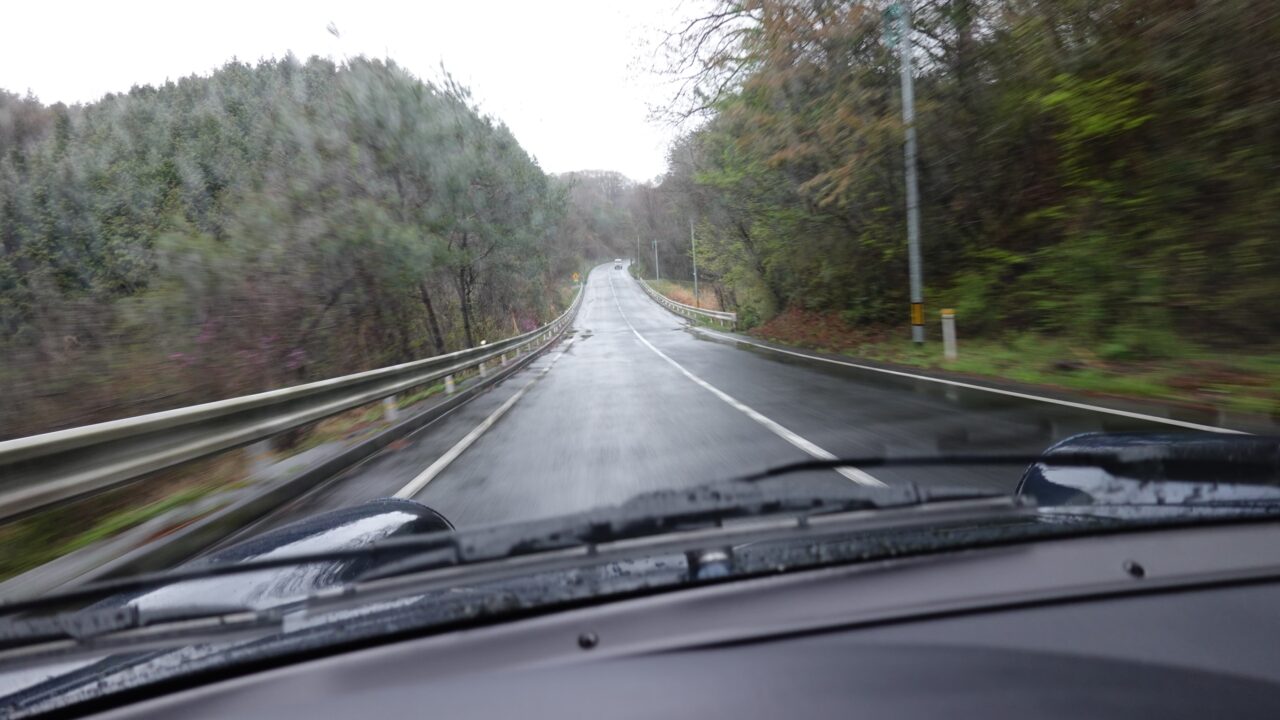
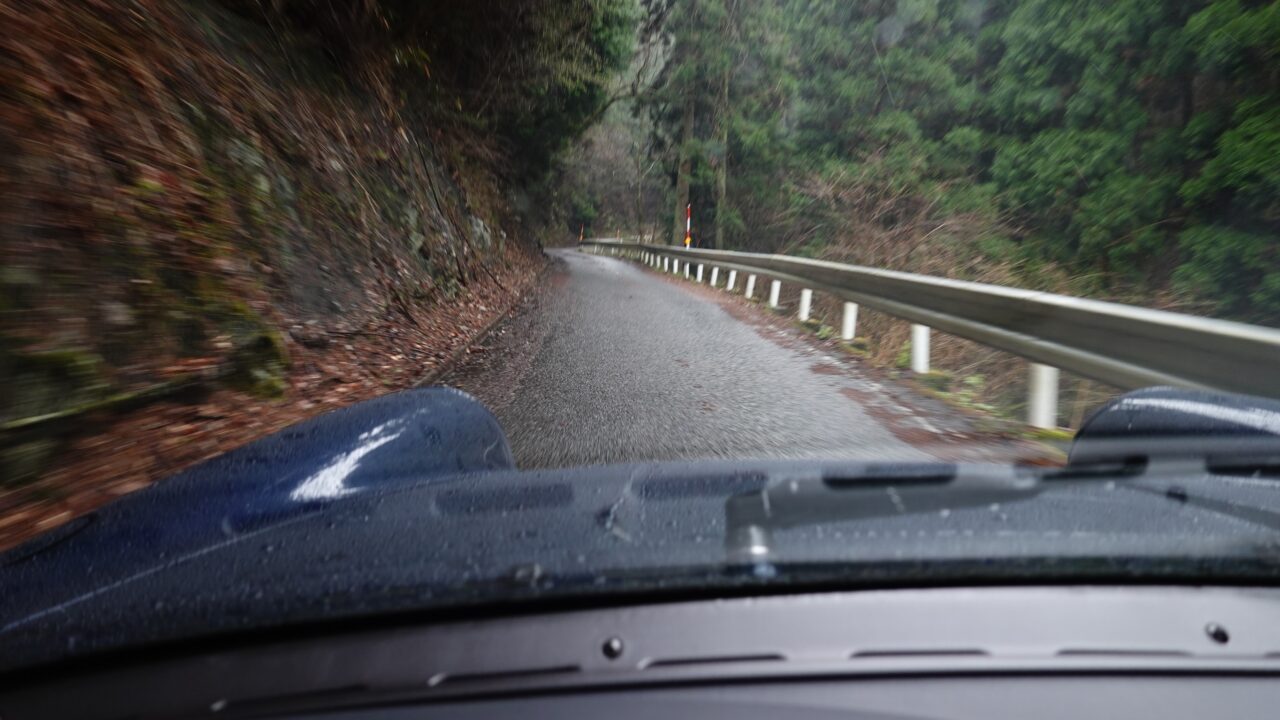
After a break at Hiruzen Kogen Center, I headed south on Prefectural Route 58 toward the Oku-Kibi Kaido. Route 58 has a striking contrast between its newly paved, widened sections and its narrow stretches. The newer sections are a dream to drive, but the road narrows to one to one-and-a-half lanes through the mountains, and oncoming traffic is more common than you might expect, so take care. If you’re not comfortable on narrow roads, I’d avoid this one.
Since tackling Kyushu’s most intimidating “koku-dō” (a notoriously narrow, challenging national road), Route 265, at the end of last year, I seem to have gained a steely resolve through my training. These days, ordinary narrow roads and even most “koku-dō” don’t faze me at all. (Laughs.)
Okayama has several excellent regional farm roads. Among the best known are Mimasaka Yamanami Kaido, Oku-Kibi Kaido, and Kagura Kaido. These roads are such a joy to drive that Wata’s blog calls them “heavenly highways.”
They’re astonishingly good driving roads—among the best in western Japan, and quite possibly the whole country. The Nara Nürburgring in Kansai has a similar feel, but, with all due respect, these roads are on another level. They really are that good.
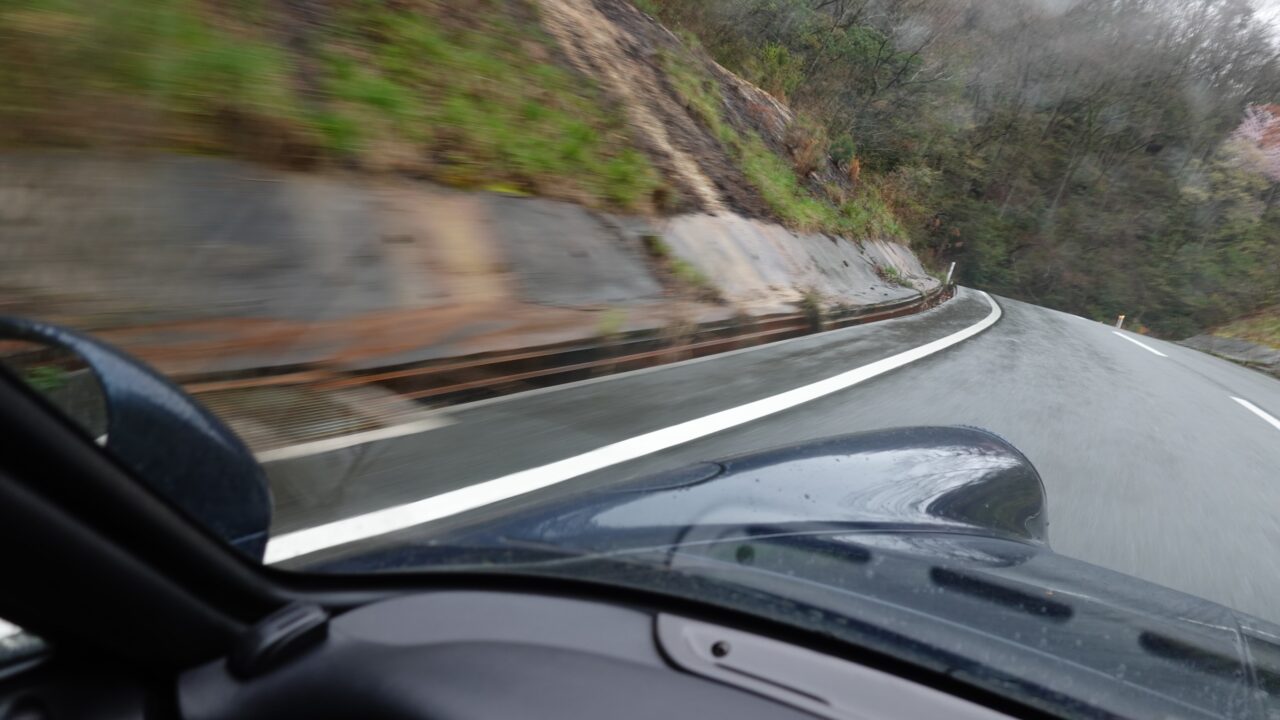
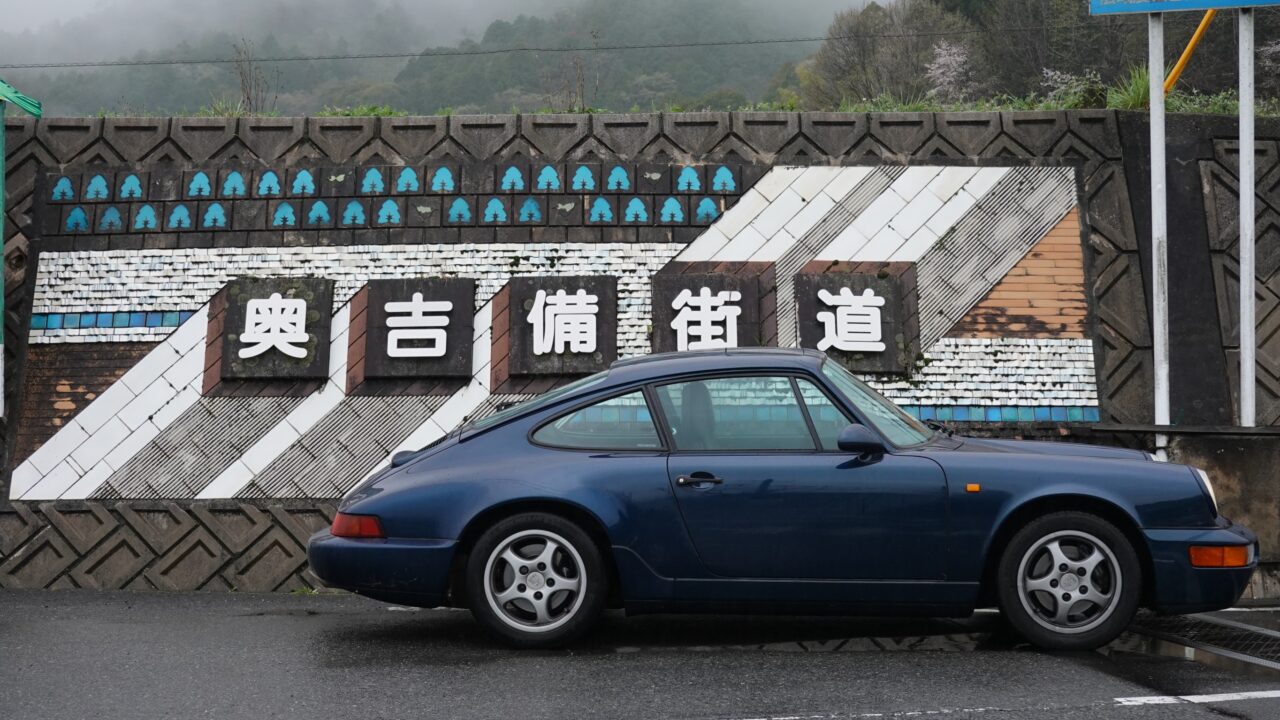
The Oku-Kibi Kaido runs from point H to point I on the map below. There’s virtually no traffic along this stretch. And when there is a car ahead, it’s easy to pass, so you can keep your own pace. The road is mostly rolling hills and medium-speed bends, with excellent pavement.
It’s also long enough to make you wonder, “Is this road ever going to end?” I kept the 964 in third gear for most of the way, occasionally dropping into second as I carved through the mountains.
It hardly needs saying, but driving a Porsche is an absolute joy. On a superb open road like this, everything that makes a Porsche special shines even brighter. The brakes are world-class and incredibly easy to modulate, the engine sounds fantastic, and the car responds directly to your driving inputs. It’s a thrill.
After enjoying the Oku-Kibi Kaido, I took Route 484 and headed onto the Mimasaka Yamanami Kaido. I introduced this wonderful road in my previous Boxster road-trip article, too. It’s a little straighter and makes for easy, flowing driving.
Here, I kept the pace relaxed and focused on feeling how the Porsche responded. I turned the steering wheel gently, aiming to drive smoothly and quickly, and savored every moment on this final great road of the trip.
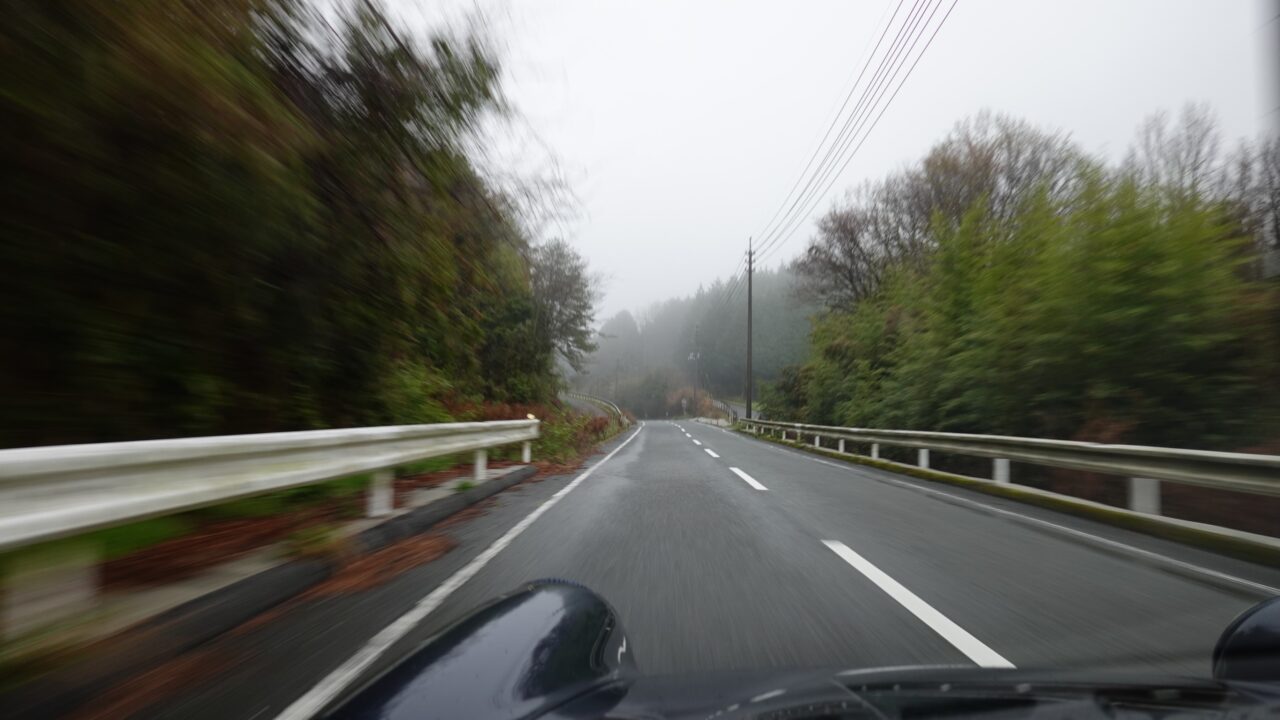
I started the drive home from Tsuyama Interchange. By the time I passed Kasai Interchange, the sun was peeking through the clouds. The 964, which was approaching its 30th anniversary, had covered about 1,100 km without a single issue.
A Porsche strikes me as a wonderful car for road trips. It combines outstanding performance with a comfortable ride, and there’s plenty of room for luggage. It can feel like a grand tourer, yet show its world-class cornering ability the moment you push into a bend. Or you can simply let the car carry you along at a relaxed cruising pace. It responds as naturally as an extension of your own body, and every movement feels just right.
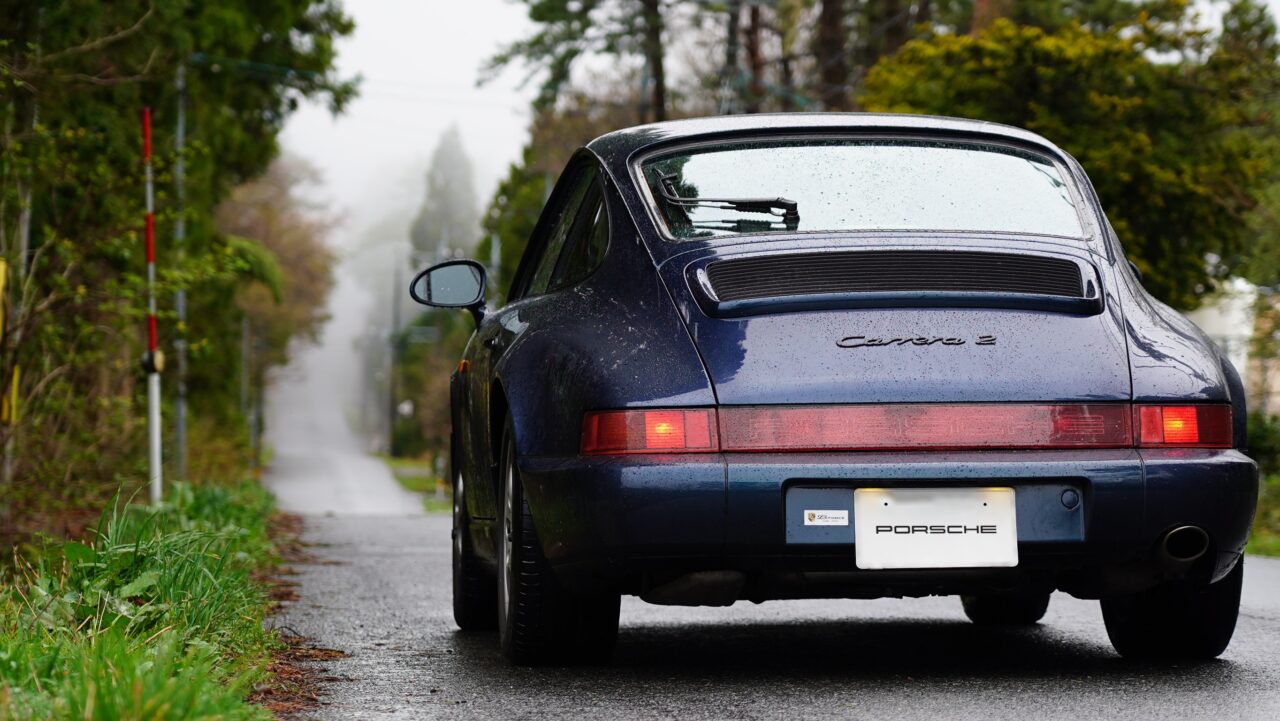
And somewhere along a long journey, you realize you’re not simply traveling in a Porsche—you’re traveling with it. That, to me, is what it means to take a trip in a Porsche.
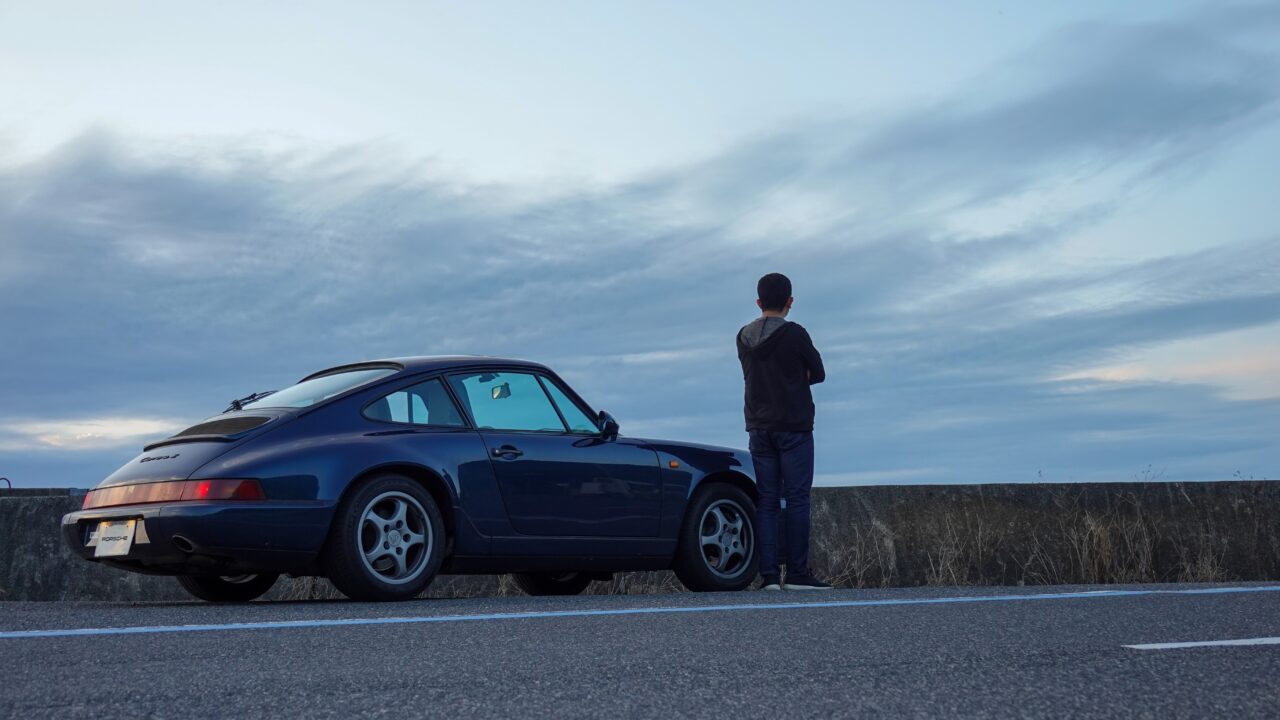
The trip covered 1,110.9 km in total, at an average speed of 58 km/h, with fuel consumption of 11.5 L/100 km (about 8.7 km/L).
If you enjoy this blog, follow along.
Comment ( 0 )
Trackbacks are closed.
No comments yet.