

Touring Okayama’s Regional Farm Roads in a Tesla: Is a Tesla Road Trip Really Fun?
Published: 2024.06.23


コンテンツ
Living With a Tesla Model 3: First Impressions and Everyday Use
It’s hard to believe that my Tesla Model 3 has already been with us for a month.
I’ve gotten used to the controls and now drive it without a second thought. I’m still impressed by how convenient it is. Just get in and press the brake pedal: the car automatically selects Drive or Reverse, so there’s no need to shift gears. For a quick stop at a convenience store, I can lock the car while leaving the climate control running. And when I get out, there’s no power button to press—I just take my phone and go.
The list goes on, but the Model 3 really is remarkably convenient.

As an everyday car, I don’t know another vehicle this convenient and comfortable. It feels as though someone threw out all the assumptions about what a car should be and designed one from scratch.
But what’s a Tesla like on a long-distance drive? Is touring in one genuinely fun, or does it get boring? Would I end up wishing I’d brought a Porsche instead? To find out, I set off on a day off for Okayama’s network of regional farm roads, including the route nicknamed “Ascension Highway.”
Putting Tesla Autopilot to the Test
I leave home in the morning with the battery charged to 80 percent. My Model 3 is the Long Range version, and because it uses an NMC battery, charging to a maximum of 80 percent is recommended for everyday use. That’s why I usually keep it at 80 percent.
It’s about 160 km to Okayama, so I settle in for the drive along the Sanyo Expressway with Autopilot engaged.
This is my first time using Autopilot extensively, and it’s easier to use than I expected. Some YouTube videos—particularly those that favor Japanese automakers—have given me the impression that it doesn’t rate highly. In practice, though, I’ve found that it works very well.
It delivers consistent performance across different road types and weather conditions, through curves and tunnels, without seeming to be affected by GPS accuracy. Rather than simply steering as an extension of lane-keeping assist, as other systems do, it feels like what the name promises: Autopilot, with the car itself actively taking on the task of driving.
It keeps trying to negotiate even fairly sharp curves instead of giving up, and it quickly picks up on the movements of cars ahead and to the side. Even when another vehicle cuts in, it slows down and responds smoothly.

You do need to keep a hand on the steering wheel, but the system isn’t as strict as those in some other cars. All I need to do is rest one hand lightly around the four-to-five o’clock or seven-to-eight o’clock position, with enough weight to take up the slack in the wheel. In fact, holding the wheel firmly with both hands can make the torque more evenly balanced and trigger a warning more easily.
I usually rest my elbow on the door armrest and lightly hold the wheel at around four or five o’clock with my right thumb and index finger. The system doesn’t tell me to let go or grip the wheel depending on the road, so I can stay relaxed in the same comfortable position for the whole drive. It’s genuinely easy. Compared with the Active Distance Assist DISTRONIC in my previous Mercedes GLB, Tesla’s system is in a different league.


Tesla’s NACS connector is compact, supports charging at up to 250 kW, and requires no authentication—you simply plug it in. By contrast, Japan’s CHAdeMO cables are very thick and heavy, and the authentication process is more complicated.
With Autopilot doing much of the work, I make my way to a Tesla Supercharger (SC) in Okayama City. I still have plenty of battery, but I want to enjoy the farm roads without worrying about range and keep the return trip in mind, so I decide to charge here.
The Supercharger is close to the city center, occupying part of a paid parking lot.
The battery is at 47 percent when I plug in. I grab lunch nearby, and by the time I return, it’s at 90 percent. Since the battery still had a good amount of charge, the charging speed wasn’t particularly high, so the stop took about 30 minutes.
Driving the Oku-Kibi Kaido in a Tesla
From here, I head north toward the celebrated Oku-Kibi Kaido.
On the way, I also enjoy a stretch of the Kibi Kogen Kaido near Okayama Airport. I normally drive my Tesla in Comfort mode, but for this outing I switch to Standard and set the steering to Sport.
The accelerator response changes so dramatically that it feels like a different car. The transformation is even more striking than switching a Porsche to Sport Plus mode.

A firm press of the accelerator sends the car surging forward with a powerful shove of G-force. It makes no difference whether you’re climbing a hill or driving on level ground. The way throttle input, acceleration, and speed line up so directly is something only an EV can deliver. No V8 or V12 can match this kind of instant response.
I cruise along the rolling farm roads, enjoying acceleration that feels like second gear in a GT3—only delivered in near silence and without drama.
The Model 3 is impressively precise through corners, too. Its steering has very little slack, and the car feels exceptionally neutral. That makes it a real pleasure to drive.
The suspension, however, isn’t tuned like a sports car, so it can’t match a Porsche near the limit. Its softer setup does help keep the tires planted in a wide range of conditions, making the car feel composed. Also, the 18-inch wheels are fitted with Michelin e.Primacy tires, which don’t inspire quite as much confidence in terms of grip. They’re fine for normal spirited driving, but take care when carrying more speed and lateral G through a tight corner.

Once I reach the Oku-Kibi Kaido, I meet up with a friend from my Porsche circle. He drives a 992 Turbo S Cabriolet, and when he takes the Model 3 for a spin, his first reaction is: “It’s faster than the Turbo S!”
It really is quick. Coming out of a corner, the Model 3 clearly wins when it comes to acceleration.
Of course, once speeds climb, it can’t compete with the Turbo S’s acceleration. But up to that point, the Tesla’s response and instant shove are in a league of their own.
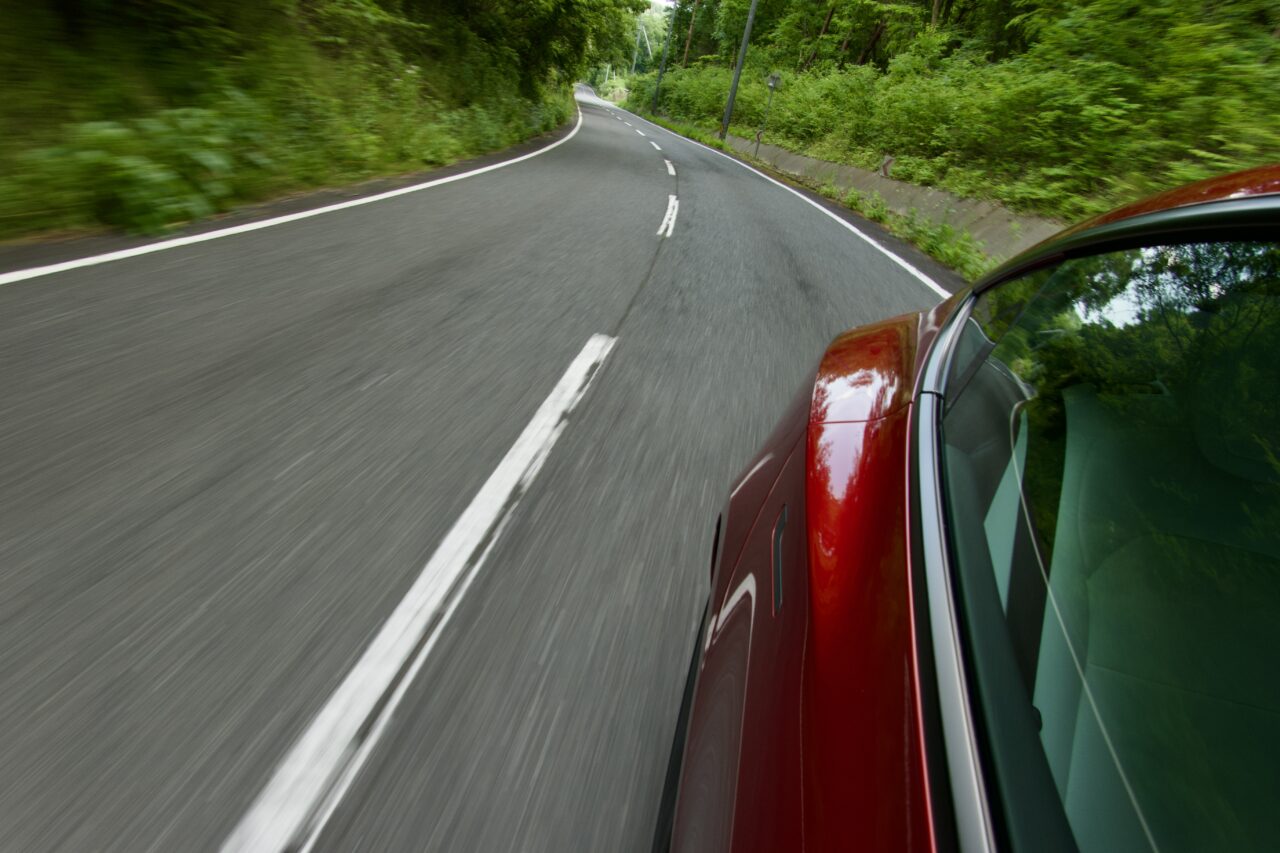
I also spend time enjoying the Oku-Kibi Kaido on my own. At one point, though, I realize the acceleration is so intense that I’m starting to feel a little carsick. It reminds me of playing a racing game in a VR headset. The cabin is quiet and calm, yet powerful G-forces arrive again and again, almost instantly. It feels as if my brain is getting confused by the mismatch between what I see and hear and what I feel as the car accelerates.
I feel better after a while, but it occurs to me that Comfort mode might be the more enjoyable choice on a longer drive.
Tesla vs. Porsche: Two Different Kinds of Road Trip
As evening falls, I get back on the Sanyo Expressway and head home.
I have plenty to think about on the drive back. Touring in a Tesla and touring in a Porsche each have their own sweet spot—and the kind of fun they offer is quite different.
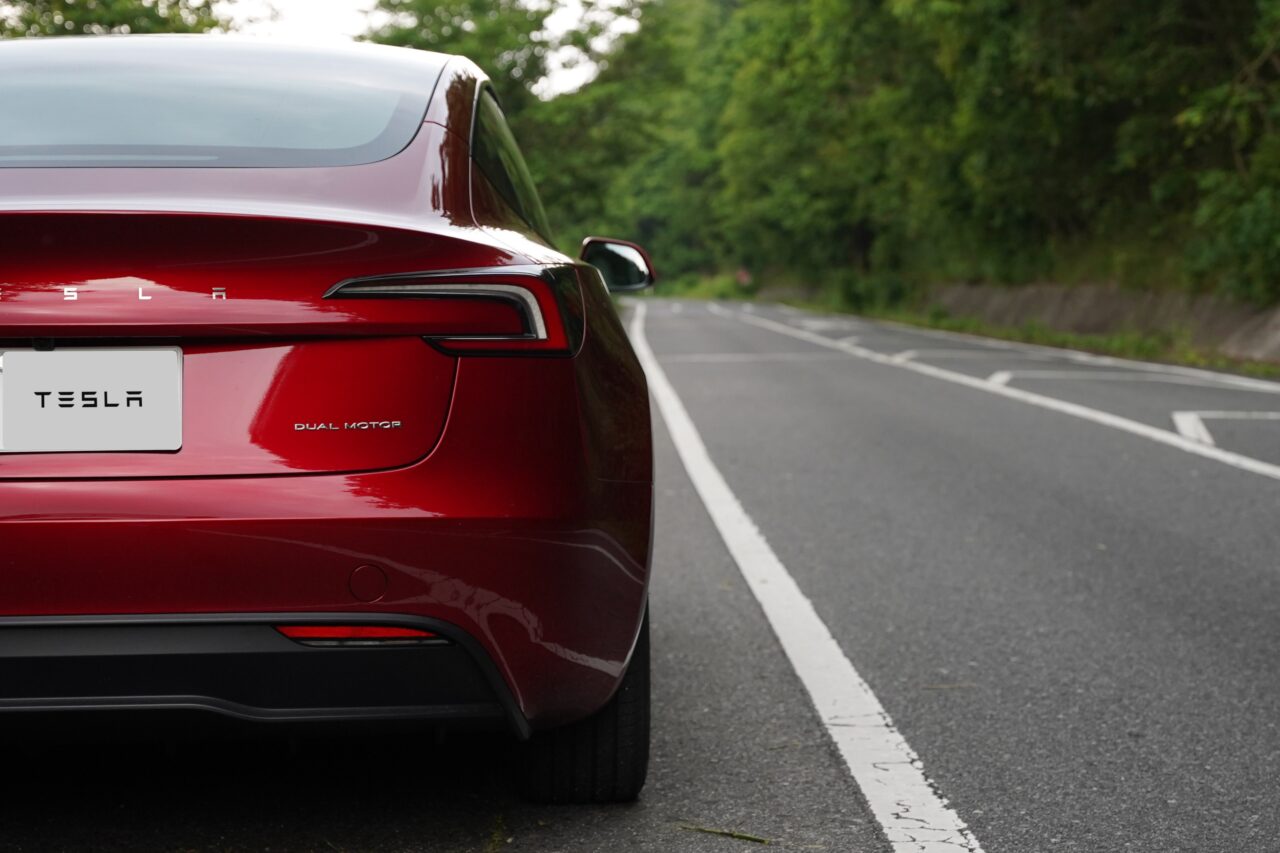
For me, a Porsche road trip is all about the twisty roads and open stretches where I can enjoy the sound, engine power, and unmistakable Porsche handling. The drive to get there—and time spent on the highway—often isn’t as engaging.
A Tesla, on the other hand, makes the whole journey enjoyable, including the expressway and the ordinary roads leading to the twisties. Planning a stop at a Supercharger becomes part of the trip, too—another experience to enjoy along the way. The Model 3 is plenty of fun on winding roads, but it’s so quick that it takes some getting used to.
So even though both are road trips, they’re enjoyable in different ways. For me, touring in a Tesla has more in common with a motorcycle tour.

On a motorcycle, almost any road can be fun as long as you’re not stuck in traffic. The acceleration feels similar, too, and—just as with a motorcycle—you can’t take tight corners as fast as you can in a car. Motorcycles also have a more limited range, so you need to plan fuel stops to some extent. That’s much like planning Supercharger stops in a Tesla. A little challenge or extra planning can make a trip more fun.
I plan to take the Tesla on more long-distance drives whenever the opportunity comes up. It’s definitely not a car that makes touring feel dull or makes you reluctant to hit the road. Touring in a Tesla can be a lot of fun. Still, it feels like a car better suited to “travel” than to touring for touring’s sake.
For reference, I’ve included my Tesla referral link below.
It can help lower the vehicle price, so it’s worth using. If you’re thinking about buying a Tesla, don’t forget to check it out.

If you enjoy this blog, follow along.
Comment ( 0 )
Trackbacks are closed.
No comments yet.