

Porsche Panamera Gas Models to Stay in Production: The Future of a Luxury Sports Sedan Defying the Shift to EVs
Published: 2024.08.31

コンテンツ
Porsche Panamera to Offer Three Powertrains Side by Side
Porsche’s four-door grand tourer, the Panamera, is set to join the shift toward electrification.
But that doesn’t appear to spell the end for gasoline-powered models. According to automotive publication Autocar, Porsche plans to introduce an all-electric Panamera while continuing to produce gasoline and hybrid versions. All three powertrains are expected to coexist into the 2030s.
Porsche Continues to Invest in Combustion Engines
Michael Steiner, Porsche’s head of research and development, discussed the company’s electrification strategy in an interview with Autocar. While the Taycan, Macan, and next-generation 718 will be offered exclusively as EVs, the Cayenne and Panamera will continue to be available with gasoline engines, either on their own or paired with hybrid systems, for some time to come.
Steiner said:
“The new Cayenne will be fully electric, but we will offer combustion-engine models alongside it throughout its entire life cycle. The same applies to the Panamera. We have also just announced an updated Porsche 911 with a hybrid powertrain.”
What Makes the Latest Panamera Special
The current third-generation Panamera was unveiled just last fall. It features a refined design and a new air suspension system, with Porsche Active Ride available as an option. The most powerful gasoline model, the GTS, packs a twin-turbocharged 4.0-liter V8 producing 500 horsepower. At the top of the hybrid lineup, the Turbo S E-Hybrid pairs an electrified version of the same engine with electric power for a formidable 782 horsepower.
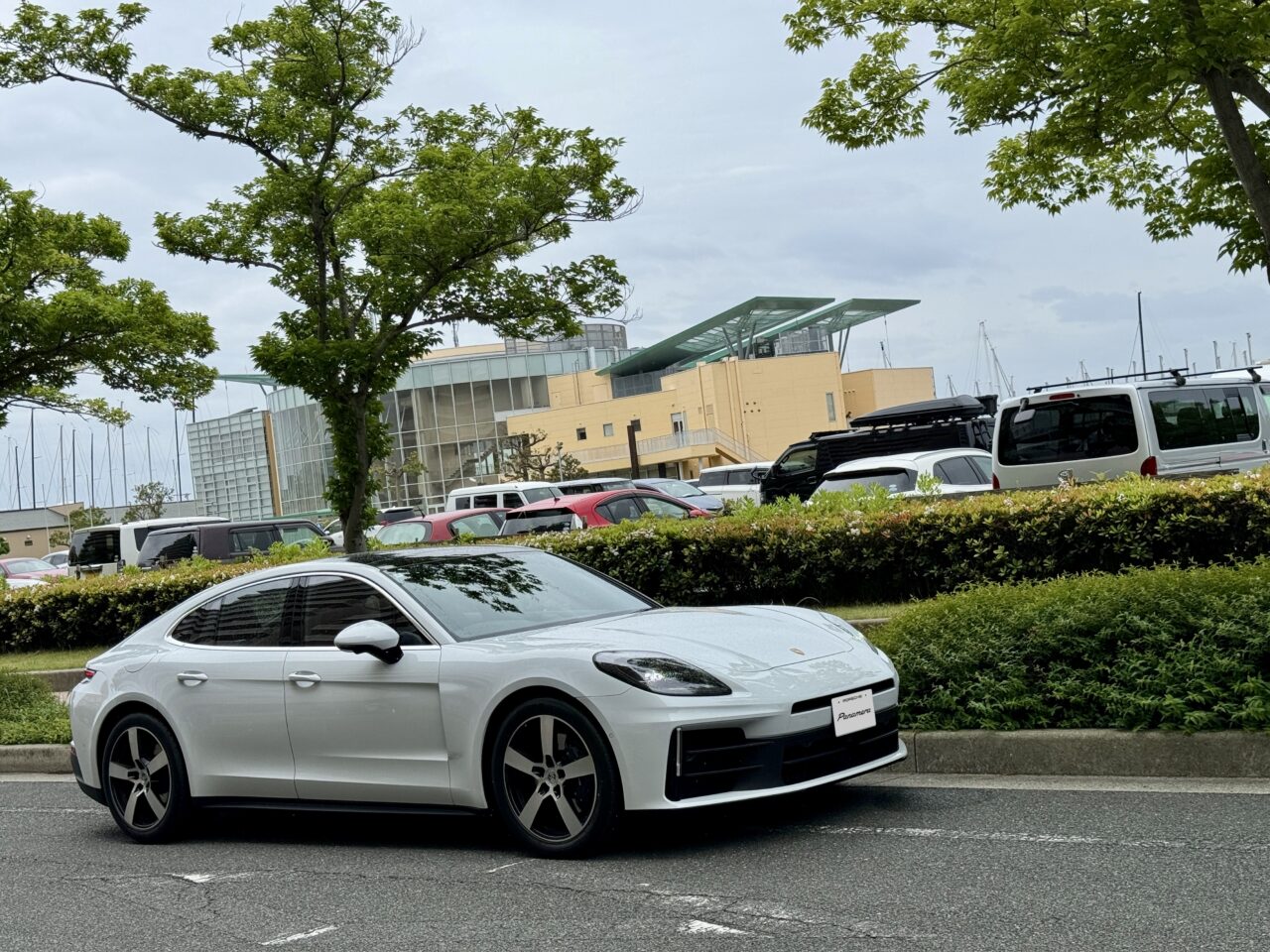
The GTS accelerates from 0 to 100 km/h in 3.8 seconds and reaches a top speed of 302 km/h. The Turbo S E-Hybrid is even quicker, sprinting from 0 to 100 km/h in just 2.9 seconds and reaching 325 km/h. These figures make clear that the Panamera is a high-performance sedan with sports-car DNA.
Porsche’s Electrification Strategy and What Lies Ahead
Porsche plans to keep producing gasoline and hybrid versions of the Cayenne and Panamera, while pursuing the ambitious goal of making EVs 80% of its sales by 2030. However, Steiner’s comments also reveal a flexible approach, rather than an unwavering commitment to hitting that target at all costs.
The company is preparing for a range of possible outcomes, including making major investments in synthetic e-fuels. Porsche appears to believe that e-fuels could allow it to continue selling cars with combustion engines beyond 2035.
This strategy shows Porsche pursuing its own course amid the automotive industry’s rapid shift to electric power. The company aims to preserve its heritage as a high-performance sports-car maker while also taking environmental concerns seriously. For Porsche owners, this could mean even more ways to enjoy their favorite models, with a wider choice of powertrains.
All eyes will be on Porsche’s next moves, particularly the Panamera’s evolution. Offering electric and gasoline power side by side may prove to be a strategy that’s distinctly Porsche. For car enthusiasts, more choice is surely welcome. It will be exciting to see how Porsche’s approach influences the wider automotive industry.

If you enjoy this blog, follow along.
Comment ( 0 )
Trackbacks are closed.
No comments yet.