

My Brother’s New Alphard: What Does a Porsche Owner Think?
Published: 2020.08.20
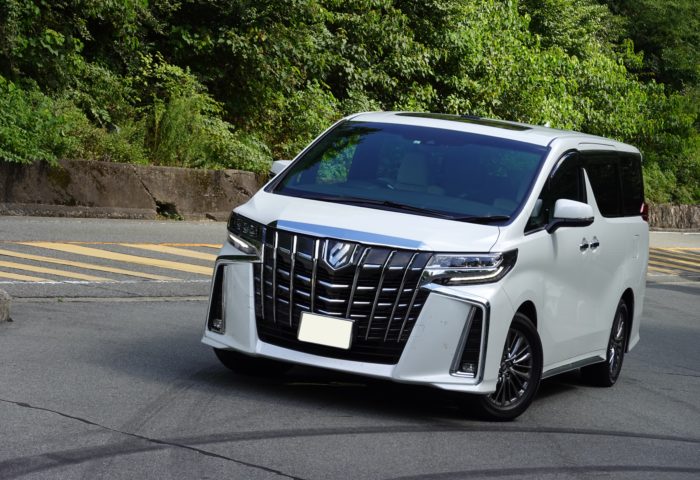

The Alphard on the Highway
We moved on to the highway to see how the Alphard handled at speed. At normal cruising speeds in the travel lane, it’s exceptionally comfortable. It’s particularly relaxing on busy roads like the Hanshin Expressway.
You get the feeling the car is saying, “Relax a little more” and “Take it easy.”
In a Porsche, I always find myself gripping the wheel firmly with both hands, whatever the conditions. But in the Alphard, I’d catch myself driving with one hand lightly resting at the bottom of the steering wheel. Even I was surprised.
I’d never normally drive that way, but somehow the Alphard invites you to.
On the way back, we hit some serious highway traffic, but I felt no stress at all. It’s such a comfortable place to spend time on the move—a truly impressive vehicle.
Even when I picked up the pace in the passing lane, its straight-line stability felt very good. It tracks straight, with no need for constant steering corrections. Tire noise is well suppressed, too, making for a peaceful ride. Even when I entered a fast curve a little too quickly, the Alphard handled it without fuss. My reaction was, “Wow, it actually drives pretty well.”
On closer reflection, though, the sense of body solidity and tire contact with the road is rather faint. This isn’t a car that feels planted and precise. So why does it still seem stable? My guess is that it creates that impression by filtering out outside noise and much of the feedback that would otherwise reach the steering wheel.
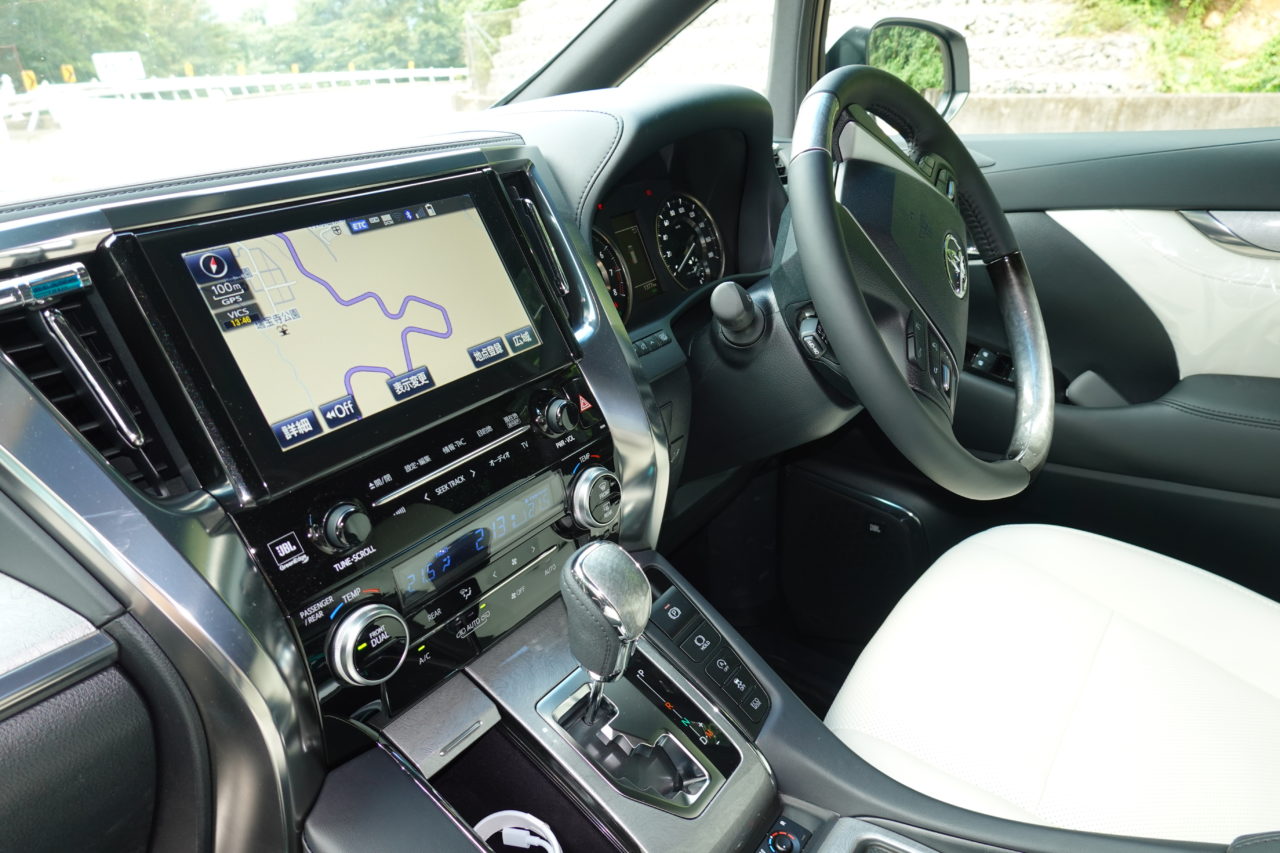
There’s ample engine power for highway driving, and you shouldn’t have any trouble in normal conditions. But if you’re leading traffic in the passing lane on one of the Shin-Tōmei Expressway’s 120 km/h sections, for example, you may need to keep your foot on the accelerator more deliberately, as the Alphard seems prone to losing speed against the air.
One thing did bother me on the highway: the brakes. Honestly, they feel underpowered. A vehicle this heavy deserves a more capable braking system. The deceleration takes a moment to build when you press the pedal, almost as if the car had low-friction brake pads.
If you imagine an accident happening right in front of you on the highway and having to swerve while braking hard, it’s a little unsettling. This is a car that carries family and friends, so I’d like to see more investment in its brakes.
The Alphard’s Rear Seats
So far, I’ve focused on how the Alphard drives from behind the wheel. But it’s an Alphard, after all, so I should also take a look at the rear seats. In the Executive Lounge, the second row gets two luxurious individual seats—and they’re truly excellent.
There’s more than enough legroom, and the seats are large, with ottomans that let even a grown man stretch out comfortably. They recline a long way. They may not quite match business class on a plane, but they’re more comfortable than the Green Car on the Shinkansen—Japan’s premium high-speed rail seating.
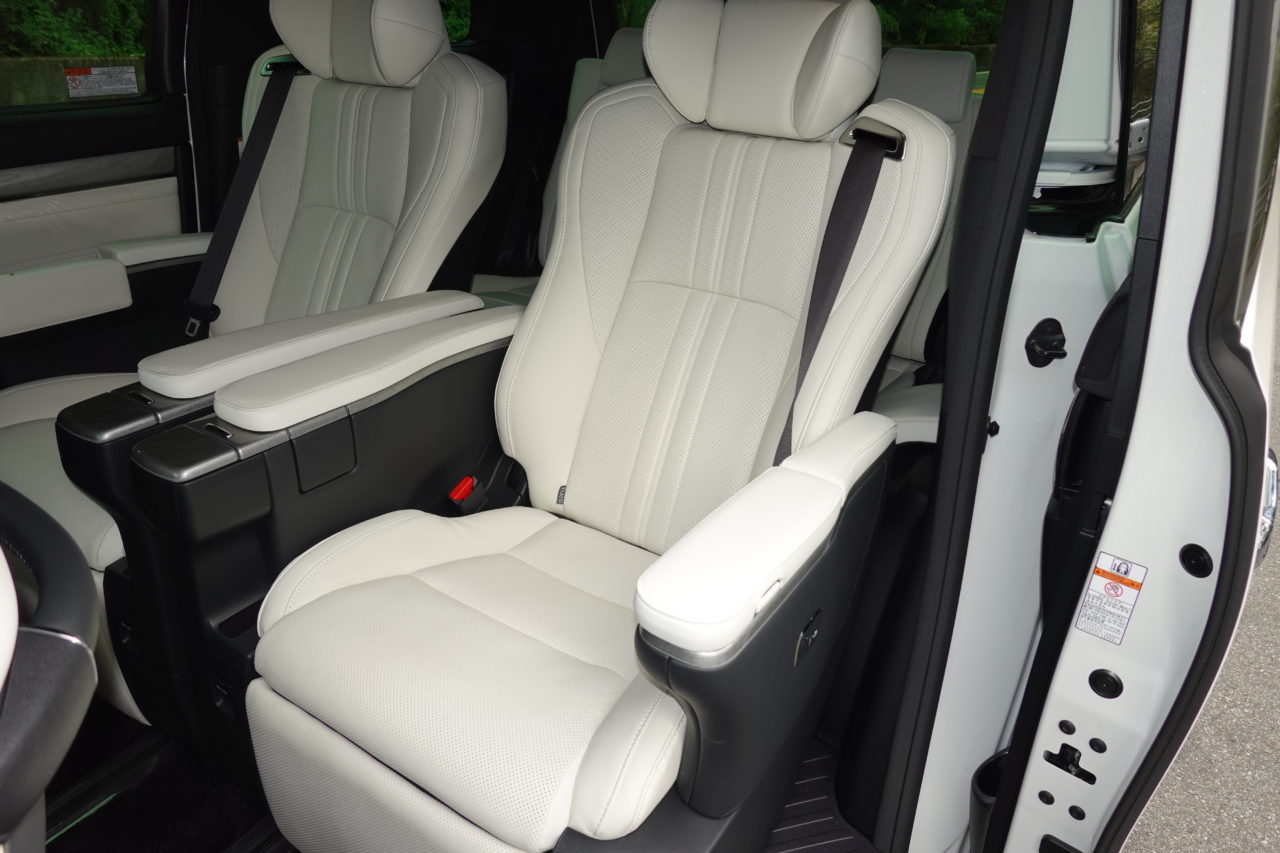
Second-row seats. These are exceptionally comfortable.
There’s also a screen mounted in the ceiling, and seat ventilation and heating are included, of course. You can adjust the seat position however you like using the controls at your fingertips. The cupholders are well placed, too. It’s genuinely comfortable. If I ever bought an Alphard, I’d definitely want to sit in the back. That’s how good the features are.
The third row is perfectly usable, too. Even with the second row in a standard position, there’s plenty of room. It may even be more comfortable than the back seat of a compact car.
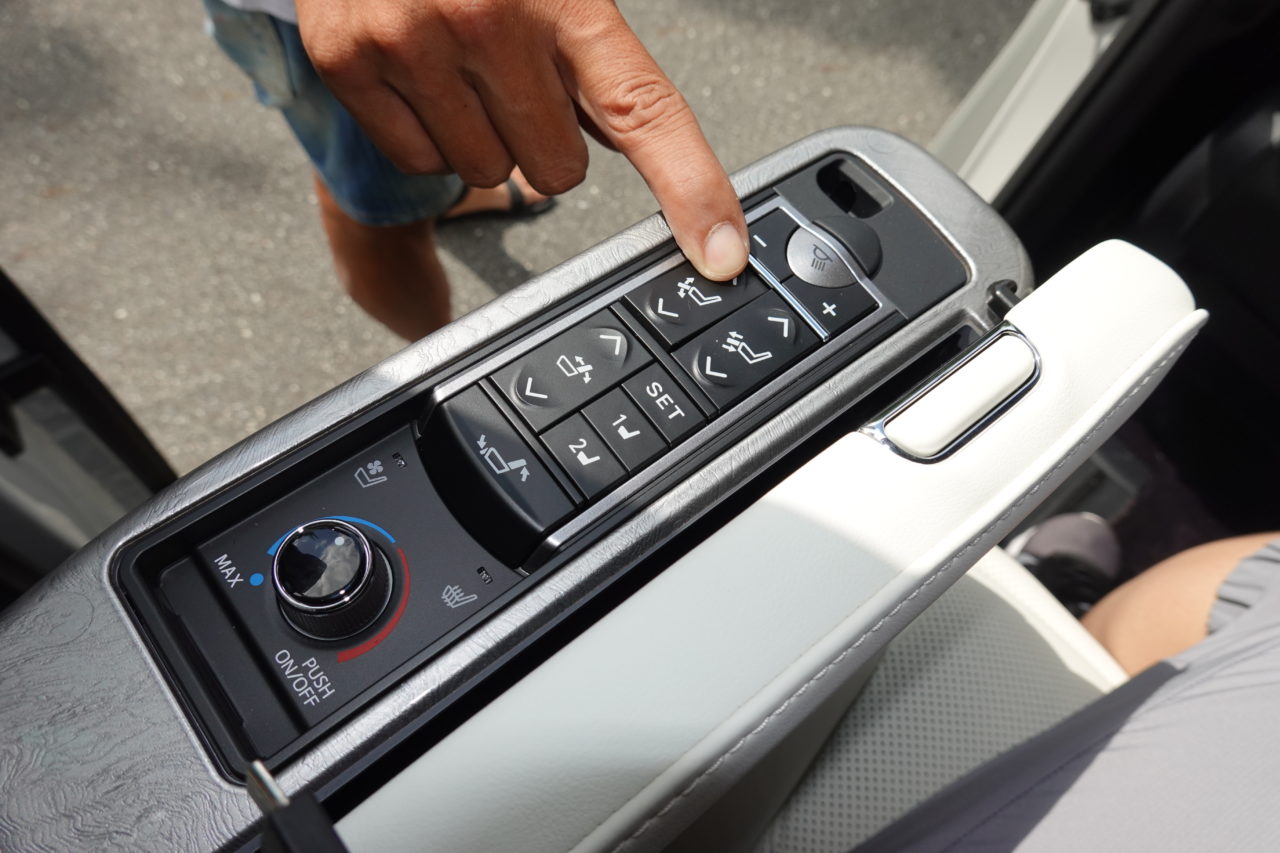
Seat controls are built into the armrest.
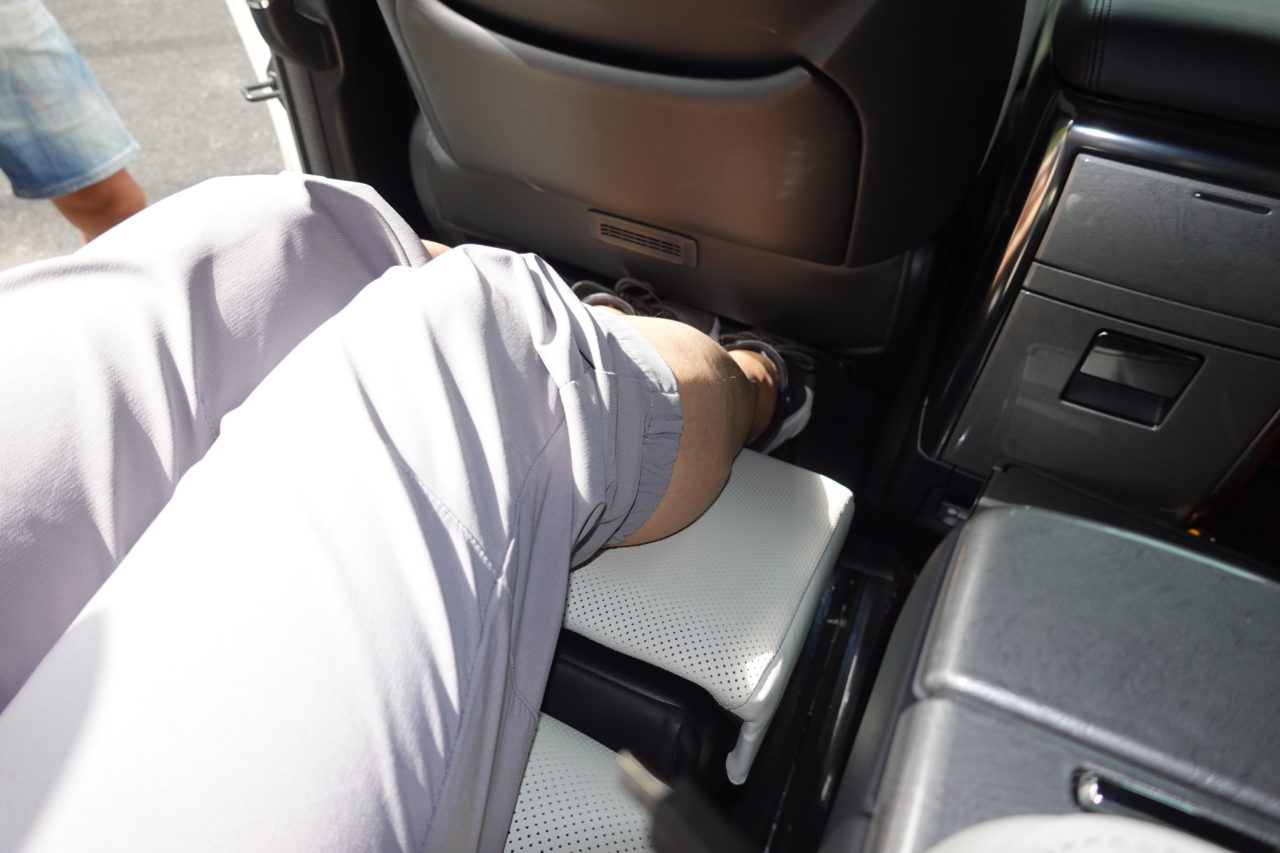
Plenty of legroom. The ottoman makes it even more comfortable.
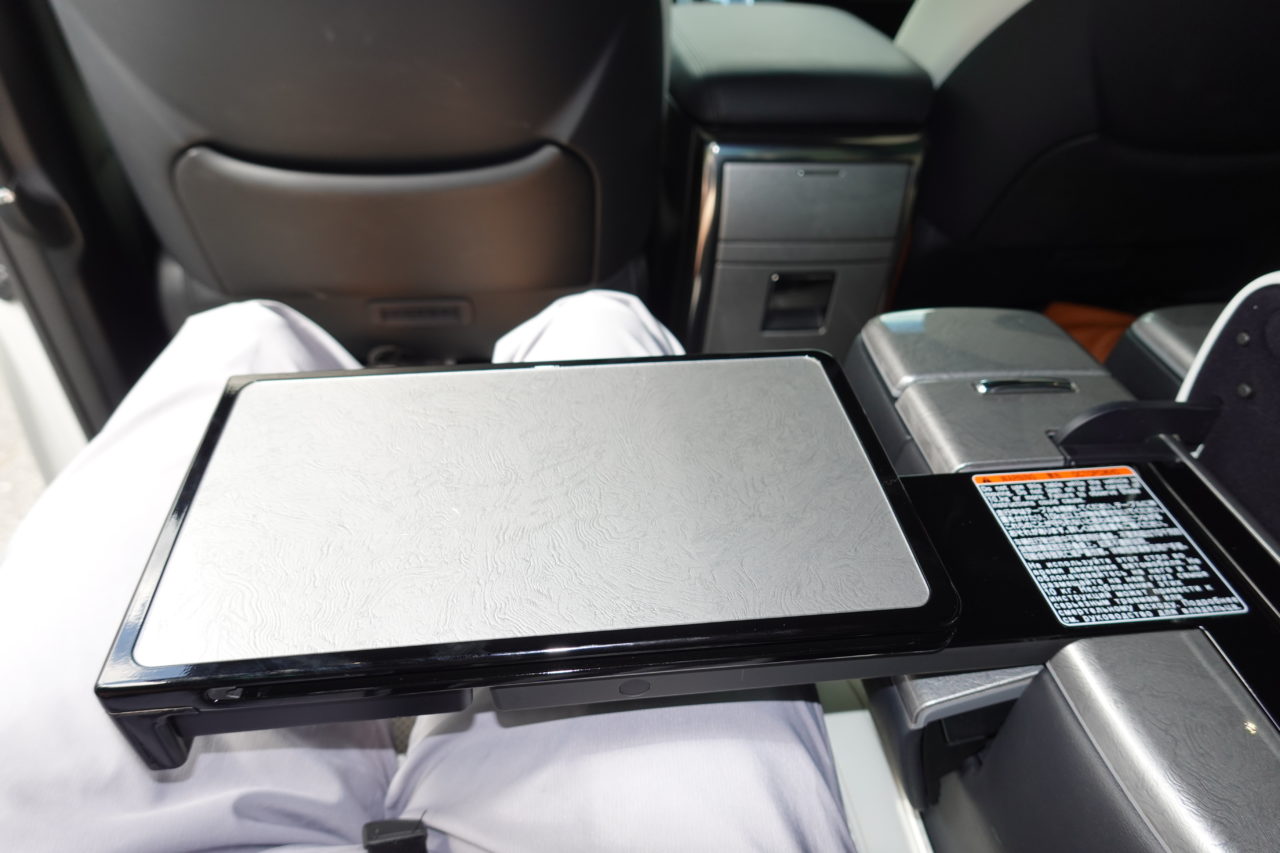
Table for the second-row seats.
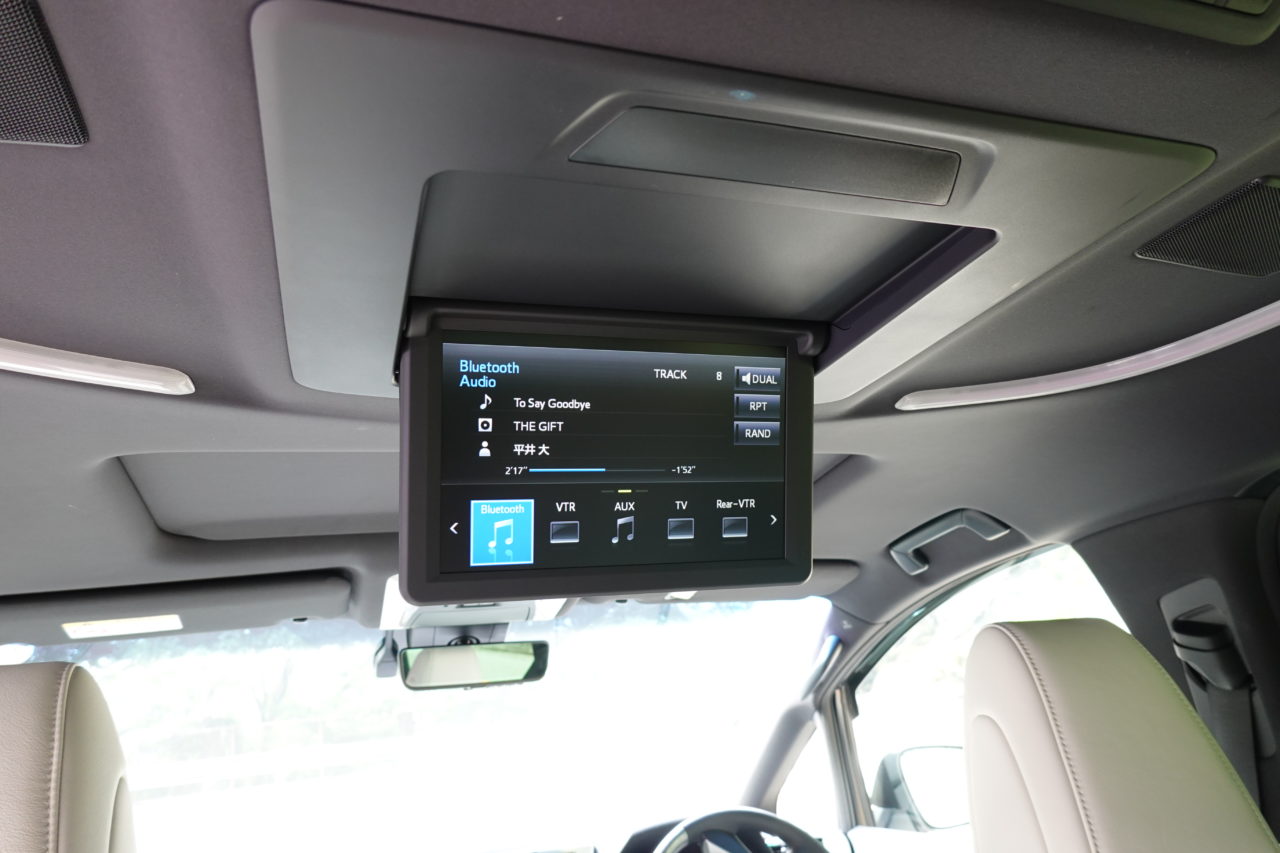
Rear-seat entertainment screen.
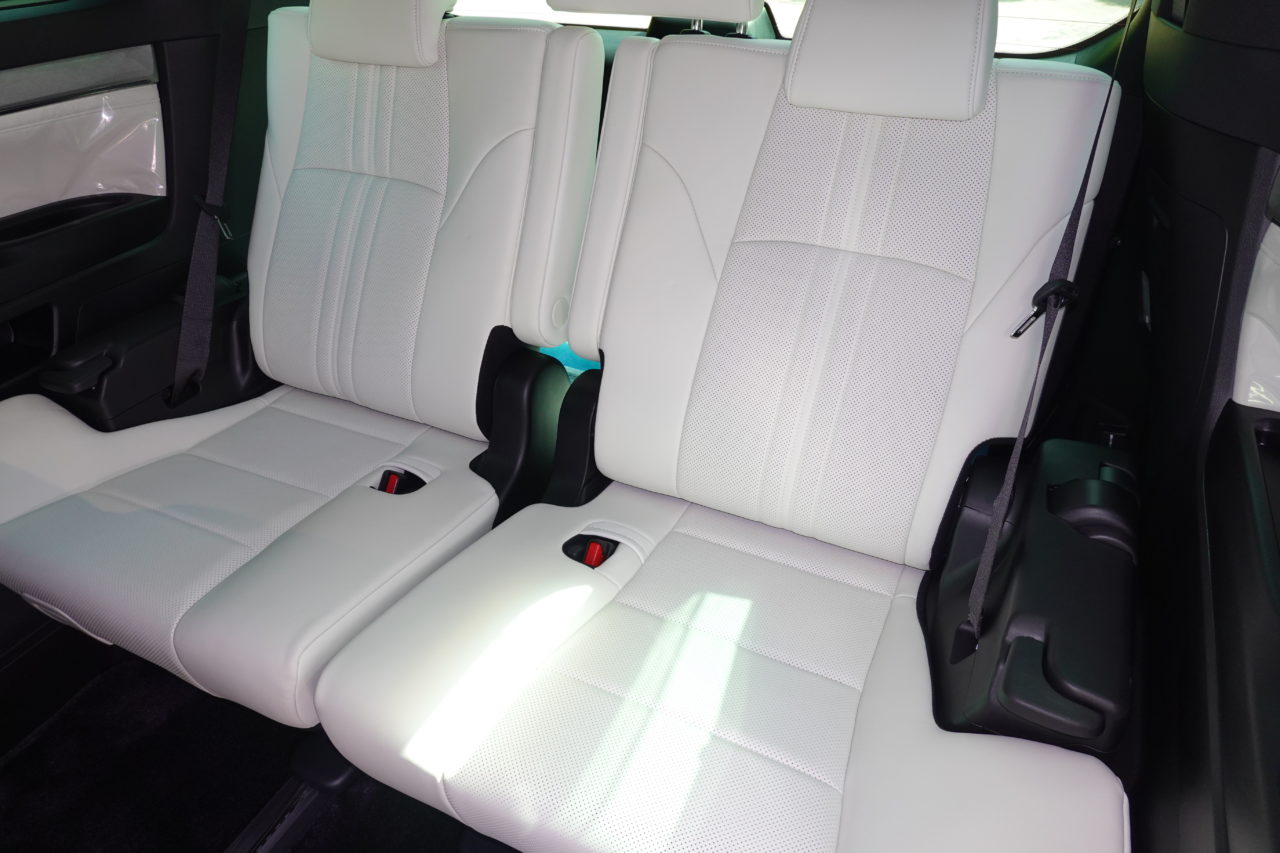
Third-row seats.
Final Thoughts
After driving the Alphard in town, on winding roads, and on the highway, I’d say it’s one of the best vehicles for Japanese roads. Toyota seems to have tuned it specifically for the speeds and road conditions people typically encounter in Japan. It’s not comfort in the sense of driving enjoyment so much as comfort through hospitality—the car is designed to make everyone on board feel looked after.
Driving the Alphard also made me realize something. When I test-drove the Mercedes-Benz GLS a little while ago, perhaps what I was hoping for from the GLS was the ride comfort of this Alphard. Looking back, I was expecting that same relaxed, supple refinement at low speeds—that particular sense of luxury.
The Alphard delivers that level of comfort and refinement. This may sound like an exaggeration, but at typical city speeds in Japan, it can feel more comfortable than an S-Class.
If you’re looking for a car where driving excitement comes second to easy, comfortable travel—and one that makes life enjoyable for passengers in the back, the Alphard has to be one of the best choices out there. I can see exactly why it’s so popular.
If you enjoy this blog, follow along.
Comment ( 0 )
Trackbacks are closed.
No comments yet.