

My Brother’s New Alphard: What Does a Porsche Owner Think?
Published: 2020.08.20
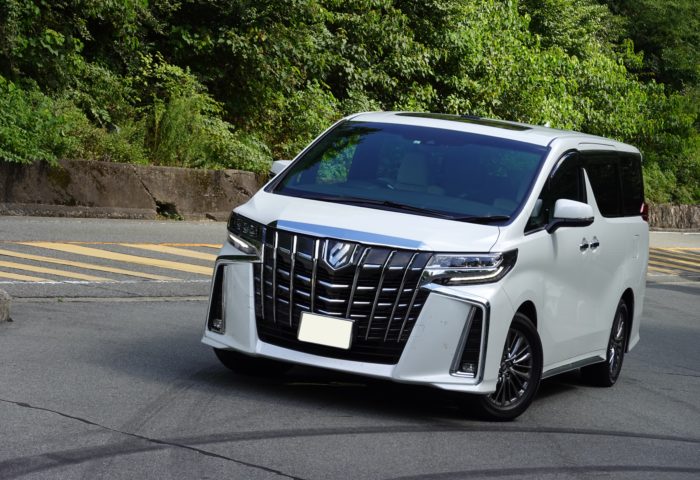

The other day, my husband got the chance to drive my younger brother’s Alphard, and he wrote up his impressions. I was back at my parents’ home for the birth of our baby, so I couldn’t join them—but I would have loved to experience the second row for myself. In the meantime, we hope you enjoy his review.
Why an Alphard?
My younger brother makes the occasional appearance on this blog, and it seems that after recently trying the Ferrari GTC4Lusso T, he’s bought another car.
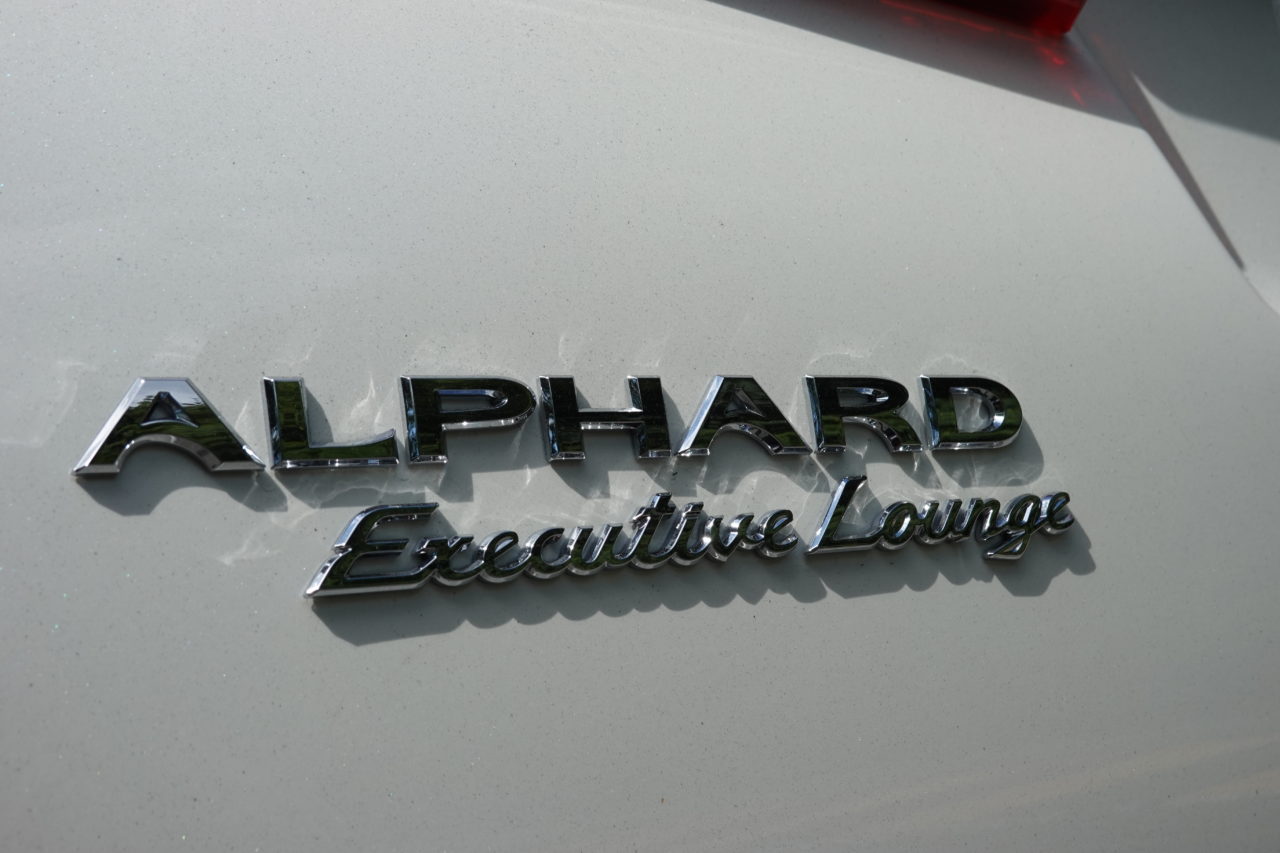
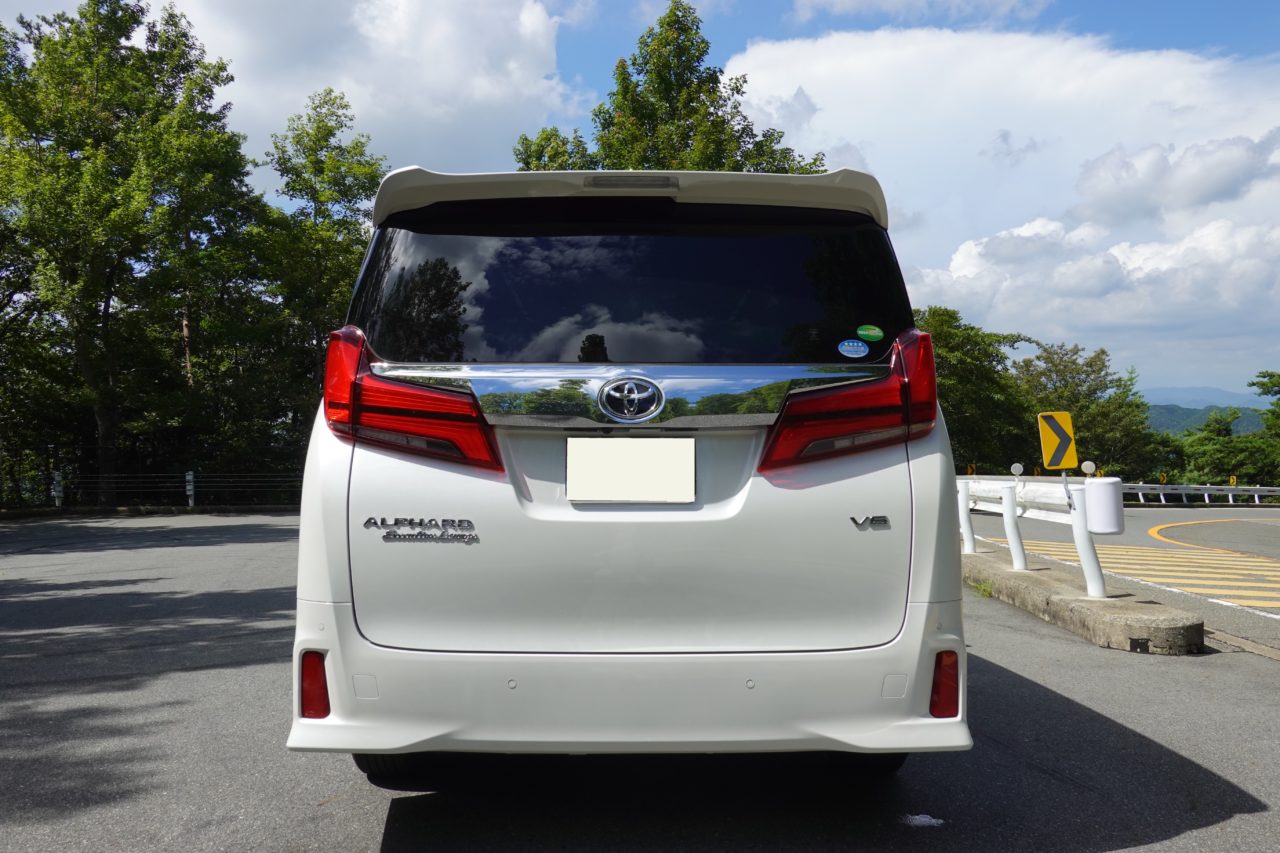
This time, it’s a Toyota Alphard. He chose the 3.5-liter, four-wheel-drive Executive Lounge. I asked him, “Why an Alphard this time?” He’d been looking for an SUV for the family and had considered the GLS, Defender, and Cayenne, among others. In the end, he settled on the Alphard for its value and spacious, comfortable ride.
Many of my brother’s friends own supercars such as Ferraris and Lamborghinis. After weighing their options, though, more and more of them seem to be choosing an Alphard as their family car. Perhaps owning a supercar makes you appreciate having something at the opposite end of the spectrum for everyday family life.
Taking the Alphard for a Test Drive
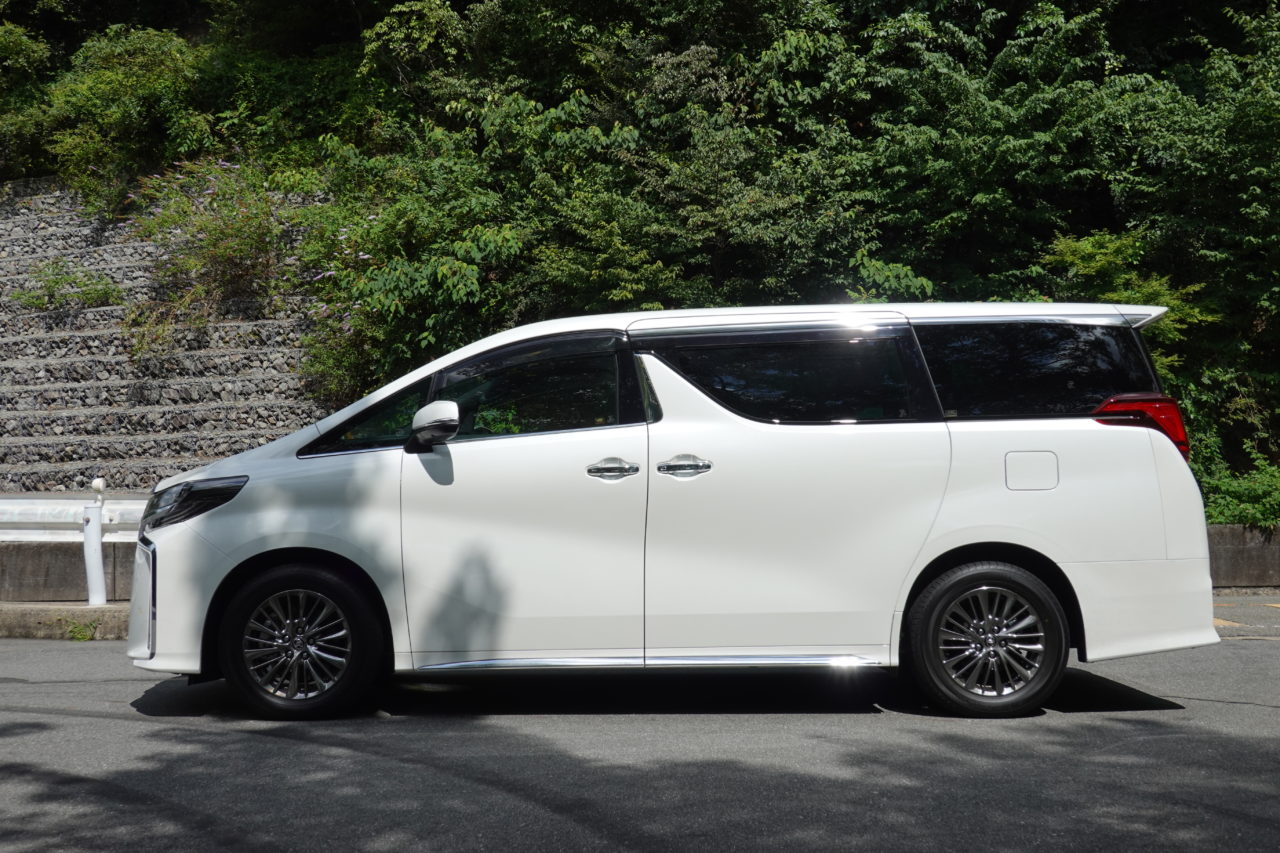
A few days after delivery, my brother brought the car over to show us. It didn’t look especially wide, but it was tall. Since I’m used to driving low-slung cars, its height came as quite a surprise.
We climbed in and headed straight for Royu Driveway for a test drive. Not many people take an Alphard up to Royu, I imagine, but there’s no getting around a drive if you want to find out how a car performs.
The first thing I noticed as we set off was how quiet it was. The Alphard does an impressive job of keeping outside noise at bay. The engine, on the other hand, makes itself heard when you put your foot down. In fact, its dry, distinctly Toyota-like combustion note is rather enjoyable.
You barely hear the exhaust, but the engine’s rising “whoosh” is surprisingly spirited.
I asked my brother why he chose the 3.5-liter engine. “I’ve driven friends’ 2.5-liter and 2.5-liter hybrid models, and the engines seemed to work hard on hills. The 3.5-liter was noticeably better in terms of ride comfort, too. Since I’m the one who’ll be driving it, I went with the 3.5-liter for its engine character and power.”
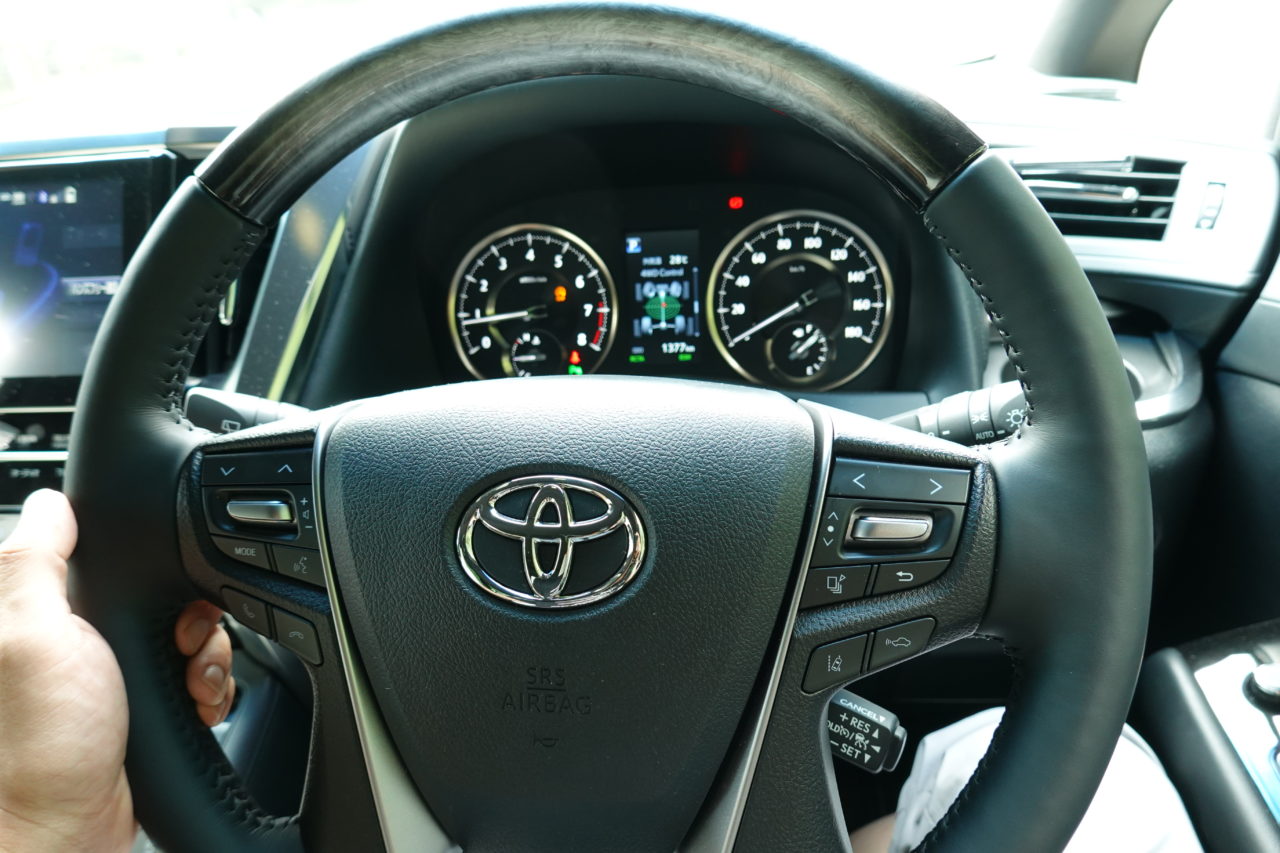
I haven’t driven one of the 2.5-liter versions, so I can’t make a direct comparison. But the 3.5-liter feels good, and there’s more than enough power for everyday driving.
What did catch my attention was the automatic transmission’s programming. On a fairly steep hill, even when the engine was clearly struggling, the transmission seemed determined to keep the revs between 2,000 and 3,000 rpm. The result felt a little sluggish.
Of course, you can press the accelerator further and make it downshift. But I’d rather it downshift sooner and make better use of the higher rev range.
The engine’s maximum torque is 361 Nm (36.8 kgf·m) at 4,600–4,700 rpm—a relatively high point of peak torque for a modern engine. Given that, I’d have expected it to use higher revs more readily.
I know this isn’t a car designed for handling, but I’ll share my impressions anyway. With its relatively large steering lock-to-lock, the car seemed to respond a beat after every input.
And that’s perfectly fine for this car.
It’s gentler on the passengers and lets the driver relax. The steering never urges you to hurry or pushes you to drive more aggressively.
As you’d expect, it tends toward understeer. On the bends at Royu, I found myself braking well before the turn, then gradually adding steering as I went through it. It’s not a car you can push hard, so you naturally settle into a smooth, low-lateral-G driving style that’s considerate of everyone on board.
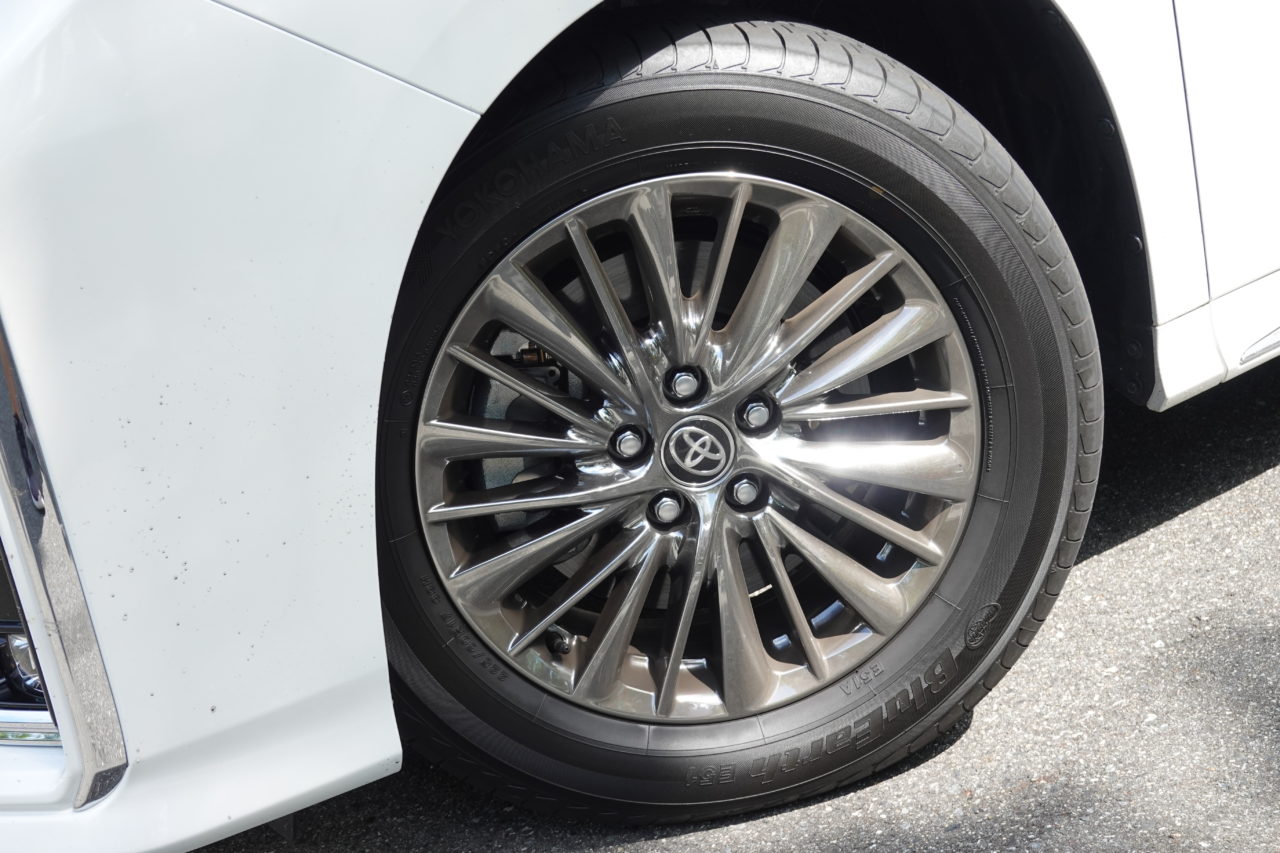
The ride is outstanding—especially at lower speeds, up to around 60–70 km/h. It feels as if the car is floating inside a giant balloon. The soft suspension and tires settle gently over the road, while the car’s weight helps it glide along with a wonderfully plush feel.
I loved the way my old S63 Coupé rode, too, but around town, the Alphard honestly feels even better. It’s not the same glass-smooth, flat ride you get from a European luxury car, where you can almost sense the tires rolling perfectly round. It’s hard to describe, but it feels as if there’s a layer of soft rubber or air between the road and the car.
The most impressive moment came when we crossed one of the raised traffic-calming strips designed to discourage speeding. The Alphard did an incredible job of keeping out both noise and vibration. I drive over that same strip all the time, so the difference was especially noticeable. Of all the cars I’ve experienced, it would rank among the quietest and smoothest.
That’s Japanese engineering—and that’s Toyota. It’s something to be proud of.
However, the ride changes character as soon as you press the accelerator and ask the car to move more briskly. There’s a lot of body roll and sway, and you can feel a certain looseness in the body. When I pointed that out, my brother said, “I’ve noticed that too, so I’m planning to fit the full set of TRD chassis upgrades.”
I wonder what my brother is trying to turn this Alphard into! (Laughs.)
Another thing that impressed me was how little it pitched fore and aft. That may partly be down to this being a four-wheel-drive model, with torque distribution managed while driving, but there’s very little front-to-rear movement. Many SUVs and minivans are designed to carry cargo, so their rear suspension tends to be firm. That can leave the back end unsettled and bouncy. The Alphard, by contrast, stayed composed.
| Next page → How does the Alphard behave on the highway? |
If you enjoy this blog, follow along.
Comment ( 0 )
Trackbacks are closed.
No comments yet.