

What Is Porsche E-Shift? The Real Reason the Taycan Gets a Virtual 8-Speed
公開日:2026.10.04

コンテンツ
Porsche Deliberately Brings Shifting Back to an EV
On August 12, 2026, Porsche Newsroom revealed details of a new option for the Taycan: E-Shift. The software recreates an eight-speed Porsche Doppelkupplung (PDK) transmission, complete with the choice of shifting manually using the steering-wheel paddles or leaving it in automatic mode. Each shift creates a noticeable pause in acceleration, while the centrally mounted rev counter sweeps up to 7,500 rpm. Porsche has even developed a dedicated sound for the system.
What’s interesting is that Porsche is explicit: this isn’t a feature designed to make the car faster. Its aim is to make the delivery of power feel more vivid and give the driver a more active role in the experience. “E-Shift brings more emotion and feedback to the car,” says Markus Lindermayr, who is responsible for the feature. Deliberately interrupting “seamless acceleration”—one of an EV’s greatest strengths—is a bold move.
The details are clear, too. E-Shift is available as an option on all Taycan models in Japan for ¥145,000. It comes as standard on the Turbo GT.
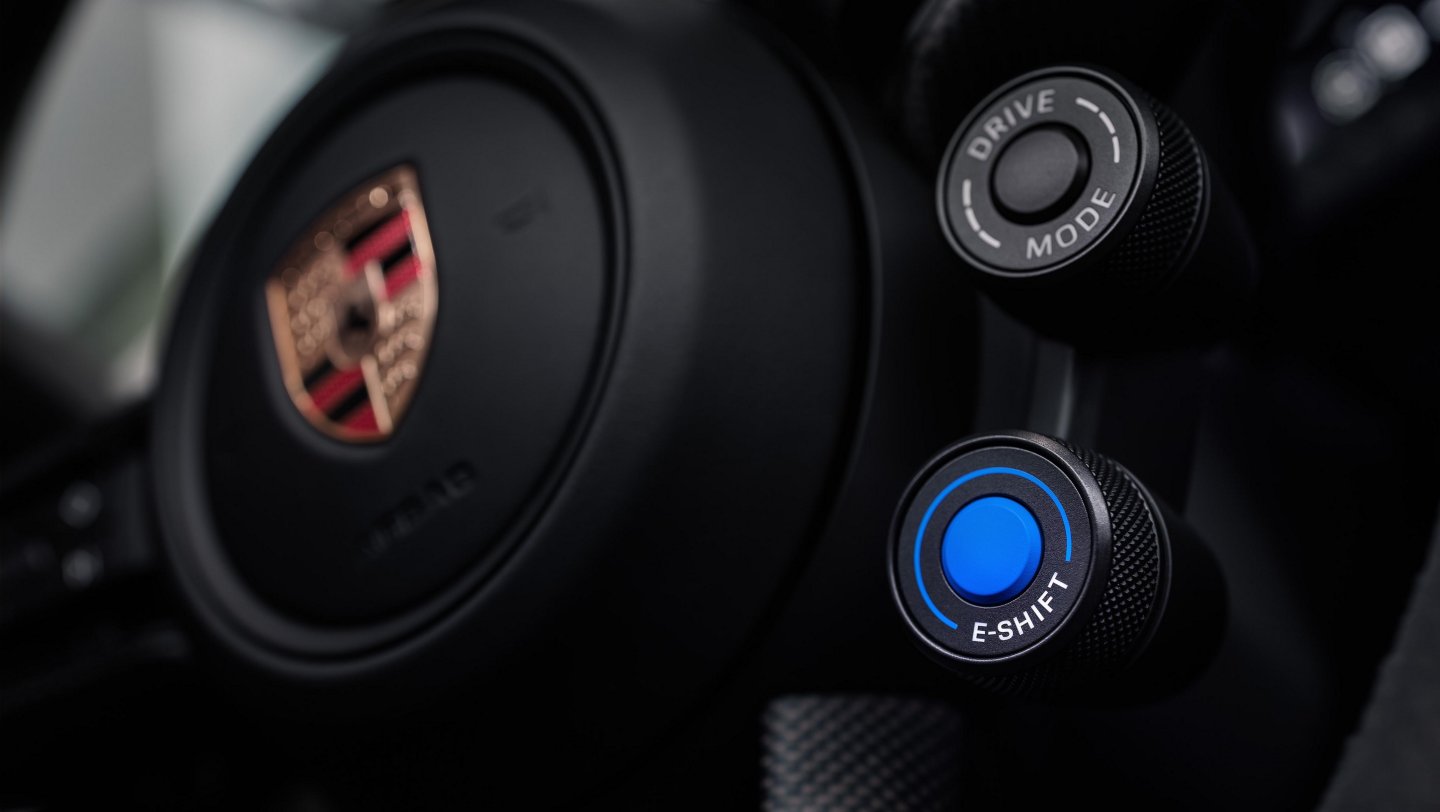
photo by Porsche Newsroom
Connecting the Real Two-Speed Gearbox to a Virtual Eight-Speed
E-Shift adds no hardware whatsoever.
The technology is entirely software-based. The development team programmed seven additional shifts into the control unit, recreating the behavior of a PDK in code. That includes downshifts under braking, different shift strategies, and even the characteristic quirks of a conventional gearbox. “We wanted to preserve an authentic driving experience without carrying over the drawbacks of a conventional transmission. For example, the shifts themselves can be executed faster than in a combustion-engine car,” Lindermayr adds.
Here’s where the technology gets especially interesting. The Taycan already has a two-speed transmission on its rear axle. E-Shift deliberately aligns the virtual shift from second to third gear with a real, mechanical shift in this gearbox. Of the eight shifts, one is real. Seamlessly blending the virtual with the physical feels like a distinctly Porsche solution.
In my Taycan Turbo GT, when I accelerate hard, I can feel the slightest change in the car’s response as it shifts into second gear. I’ve now driven more than 8,000 km, but I still notice that moment every time. Think of that one real “seam” as the anchor around which the seven simulated shifts are built, and the designers’ thinking starts to come into focus.
What Changes When the Paddles Change Jobs
E-Shift is activated with a single switch on the GT Sports steering wheel.
From there, you can select automatic or manual mode and use the paddles to shift through the virtual gears. The clever part is what happens when you turn E-Shift off: the same paddles go back to adjusting regenerative braking across two levels. Pull both paddles at once, and Push-to-Pass kicks in, temporarily adding extra performance. One piece of hardware, three different jobs.
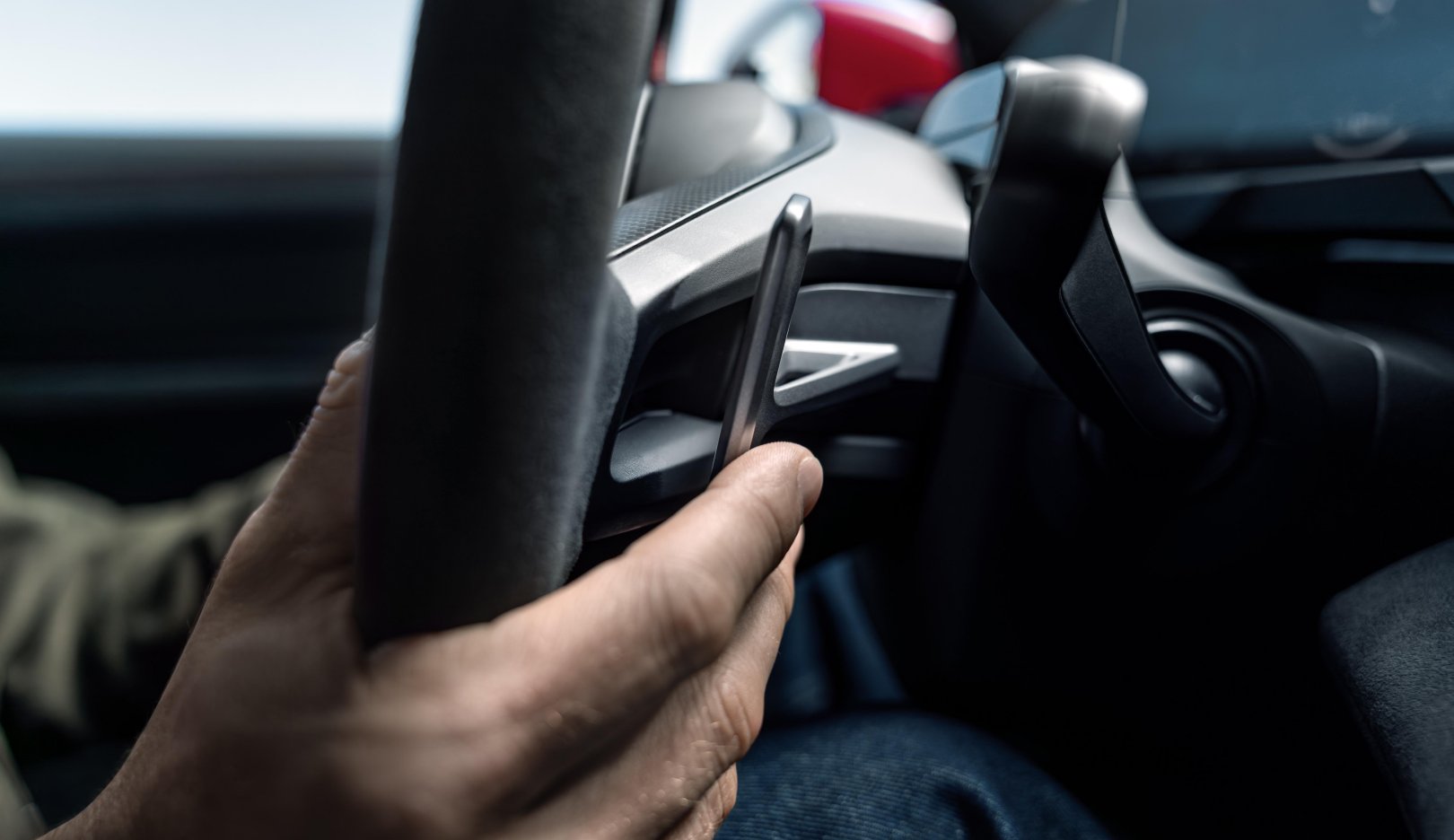
photo by Porsche Newsroom
As for performance, drive torque briefly drops with each shift, then immediately returns, so overall acceleration remains unchanged. In other words, this isn’t a mechanism for shaving time off a lap; it adds another dimension to the driving experience. Creating a sense of “pause” without sacrificing any speed is a trick made possible by electric power.
Porsche has also worked on the sound. Using the existing Porsche Electric Sport Sound as its foundation, the company has developed a new soundscape that changes with virtual engine speed, load, and actual road speed. There’s a new sound at start-up, too, played through the existing interior and exterior speakers and positioned toward the rear. That subtle sense of sound coming from behind is a particularly clever touch.
A Gimmick—or a New Way to Connect with the Car?
To be honest, I’m quite positive about this feature.
The GT3 engine in the 718 Spyder RS revs to 9,000 rpm, and the brief pause with each shift makes the next burst of acceleration feel all the more intense. In a 981 Boxster GTS with a six-speed manual, you create that pause yourself with your left foot and right hand. The Taycan Turbo GT, by contrast, is a beast that feels more agile than even a GT3 on winding roads, yet its acceleration has no breaks. It’s smooth and powerful—but relentless. Sometimes it’s so fast that there’s nowhere for the emotion to land.
photo by Porsche Newsroom
Of course, some people will ask, “What’s the point of simulated shifts?” It’s easy to understand the argument that if extra gears don’t make the car faster, they’re unnecessary. But I see this not as a question of speed, but as an attempt to add another channel of communication between driver and car. Porsche hasn’t added performance so much as room for the driver to get involved.
This option may appeal most to drivers moving from a combustion-engine Porsche who feel something is missing. On the other hand, if you value an EV’s uninterrupted acceleration above all else, E-Shift might feel like unnecessary noise. The fact that you can simply switch it off is part of what makes the feature so thoughtfully designed.
このブログが気に入ったらフォローしてね!
Comment ( 0 )
Trackbacks are closed.
No comments yet.