

Why the Porsche Panamera Is Such an Impressive Car: Inside Its Grueling Test Program
公開日:2018.11.24

Pre-Production Testing for the 911
I’ve written before that Porsche’s published specifications are accurate—and that, in some cases, a Porsche can even outperform its official figures. At the time, I knew a little about the grueling tests Porsche conducts in the scorching heat of Death Valley. But recently, I came across an article saying that the new Porsche 911 Carrera underwent an incredible 3 million kilometers of pre-production testing, and I was stunned.
…Th-three million kilometers?! (;゚Д゚)
The equator—the Earth’s “waistline,” if you like—is about 40,075 kilometers long. So that means the test cars covered the equivalent of roughly 70 trips around the globe. Here’s what the article had to say.
The 911 has always been engineered to deliver both high performance and everyday usability. To make it even more comfortable, Porsche puts it through repeated, demanding tests. These include:
① In summer, testing in Death Valley, where temperatures exceed 50°C, to check the climate-control system, engine heat management, and the effects of thermal expansion.
② Testing in Finland at –35°C, including cold starts, traction, handling and braking, as well as the responsiveness of the vehicle’s control systems.
③ Testing at circuits in China and on rough roads in the Arctic region.
④ Comprehensive testing of the chassis, engine, transmission and brakes at the Nürburgring.
⑤ Testing at Nardò in Italy (Porsche reportedly now owns the Nardò Technical Center.) to assess high-speed stability, cooling and more.
⑥ Collecting data at an elevation of around 90 meters below sea level, on a bone-dry salt lake in Death Valley—the second-lowest point in the Western Hemisphere.
⑦ Testing in the thin air at 4,300 meters above sea level in Colorado to check energy recovery efficiency and fuel-system performance.
In total, the test vehicles covered an astonishing 3 million kilometers.
*Source: [NEWS] The New Porsche 911 Carrera Underwent an Incredible 3 Million km of Pre-Production Testing!
That’s incredible… Porsche really goes that far. My husband and I were amazed by how smoothly the new Cayenne rode when we test-drove one. Knowing how extensively Porsche tests the Cayenne off-road and on poor surfaces, it makes sense that it feels so composed on regular roads.
That got me wondering: “What does the Panamera’s testing program look like?” The 911 is Porsche’s signature model, so perhaps it gets special attention during testing. But what about the Panamera we have at home?
What Does Panamera Testing Involve?
I searched online and found a page on Porsche Japan’s website describing the Panamera’s punishing test conditions!
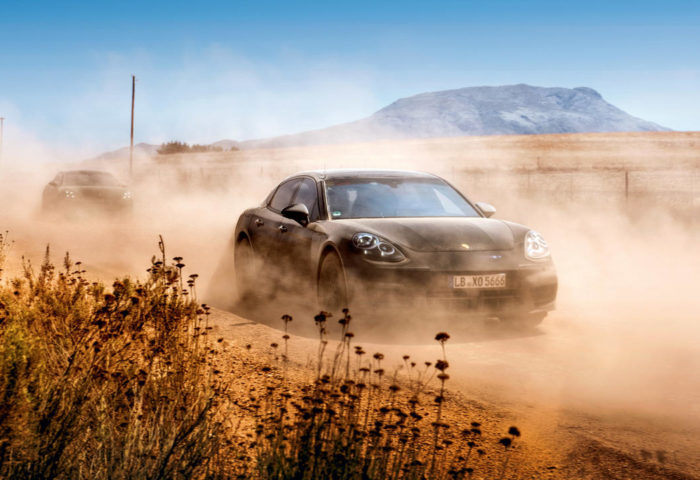
The Panamera pushes itself to the limit. The highest quality is born from adversity. Guided by this uncompromising motto, the next-generation Panamera undergoes its final shakedown in the scorching South African landscape, blanketed in sand, dust and gravel.
“Do they really have to put the Panamera through all that?” The opening lines almost made me feel sorry for it (laughs). The article follows the 971-generation Panamera through testing in an arid, unforgiving environment. It also mentions that testing in extreme cold had already been completed, so, just like the 911, the Panamera appears to be put through extensive tests everywhere from scorching heat to freezing cold.
The major changes from the 970 to the 971 included:
・A newly developed 4.0-liter V8 engine
・Reduced weight through increased use of aluminum
・A sportier design, with a lower roofline than the previous generation
・More luggage capacity and a roomier interior
・A new adaptive cruise control (ACC) system managed by no fewer than 13 control units
Porsche carries out tests like these to check and refine every new component, making sure it continues to work correctly and reliably in even the most extreme conditions. And the article opened with this:
The feel of the switches on the center console still needs refinement, and the shift from second to third gear remains somewhat stiff. That won’t earn approval from the head of development.
The feel of a switch, or a slight stiffness when shifting up a gear…really?
If I were in charge of development, I’d probably say, “Everyone’s worked so hard, and the launch is coming up. This is good enough—great job, everyone! Approved!” But the development chief’s commitment to perfection—and the engineers’ pride in addressing every last detail—is truly impressive.
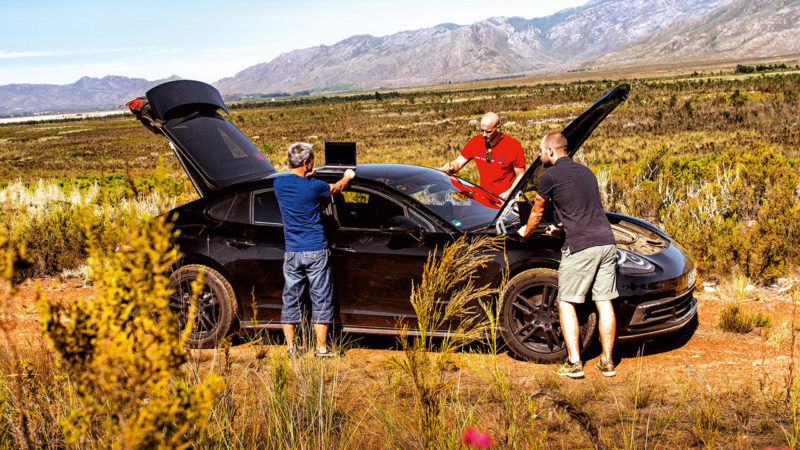
Apparently, Porsche’s engineers organize and prepare these vehicle tests as a team. Here’s a summary of what they put the Panamera through:
・The car charges up a steep, winding mountain road in the scorching heat, then brakes hard at the top. Just seconds later, the Panamera comes to a complete stop. The first test is passed.
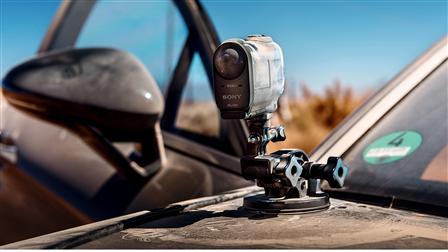
・Today’s test covers 600 kilometers of country roads. The relentless sun beats down on the bodywork, and the car is quickly coated in sand and dust. It must cope with pitted, rough asphalt and rapidly changing weather along the way.
・The test cars cover hundreds of thousands of kilometers in total.
・Today’s route climbs to more than 3,000 meters above sea level. The engineers have already simulated harsh conditions at Weissach, but nothing beats real-world testing. In development, “the truth is on the road.”
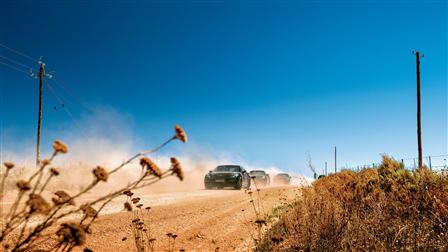
・The eight-speed Porsche Doppelkupplung (PDK) transmission is smoother than ever. The team confirms that the car can cover the scorching terrain at 120 km/h with barely any road noise, making for a comfortable drive. The seventh and eighth gears are optimized to reduce fuel consumption, and average fuel economy has improved significantly.
・The test crew picks up the pace. Exceeding the legal speed limit is permitted for this test, and the necessary authorization has been issued.
・Countless potholes batter the air suspension and low-profile tires, making the body buck violently and kicking up clouds of dust. With the road in such poor condition, the driver has no choice but to keep their eyes on the road and focus on driving.
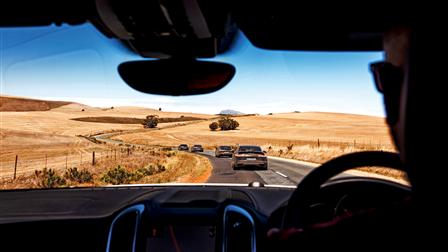
After completing these punishing tests, the team arrives at its hotel after dark. Even then, the staff reportedly work late into the night to solve problems and spend hours reviewing the prototype’s complex guidelines before finally turning in. Incredible… If it were me, I’d be fast asleep before the test drive was even over, let alone after getting back to the hotel. (-_-)
Hats Off to the Panamera
The article also had this to say about a man named Dörner, who is responsible for the Panamera model range:
Dörner reviews the feedback from each crew and goes over the day’s tests once more. Which details are still not good enough? How can they be optimized? He is already beginning to simulate tomorrow’s tests.
That’s just impressive. Until now, when I heard that people test-drive Porsches, I imagined:
“What a great job! You get to drive cars you love—and they’re Porsches—and you get paid to say, ‘This part’s good, that part needs work.’ What could be better?”
But I was completely wrong. Even if I got to work on developing a Porsche I loved, I couldn’t handle a job this demanding.
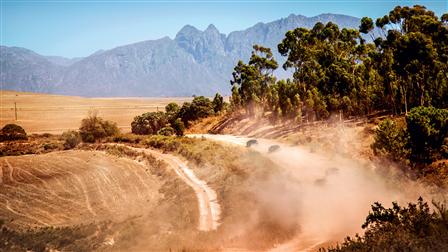
As I read, I kept thinking, “Surely no one is ever going to drive a Panamera in conditions this extreme.” Then I came across an engineer’s comment: “We don’t expect many Panamera customers to drive on roads this rough. But testing in such adverse conditions reveals weaknesses that might otherwise go unnoticed.”
I’m impressed. No wonder the Panamera is such a great car. As it happens, we’re setting off for Amakusa in Kyushu in the Panamera today. We’ll take the ferry there and back, and we’d been hoping to tour around Aso while we’re there—but unfortunately, the forecast calls for rain. (I’m a rain magnet—and a fog magnet—so it’s been a long time since I expected good weather.) I’m looking forward to getting behind the wheel of the Panamera again!
*Article and image source: “Porsche in an Arid, Extreme Environment” — Porsche Japan
このブログが気に入ったらフォローしてね!
Comment ( 0 )
Trackbacks are closed.
No comments yet.