

Tesla Model 3 vs. Porsche Taycan: What I Learned from Owning Both
公開日:

コンテンツ
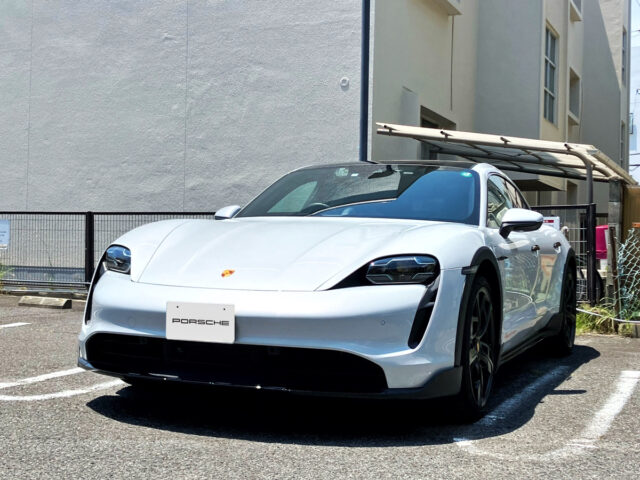
The Taycan Is Back!
After a charging issue put our Taycan in the shop, it’s finally back home. It was there for about three weeks—the wait for parts from Germany was the longest part—but at last, it’s back in our hands.
While the Taycan was away, I drove our Tesla Model 3 almost every day. It was as comfortable and stress-free as ever.
The Model 3 drives beautifully and is easy to live with, so I’ll admit I sometimes wondered, “Maybe I don’t need the Taycan if I have the Model 3…” But then I’d take the Model 3 on the highway and find myself missing the Taycan’s driving feel, thinking, “I can’t wait for the Taycan to come home.”
That was the push and pull of those three weeks.
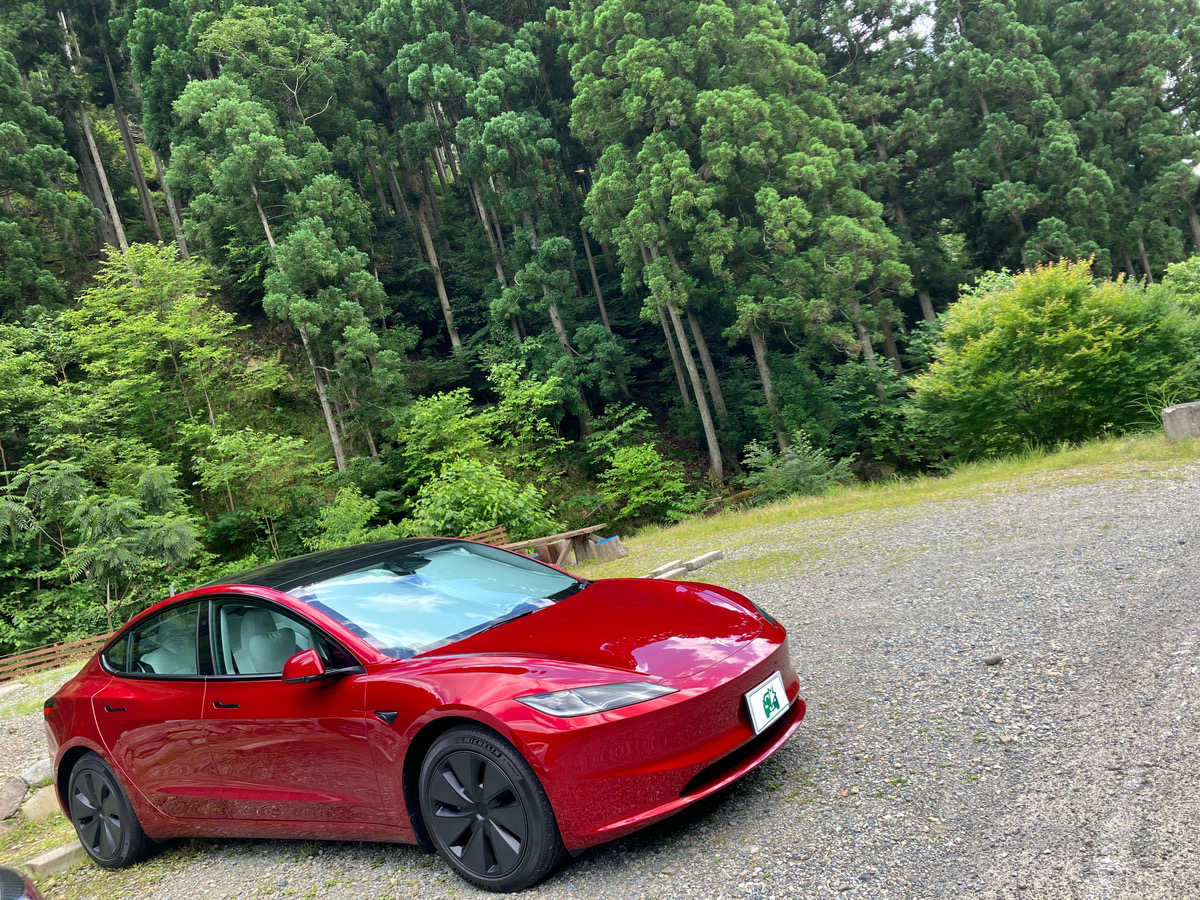
Now that the Taycan is back, I’ve had the chance to drive it again—and it’s reminded me that, despite both being EVs, the Model 3 and Taycan are worlds apart. If I were comparing vehicles by size, perhaps the Model S would be a more natural Tesla rival, but today I want to share what stood out to me about these two cars.
One note: our Tesla Model 3 is a Long Range. A Performance model would likely feel quite different, so please keep that in mind.
The Tesla Model 3 Is Hard to Fault
I was reminded just how well the Tesla Model 3 suits everyday driving in Japan.
① Compact Dimensions That Suit Japanese Roads
The Model 3 is easy to maneuver on Japan’s narrow streets and in its tight parking spaces. Compared with many imported cars, its relatively modest width makes it particularly well suited to driving here. Not having to worry, “Will there be enough room to park when we get there?” or “Can I get down that road?” makes ownership remarkably stress-free.
② Impressive Performance and Smart Technology
Tesla’s Autopilot is remarkably capable. It works so naturally that I sometimes find myself wondering, “How can it detect a car that far ahead?” It can track traffic well beyond what I can clearly see, and accurately identify where nearby vehicles are positioned in their lanes.
It quickly recognizes when the car ahead changes lanes, makes sound judgments, and—just as importantly—responds and follows traffic with a naturalness that feels almost human. It’s genuinely impressive.
The large touchscreen is also easy to use and highly responsive. Honestly, once you get used to it, the Taycan’s navigation screen can feel sluggish by comparison—and that can be frustrating.
③ Lower Running Costs
Electricity costs less than gasoline. The regenerative braking system is impressive, too. A gasoline car can’t replenish its fuel as it goes downhill, but in a Tesla, the battery can gain a surprising amount of charge on a descent.
This is just my impression, but regenerative braking seems to work more strongly in the Tesla than in the Taycan.
The car efficiently recovers energy on downhill stretches and uses power effectively on climbs, helping maximize efficiency. That’s especially useful for us, since our home is in a hilly area.
④ Comfort Like a Living Room
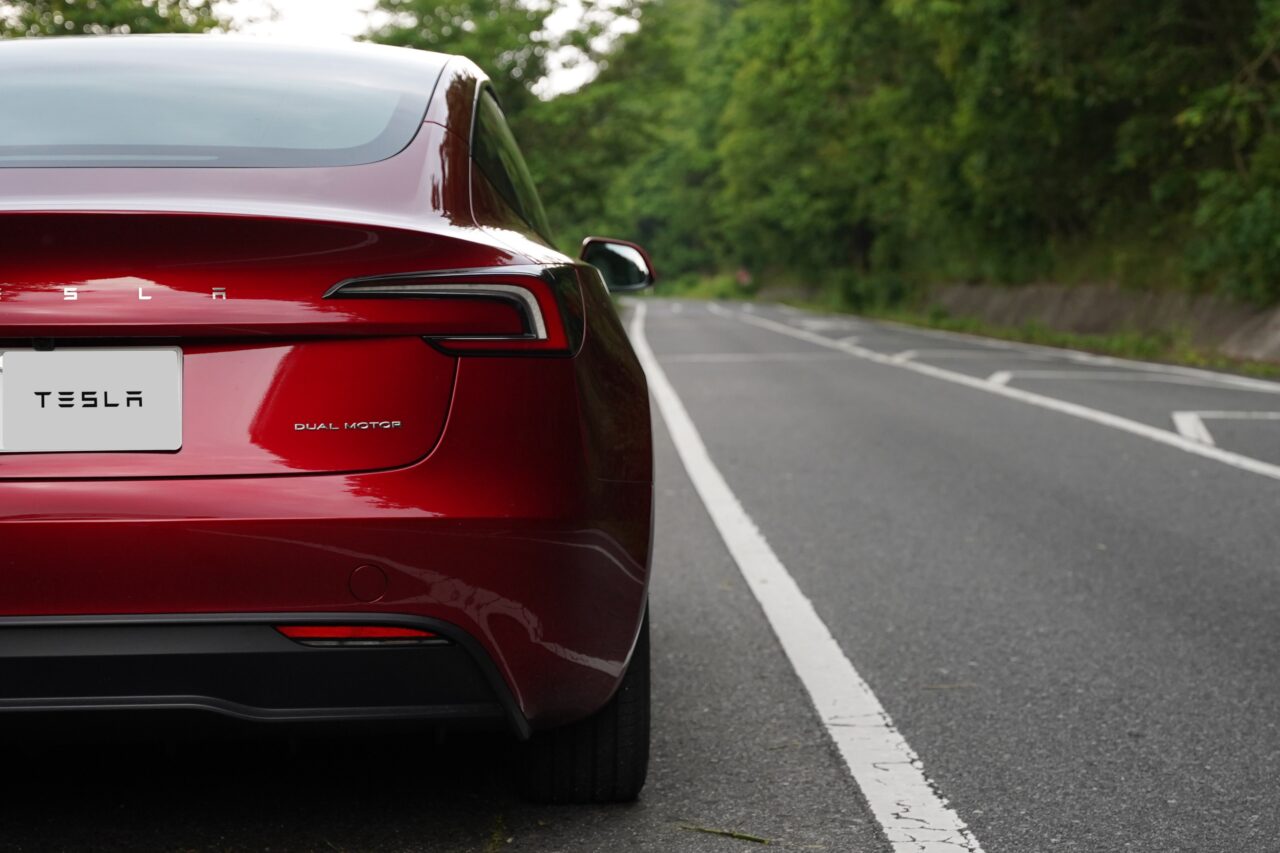
The Model 3 has more rear-seat space than the Taycan. Its roomy cabin gives adults and kids alike plenty of space to stretch out. Even on a long drive, passengers can stay comfortable without feeling cramped.
There’s also a display in the back, which doubles as an entertainment hub. The kids can watch YouTube and stay happily occupied on long journeys.
The cabin is quiet and comfortable, too—a great place to chat or listen to music. In fact, the Model 3 is so quiet and relaxing that lately, whenever I ride in the passenger seat, I inevitably fall asleep. (Laughs.)
The Tesla is so quiet that when I drove the Taycan again recently, I caught myself thinking, “Wait, has the Taycan always made this much motor noise?”
When I switched from a 911 Carrera T to the Taycan, I was surprised by how nearly silent the Taycan was. So for its sound to stand out now… the Tesla must be exceptionally quiet.
Taken together, these qualities make the Model 3 a comfortable long-distance cruiser. The kids stay entertained, the adults are less tired, and family road trips are simply more enjoyable.
The Taycan Is in a Class of Its Own
On the other hand, moving from the Tesla to the Taycan makes the difference in class hard to ignore. The Tesla is an excellent car, but the Taycan’s precision on the road really stands out.
① A Different Level of Chassis Control
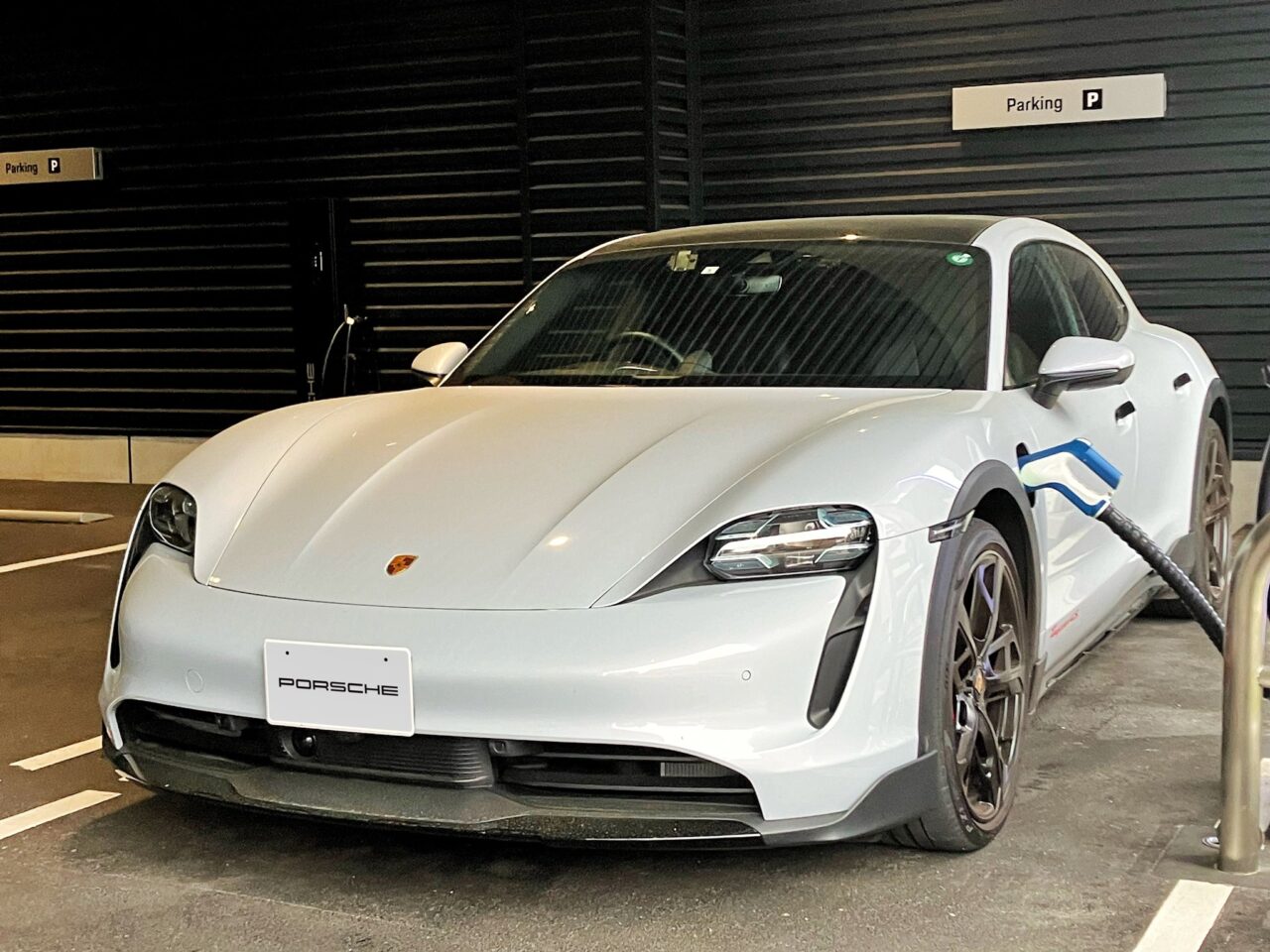
The Tesla Model 3 is very smooth, and its refinement sets it apart from sedans from many other brands. But in the Taycan, the sense of substance, grip, and rigidity is unmistakable. Its suspension is particularly impressive, giving it the edge over the Model 3 and highlighting its greater precision and polish.
② Sharper, More Precise Handling
The Model 3 handles well, but the Taycan is even more precise. If the Model 3 turns in with millimeter accuracy, the Taycan feels like it can carve into a corner to within a tenth of a millimeter.
The rear-axle steering option on our Taycan may be a big part of that. It’s also remarkable how easy the Taycan is to park despite its size.
The Model 3 can feel a little reluctant to turn when parking: even when I steer to what seems like the right angle, it doesn’t always turn as tightly as I expect. That probably wouldn’t bother me if I hadn’t experienced Porsche’s rear-axle steering.
But side by side, the difference is clear.
③ Highway Driving: A Different Feel
The Model 3 feels stable on the highway, and I never feel uneasy—even through corners. Still, perhaps because it doesn’t generate downforce, it can feel as though it’s riding a little light. I prefer a more planted, buttoned-down feel, so I’m drawn to the Taycan’s high-speed stability and its way of settling down under acceleration, then surging forward with force.
④ A More Combustion-Car-Like Character
The Taycan is undoubtedly an EV, but the way it delivers the experience feels closer to a gasoline-powered car. With the Sport Electric Sound option, in particular, its motor note and acceleration can make you feel as though you’re driving a naturally aspirated car.
If I hadn’t driven the Model 3, the Taycan might have felt like a cyborg, too. But comparing the two helped me appreciate how much more naturally the Taycan connects with human driving sensations.
Overall, the Taycan is still very much a sports car, with its precision and sporting character front and center.
For city driving, the Model 3 is by far the easier and more comfortable car to live with. But if you’re looking for a sharper, more exhilarating drive, I’d choose the Taycan.
That said, I’d love to try the Model 3 Performance next.
このブログが気に入ったらフォローしてね!
Comment ( 0 )
Trackbacks are closed.
No comments yet.