

I Drove a Tesla Model 3 for 30,000 km: Why This Porsche Owner Rates It “12 Out of 10”
Published: 2026.04.17

コンテンツ
One Test Drive Changed Everything
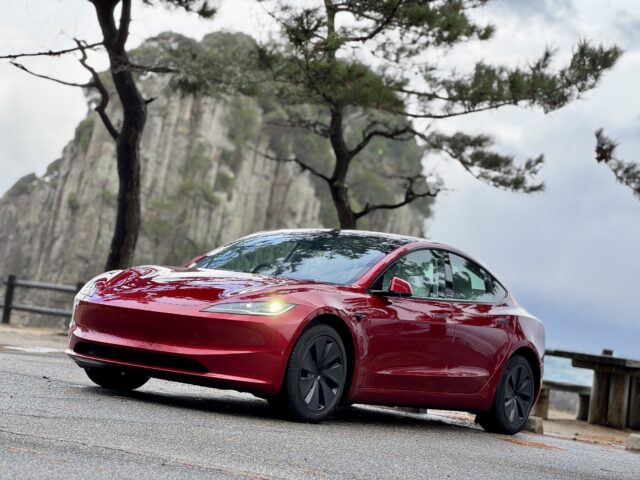
It’s almost been two years since I bought my Tesla Model 3.
Delivered in May 2024, my Model 3 Long Range has now covered more than 30,000 km—that’s 15,000 km a year. It’s more than earned its place as our family’s everyday car. My wife’s Taycan 4S Cross Turismo has also passed 35,000 km, so living with two EVs has become part of our daily routine.
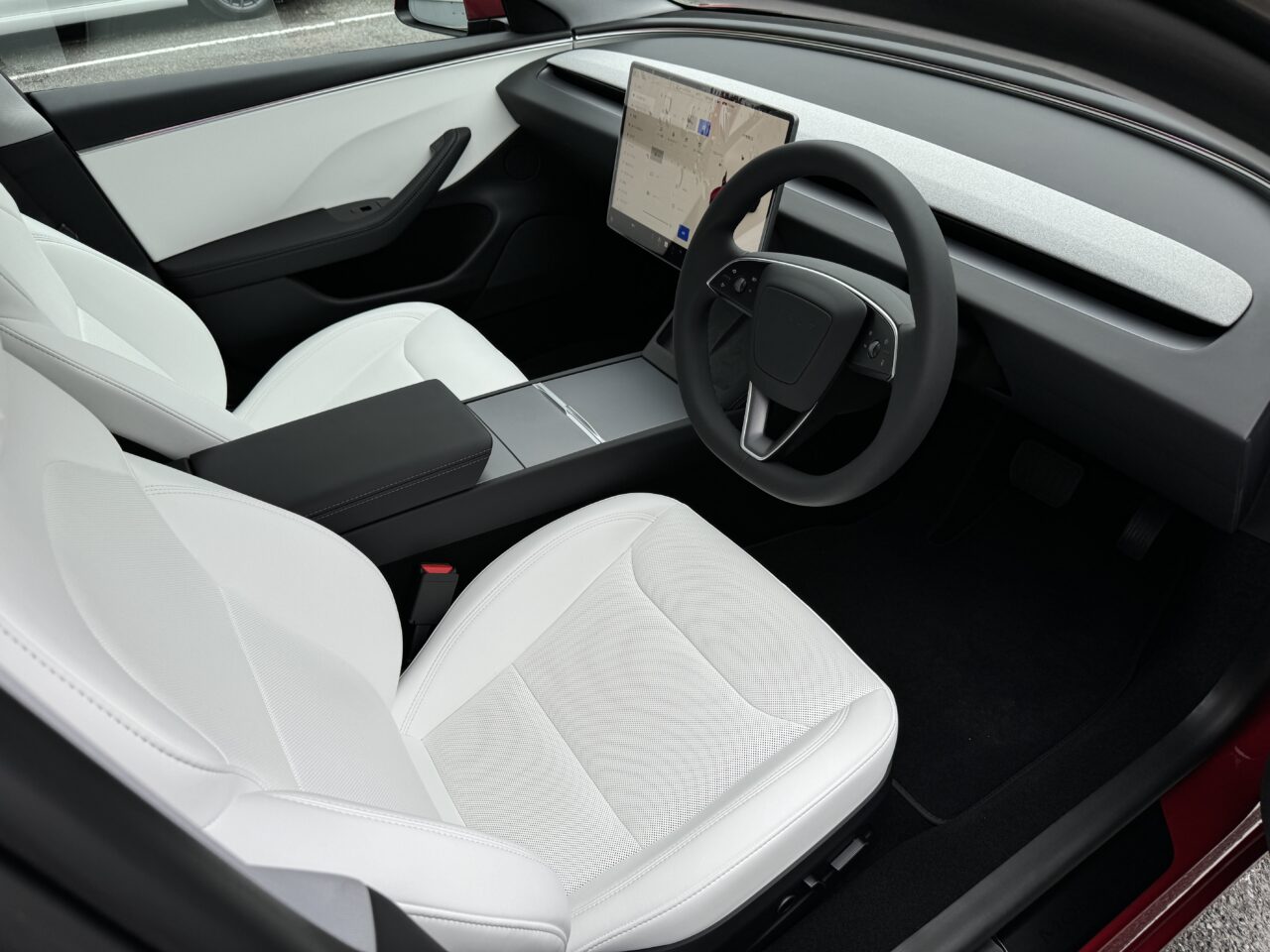
A test drive is what convinced me to buy one. All you have to do is get in, buckle up, and press the brake—the car is ready to go. There’s no gear selector. Tesla’s approach is simple: choosing a gear is one more task drivers shouldn’t have to do themselves. Even the sun visor feels different. Instead of tugging it loose from a stiff hinge like in a conventional car, you can move it smoothly thanks to its magnetic mount. Every detail reflects a philosophy of rethinking the car from the ground up. Never before had a conventional car felt so outdated to me.
A Drive That Impresses Even a Porsche Owner
As someone who drives Porsches, I can say this with confidence:
The Tesla is genuinely fun to drive. Its power and acceleration are more than ample, but the Model 3’s real strength is the precision of its handling. It feels neutral, with little tendency to understeer or oversteer. The steering angle and the car’s path through a corner line up with remarkable precision. There’s none of the disconnect between steering input and the car’s actual trajectory that I’ve often felt in Japanese cars. I suspect that’s because the car was designed with AI-driven autonomy in mind. Any mismatch between steering angle and trajectory would be a problem for an AI driver, too. That design philosophy also makes the car a pleasure for humans to drive.
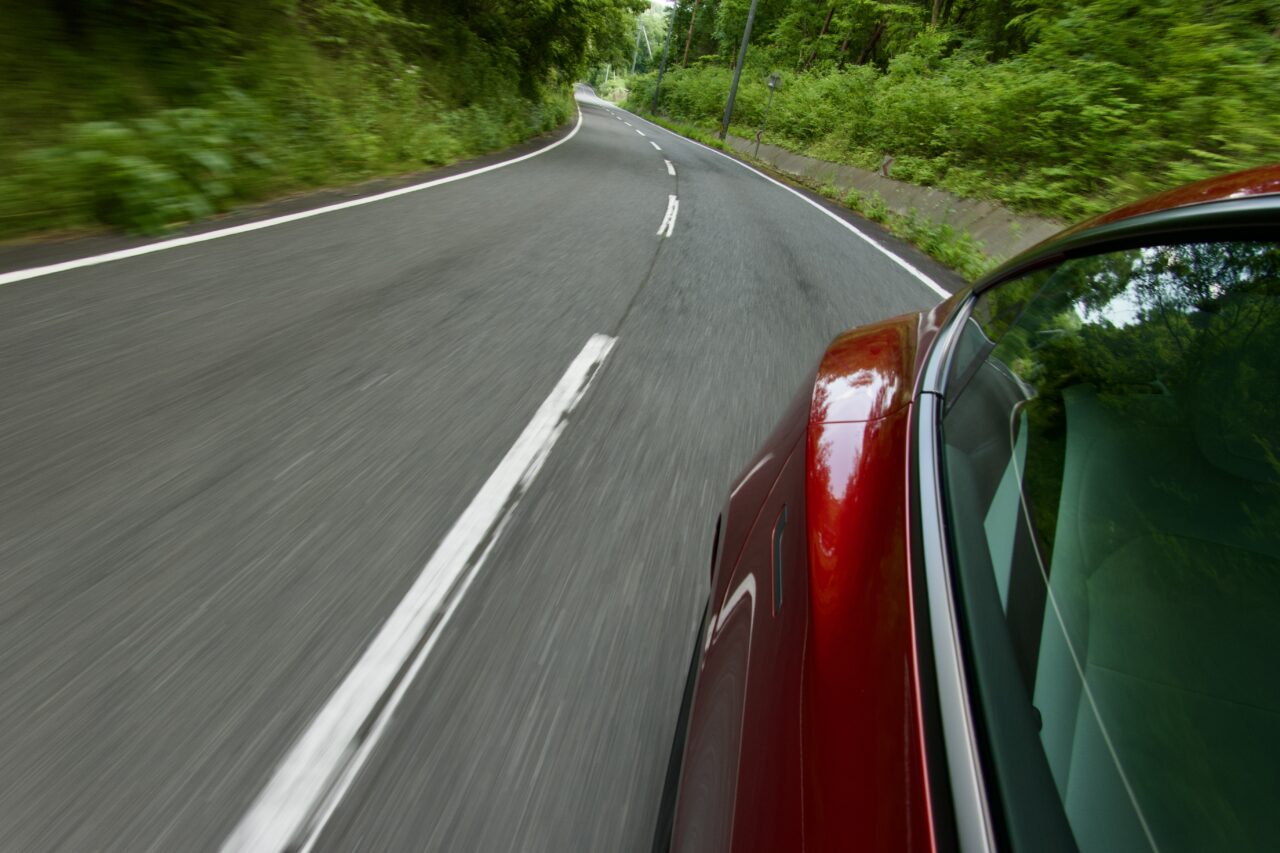
Take it on a winding road, and its abilities become even clearer. On a climb with a series of tight mountain corners, I think the Model 3 could leave many sports cars struggling to keep up. And that’s the Long Range—the mid-range version I own. The Performance model would be even more formidable. The body feels solid, and although its turning circle is a drawback, the Model 3 delivers a level of driving enjoyment beyond what you’d expect from a sports sedan.
A Mobile Office—and a Movie Theater
The cabin’s quietness deserves special mention.
The Model 3 has double-glazed windows, and almost no sound escapes when you’re talking on the phone inside. In many Japanese cars, it’s not unusual for conversations to be clearly audible outside, but that’s not something I worry about in the Tesla. The sound from its 17 speakers is outstanding, putting the audio system among the best out there. Whether I’m playing music a little louder or watching Netflix, I don’t have to worry about disturbing anyone outside.
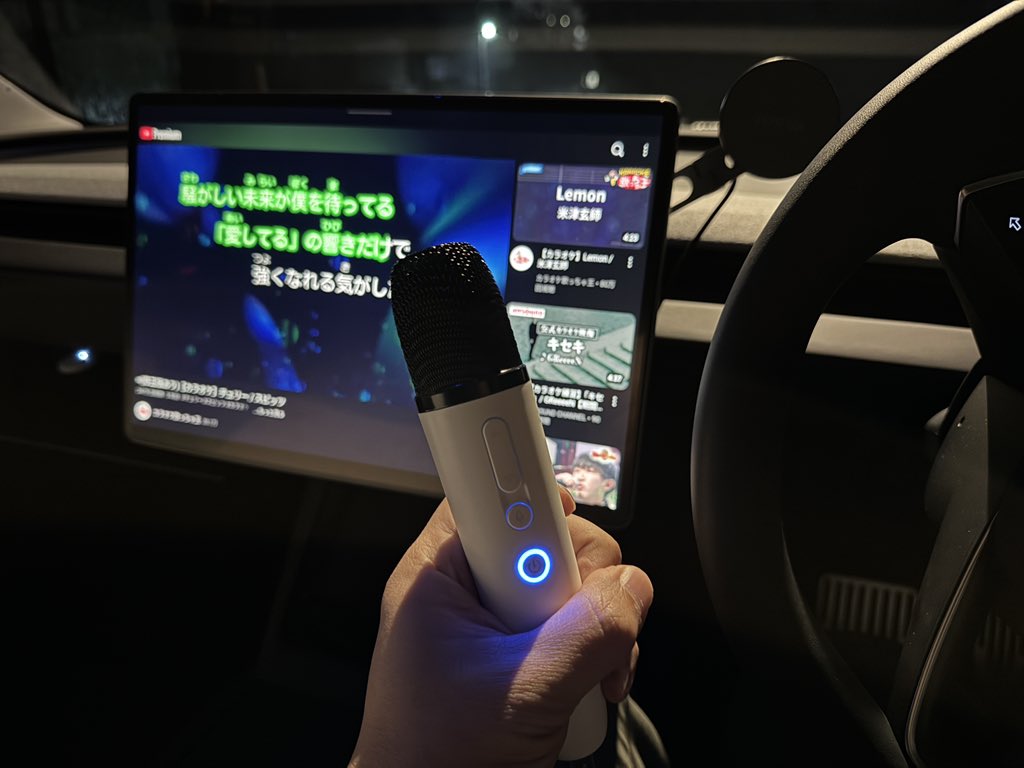
Buy a microphone for your Tesla, and the cabin can even become a full-on karaoke booth with proper echo effects.
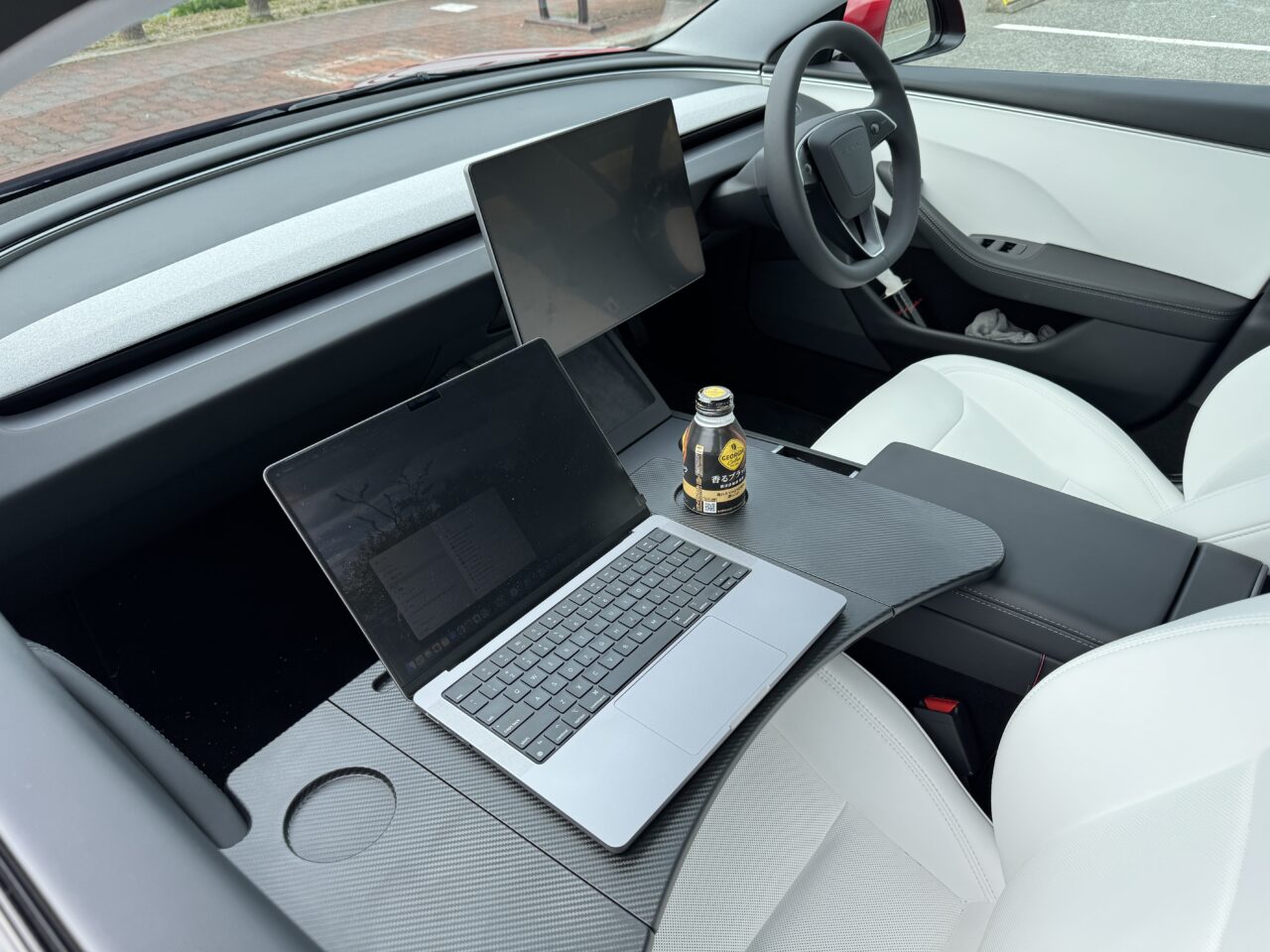
Camp Mode is another big plus. Given the way I work, my Tesla can be an office anywhere. I park in a paid lot, set up a table, turn on the climate control, and put on some background music. That’s all it takes to create a café-like space where I can focus, wherever I am. For an EV that serves as an everyday car, it’s hard to imagine a more practical perk.
Over-the-Air Updates: Tesla’s Biggest Advantage
Without a doubt, software updates are one of Tesla’s greatest strengths.
Updates arrive almost every month, and rarely do I wait longer than six to eight weeks. I’ve received dozens since buying the car, and it’s a world apart from the Model 3 I first drove home. The display now recognizes far more of the cars and pedestrians around me. Updates have added Amazon Music, automatically reduced climate-control fan noise during phone calls, upgraded the existing lights to adaptive headlights, enabled passenger-seat controls on the display, and increased the number of cameras recording in Sentry Mode. And that’s just a sampling of the many new features.
What other car keeps gaining features for free, long after you buy it?
As Tesla Japan President Tomohiko Hashimoto has said, Tesla is aiming to make FSD (Full Self-Driving) available in Japan in 2026. That, too, is expected to arrive via a software update. What about other EVs? They may occasionally receive bug fixes, but it’s rare to see routine feature updates—or groundbreaking capabilities like FSD—added after purchase. I can’t see why I’d choose an EV with so little potential to improve.
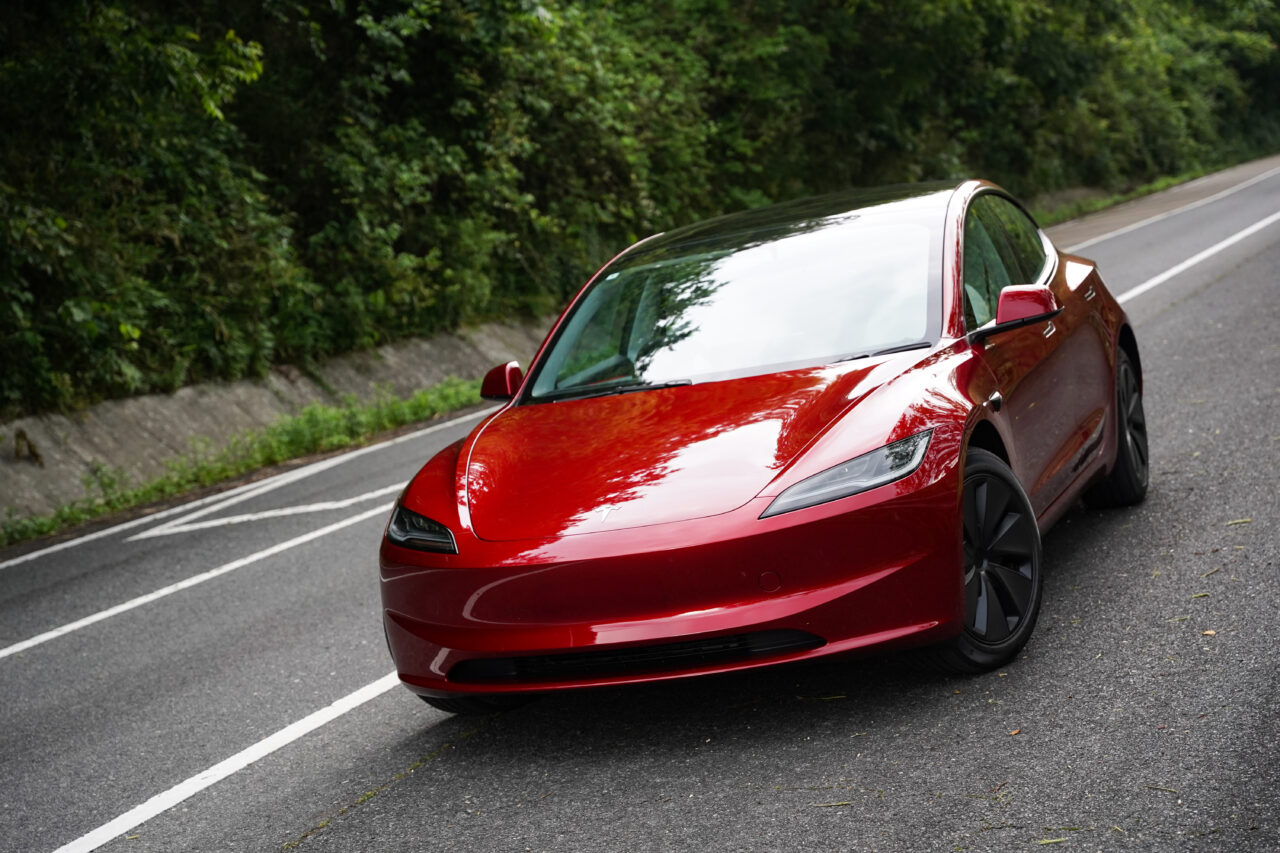
Of course, I often hear people say, “I don’t like Tesla’s design.” I understand where they’re coming from.
But the Tesla isn’t a car you buy for its looks. It’s like the Apple Watch: how many people choose one purely for its beauty as a fashion accessory? People use it because it’s incredibly convenient—and the same goes for Tesla. If you want a car that turns heads, you can always buy one as a passion project.
After 30,000 km, here’s my honest verdict: I’d give the Tesla Model 3 a 12 out of 10, even on a 10-point scale. It’s unquestionably one of the best cars I’ve ever owned. Whether or not you plan on buying one, I’d encourage you to take it for a test drive. You’ll quickly realize it’s a different kind of car from Japanese and German models. You may be surprised by what happens when a company with world-class software expertise sets out to build a car.
For reference, I’ve included my Tesla referral link below.
It can save you money on the purchase price. If you decide to buy a Tesla, don’t forget to use it.


If you enjoy this blog, follow along.
Comment ( 0 )
Trackbacks are closed.
No comments yet.