

Volkswagen Golf 1.2 or 1.4: Which Should You Buy?
公開日:2018.04.16
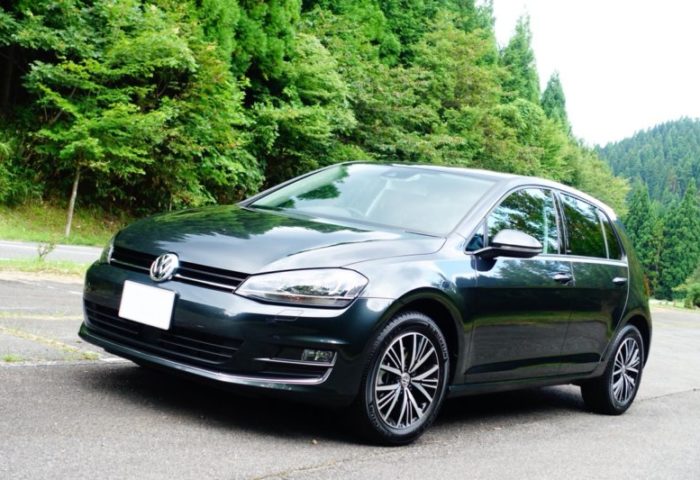

Our Volkswagen Golf Mk7
In August 2016, a Volkswagen Golf Allstar joined our family. We use it for my husband’s commute, trips when all five of us need to go somewhere (the Panamera seats four, while the Boxster and SL seat two…), and outings where the parking spaces or roads are too narrow for a larger car.
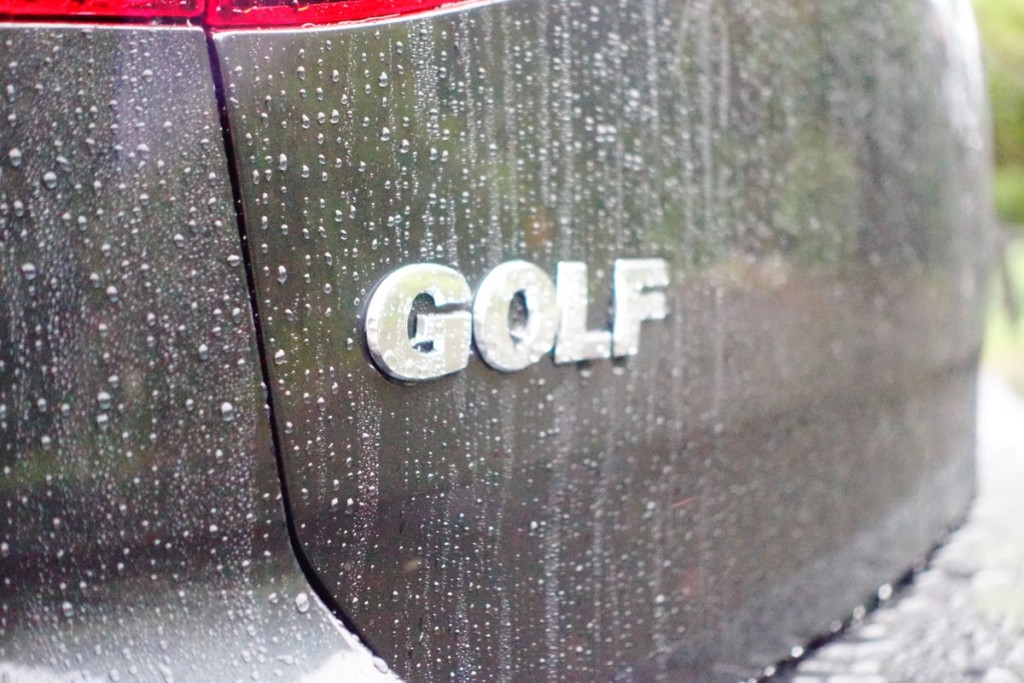
Our Golf is a limited-edition model from the final run of the pre-facelift Golf Mk7, with just 300 made. It’s powered by a 1.2-liter turbo engine paired with a seven-speed DSG transmission. Its body color, Carbon Steel Grey Metallic, was exclusive to this model. And as for the Golf…
“A 1.2-liter turbo? It must be seriously underpowered, right?”
I didn’t have particularly high expectations. But once it arrived and I took it for a drive, I discovered what a lovely car it is.
When the Golf Gets the Call
This is a personal detail, but starting this year I decided to visit my father’s family grave and my husband’s family grave once a month (by chance, the two family plots are close to each other). We take the Golf rather than the Panamera for these trips because the country roads near my father’s family home are so narrow that the Panamera simply can’t get through. (The “lol” is well earned.)
The round trip takes about three hours and covers roughly 160 kilometers, with a nice mix of highways, city streets, and country roads. It was another comfortable drive this time. I’ll share more details in a future post, but for now, here’s my overall assessment of the Golf Mk7.
My Personal Take on the Golf Mk7
1) City Driving
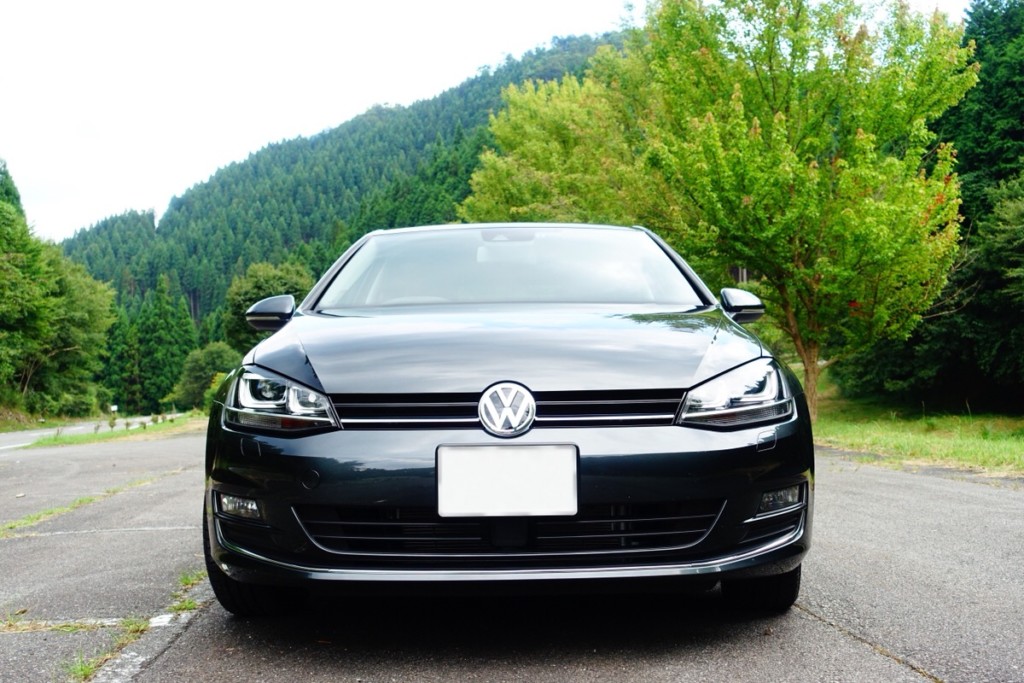
Compared with a Porsche, the Golf doesn’t surge forward the moment you touch the accelerator or deliver that thrilling sense of being perfectly in sync with the car. The pedal does feel like it has a little more free play. That said, it’s not at all vague or unresponsive—the car accelerates properly in proportion to how much you press the pedal. The brakes feel a little soft, but they work well and stop the car without a problem.
With a 1.2-liter turbo engine, I wondered whether it would manage the steep hill in front of our house. It climbs without any trouble and doesn’t feel like it’s straining to do so. In fact, our old Audi A3 2.0T felt more prone to wheelspin when starting off or climbing hills. And unlike the Panamera, the Golf is easy to maneuver, so it can go just about anywhere and fit into all sorts of parking spaces—a real convenience.
2) Highway Driving
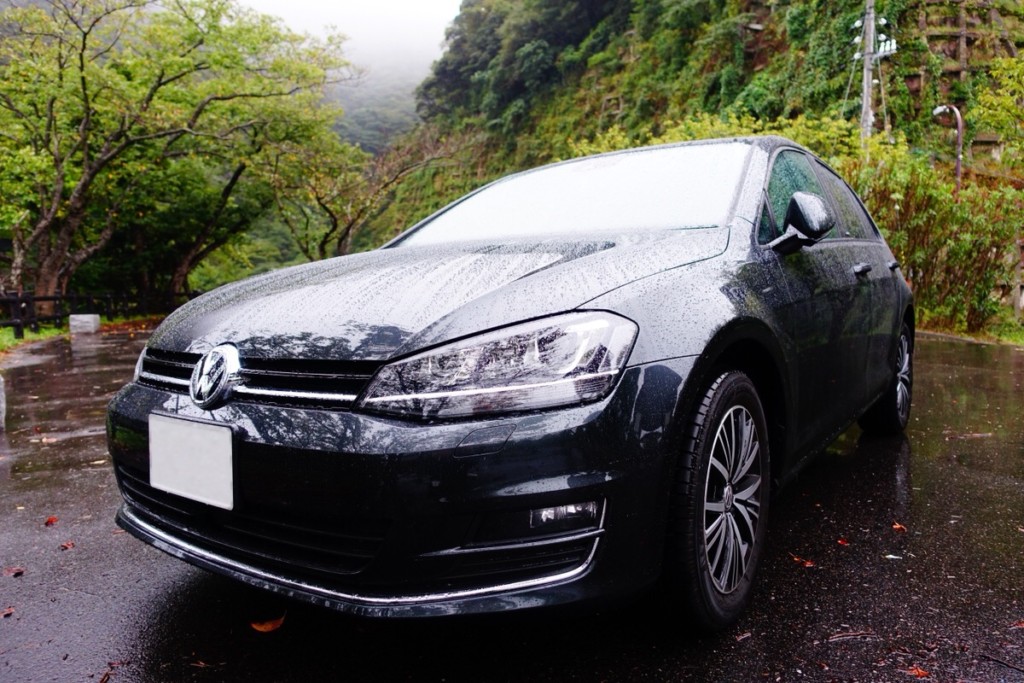
The Golf can feel a little short on power when accelerating to merge onto the highway. But that may be because I’m used to driving a beast of a car: the Panamera Turbo, which does 0–100 km/h in 3.6 seconds (Car Graphic recorded an even quicker 3.36 seconds in its test). (Lol.) Once you’re up to speed, though, acceleration from around 80 km/h is impressively smooth.
The drive feels so effortless that it’s easy to find yourself cruising well over 100 km/h before you know it. Even at those speeds, the car stays planted and stable. There’s none of the fear or tension you might expect from driving fast, so you can cruise comfortably. It’s a great reminder of what German cars do so well: they’re engineered with high-speed Autobahn driving in mind.
3) Interior and Seats
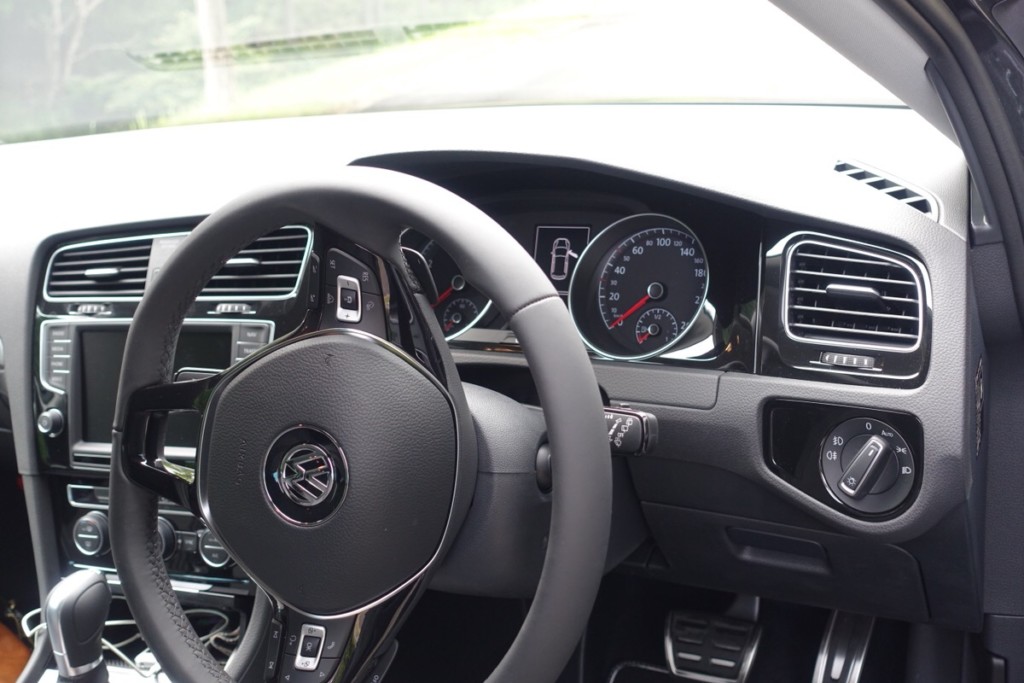
The Golf Allstar’s interior looks pretty sharp. The seat stitching adds a stylish touch, and neither the touchscreen nor the steering wheel feels cheap. The seats aren’t overly soft, so they stay comfortable even on long drives. And the back seat is surprisingly roomy. I wonder why… My husband, who’s 178 cm tall, even commented, “There’s plenty of space back here.” The driver’s and front passenger’s seats adjust manually, not electrically. I suppose that might bother someone who insists on power seats—but does anyone really feel that strongly?
4) ACC (Adaptive Cruise Control)
The Golf’s ACC (adaptive cruise control) is smart. Its lane-keeping assist can keep the car in its lane through moderate curves, and it detects cars cutting in and applies the brakes. However, unlike the newer Panamera, which has radar sensors on both sides, the Golf has just one in the center, so be cautious if another car cuts in suddenly.
Best of all, ACC makes traffic jams much less tiring. It follows along at a crawl, and after the car has been completely stopped for three seconds, ACC goes into standby. Press the RES button or lightly tap the accelerator, and it starts following again. It’s almost too comfortable—you could practically fall asleep, so stay alert! I found the default following distance too short and the braking a little late for comfort, so I recommend setting a longer distance.
5) Fuel Economy
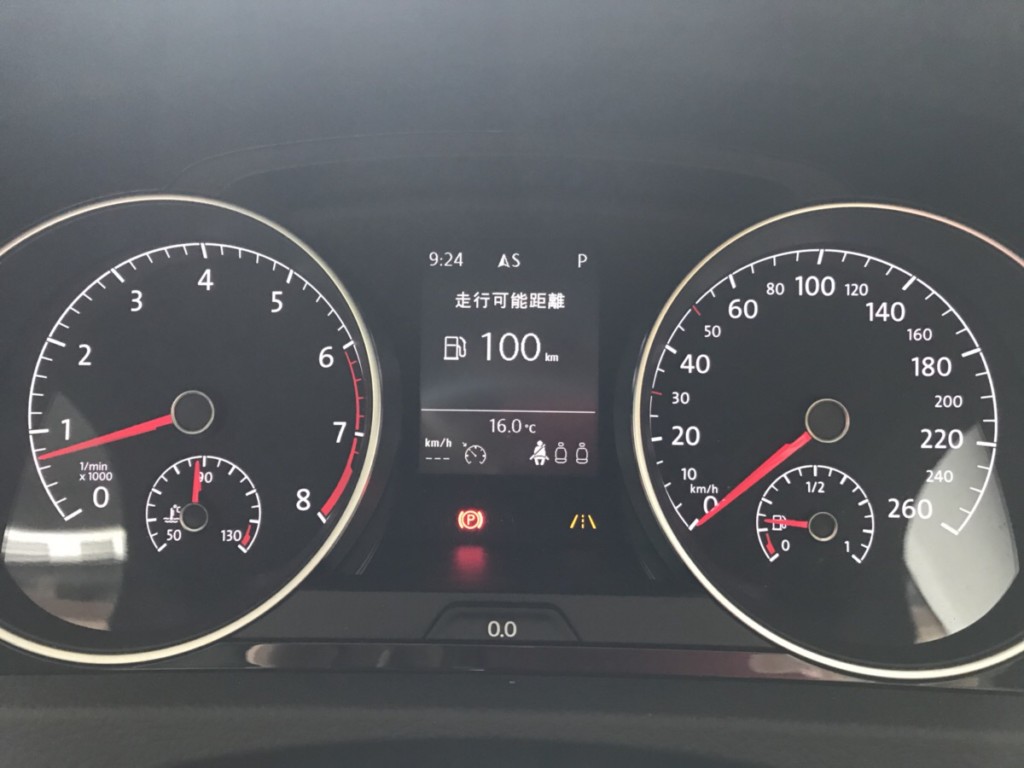
Fuel economy is excellent (though compared with the Panamera Turbo, just about any car would be!). Even with the fuel gauge nearly empty, the estimated range is still 100 km. That’s impressive! ( ゚д゚ )!!
Here’s the fuel economy from our recent trip to the family graves.
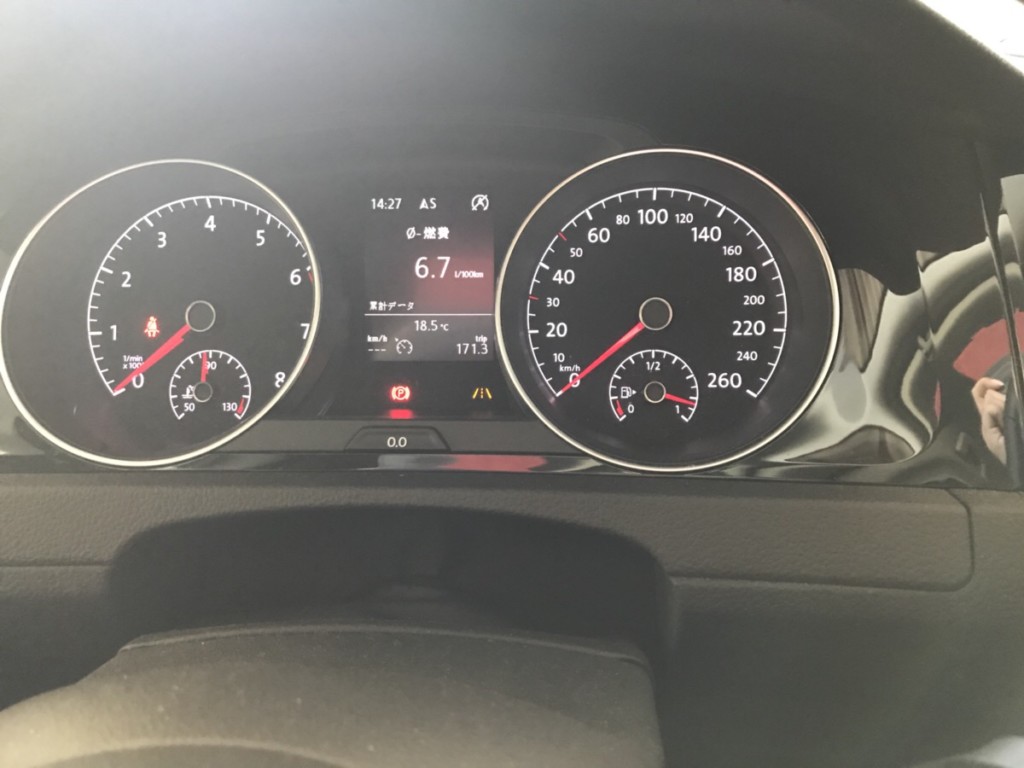
Wait, 6.7 km/L…!? That’s terrible!
That was my first thought, but my husband had set the display to show how many liters of fuel it takes to travel 100 km. Converted to the Japanese-style measure of kilometers per liter, that works out to 14.9 km/L—very respectable. My husband says it usually averages between 14 and 15 km/L on his commute, too.
We’ve driven about 20,000 km since buying the Golf new, and it hasn’t had a single problem. We had the oil changed and the car inspected at the dealership at 5,000 km, and it’s run beautifully ever since.
The Golf is such a good car that after spending a whole day driving it, I find myself thinking:
“Maybe we don’t need the Panamera after all. The Golf is great.”
That’s how good it is. ( ̄ー ̄)
My husband recently said, “If I had to choose between the 1.2 and 1.4, the 1.2 would be more than enough,” and I agree. If even someone who drives a 550-hp Panamera Turbo with a 4.0-liter twin-turbo V8 says that, it must be true. (Lol.)
このブログが気に入ったらフォローしてね!
Comment ( 0 )
Trackbacks are closed.
No comments yet.