

When You Say You Drive a Porsche, People Ask “A 911?”—Then You Say “A Boxster,” and Things Get Awkward
公開日:2019.02.01
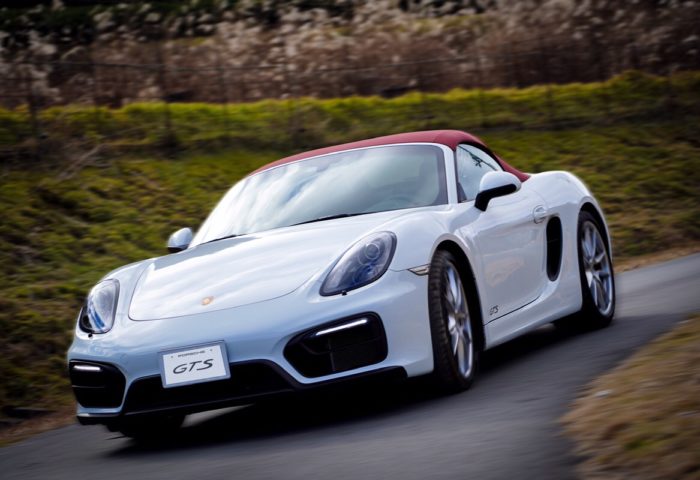

Living with a 981 Boxster
My husband had recently been commuting in his air-cooled 911, but the other day he took the Boxster to work for the first time in a while. When he got home, the first thing he said was:
Man, the Boxster really is a great car.
I couldn’t help replying, “I’ve heard you say that at least a thousand times.” (Kansai folks have a habit of exaggerating, so in reality it was probably more like 30.) But my husband went on:
The GT3 Touring that’s coming soon—will it really be better to drive than this Boxster? The Boxster’s so good, I can’t help worrying about it.
He was full of praise.
As usual, he then started muttering to himself about how “there’s nothing like the sound of a naturally aspirated engine,” how “the ride is so supple,” and how “when your inputs and the car are perfectly in sync, it’s the best feeling in the world—I could cry…”
Living in the 911’s shadow…
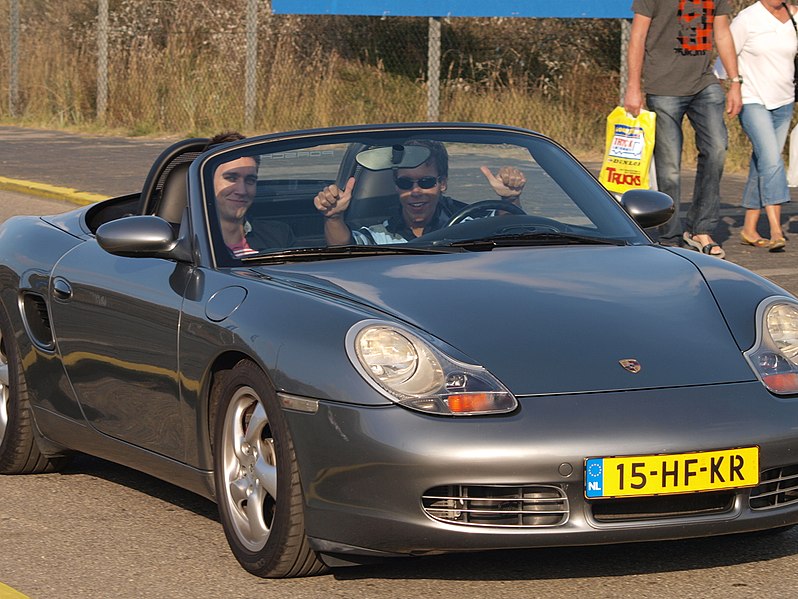
The Porsche Boxster’s name combines “Boxer,” referring to its horizontally opposed engine, with “Speedster,” a name associated with open-top models.
It’s a terrific car, yet the public image of Porsche remains firmly tied to the 911. The 911 is a fantastic car, of course, but sometimes it feels as though the Boxster gets overlooked in its shadow. I’ve also heard stories like this:
You tell a friend, “I drive a Porsche,” and they ask, “What do you drive—a 911?” You reply, “No, a Boxster.” Then there’s an awkward pause.
My husband has had that experience, too. But I want to say it here and now: the Boxster is every bit as wonderful a car as the 911.
Taking the Boxster on winding roads
When my husband and I take the Boxster out on Sanda Bullring or other enjoyable winding roads, he often says:
The Boxster really comes into its own on winding roads. It turns as if pivoting around the center of the car, and the tighter the corner, the more pronounced that feeling becomes. Rather than feeling light and fluttery, it follows each bend as if drawing one circle after another with a compass. It offers a kind of driving pleasure you don’t get from the rear-engined 911.
That’s how he puts it.
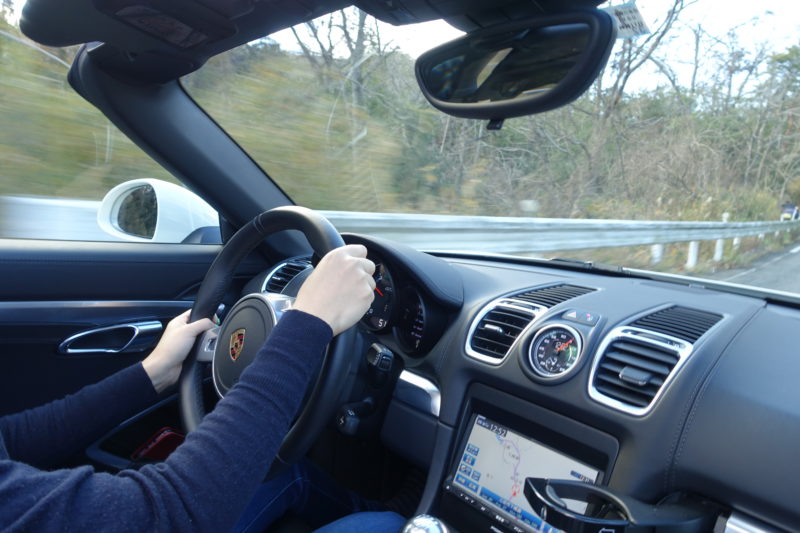
He’s right: the way the Boxster turns through a corner is completely different from the way a 911 does. Both have their strengths, but personally, I prefer the Boxster to the 911 on the Royu Driveway.
The appeal of an open-top Porsche
There’s nothing quite like the feeling of driving along the Royu Driveway or a winding road with the Boxster’s soft top fully lowered…
In spring, you can cruise beneath cherry blossoms; in summer, through fresh green foliage; and in autumn, under brilliant red leaves. (Winter can get a little chilly.) Feeling the breeze and becoming one with it as you drive is a pleasure only an open-top car can offer.
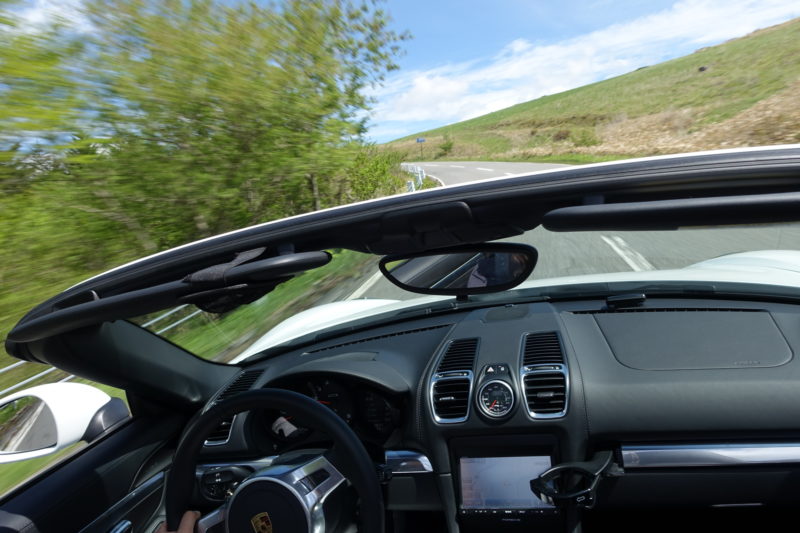
It’s nothing like a sunroof in a regular car. I’ve even found myself thinking, “Once you’ve experienced this, you’ll never want to give up an open-top car.”
In fact, my husband used to say, “I don’t get the point of convertibles! They’re less rigid than coupes, and people will think you’re showing off (acting like a big shot)—I’d never buy one.”
Then he had a chance to buy an acquaintance’s R171 SLK 350 at a good price. After driving it, his opinion changed completely. Before long, he was saying:
“Every household needs an open-top car. Having one makes life so much richer.”
One day I asked, “Okay, okay—calm down. What’s so great about open-top cars, anyway?” He replied:
Well, for starters, you can lower the roof and instantly make any situation feel special. Even if you’re driving a fast, beautiful sports car, sitting in traffic or crawling through stop-and-go driving doesn’t feel all that different from being in an economy car or a family car.
But in an open-top car, even then, lowering the roof transforms the whole experience. It feels completely different. Look up at the sky, and even traffic or driving through town can be fun.
And on a winding road or somewhere with beautiful scenery, you can take in everything—the sounds, the light, the feel of the air, the smells, even the temperature. It’s just like riding a motorcycle. That’s what makes it so special.
He was certainly passionate about it.
Of course, the 911 is also available as a convertible: the 911 Carrera Cabriolet. When I checked Porsche Japan’s website, its price started at ¥1,510,000 (tax included)—a substantial figure. By comparison, my husband’s Boxster GTS cost just under ¥10 million, even with options. That’s quite a bargain. (Although, to be fair, a Boxster is still a very expensive car by most standards…)
Boxster luggage capacity
The Boxster uses a mid-engine layout, with the engine mounted in the middle of the car, so it has two trunks—one at the front and one at the rear. The front trunk is particularly deep, with plenty of room for a medium-sized suitcase.
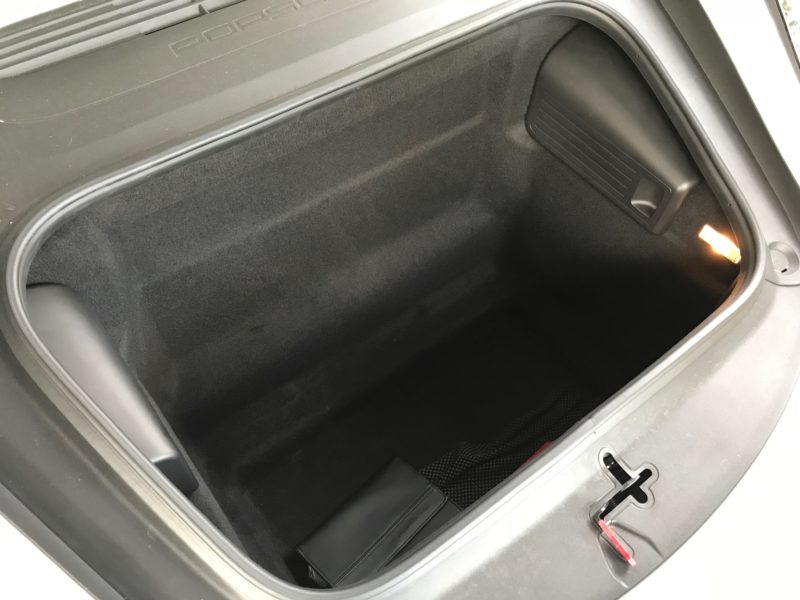
The rear trunk also has enough room for car-washing supplies, a tire repair kit, and other essentials.
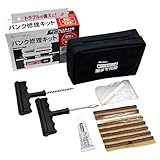
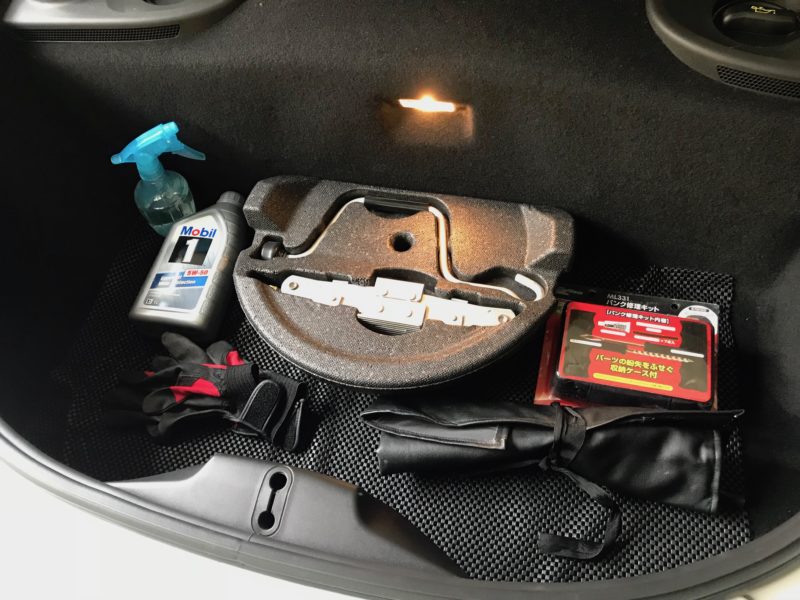
That means a Boxster can easily carry two small suitcases for a couple’s two-day, one-night driving trip. The 911 has rear seats where you can stow luggage, but its trunk is on the small side, so the Boxster wins when it comes to luggage capacity.
The naturally aspirated engine
This may not be a direct comparison between the 911 and the Boxster, but when my husband was shopping for a Boxster, he said:
“No matter what, even if I have to get in just before the end, I’m buying a 981 Boxster—the last naturally aspirated six-cylinder model.”
And he was right: with its naturally aspirated engine, the 981 Boxster accelerates smoothly, while its crisp, high-pitched engine note bursts out with a satisfying “pah!” It’s an absolute joy. My husband’s Boxster is a GTS, too, with a louder, more powerful-sounding exhaust than the standard model. Every time I ride in the passenger seat, I think how incredible it must be to drive this GTS with a manual transmission and control the engine’s sound yourself… (Which is why I’m working hard to learn to drive a manual, too! lol)
Taking the Boxster to the track
The other day, my husband took the Boxster to a track event at Suzuka Circuit. Before he went, he wondered, “How well will an open-top Boxster really perform?” But when he got home, he was buzzing as he told me:
At Suzuka’s 130R, the faster I went, the more stable the Boxster seemed to feel. The moment I turned the wheel and entered the corner, the car hunkered down and turned as if it were glued to the track. I remember thinking, “Wait—the Boxster’s this stable?” It was a strange feeling.
That’s what he said.
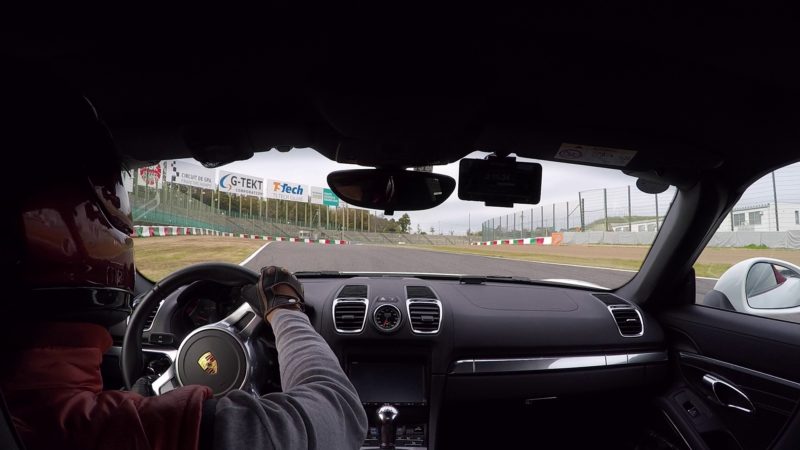
If you’re chasing lap times, you’d naturally be better off in a track-focused car like a GT3 or GT4. But after taking the Boxster around the circuit, my husband realized that it still has plenty of untapped potential.
A 986 Boxster S owner’s perspective
Just the other day, my husband sent me a link to an online article with this message: “This Boxster article really gets to the heart of what makes the car so good. Have a read.” I read it straight away, and it described the same qualities he’d found so appealing.
The article was based on an interview with the owner of a 2001 first-generation Boxster S (986) with a manual transmission. From the article, it seems the owner runs an auto repair shop and is well known for looking after early Porsche owners, including people with 356s and early 911s.
Until fairly recently, his own car had been a 1974 Porsche 914 2.0. The article explored why a specialist so familiar with Porsches chose a 986 Boxster S as his own car.
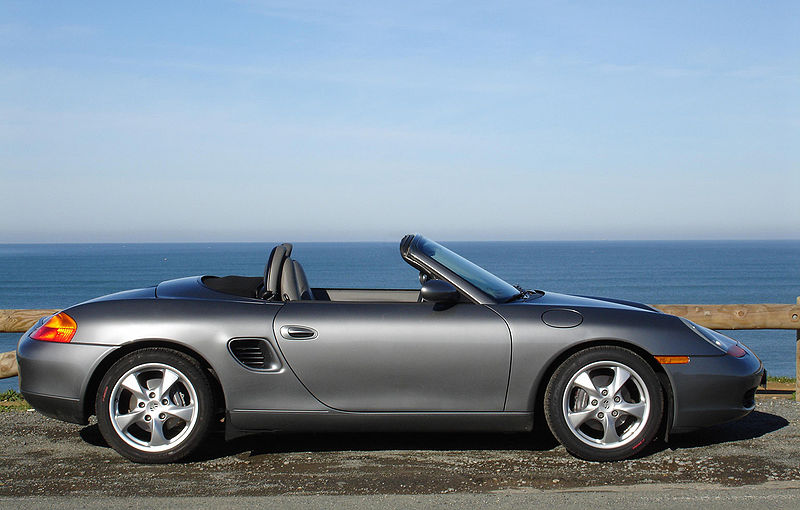
Here’s what he had to say:
When it comes to the Boxster, a lot of people—especially 911 owners—dismiss it without giving it a chance. (…) I let customers take one for a drive or ride along as a passenger so they can experience what makes the Boxster special. They’re all amazed, saying, “I can’t believe this car is nearly 20 years old!”
The editor who wrote the article also had this to say:
What numbers can never capture: the Boxster experience
The engine’s mechanical sounds and exhaust note come directly from behind you, stimulating all five senses. One of the Boxster’s greatest strengths is that you can enjoy this experience around town. And on a winding road or highway, you can enjoy even more of what this car has to offer.
What makes the Boxster special
After taking in all these reasons to love the Boxster, my husband put it this way:
Unfortunately, when you drive a Boxster or Cayman, people sometimes assume you’re driving a “cheap Porsche.” They do cost less than a 911, but even the base Boxster and Cayman start at around ¥7 million. And most people add options, which can tack on another ¥1–3 million.
So it’s not unusual to build a car and find that the final price is enough to buy a base 911.
But people tend to judge by the car’s list price, so I guess they don’t realize that.
And when you actually drive a Boxster, there are plenty of times when it feels like it outdoes the 911. The price difference doesn’t translate into a difference in how good they are. The Boxster and Cayman may have a different character from the 911, but they’re every bit as much real Porsches, with their own unmistakable driving identities. So even though they cost different amounts, it’s not about which one is better or worse—it comes down to which driving character you prefer.
It’s like potato chips: do you prefer lightly salted or consomme flavor? (laughs)
They’re made from the same basic ingredients; it’s just a different flavor. Boxster and Cayman owners shouldn’t feel inferior—they should drive their cars with pride.
That makes sense. Lately, I’ve had more and more opportunities to realize just how many great cars Porsche has made. It would be a real shame to dismiss any of them without giving them a chance. I hope I’ll have plenty more opportunities to experience different Porsches—including on test drives.
このブログが気に入ったらフォローしてね!
Comment ( 0 )
Trackbacks are closed.
No comments yet.