

A Trip to Awaji Island in the Taycan: When Will CHAdeMO Charging Errors Be Fixed?
公開日:
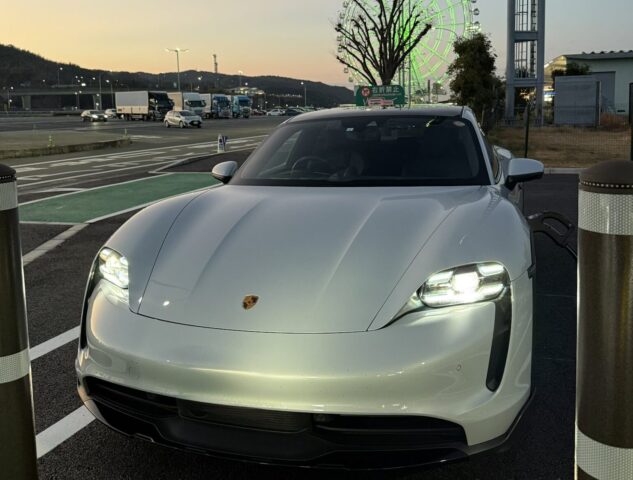

Recently, I took a trip to Awaji Island in my Taycan. At the end of last year, I decided, “From now on, I’ll make time to visit shrines and collect goshuin stamps,” so I’m planning to explore various shrines with my beloved Taycan. However, I ran into that familiar trouble again.
It was a charging error with the CHAdeMO fast charger.
コンテンツ
Using Fast Charging on the Go: An Infrequent Necessity
Since we have the ability to charge at home with a standard charger, we rarely use fast chargers while out. My daily driving mainly involves trips around Osaka, usually about 100 km or less. That means there’s no real need to charge mid-trip, and charging overnight at home easily covers our needs.
I usually keep the battery charged up to 80%, and even if it drops to around 50%, it’s back near 80% by the next morning. That’s enough for about 300 km of driving, so daily life is rarely disrupted.
Fast charging is reserved for occasions like this one, when we’re covering relatively long distances. On this trip to Awaji Island, we spent time letting the kids play at parks and visited several shrines, resulting in a driving distance of about 150 to 200 km.
We expected to return home with around 15% battery left, but “Well, it should be fine, but just in case, let’s charge at the highway service area on the way back,” we decided.
The Hassle and Frustration of Visitor Fast Charging
I use fast chargers maybe once a month or less. So honestly, I feel it’s not worth paying the roughly 4,000 yen monthly fee to become an e-Mobility Power (eMP) member. While membership offers cheaper charging rates, my infrequent use means I usually opt for pay-as-you-go visitor charging.
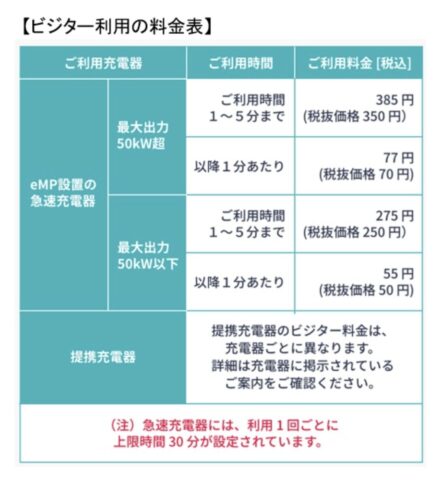
Image source: e-Mobility Power Visitor Charging Rate Table
But visitor charging is truly a pain. The charging cable itself is heavy and cumbersome—like an “elephant’s trunk”—and just plugging it in is a challenge. Then you have to stand in front of the terminal with your smartphone and wallet, scan QR codes, and enter your credit card details every single time. It usually takes 2 to 3 minutes just to get the charging started.
And the real problem is the sheer number of errors.
From my experience, about one in three attempts ends in an error. I often think, “This probably won’t work again,” and when it does succeed on the first try, I’m genuinely surprised and think, “Wow, lucky this time!”
The same thing happened on the way back from Awaji Island. When we stopped at the Awaji Island Highway Oasis, the charger gave an error again. Usually, retrying twice or so gets it going, but this time no matter how many times we tried, it failed. Even when it briefly connected, 15 seconds later it would error out again.
To make matters worse, we were still charged 385 yen for that brief connection (ouch).
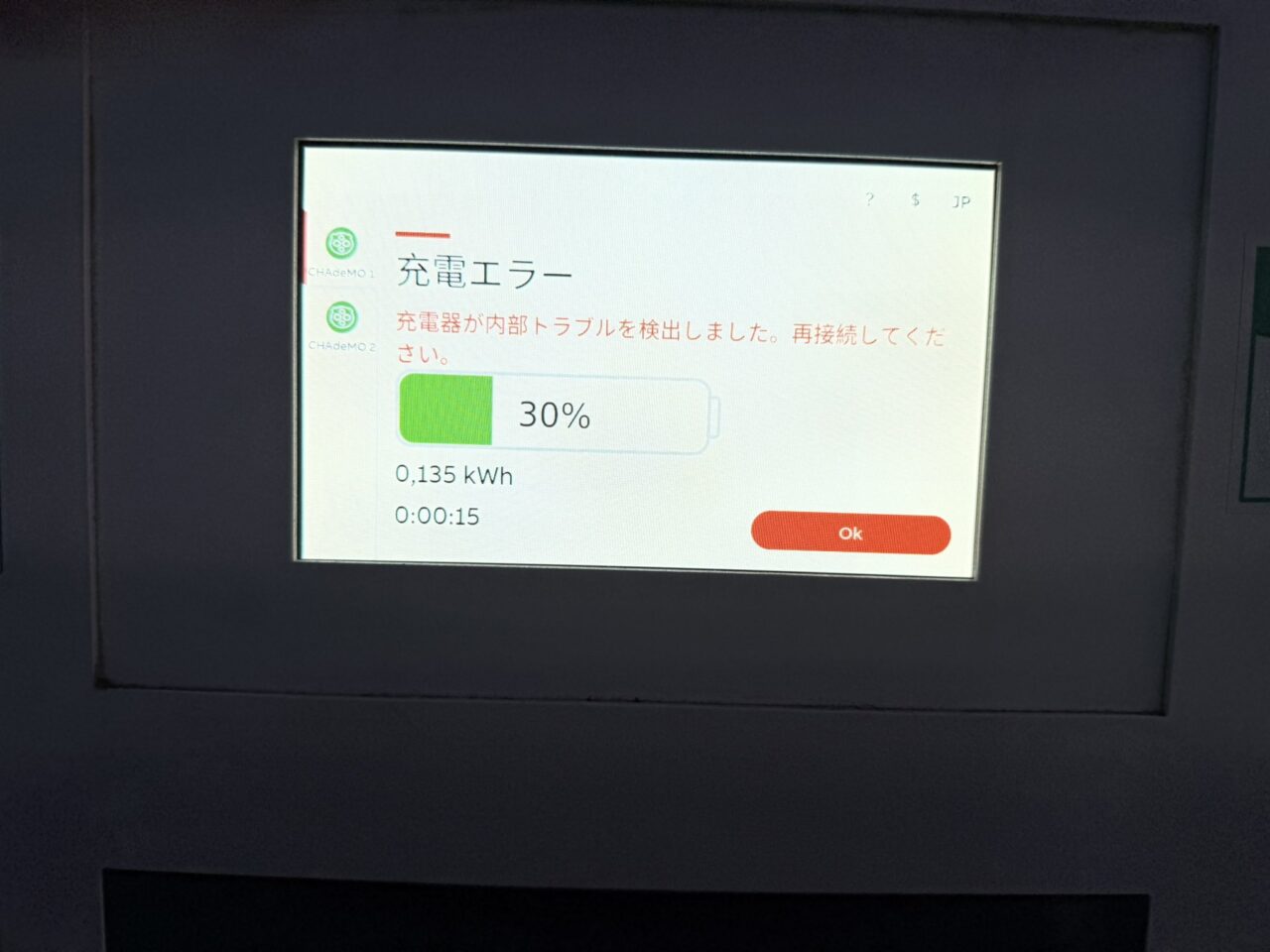
There were two chargers, so I tried the other one as well, but the result was the same. I wondered, “Is it the Taycan or the CHAdeMO charger that’s the problem?” Just then, a Toyota vehicle arrived and started charging—but it showed the same error.
So this time, it was probably a CHAdeMO issue. In the end, we gave up on charging, set the navigation to prioritize shortest distance, and braved the heavily congested Hanshin Expressway on a holiday evening to get home.
The Stark Contrast with Tesla’s Supercharger Experience
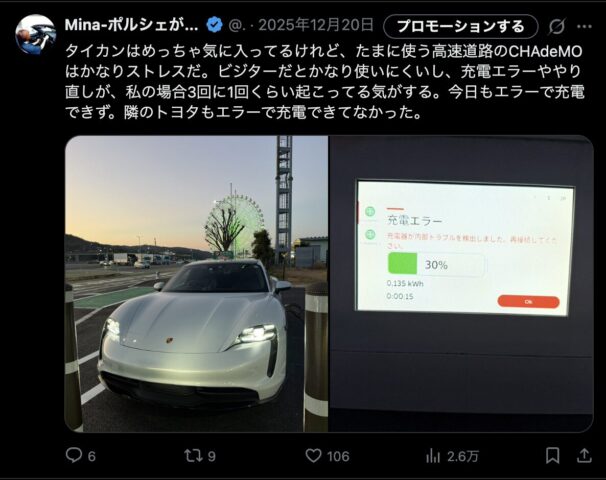
I couldn’t help but vent my frustration on X (formerly Twitter), and the post got a lot of impressions (laughs). Clearly, many share the same dissatisfaction with the charging infrastructure.
A few days later, I had the chance to travel in a Tesla. I stopped by a Supercharger near my workplace, planning to wait and get some work done while charging—and it was astonishingly easy.
Just plug in the slim charging cable with a satisfying click. That’s it. (If your card is registered in the app beforehand, you don’t even need to touch your phone.)
It was so effortless. I had planned to get some work done while waiting, but the battery was already 80% charged before I knew it, and I was on my way again.
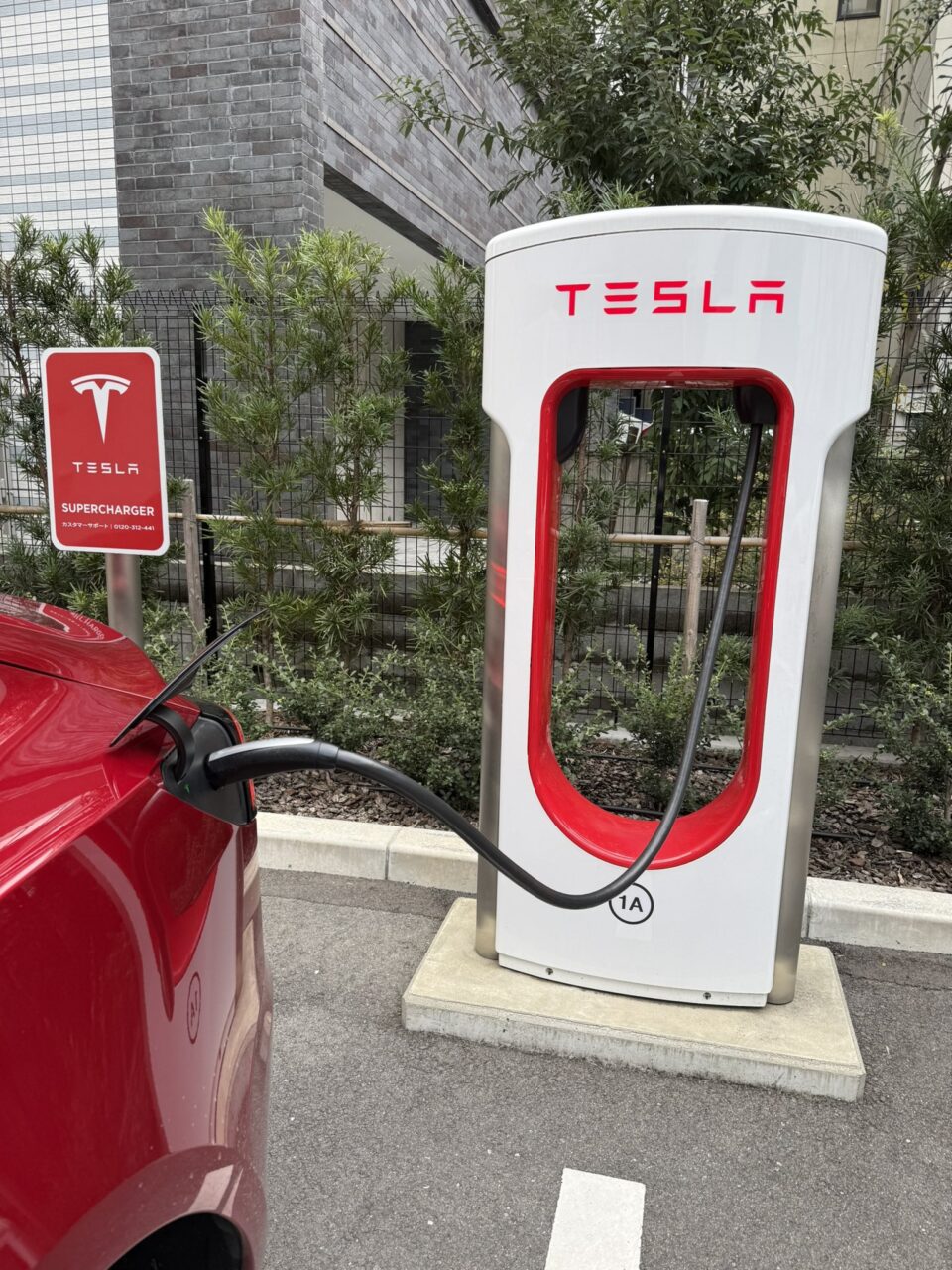
I couldn’t help but think, “Why can’t this be the standard everywhere?” while once again appreciating the excellence of Tesla’s Supercharger network.
The Taycan is truly an amazing car. That’s why I hope Japan’s fast charging infrastructure can become smoother and more reliable.
Just to be safe, I plan to have the Porsche Center check the Taycan’s fast charging system early this year (standard charging works fine). I’m looking forward to a day when I can enjoy long-distance drives in the Taycan with complete peace of mind.
このブログが気に入ったらフォローしてね!
Comment ( 0 )
Trackbacks are closed.
No comments yet.