

Test-Driving the New Chevrolet Corvette (C8): It Exceeded Every Expectation
公開日:

コンテンツ
The Appeal of American Sports Cars
I haven’t been able to travel much lately because of COVID, but I used to visit the U.S. for work once or twice a year.
Whenever I went, I’d rent a car in a slightly nicer class and try to get around by car as much as possible. Sometimes I’d even take a grand tour from LA to Las Vegas and on to San Francisco—it was one of the best parts of the trip.
One thing that always struck me was how good American sports cars looked. You see the occasional Camaro, Mustang, or Corvette in Japan, too, but there’s something about seeing them on American streets—maybe it’s the scenery, or maybe the excitement of being there—that makes them look especially cool.
I’d be so taken with them that I’d find myself browsing Carsensor as soon as I got home.
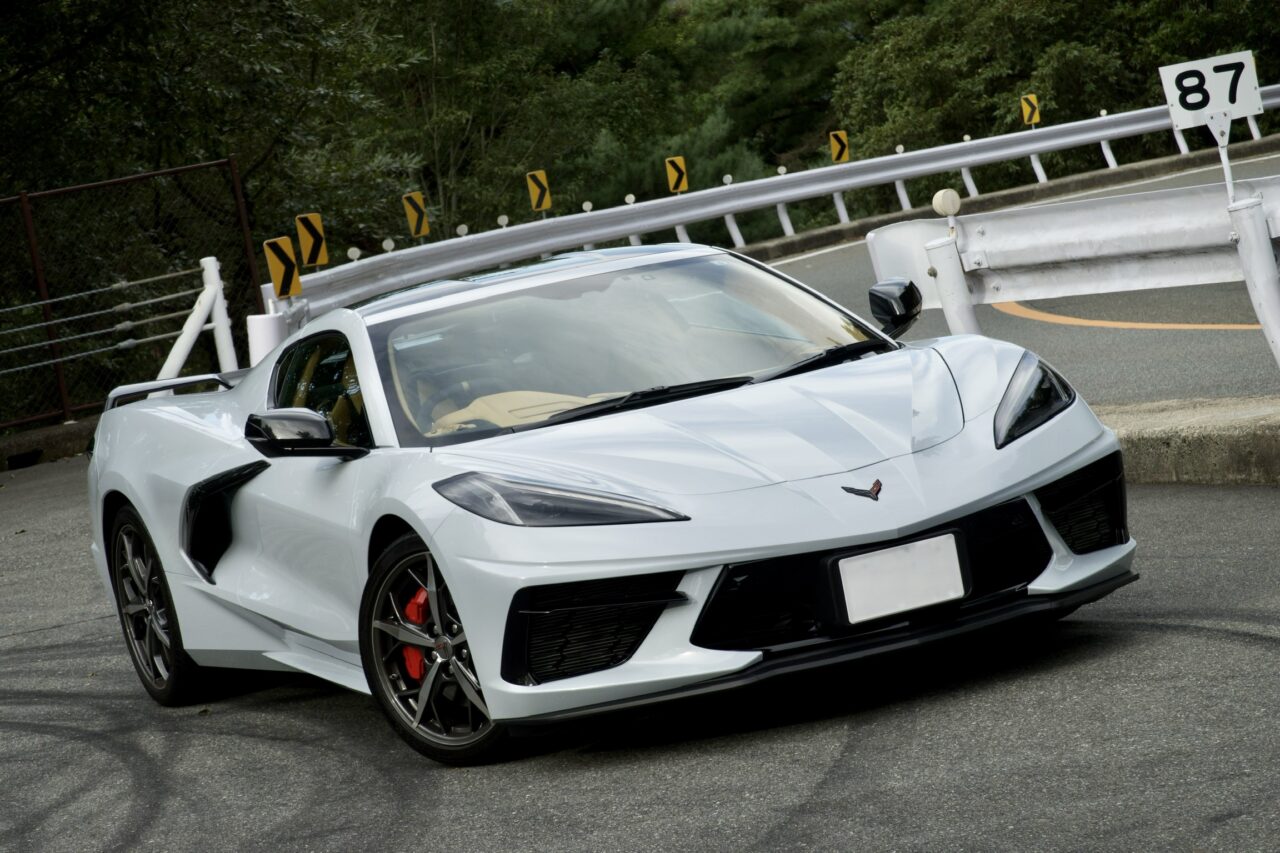
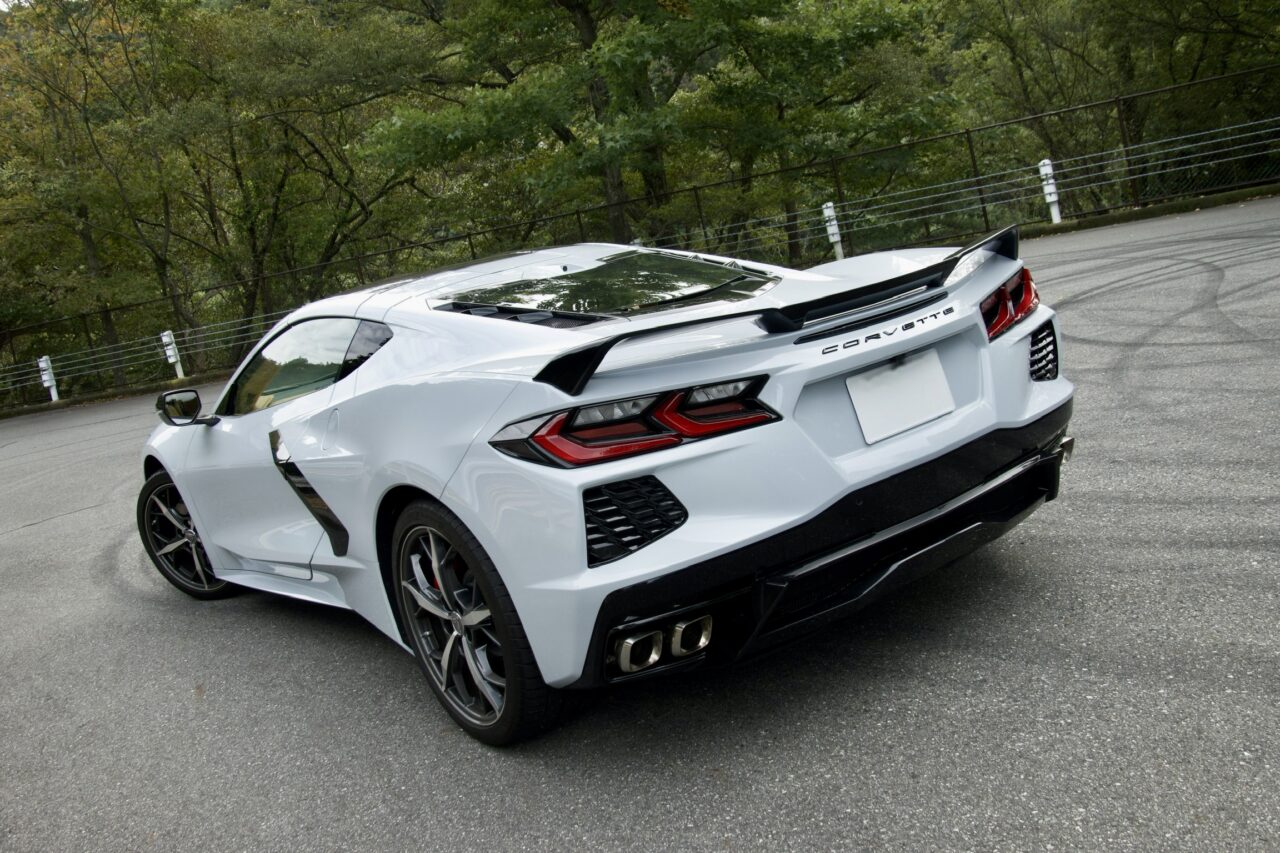
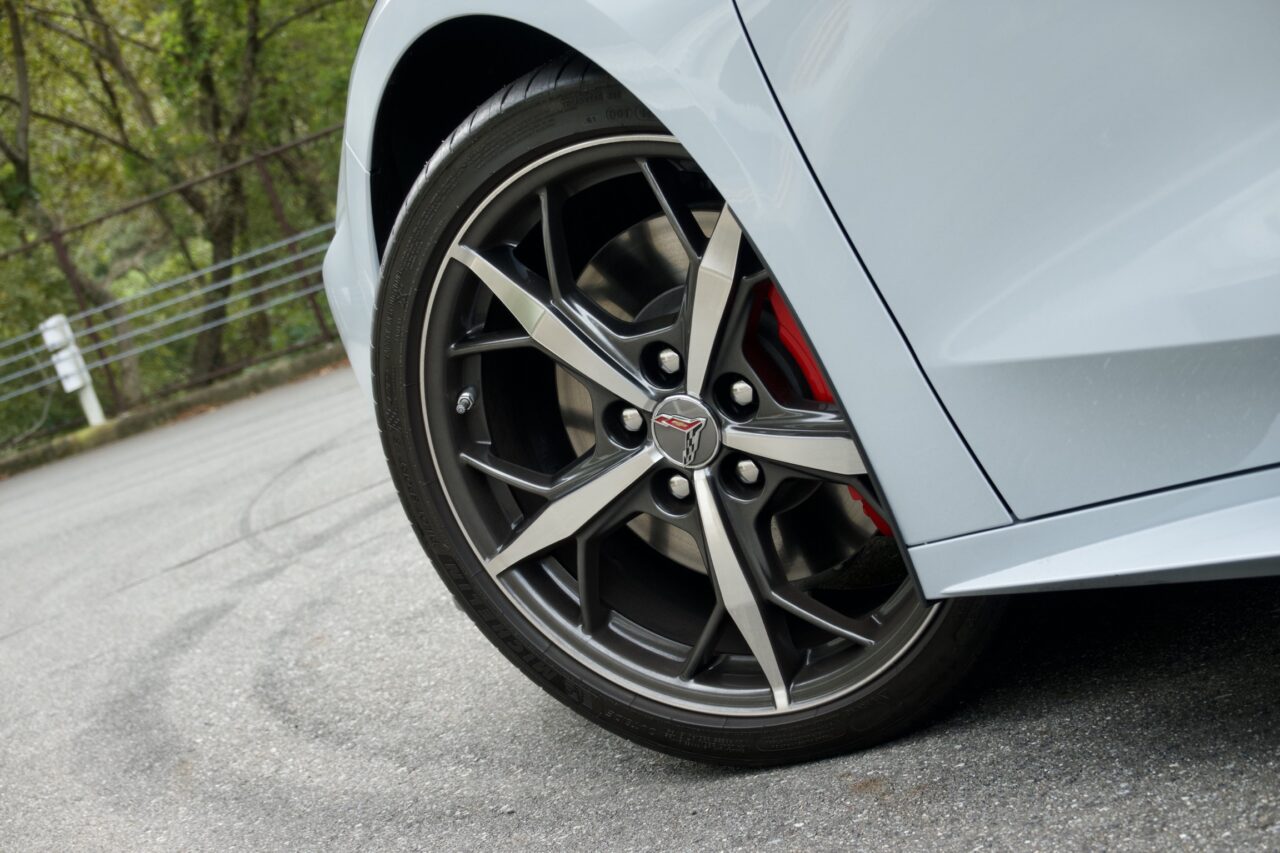
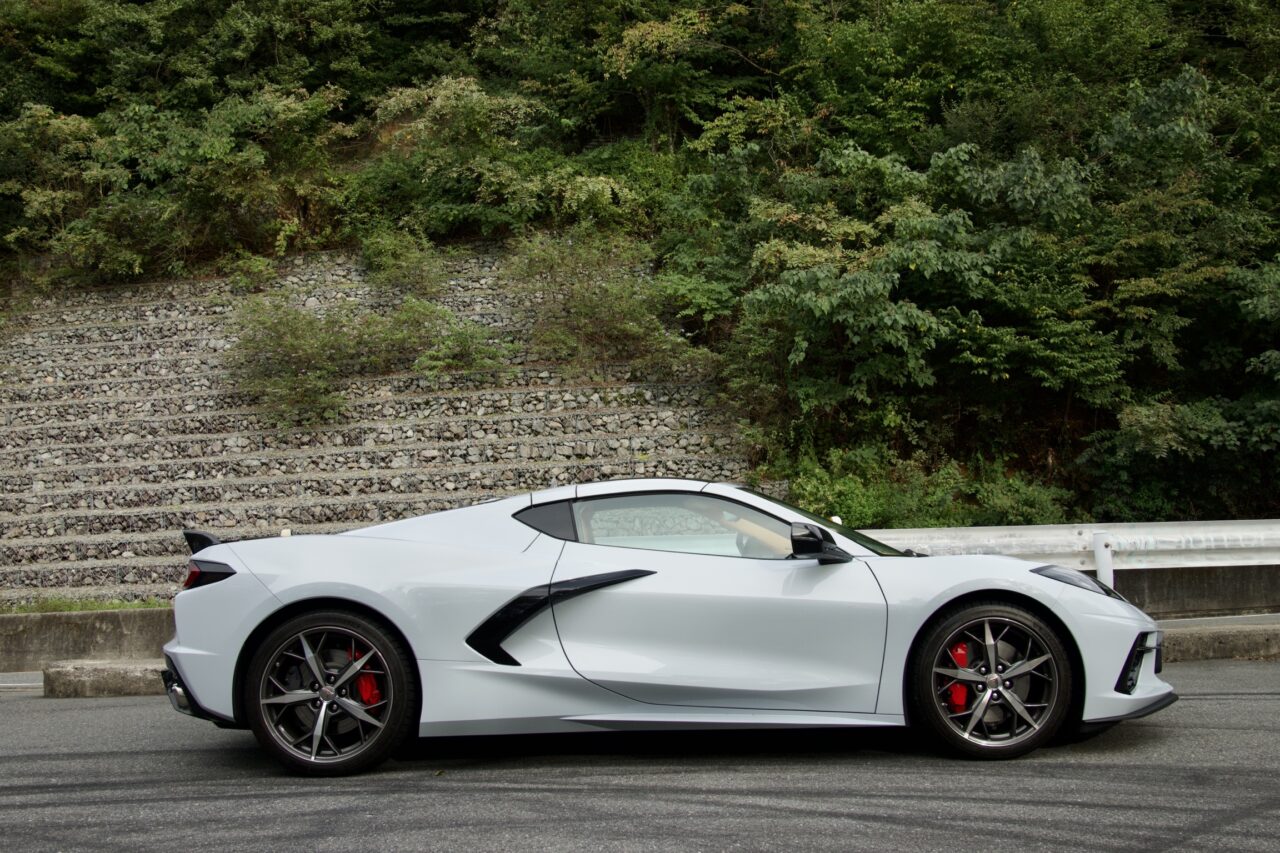
This isn’t white, but Ceramic Matrix Gray Metallic—a very light gray with a hint of blue, according to the owner.
I was especially interested in the C8 Corvette. I’d even been thinking about taking one for a test drive someday.
As luck would have it, I recently got the chance to drive the new Corvette. Here’s how it went.
Test-Driving the Corvette (C8) 3LT
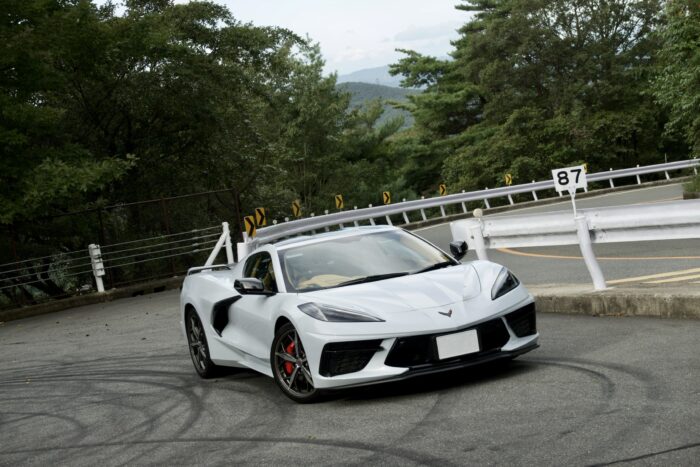
My first impression of the exterior? It simply looks fantastic. It’s the kind of design you can imagine kids drawing when they picture a supercar or sports car: pure, concentrated cool.
The wide, low body measures 4,630 mm long, 1,940 mm wide, and 1,225 mm tall, but it looks even longer and wider in person. The large side mirrors and the rising crease that runs from the front wheel arches toward the rear make the car look more substantial than the dimensions suggest.
To my eye, it feels bigger than a Ferrari F8, but a little smaller than a Lamborghini Huracán.
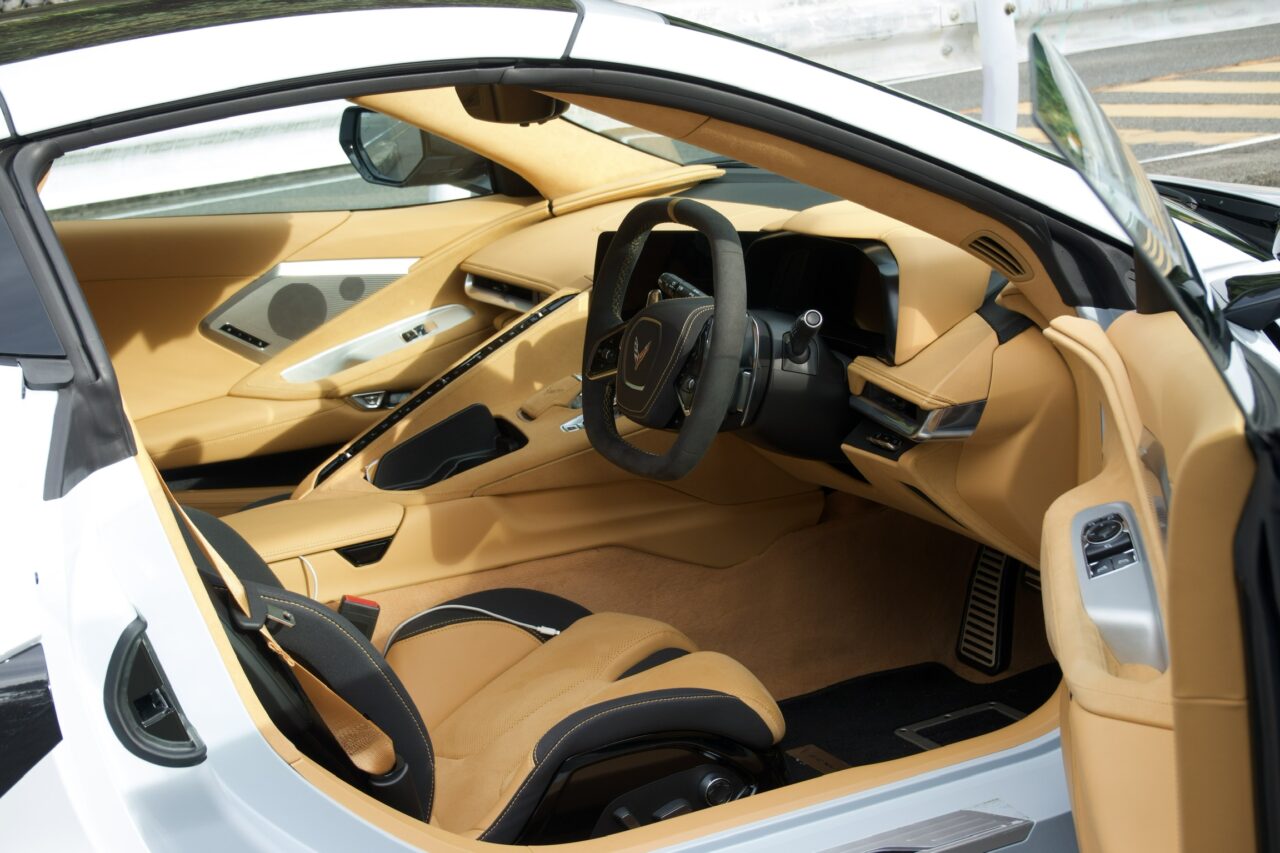
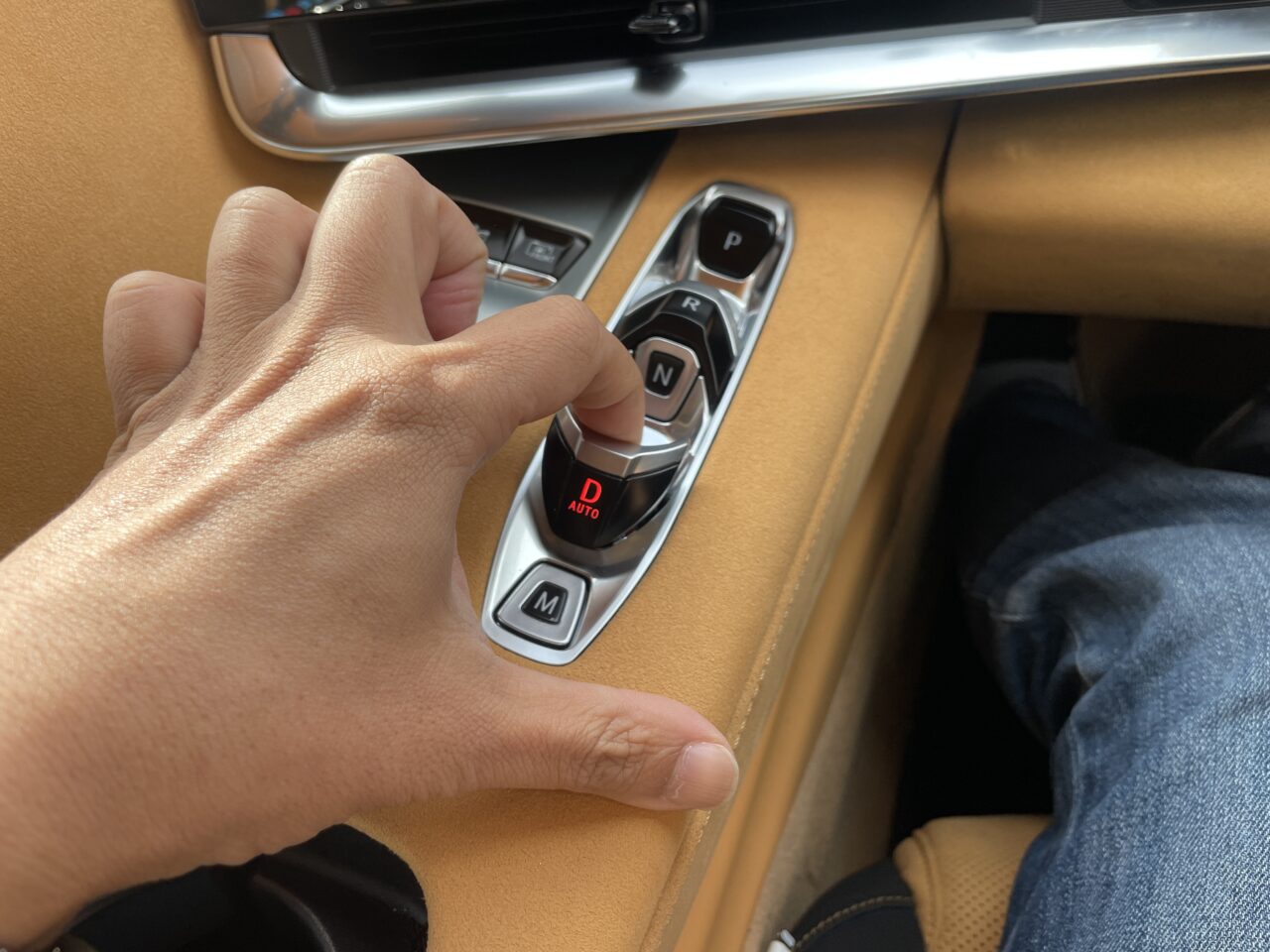
Pull the D button up with your finger to select Drive.
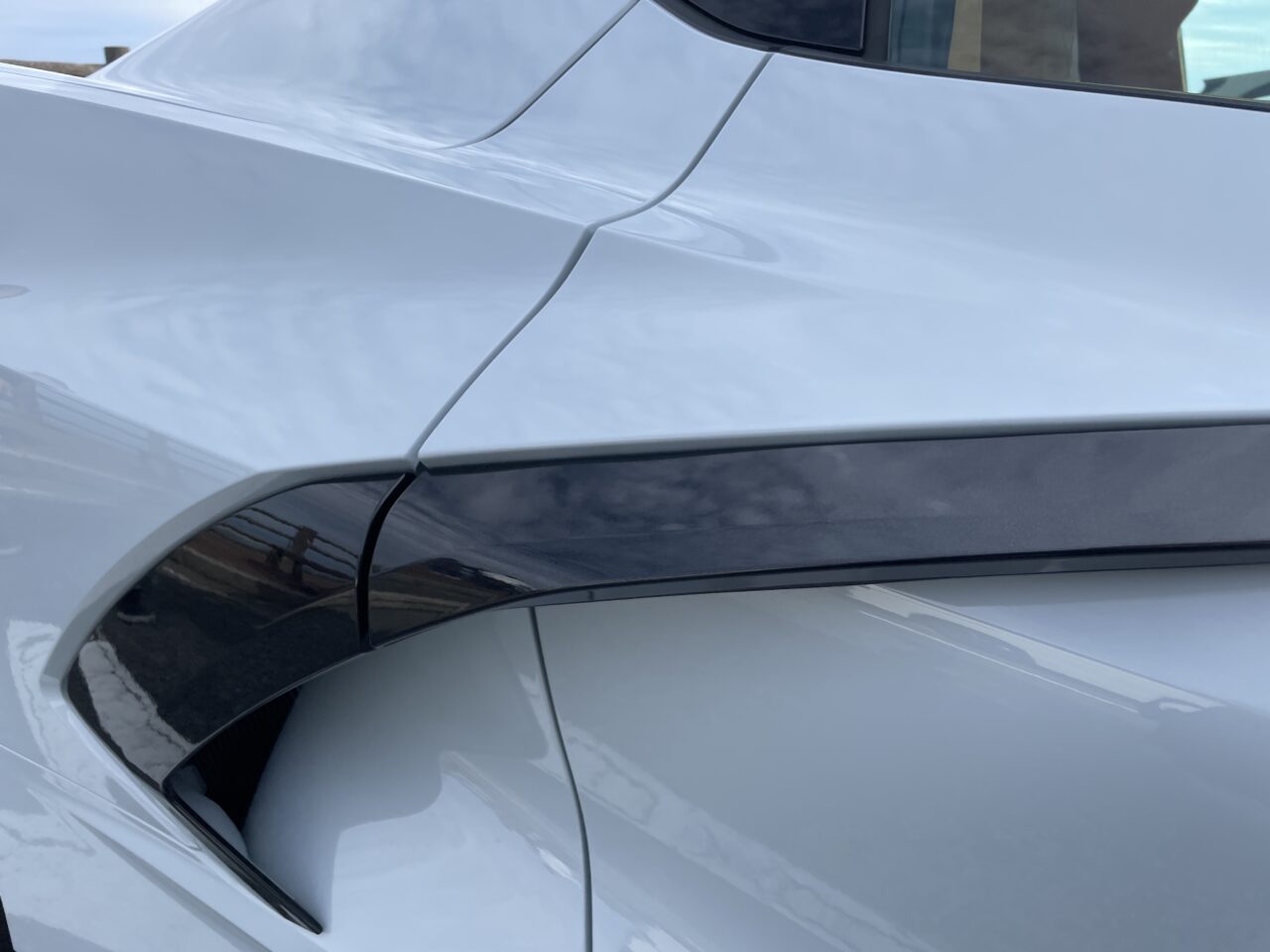
The switch to open the door is underneath this black, air-deflector-like piece. It protrudes quite a bit, so the owner says you have to be more careful about the car’s width than the numbers alone would suggest.
The owner told me that the car’s width can be a challenge. The side mirrors stick out farther than you might expect, the doors are long, and the black, air-deflector-like trim leading to the door-mounted air intake protrudes quite far outward. If another car parks alongside, getting in can be tricky.
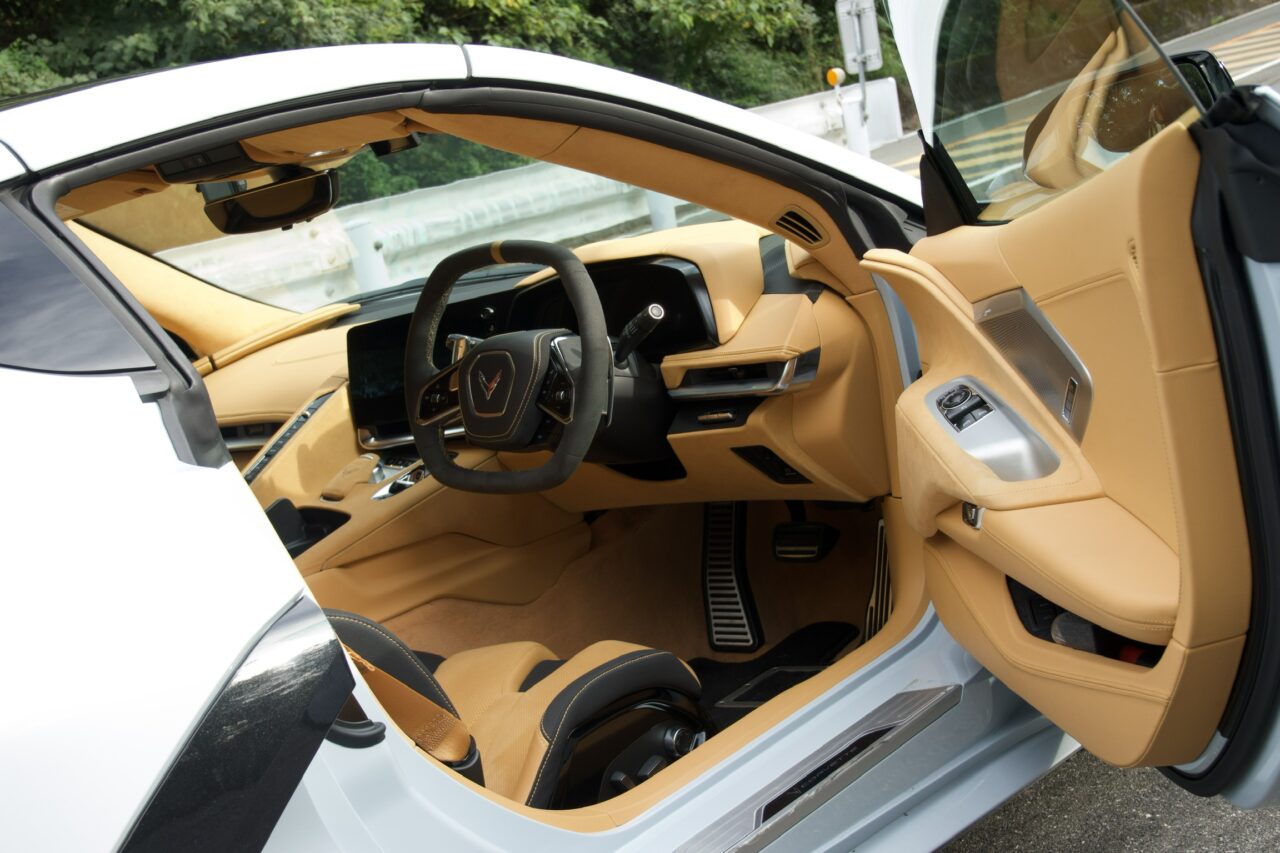
To get in, you press a button beneath the door handle to open the door—a setup that reminded me of a McLaren. The door is huge, but not as heavy as it looks. It has just the right amount of heft, without feeling flimsy.
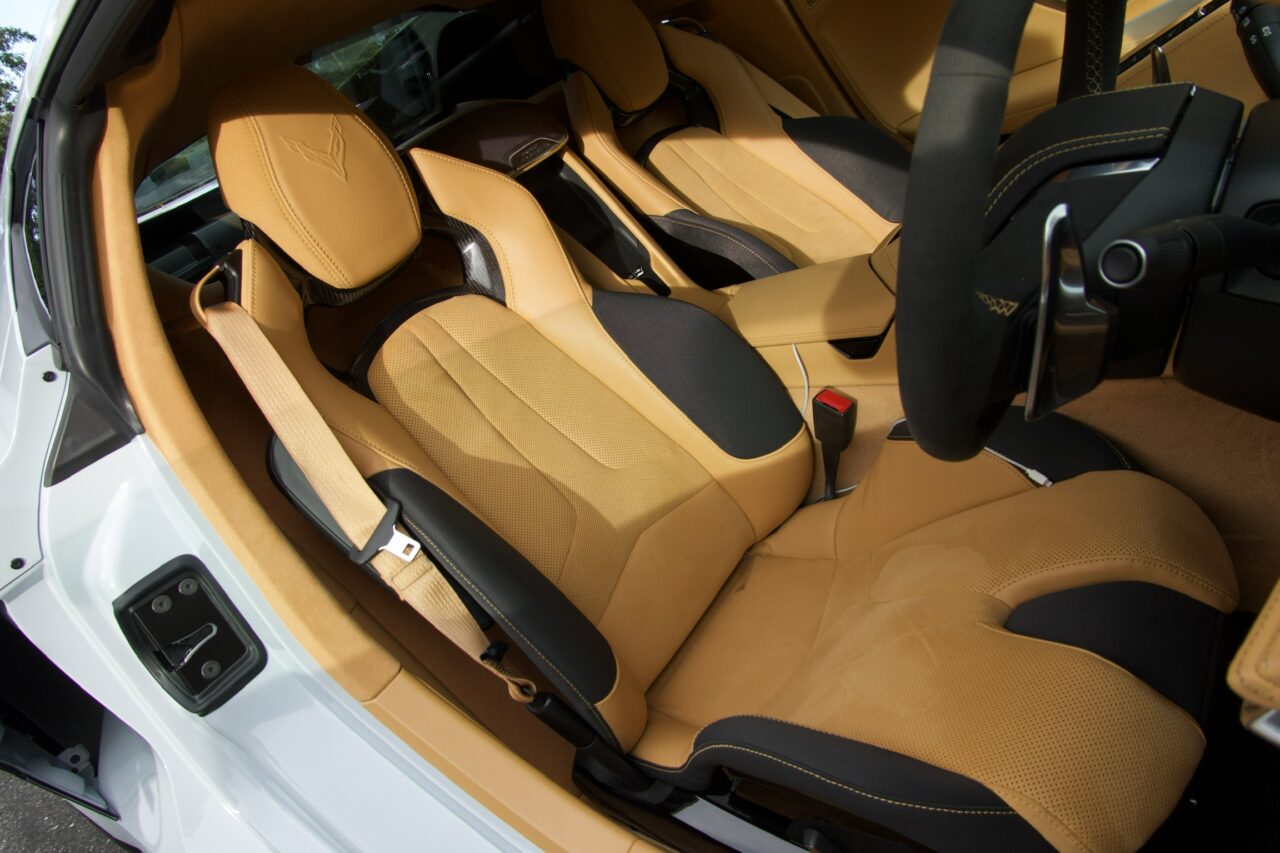
The cabin feels wonderfully cocooned and enclosed. The center console sweeps out from the dashboard and angles toward the driver. The design somehow brings the A80 Toyota Supra to mind, and I really like it.
The seats are power-adjustable, and unlike some older American cars, there’s no issue with the pedals feeling too far away for someone with a typical Japanese build. Most drivers of average stature should be able to find a comfortable driving position.
Ride Comfort
Start the engine, and the 6.2-liter V8 wakes up with a wonderfully assertive sound—surprisingly so for a modern car. It isn’t over the top, though; the volume stays within reasonable bounds.
Pull up the D button to select Drive, and the Corvette eases forward. In the first 10 meters out of the parking lot, I found myself saying, “Oh, this rides really well!”
The tires roll over the road with a composure you wouldn’t expect from the exterior. It doesn’t have the firm, tightly wound feel of a European sports car.
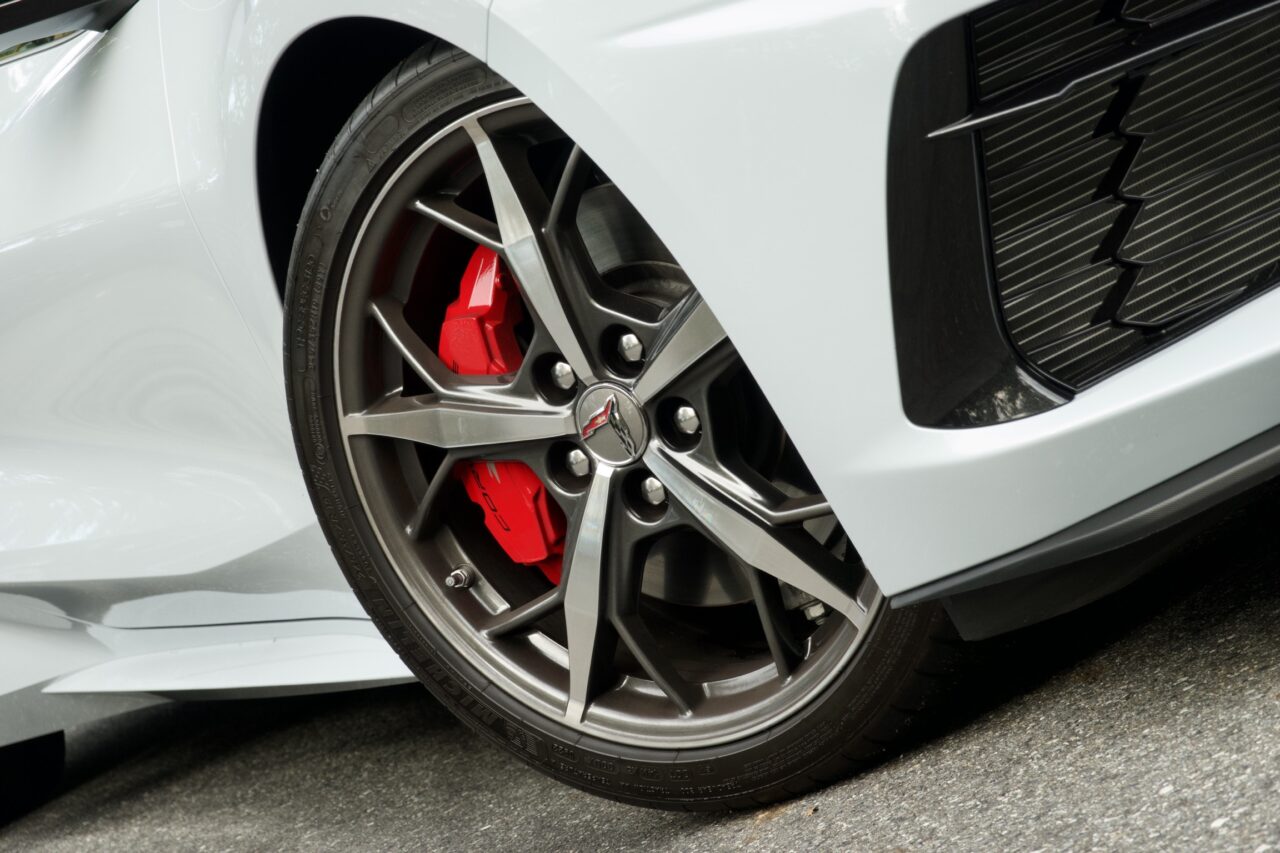
Among cars with supercar looks—and ultra-high-performance sports cars like Porsches—the Corvette is probably near the top for ride comfort. In fact, based on my experience, I can’t think of another car that comes close.
It would make a perfectly good date car, and it’s ideal for long-distance grand touring.
Ease of Driving and Handling
Press the accelerator, and the Corvette feels remarkably smooth and easy to manage for a 6-liter-plus OHV engine. To me, it feels light on its feet, like a torquey three-liter engine.
As you’d expect from a large-displacement naturally aspirated engine, it delivers plenty of torque from low revs, but the torque delivery is remarkably even. The response feels natural and predictable, rising in step with throttle input and engine speed. That should make it easy to drive even in stop-and-go city traffic.
“This is really easy to drive,” I said to the owner as we took a couple of corners. The steering feels very natural. The suspension had seemed mild at first, but there’s no hint of uncertainty. It reminded me of a Mercedes coupe: soft and supple, yet planted and confidence-inspiring, with not a trace of nervousness.
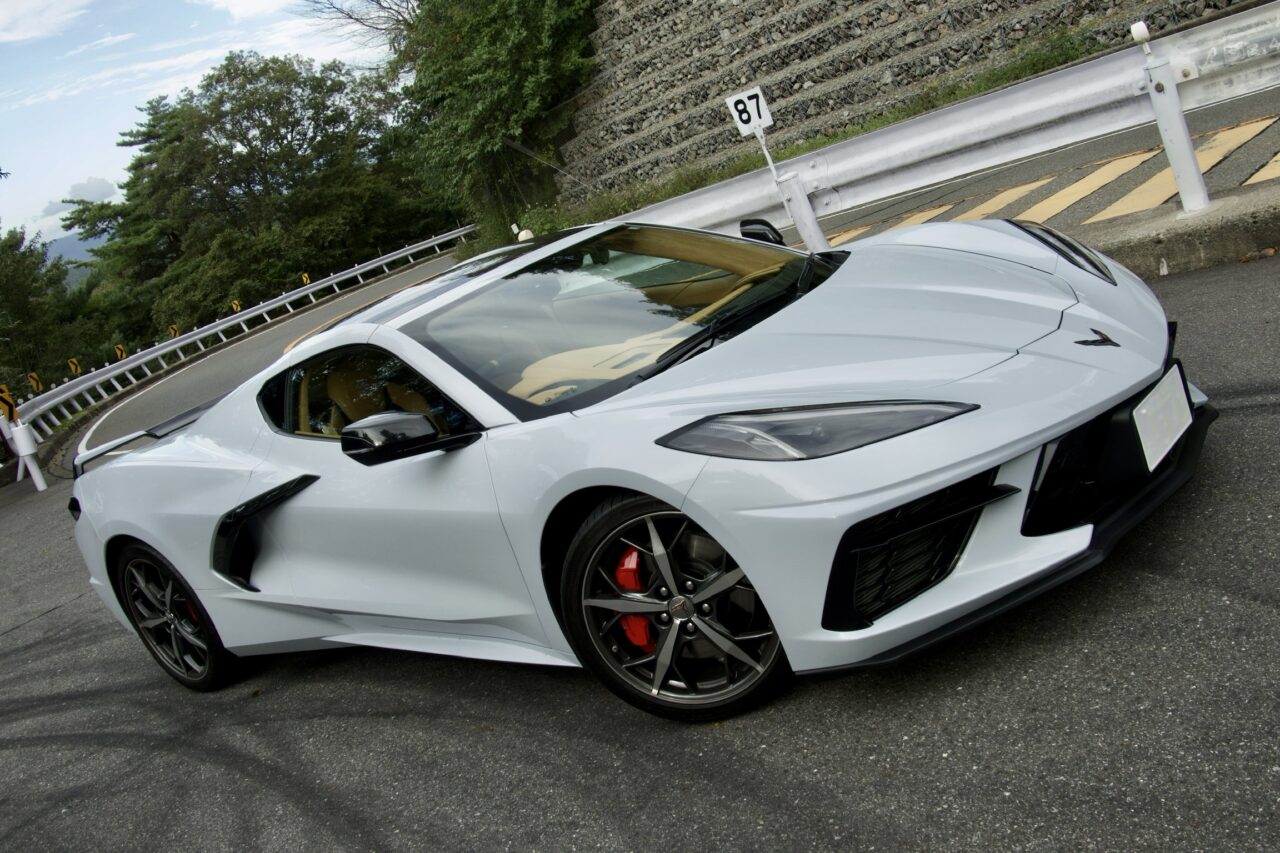
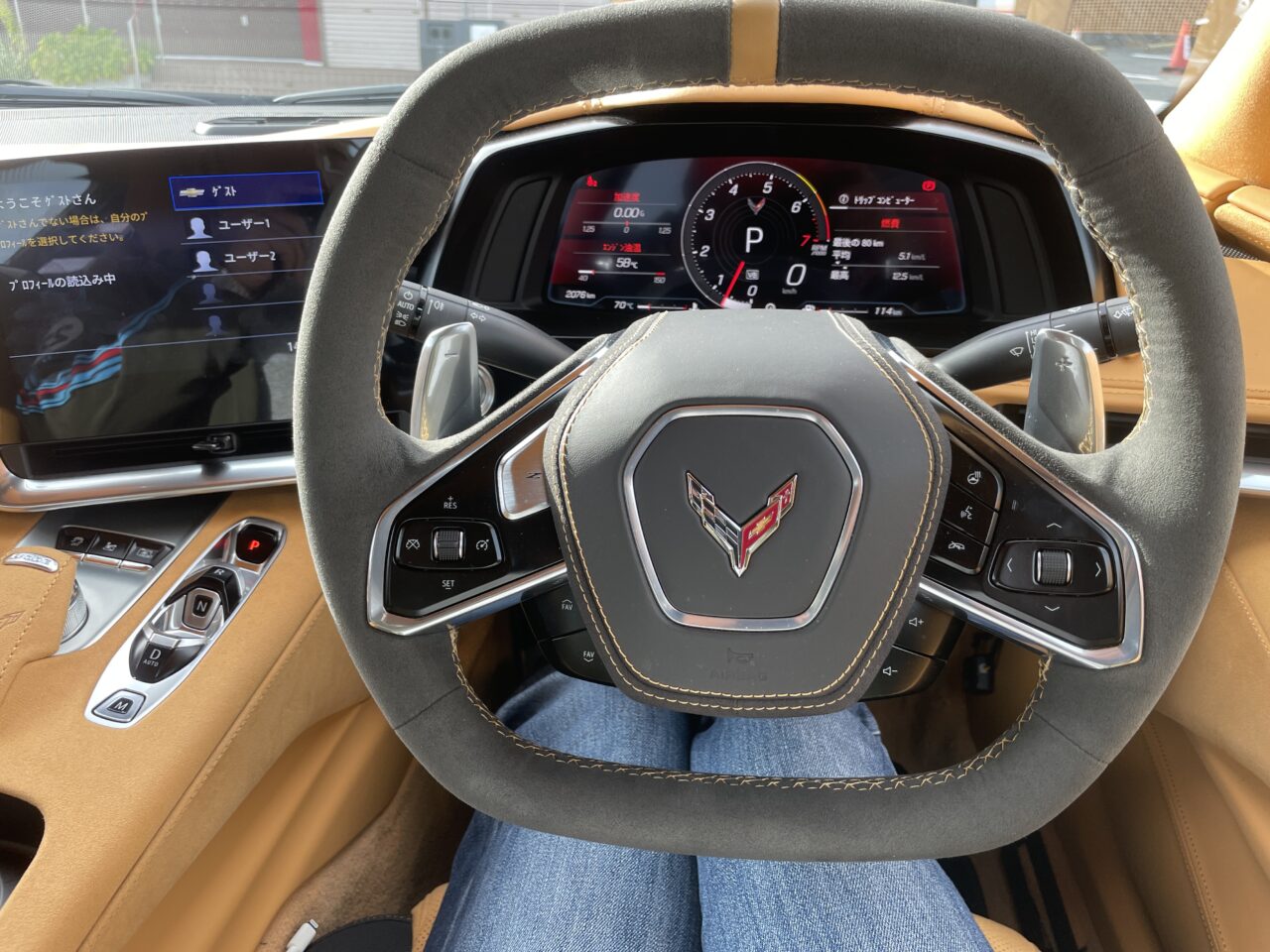
We switched from Normal Tour mode to Sport. The electronically controlled dampers, similar to Porsche’s PASM, firm up the suspension by increasing damping force. But the ride never becomes uncomfortable. Subjectively, it feels about as firm as a Porsche in Normal mode.
I eased off the throttle, kept a little brake pressure on, and turned in. The Corvette swept through the corner in a beautiful arc. I’d almost forgotten while driving, but this is the first Corvette with a mid-engine layout.
The mid-engine balance feels fantastic. Once you experience how freely and naturally it carves through corners, it’s hard not to smile—and the old image of American cars that don’t corner will disappear in an instant.
The 8-Speed DCT, Engine Sound, and Power
I switched the 8-speed DCT (dual-clutch transmission) to manual mode and shifted using the paddles. The DCT is excellent: quick and crisp, with a great sound to match. On upshifts, it snaps into the next gear with a race-car-like “Bang!” On downshifts, the rev-matching is superb, accompanied by a glorious engine note.
This DCT is seriously good—worlds apart from the transmission in a certain supercar that costs far more than the Corvette. Compared with Porsche’s PDK, I’d say it’s more refined than the 991.1 and 981 versions, and very close to the level of the 991.2 and 718.
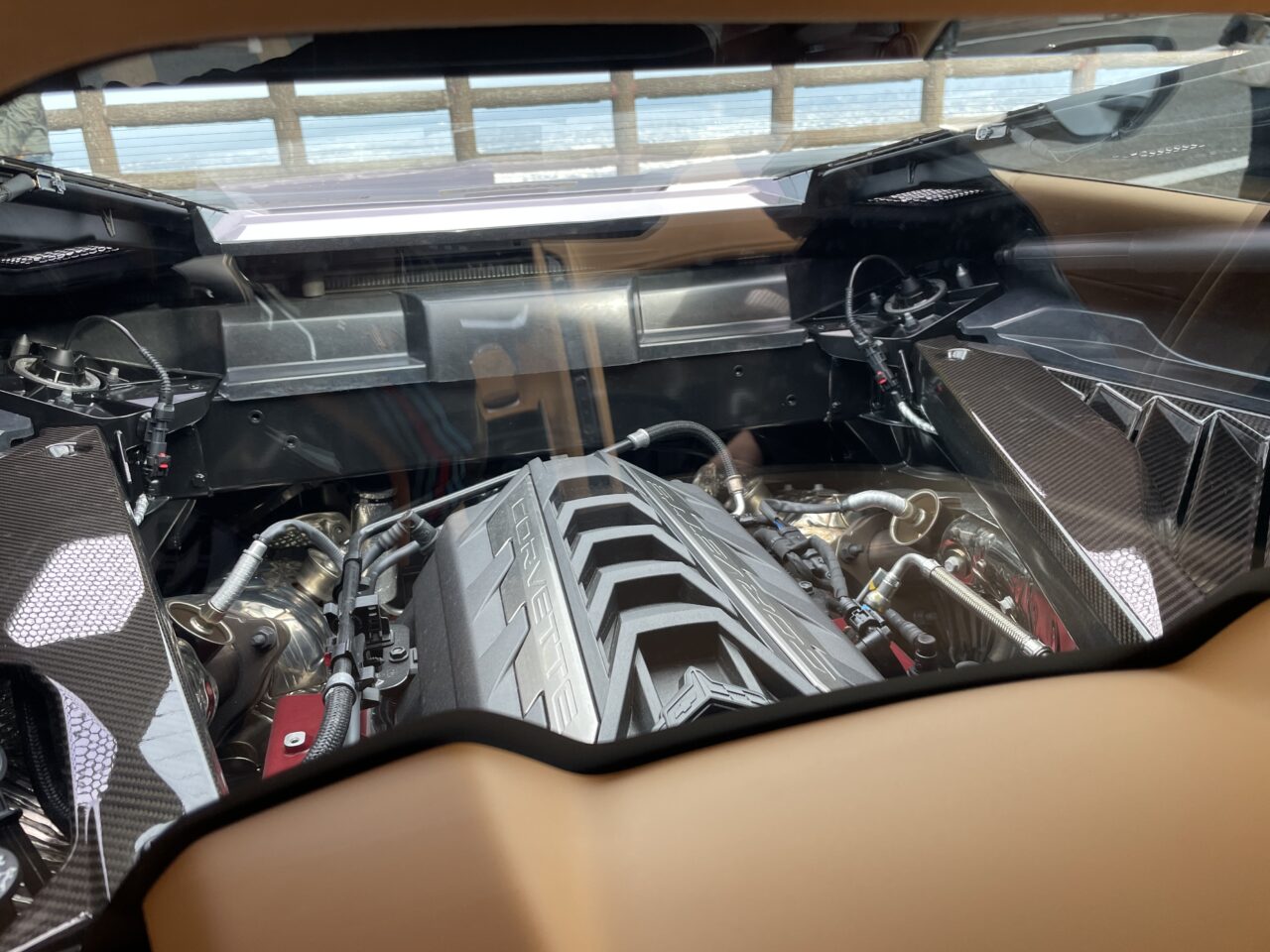
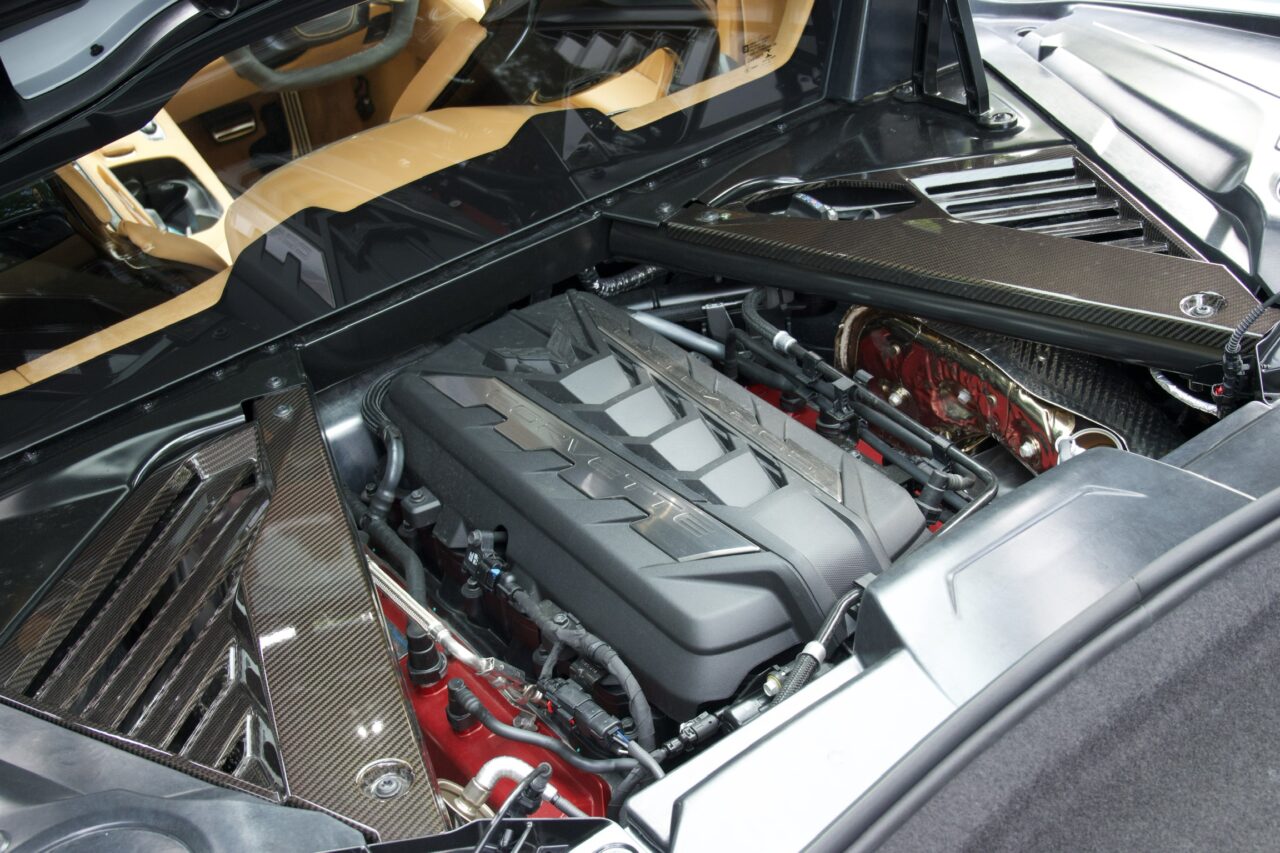
A 6.2-liter naturally aspirated V8. The owner pointed out that inexpensive plastic is used in a few places, suggesting that cost wasn’t lavished on every detail.
That alone makes the Corvette a lot of fun to drive. And the engine sounds fantastic, too. I’d expected the old-school, rumbling V8 sound, but that’s not what you get. The tone is remarkably even and refined—in fact, I’d call it a sweet-sounding engine.
When you get on the throttle, the engine has the weighty feel you’d expect from its large displacement. But it revs smoothly, with no sense that it’s reluctant to climb the rev range.
As for power, my honest impression during the drive was, “Maybe around 400 hp?” I later learned that it produces 502 hp and 637 Nm of torque, but it didn’t feel that powerful from behind the wheel.
Part of the reason may be that I’ve been driving a lot of high-performance turbocharged cars lately, so I’m used to the instant punch of turbo power. Torque delivery and gearing likely play a big part, too. In terms of how the car felt during a roll-on acceleration, the 992 Carrera felt quicker, and even my 430-hp naturally aspirated 991.1 GTS felt a little faster.
That said, the manufacturer’s claimed 0–60 mph time is a blistering 2.9 seconds, so it’s certainly no slow car. I only tried rolling acceleration during this drive, and the torque builds in a relatively smooth, measured way. That’s probably why it felt less urgent than the numbers suggest.
Verdict
I really liked this Corvette. I’d genuinely love to own one—if I could only add another parking space.
It’s been a while since I drove a car that was this comfortable, fast, and fun. It looks fantastic, too, and you can buy the coupe for around ¥14–16 million. That price includes features such as a front lift system and most of the modern equipment you could ask for.
For the money, it’s an outstanding car. If you can get this design and level of performance for this price, it’s an easy one to recommend. If you’re looking to satisfy your desire for prestige and attention, I’d point you toward a much more expensive supercar. But if you love driving and value the quality and enjoyment of the experience, I’d strongly recommend the Corvette.
Compared with a Porsche, the Corvette still offers excellent value. In terms of driving, Porsche feels more solid, with a higher level of refinement in its grip, stability, and the fine details of its drivability. But plenty of drivers may not need that extra level of polish.
With that in mind, the Corvette is absolutely worth considering.
This new Corvette completely exceeded my expectations. It shattered my preconceptions about American sports cars and showed me a whole new world. If you love the design and aren’t concerned about the width, this is one car I’d wholeheartedly recommend.
I think it could be the perfect driving companion.
このブログが気に入ったらフォローしてね!
Comment ( 0 )
Trackbacks are closed.
No comments yet.