

Euro 7 Could Spell the End of the Porsche 911 GT3’s Naturally Aspirated Engine—Is the EU Undermining Its Own Car Culture?
Published: 2026.03.07

コンテンツ
What Is Euro 7? The History and Current State of Emissions Regulations
Europe’s emissions regulations are about to enter a new phase.
The EU’s emissions rules began with Euro 1 in 1992. They started with mandatory catalytic converters and grew progressively stricter with Euro 2 (1997) and Euro 3 (2001). Euro 5 (2011) made diesel particulate filters (DPFs) standard on diesel cars, while Euro 6 (2014) required a substantial reduction in NOx emissions, making after-treatment systems such as SCR and AdBlue commonplace. Then, in May 2024, Euro 7 (EU Regulation 2024/1257) was formally adopted.
Euro 7 requirements will apply to type approval for new vehicle models from November 2026, and to all new vehicle registrations from November 2027. The rules were initially due to take effect in mid-2025, but were delayed by around 18 months. Even so, manufacturers don’t have much time to prepare.
One of Euro 7’s defining features is that it goes beyond exhaust emissions. For the first time, non-exhaust pollutants—including brake dust and tire-wear particles—are also subject to regulation. Tire-wear limits for C1 tires will apply from July 2028. Emissions-system durability requirements are set at 10 years or 200,000 km (124,000 miles)—twice the Euro 6 standard. Testing conditions will also expand to temperatures ranging from -10°C to 45°C. Vehicles will have to remain within the limits in every environment and over every mile.
The Day the GT3’s Naturally Aspirated Engine Disappears
Andreas Preuninger, head of Porsche’s GT car development, had a sobering message.
In an interview with the British magazine Autocar, Preuninger said, “I don’t think you can do Euro 7 without electrification or turbocharging.” He explained that even to meet today’s Euro 6 requirements, the 4.0-liter naturally aspirated flat-six at the heart of the GT3 had to cut NOx emissions by a third and particulate matter by 40%. Under Euro 7, it will be close to impossible to preserve the performance expected of a GT3 with a naturally aspirated engine.
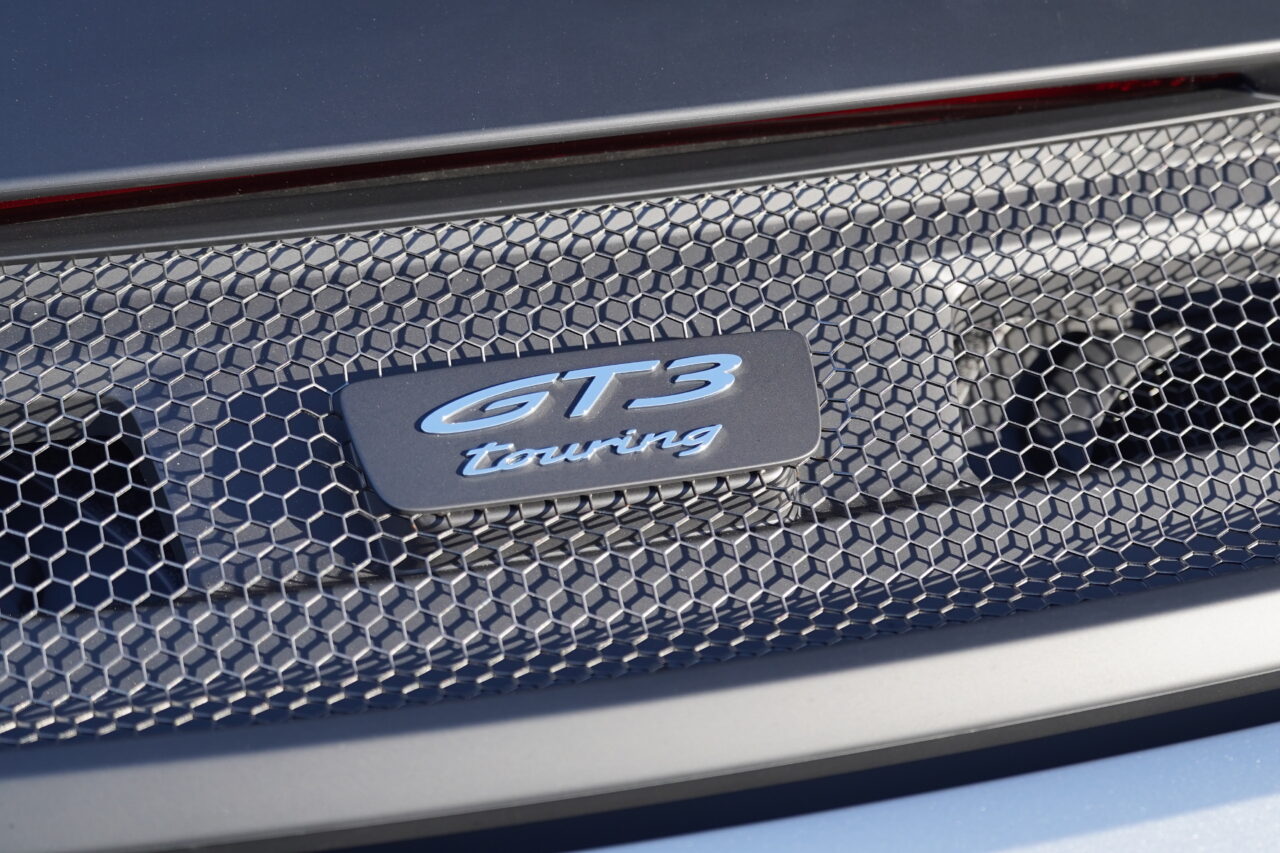
The options are turbocharging or hybridization. But as Preuninger points out, Porsche’s current hybrid systems are too heavy for a GT car. For a GT, the straights are simply the stretches between corners, and extra weight compromises the very essence of the driving experience. That makes turbocharging the more practical solution. Just as the 992.2 Carrera GTS adopted the T-Hybrid system, the GT3 may also be forced to embrace some form of electrification.
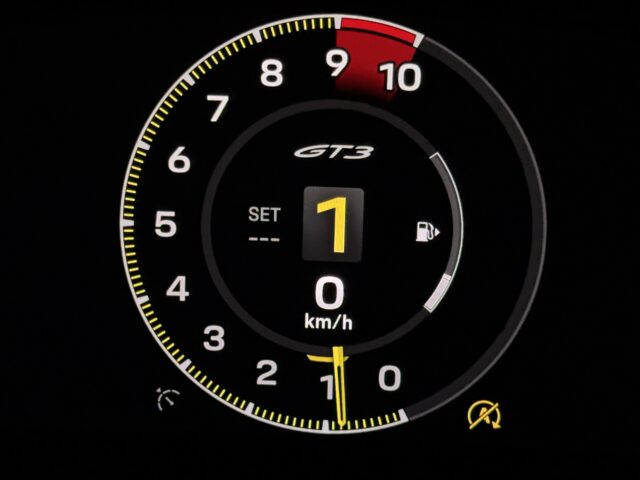
I drive a 718 Spyder RS, and there’s nothing quite like the way its GT3-derived 4.0-liter naturally aspirated engine surges all the way to 9,000 rpm. I’ll be honest: I still haven’t fully come to terms with the prospect that regulations could make an engine like this impossible to build.
The Invisible Barrier of Noise Regulations: A 68 dB World
Exhaust emissions aren’t the only issue. Noise regulations are also threatening the very reason sports cars exist.
EU Regulation 540/2014 reduces permissible vehicle noise in three stages. The limit, once 74 dB(A), has been lowered through Phase 1 (2016) and Phase 2 (2022), with Phase 3 bringing it down to 68 dB(A). Phase 3 has applied to new vehicle types since July 2024 and to all new vehicles since July 2026. The drop from 74 to 68 dB may look like just 6 dB on paper, but decibels use a logarithmic scale, so the reduction in perceived loudness is roughly three-quarters.
On top of tire-wear particles, Euro 7 also puts tire noise in the regulatory spotlight. Once a car travels faster than roughly 30–50 km/h (19–31 mph), tire noise becomes a major source of exterior noise, overtaking the engine. That creates a fundamental problem: no matter how quiet the engine becomes, the car still can’t meet the limit if its tires remain noisy.
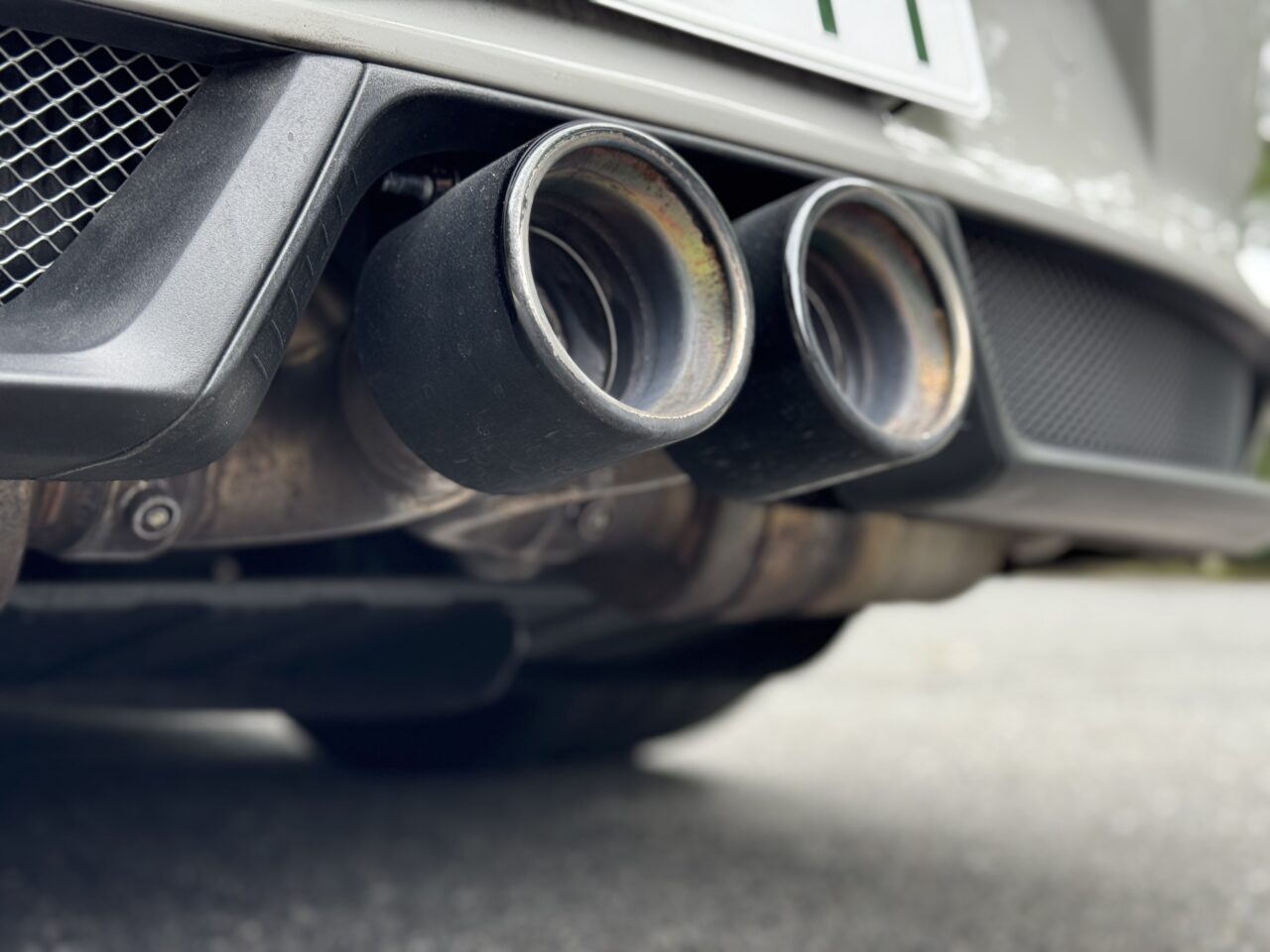
So what does this look like in practice? The 992.2 GTS has done away with the mechanical sound symposer used in the 992.1—a tube-like device that transmitted engine sound into the cabin through a vibrating diaphragm. In its place, speakers play electronically generated engine sounds. Even Porsche is going down this route. AMG and BMW Alpina are also using cabin speakers to enhance the engine note. Sports cars are losing the ability to deliver the “real thing” inside the cabin. This is no joke; it’s reality.
The EU Is About to Give Up Its Own Strengths
Europe has a sports car culture it can be proud of.
Germany has Porsche and AMG; Italy, Ferrari and Lamborghini; and the UK, Aston Martin and McLaren. These marques have created intoxicating V6, V8, and V12 engines that have captivated car enthusiasts around the world. There’s no question that environmental protection matters. Strict regulations for mass-market cars make sense. But does it really make sense to impose the same standards across the board on sports cars that may be built in just a few thousand units a year?
At the same time, the EU is using regulation to push combustion-engine cars toward EVs, yet European manufacturers are struggling to match Chinese automakers on EV technology and cost competitiveness. Europe is shutting down an area where it excels, while putting itself in a position where it has to compete on less familiar ground. It’s hard to call that sound industrial policy.
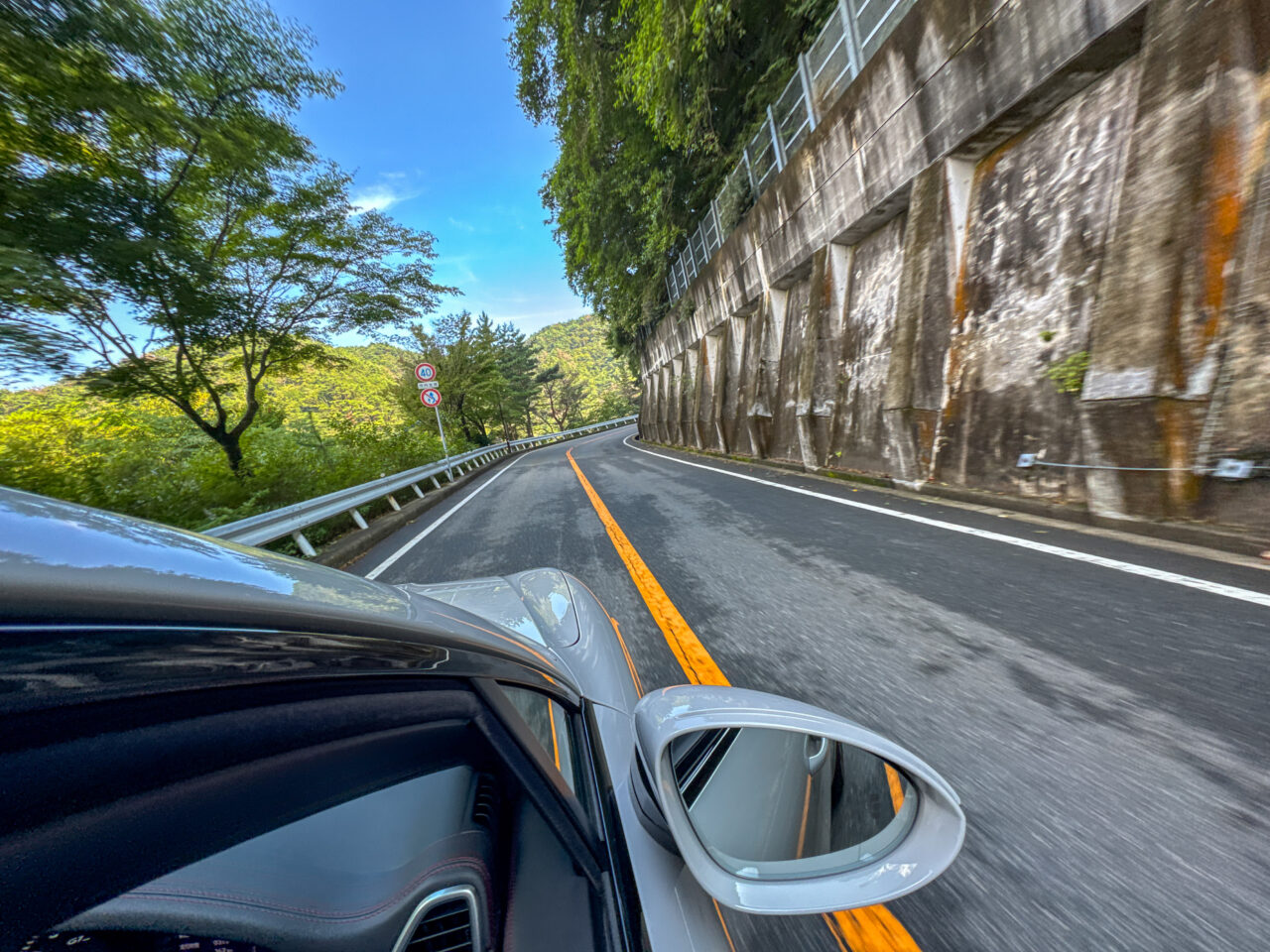
I’ve owned a succession of different Porsches over the years and driven many more for this blog. What I’ve noticed is that the newer the model, the more power it makes—but the more its engine character and emotional appeal seem to fade. Gears multiply, ratios are added to improve fuel economy, and in Normal mode, the car is programmed to keep revs as low as possible. Throttle response is deliberately softened, too. It’s all about calibrating the car to meet regulations, and the result is a growing disconnect from what the driver feels.
That contrast becomes clear when I drive our 1992 964 Tiptronic. Its four-speed automatic may seem primitive by today’s standards, but the way it accelerates from first to second and then third, following the engine’s smooth climb through the rev range, feels wonderfully natural. There’s no programming trying to suppress the revs; the engine spins freely, and the car moves forward with it. I’ve often thought that being able to feel the engine’s pulse even around town has something in common with the direct acceleration of an EV—a rather ironic comparison. Today’s cars are so heavily managed that they only feel “just right” once you put them in Sport mode.
Enjoying the Engine or Enjoying the Performance?
With Euro 7 approaching, there’s an important question to consider.
The 4.0-liter naturally aspirated flat-six in today’s 911 GT3, 718 Spyder RS, and 718 Cayman GT4 RS is unlikely to survive under Euro 7. The next generation of GT models will probably have to go turbocharged or hybrid, and the naturally aspirated engine’s ability to rev cleanly and effortlessly to the redline will likely become a thing of the past. In other words, this may be the last era in which you can buy a new GT3 with a naturally aspirated engine.
I know many people are looking forward to the new 718 and 911. Plenty of you may be thinking, “If it’s available with a combustion engine, I want one.” But to be blunt, if what you really want is the joy of a naturally aspirated engine, I’d look at current or older models rather than waiting for a new one. Air-cooled Porsches, the 996 through early 991, the 986 through 981, and the GT3, GT3 Touring, Spyder RS, and GT4 RS: there’s a good chance you’ll never again be able to experience the engine character these cars offer in a brand-new car.
On the other hand, if you want a comfortable, fast car packed with the latest technology, I’d recommend a new model without hesitation. The 992.2 GTS delivers serious performance with its T-Hybrid system, while the Taycan Turbo GT can feel even more agile than a GT3 on a winding mountain road. There’s no doubt that newer cars are faster, more comfortable, and more refined. But they’re becoming a different kind of vehicle—one that’s less about enjoying the engine itself.
Do you want the joy of the engine, or the performance of the car? Choosing a Porsche in the Euro 7 era may begin with finding your own answer to that question.
If you enjoy this blog, follow along.
Comment ( 0 )
Trackbacks are closed.
No comments yet.