

Driving a Porsche 356 for the First Time: A Classic Porsche Owner Experience
Published:
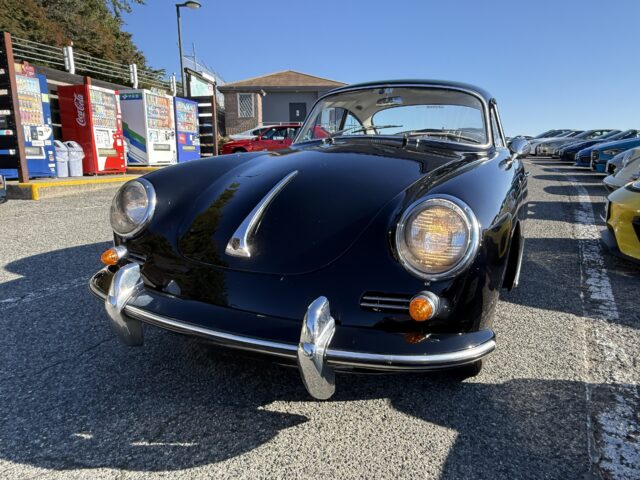

Yesterday, I got the chance to drive a Porsche 356. I’d love to share a few thoughts about the experience.
コンテンツ
What Is the Porsche 356?
The Porsche 356 was the first sports car to bear the Porsche name. Developed in 1948 under the direction of Ferry Porsche, son of company founder Ferdinand Porsche, the first example was built in Gmünd, Austria. The car’s name is said to come from its design project number.
Based on Volkswagen Beetle components, the 356 has an air-cooled flat-four mounted at the rear. It made just around 40 horsepower, but its lightweight, streamlined body and excellent handling won over sports-car enthusiasts. Full-scale production began in Stuttgart’s Zuffenhausen district in 1950, and the 356 remained in production until 1965.
I think the first time I saw a 356 was at the Porsche Museum in Germany.
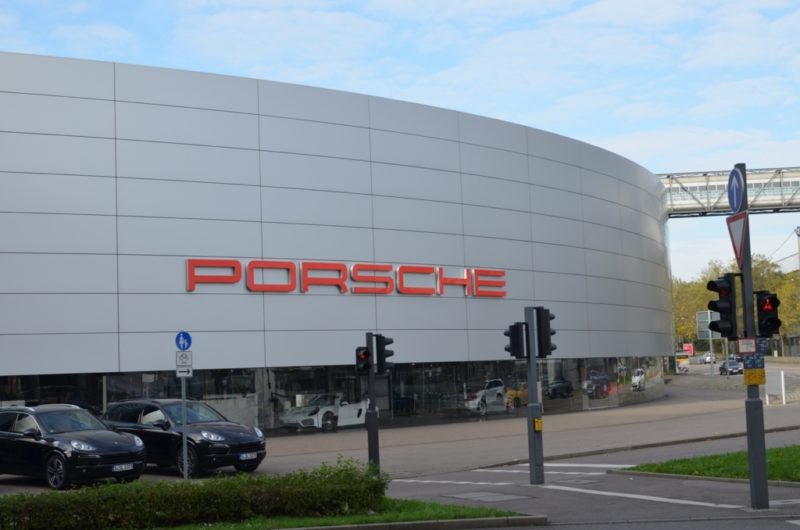
Back then, I knew virtually nothing about Porsche or cars. I remember taking a photo and thinking, “Wow, Porsche made cars this old? It’s so small, round, and cute!” I’d spotted one now and then over the years, but I’d never ridden in one—and never imagined I’d get the chance to drive one in my lifetime.
An Early-Morning Trip to Royu Driveway
Time flies: our third son has turned six, and life with the kids has settled down a little. He starts elementary school next year, so I’m sure things will get busy again, but compared with five or six years ago, we have a lot more breathing room. I decided it was time to visit Royu Driveway again, so I headed there on a Sunday morning.
“My goodness, Sunday mornings get really crowded!” my husband often says. So I got up at 6:30 a.m. and aimed to arrive by 7:30. When I got there, the lot was already nearly full. Porsche people sure are early risers!
Then I spotted someone my husband knows well. He owns several cars, and that morning he’d brought his 356. He turned to me and asked:
“Would you like to take it for a drive?”
Wait—what?! No, no, that’s far too kind! …Would it be all right if I at least sat in the driver’s seat? I asked, and he let me climb in.
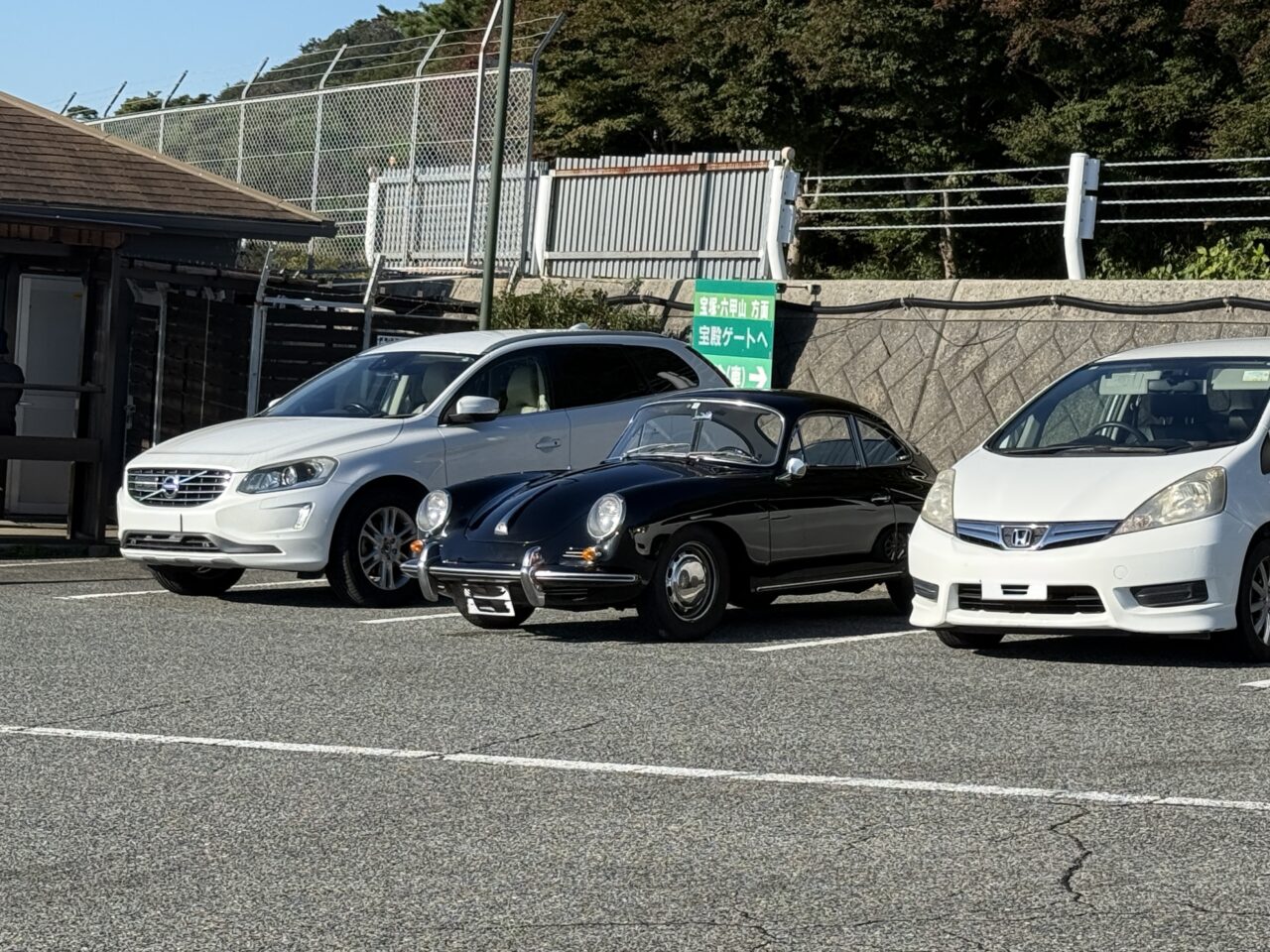
My First Time in a Porsche 356
The 356’s steering wheel is thin and large—a curious feeling. It has a four-speed manual gearbox.
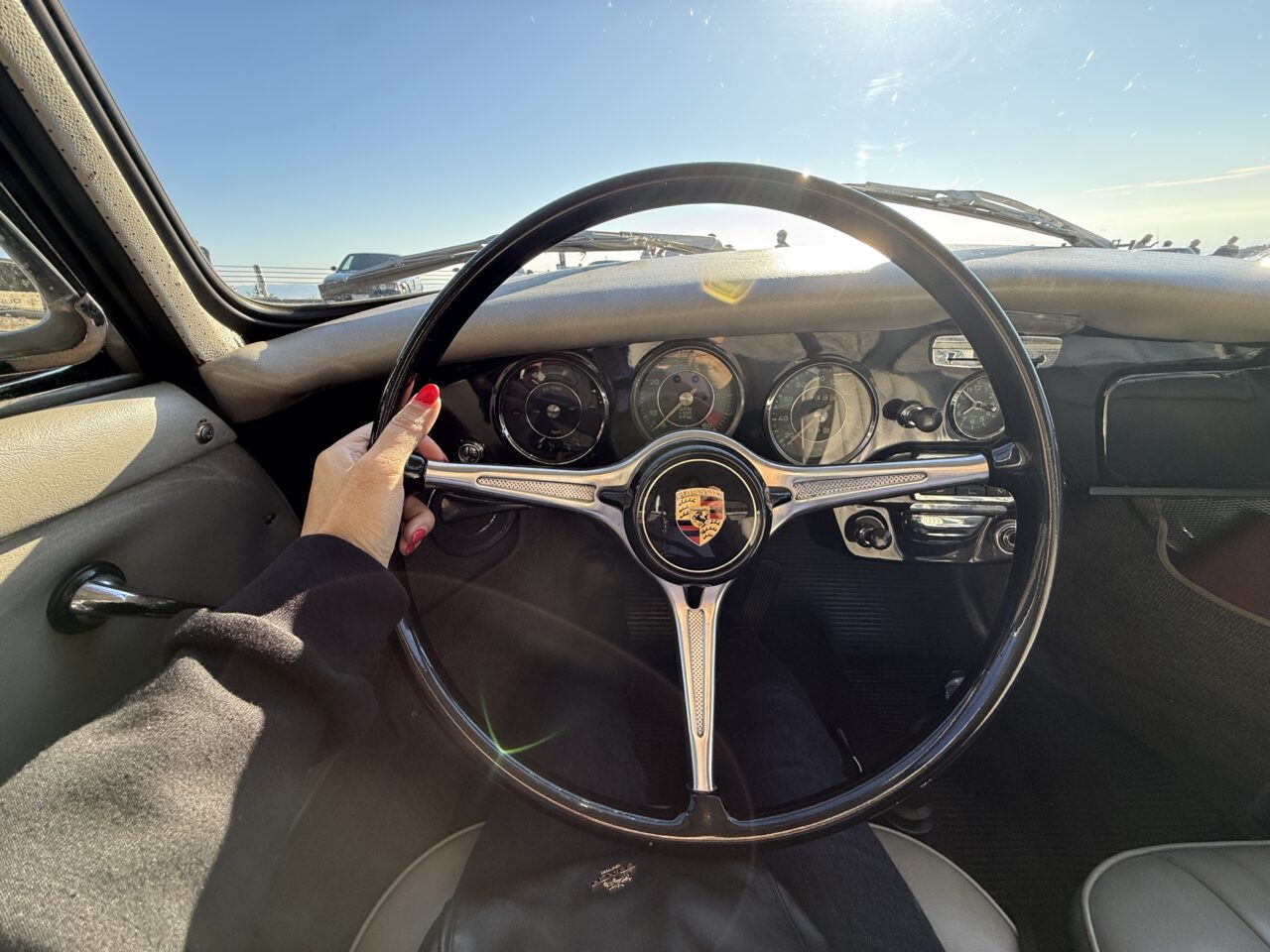
The cabin is compact, but the seats are plush. It felt less like a sports car and more like a relaxed, luxurious grand tourer.
I was already thrilled just to sit in a 356. What a rare opportunity! Then its owner asked, “Would you like to drive it? It’s really easy!”
“Oh, no… But of course it’s a manual, and I’ve never driven a classic Porsche like this. I’d be worried about doing something wrong. Would it be all right if I took you up on the offer and rode along in the passenger seat instead?”
And off I went to the passenger seat. (For someone who was being so hesitant, I certainly didn’t waste any time getting in! lol)
I was also surprised to learn that the car originally had no seat belts. A lap belt had been added later—the kind that buckles across your waist, like one on an airplane. Details like that really bring home how much things have changed.
Once we set off, what amazed me was just how supple the ride was. The suspension felt composed, with terrific contact with the road. And yet it wasn’t harsh at all; the ride was smooth and comfortable.
It felt more luxurious than sporty. Somehow, I could picture it being closer in character to a modern Turbo S than I’d expected. (Or so it seemed to me, anyway! lol)
I’d driven my 718 Spyder RS to the meet that day, and on the way there I’d found myself thinking, “This suspension is firm… I might get a little tired of this at low speeds for a long time.” That made the contrast all the more striking.
A Porsche is a Porsche. You can feel the marque’s DNA in the steering and suspension. And the 356 is where it all began. It’s incredible that, after all these years, the “Porsche way of driving—the Porsche feel” is still alive in today’s cars.
Taking the Wheel of a Porsche 356
After driving for a while, the owner pulled over and said, “Since you’re here, why not take the wheel? I’m sure you’ll find it easy.”
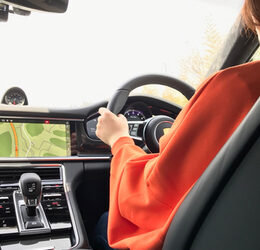
Wait—really?! Excited and more than a little nervous, I climbed into the driver’s seat.
The first surprise was how light the clutch was. It had a long travel, right down to the floor, but the pedal itself was incredibly light.
“When it’s this light, I’d think it would be hard to tell where it starts to bite…” I said. “Not at all. It’s really easy to use.” the owner assured me.
I wasn’t quite convinced, but when I set off, the car pulled away smoothly without needing much throttle. The clutch was easy to work, and I didn’t feel as though I had to brace myself for it.
Used to modern Porsches, I shifted into second almost as soon as I’d pulled away in first. The car seemed to labor a little.
“You can stay in first a bit longer. Let the engine rev to around 3,000 or 4,000 rpm before shifting into second.”
Taking the owner’s advice, I shifted back into first, then moved into second once I’d picked up a little speed. By then, my verdict was already in: “This is so easy to drive. What a lovely feeling!”
So this is what people mean by an analog driving experience.
Not About Speed: The Joy of Smooth, Effortless Acceleration
Modern Porsches have plenty of power and are undeniably fast. But the 356 reminded me that there’s another kind of pleasure: the satisfying, effortless way speed builds. You don’t need enormous speed. Press the throttle, and the car gathers pace naturally and smoothly. It’s compact, easy to drive, and makes you feel connected to the experience. And this is a car more than 60 years old that can still drive so confidently today.
Of course, it helps that this particular car is in excellent condition and has been properly maintained. Even so, it’s remarkable.
I finished the drive with my nerves still buzzing and thanked the owner. It was a very busy morning—though apparently not as crowded as usual—so I headed home after about an hour. I was also happy to meet a few readers of the blog.
I think I’ll start making the occasional Sunday-morning trip up to Royu. I hope to see you there!
If you enjoy this blog, follow along.
Comment ( 0 )
Trackbacks are closed.
No comments yet.