

[Road Test Review] 987 Boxster Spyder: The Lightest Roadster That Makes You Feel Like You’re Wearing a Porsche
Published: 2026.05.28

コンテンツ
The Day I Drove a 987 Boxster Spyder
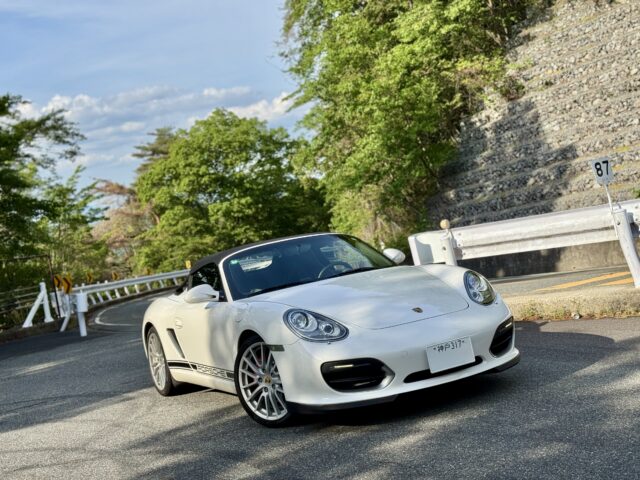
There was a car I’d been curious about for a long time: the Porsche 987 Boxster Spyder. A look back through my social media shows that I was already posting about wanting to drive one back in the fall of 2023. Two years later, I finally got my chance.
The route that day was a round trip from the Rokko Observatory toward Arima Onsen. Normally, I’d do one loop and say, “I think I’ve got the feel for it.” This time, though, I didn’t want to get out, so I asked if I could do another lap. It’s rare for me to drive the same route twice during a test drive—and I couldn’t stop grinning the whole time. The praise this car gets is no exaggeration.
The Lightest Porsche: Specs That Still Impress 15 Years On
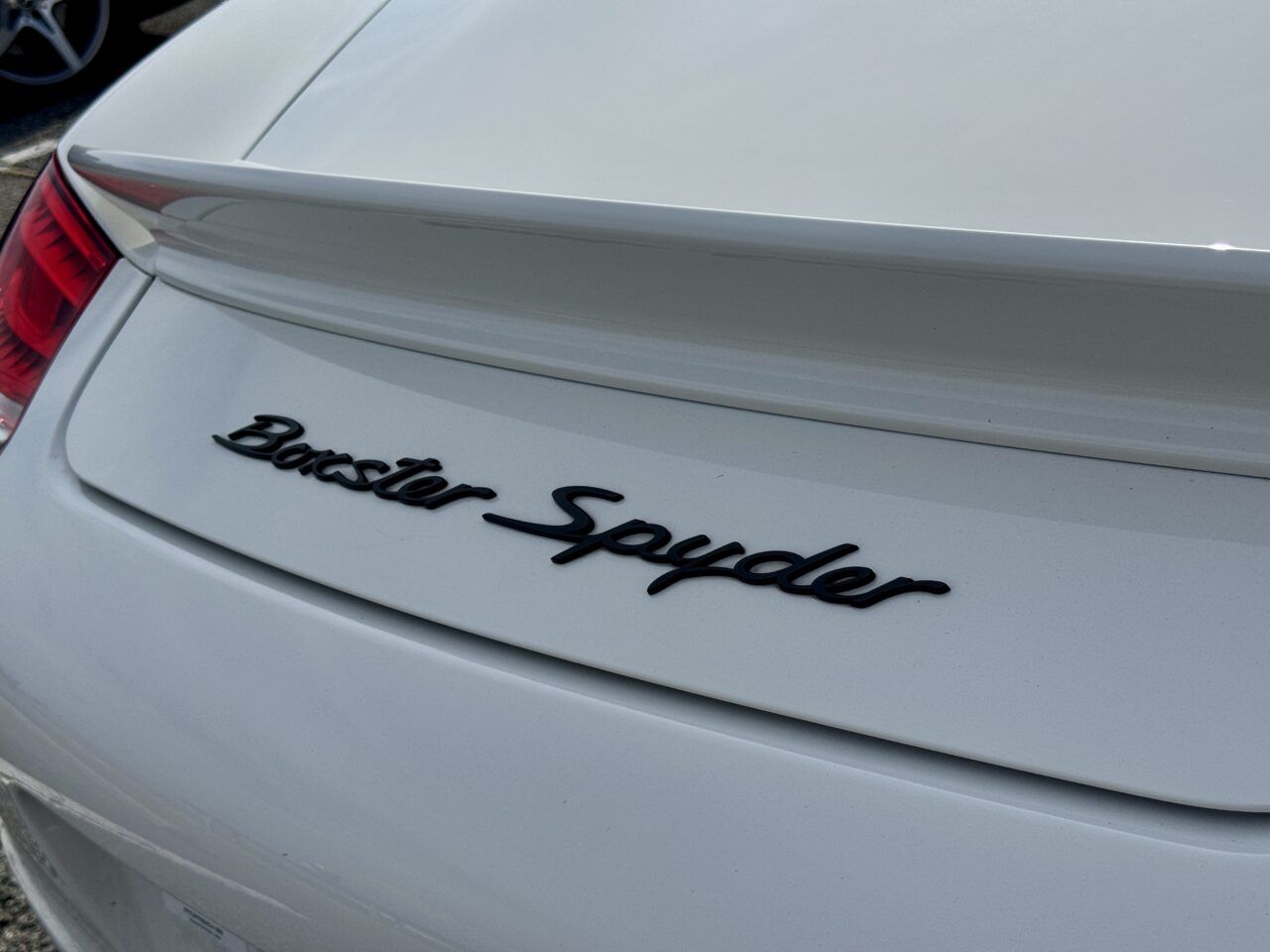
The 987 Boxster Spyder was unveiled at the Los Angeles Auto Show in November 2009. Sales began in Europe in February 2010, and it arrived in Japan that fall. It was the top-performance variant to cap off the 987 Boxster’s run (2004–2012), but it wasn’t simply a hot model. At heart, it’s a roadster built around weight reduction and a pure driving experience.
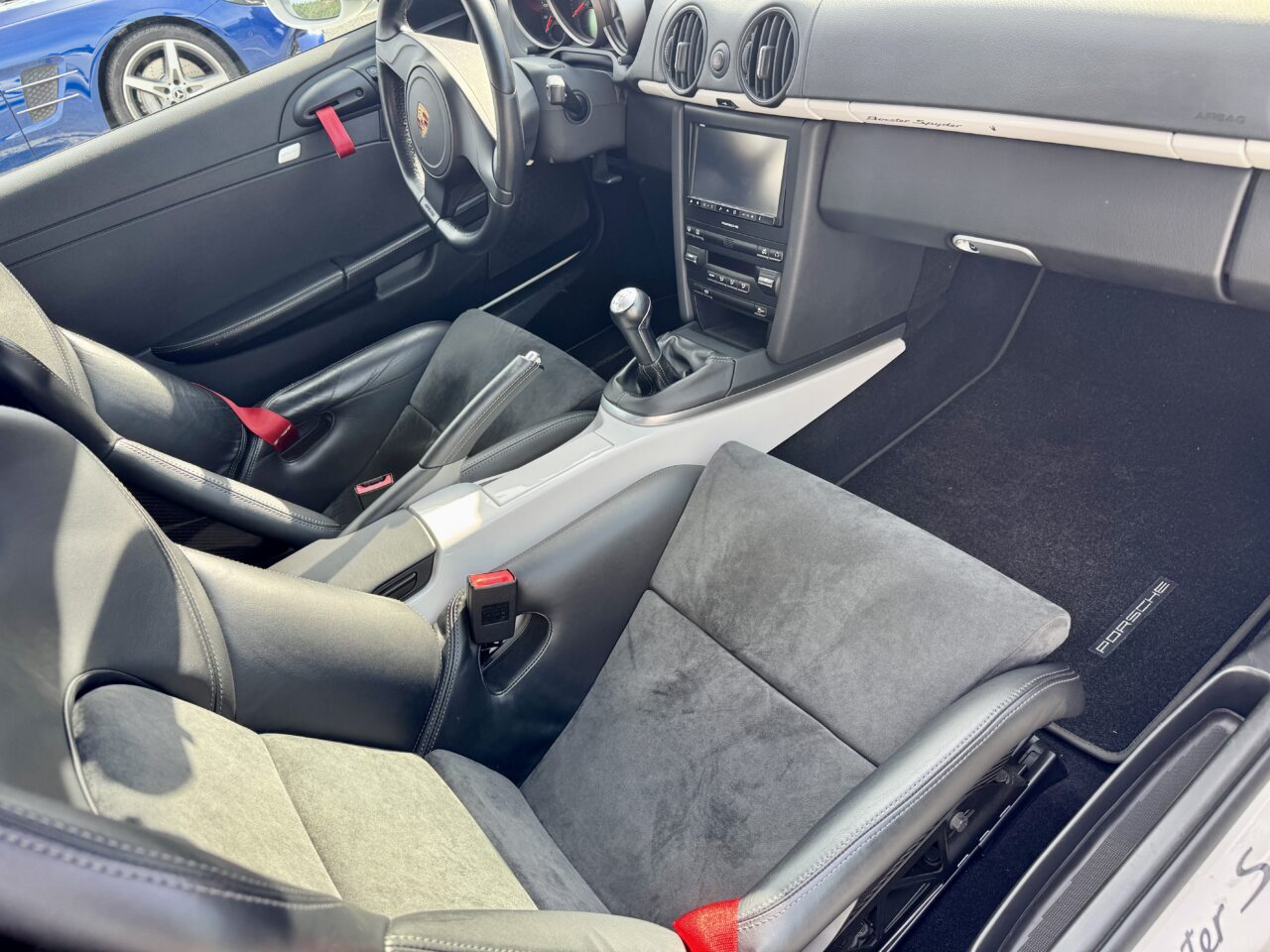
At 1,275 kg (DIN, six-speed manual), it was about 80 kg lighter than the Boxster S and the lightest production Porsche of its day. Power comes from the MA1 3.4-liter naturally aspirated flat-six, part of the same engine family as the 997.2 Carrera. It produces 320 PS and 370 Nm of torque, with a 0–100 km/h time of 5.1 seconds and a top speed of 267 km/h. Those figures may not sound outrageous on their own, but with roughly 4 kg per PS, it still has more than enough performance by today’s standards.
The details behind the weight savings are fascinating. Aluminum doors shed around 15 kg, carbon-fiber bucket seats save about 12 kg, and it gets Porsche’s lightest 19-inch wheels. The electric soft top was replaced by a manually operated fabric top with a carbon-fiber frame. Even air conditioning, PCM, door handles, and cup holders were optional. It also features the two double humps over the rear deck and a chassis lowered by 20 mm. The suspension is said to have been developed with Walter Röhrl’s input—and he reportedly bought one himself. There’s plenty of reason this car is still talked about 15 years later.
Lighter Than the Numbers Suggest, with a Firm, Supple Ride
The first thing I noticed as soon as we got moving was the quality of its lightness. I knew it weighed 1,275 kg, but from behind the wheel it felt even lighter. The way the nose tucks in as you turn, the weight transfer when you lift off the throttle, the dip of the front end under braking—every response came a beat sooner and felt a little more direct.
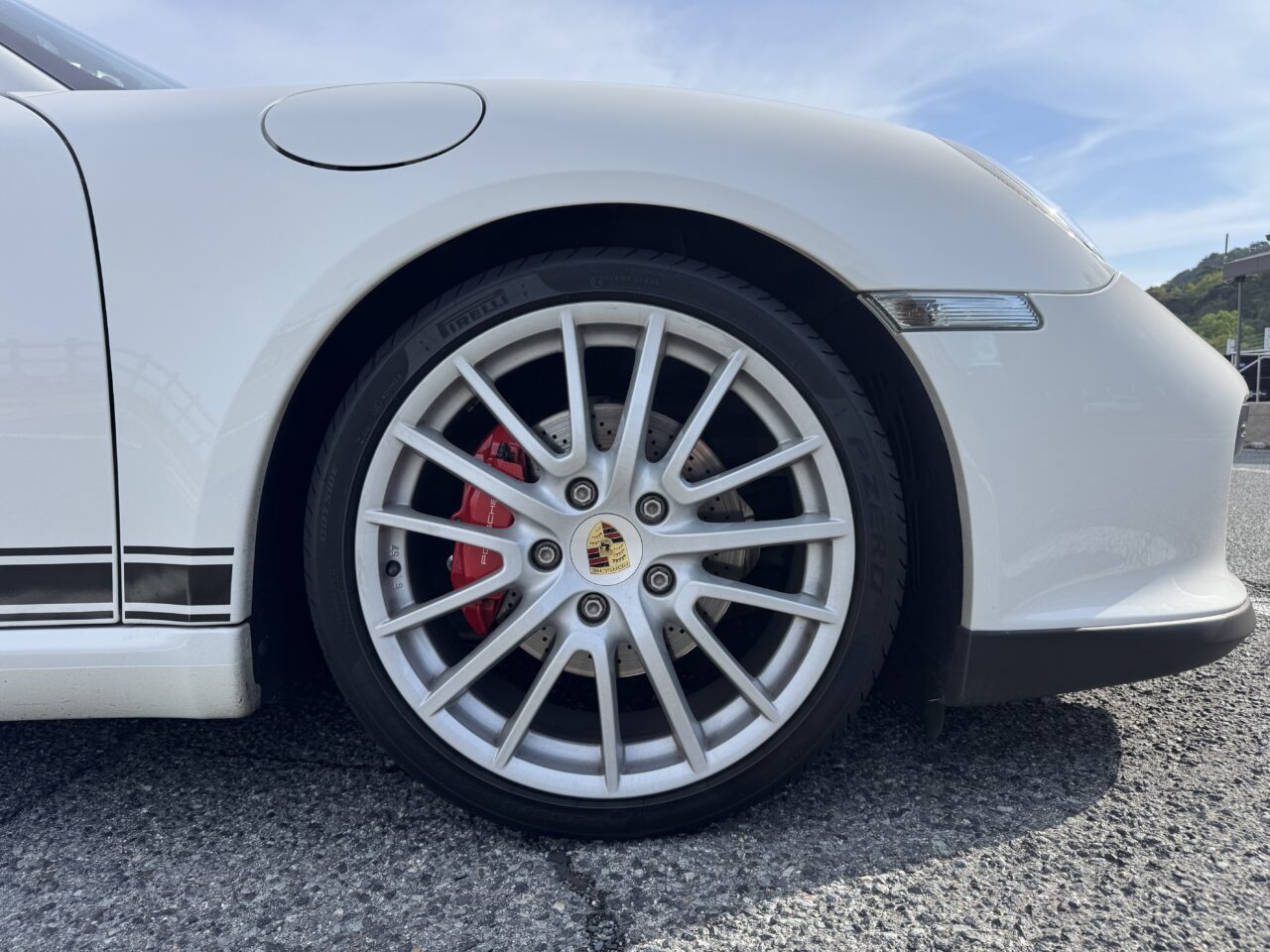
The suspension is firm, as you’d expect from a car lowered by 20 mm and fitted with a bespoke sports setup. But it isn’t simply “stiff.” It takes in bumps from the road, settles them, and then communicates them to the driver. It has a real backbone to it—like the springy, chewy bite of Sanuki udon.
The obvious comparison is my own 718 Spyder RS. That car has a superb, tightly controlled ride, but the 987 Spyder is a little softer. Softer, yet still wonderfully composed. It doesn’t crash over everyday bumps and expansion joints, but through corners it stays flat and flows around them. Honestly, it’s remarkable that a car from 15 years ago gets this balance so right.
A Rare Porsche That Makes You Smile at Low Speeds
What impressed me most was how much fun the car is at low speeds. Sports cars usually need a bit of speed and revs before they really make you smile. The 987 Spyder is different. Even at ordinary urban speeds—30, 40, or 50 km/h—it responds instantly and precisely to your steering inputs.
In my 981 Boxster GTS, I have to be doing 60–80 km/h to get the same sense of connection that the 987 Spyder delivers at 30–50 km/h. That makes a huge difference in a road car. On Japanese roads, you can enjoy it all day while staying within legal speed limits. This isn’t a car that only comes alive on a racetrack.
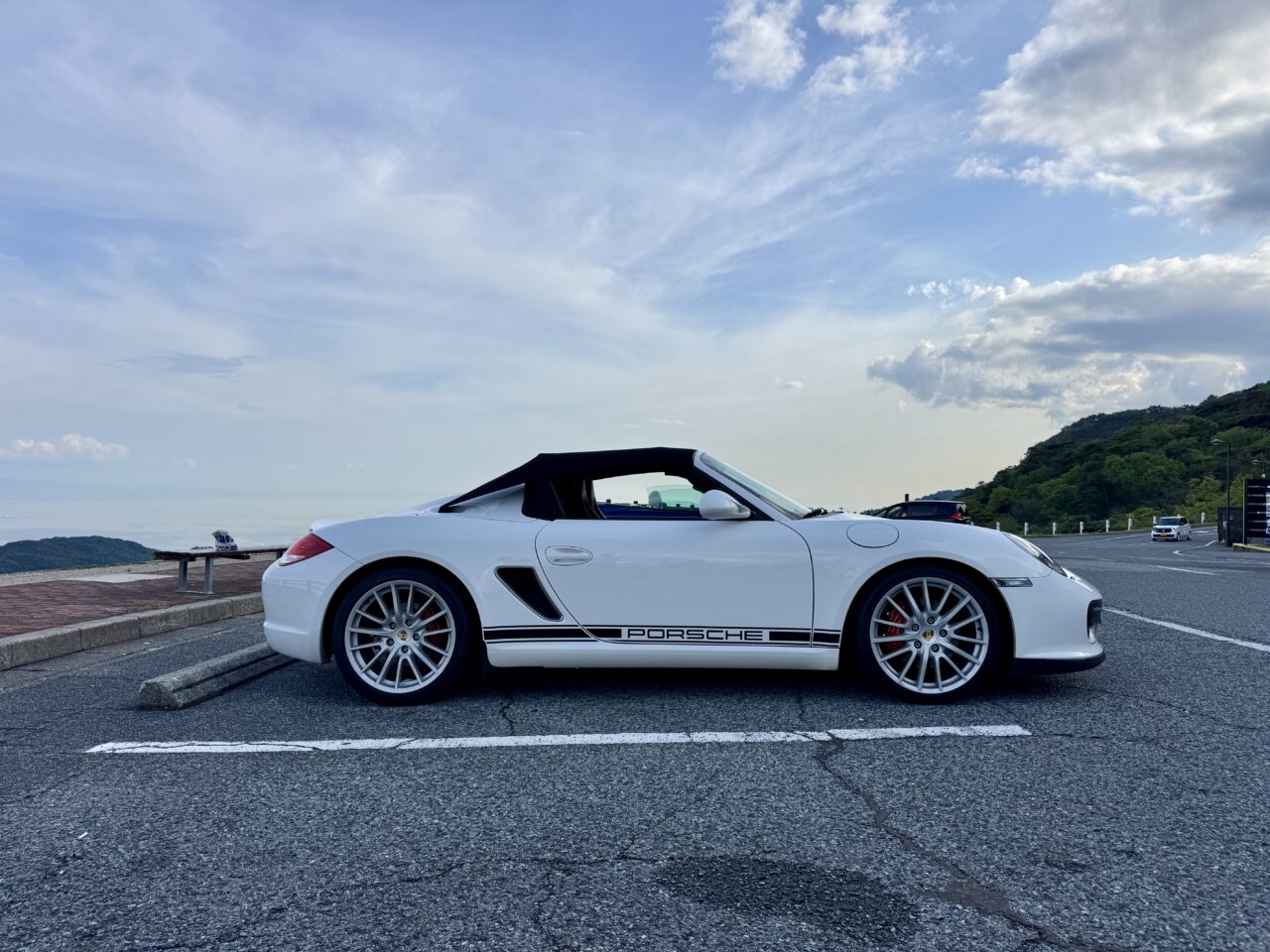
Another detail that stood out was how close you feel to the front of the car. In actual measurements, it shouldn’t be much different from the 981 or 718, but in the 987 Spyder, I felt as though I was sitting farther forward—almost right behind the front wheels. The low bucket seats and 20 mm ride-height drop combine to create a remarkable sense of unity, as if you’re talking directly to the front tires every time you turn the wheel.
The sound was just right, too. The test car had the sports exhaust, but it wasn’t loud or overbearing. It was only a notch louder than stock, yet still wonderfully raw. Cruising along in third gear felt like having the perfect soundtrack playing in the background. Second gear is low enough to be fun around town, while third is taller and more relaxed. The gearing in my 981 GTS can sometimes feel a little long, but this setup was exactly to my taste.
A Porsche That Feels Like It’s Made to Wear
The 981 Spyder is a wonderful car, too. I love it: the sound and presence of its 3.8-liter naturally aspirated engine, its supple yet firm suspension, and the sense of freedom you get with the top down are all first-rate.
But after driving the 987 Spyder and thinking back to the 981, I realized the 981 felt a little like wearing a jacket that’s just slightly too big. It’s not a bad fit—in fact, it’s a lovely jacket—but there’s just a little extra room in the shoulders and sleeves.
The 987 Spyder, by contrast, fits like a jacket made just for you. Of all the water-cooled Porsches I know, none embodies the Japanese expression “wearing a Porsche” quite as naturally as this one.
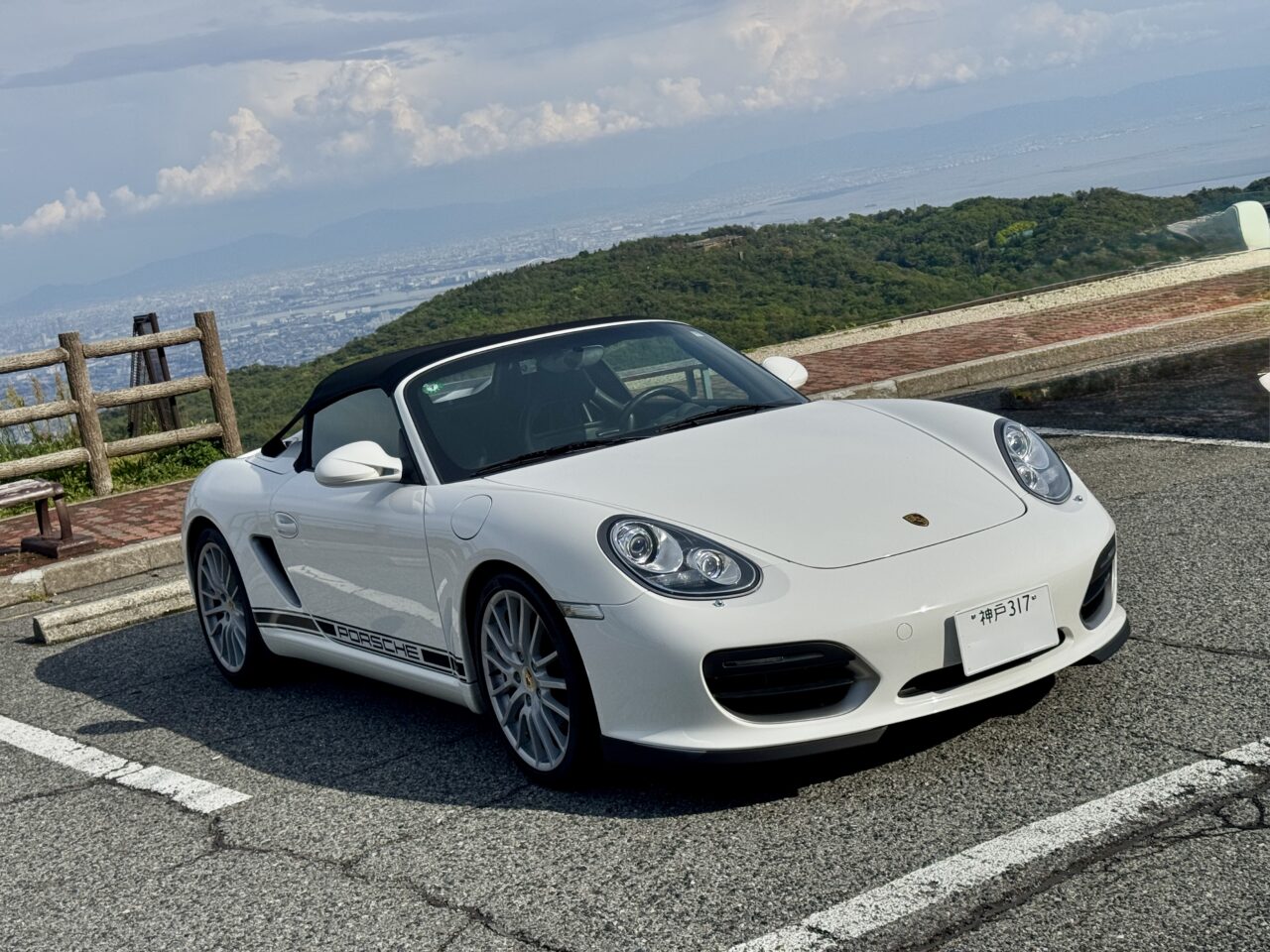
In character, it also has something in common with the 996 GT3: sharp turn-in, immediate responses, and a solid chassis. But the 987 Spyder is much easier to live with. It’s less demanding than the GT3, with a more forgiving nature and, above all, a more comfortable ride. It feels like a car that lets you enjoy its athleticism in everyday driving.
I’ve also driven the first-generation 986 Boxster S. That was a supple, soft, gentlemanly roadster. The 987 Spyder feels like its natural successor: it keeps that easygoing character but sharpens and elevates its athletic ability.
Who Should Consider the 987 Boxster Spyder?
As emissions regulations have tightened, Porsche’s current engines have increasingly turned to turbocharging, while noise regulations have narrowed the scope for expressive exhaust notes. The latest models have plenty to offer, of course, but if you want the raw pulse of a naturally aspirated engine, pre-regulation-era NA cars have a real advantage.
The 987 Spyder’s MA1 is a naturally aspirated flat-six from that golden era. It’s been a long time since you could buy one new, and the value of finding a well-kept example is likely to grow with every passing year.
Manual transmission, convertible top, mid-engine layout, naturally aspirated flat-six: you can’t buy a new Porsche with that combination anymore. The 987 Boxster Spyder will remain a highly appealing option for Porsche enthusiasts for years to come.
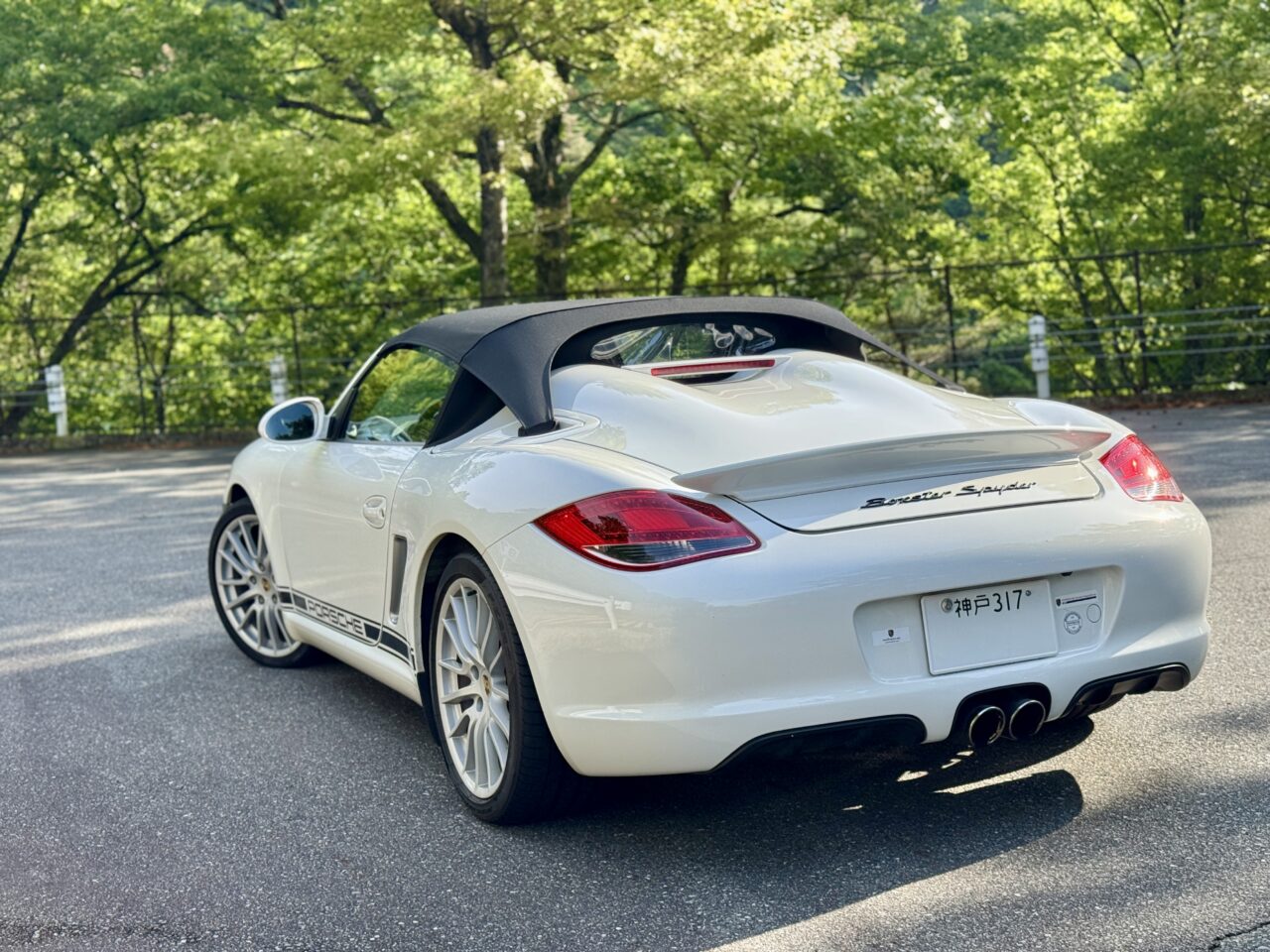
If you value the pleasure of driving over outright speed, can’t give up on a manual, an open top, and naturally aspirated power, or want an even purer connection after owning a 981 or 718, this could be one of your best choices. It’s less suited to drivers who need the latest safety features, digital interfaces, or the very best long-distance comfort. But if you’re happy to make do with a map for navigation, the 987 Spyder’s appeal can last a very long time.
After taking delivery, I’d love to bring it along on a tour and share more about how it feels over longer distances.

If you enjoy this blog, follow along.
Comment ( 0 )
Trackbacks are closed.
No comments yet.