

Why One Porsche Owner Went from an Early 991 to a 718—and Back Again
Published:

An article titled “‘Enjoy it while you can,’ his wife said: How a mug worth a few thousand yen became a ¥7.8 million Porsche 911 on his 57th birthday” appeared on TRILL. It tells the story of A, an office worker who had dreamed of owning a 911 since childhood. On the morning of his 57th birthday, his wife served him coffee in a Porsche mug. Before long, he had bought a used early 991 for about ¥7.8 million—without even seeing the car in person first.
About two and a half years later, that 911 was written off in an accident. A switched to a new 718 Boxster T that a Porsche Center had recommended because it was available for immediate delivery, paying around ¥10 million. But just three months later, he sold it for about ¥7.5 million and returned to an early 991, this time for around ¥9 million. I found myself wondering what made him so determined to go back.
コンテンツ
He Went Back Not Just to a 911, but to an Early 991
The original article doesn’t criticize the 718 Boxster T.
It describes the car as “a vehicle with truly outstanding performance,” but says that A began to feel less of the excitement behind the wheel than he had in his previous 911. His wife, too, noticed differences such as the engine sound and felt that something wasn’t quite the same. As A put it, “I didn’t just want any Porsche. What I really wanted was that distinctive 911 feel.”
The article doesn’t use the term “naturally aspirated,” or “NA.” But as I read it, the comparison is effectively between the early 991’s naturally aspirated flat-six (an engine without a turbocharger) and the 718’s 2.0-liter turbocharged flat-four—in other words, the difference in their engines.
718 T vs. Early 991: How Their Engines Differ

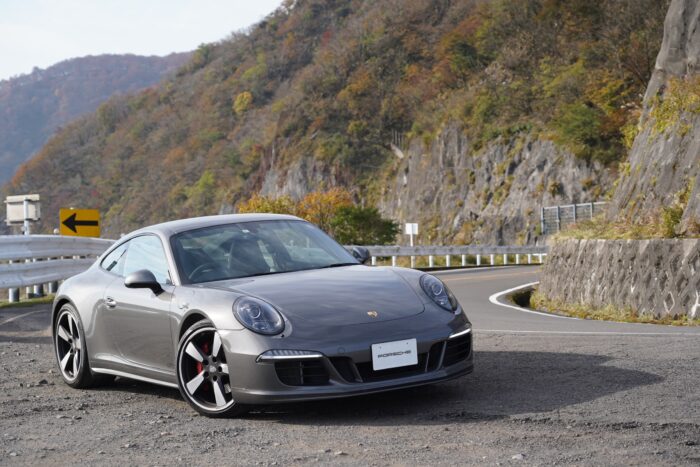
My former early 991 Carrera 4 GTS, with a 3.8-liter naturally aspirated flat-six
Let’s start by comparing the two engines on paper.
The 718 Boxster T and Cayman T use a 2.0-liter turbocharged flat-four that produces 300 PS at 6,500 rpm. Maximum torque of 380 Nm is available from just 1,950 rpm through 4,500 rpm. Porsche says its “Dynamic Boost” system is designed to deliver the sharp response of a naturally aspirated engine. With a sports chassis lowered by 20 mm specifically for the T and Sport Chrono Package also included as standard, it’s a seriously well-equipped car.
By contrast, every early 991 Carrera model has a naturally aspirated flat-six. My Carrera 4 GTS had a 3.8-liter engine producing 430 PS at 7,500 rpm, with maximum torque of 440 Nm at 5,750 rpm. A turbo engine delivers strong torque from low revs, while a naturally aspirated engine builds its power as the revs climb. You can see that difference in character right there in the numbers.
Starting with the facelifted 991, the Carrera range switched to a 3.0-liter twin-turbo engine. That makes the early 991 the last naturally aspirated Carrera generation, apart from GT models such as the GT3. There may be a reason A chose to return to an early 991.
My Experience of Living with a Cayman T

My former 718 Cayman T. The Cayman T is a fantastic car, too
I’ve owned a 718 Cayman T myself, so I can understand how A felt.
Our Cayman T arrived at our home in August 2023. It was a brand-new car in Carrara White Metallic, with PDK and left-hand drive. The Cayman T is a fantastic car, too. It’s not a case of a turbo being inferior; it comes down to personal preference and the character of each car.
Still, the naturally aspirated engine in the early 991 stood out for its smoothness, refinement, and sound. Mine was an Agate Grey Metallic Carrera 4 GTS with PDK, which I sold in 2025. The sense of power, the way the engine revved, and its sound all built together in step with the revs. That was an incredibly satisfying feeling.
With maximum torque arriving at 5,750 rpm, it makes sense that the power and sound swell together as the engine spins faster. I suspect that was the source of the “excitement” A described.
Not Every Porsche Feels the Same
I think the original article is less about “going back from a 718 to a 911” and more about how much A liked the early 991.
From January to September 2026, Porsche sales fell 16% overall, while 911 sales alone rose 12%. A’s story takes that a step further: even within the 911 range, the generation and engine can make all the difference to how a car makes you feel behind the wheel.
For someone who wants effortless acceleration and strong torque from low revs, the 718 Boxster T and Cayman T are excellent choices. But if you want to experience a naturally aspirated six-cylinder engine whose power and sound build as the revs rise, the early 991 may be the better fit.
Perhaps what A wanted wasn’t simply the 911 name, but the sensation of that engine coming alive as it revved. Not every Porsche will do. That’s how I see it.
If you enjoy this blog, follow along.
Comment ( 0 )
Trackbacks are closed.
No comments yet.