

Goodbye, Golf 7—and Thank You: Our Verdict After Nearly Three Years
公開日:2019.05.30
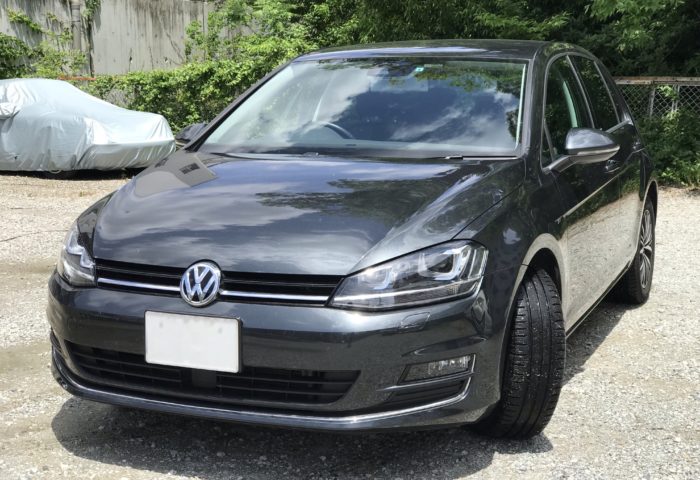

VW Golf 7
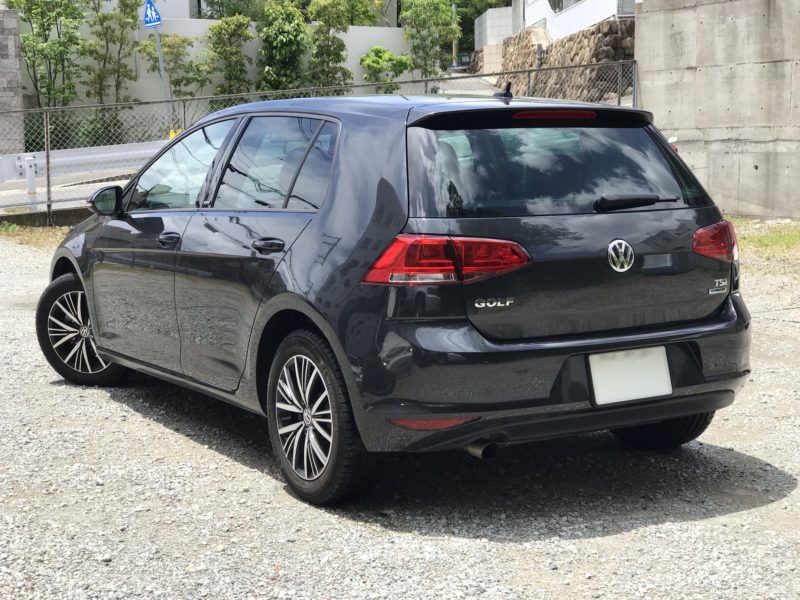
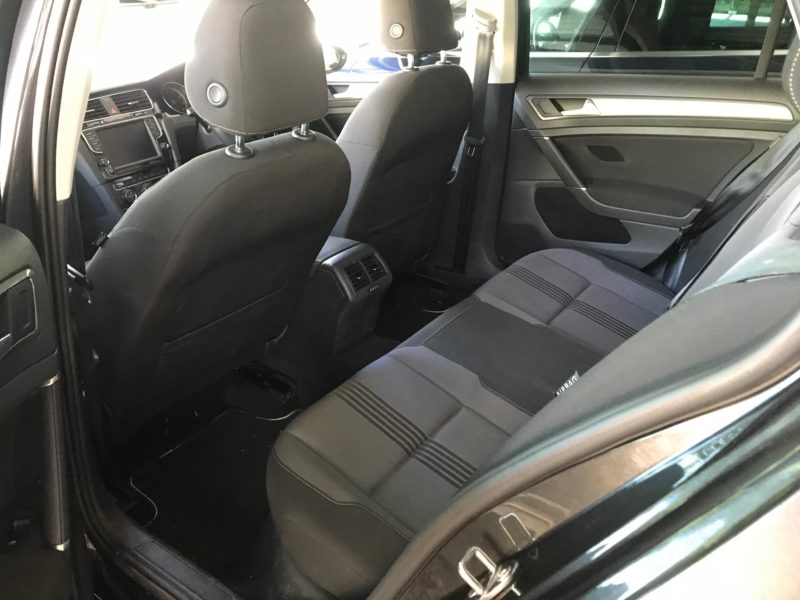
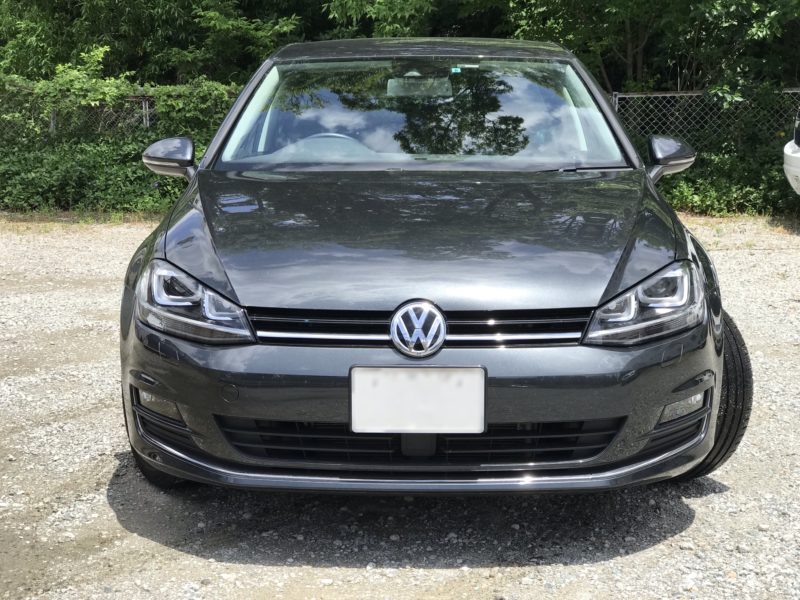
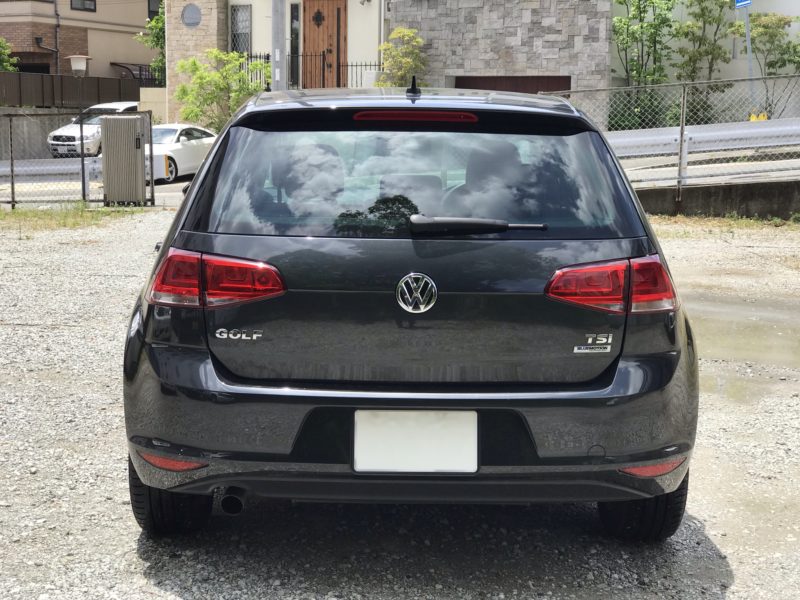
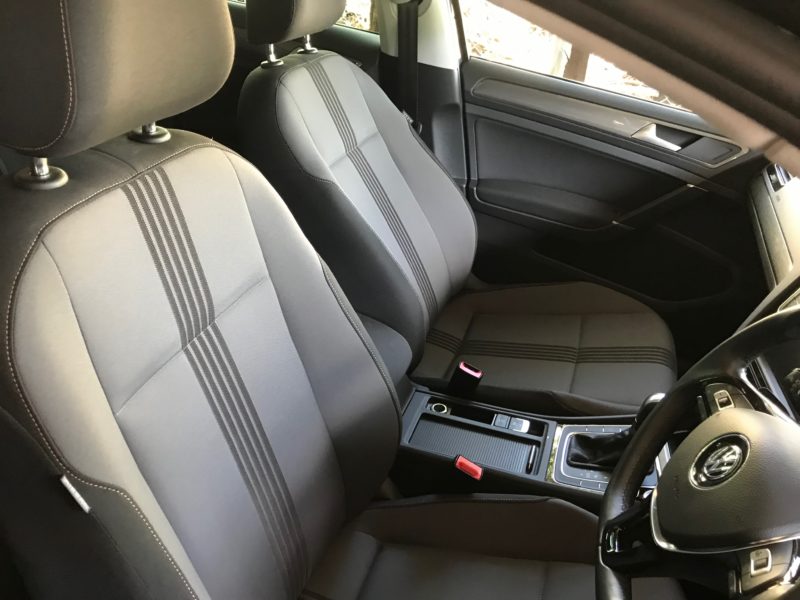
Not long ago, a BMW 320i joined our family, which meant we had to reluctantly say goodbye to our Volkswagen Golf 7 Allstar. Our Golf was a special-edition model with a 1.2-liter engine and seven-speed DCT, finished in the special Carbon Steel Grey Metallic paint. It also came with 20-spoke alloy wheels, uniquely designed fabric seats, and “ALLSTAR” badges and door-sill plates.
The Golf was a truly, truly well-engineered, wonderful car. Unless you’re regularly heading out on long-distance tours or taking your car to the track, one Golf is more than enough for everyday life. I’ve written about what makes the Golf so great many times on this blog, but now that we’ve owned ours for two years and nine months, I’d like to share my final thoughts on the experience.
Our Verdict on the Golf
Excellent All-Round Performance
The Golf is a car with excellent fundamentals. People often say that Porsche gets the basics—going, turning, and stopping—just right, and the Golf is much the same. It handles beautifully, and the brakes work well. The ride is on the firm side, but it’s exceptionally smooth, and you can drive for hours without getting tired.
It’s also very stable at highway speeds, whether you’re cruising at 100 km/h or changing lanes. The doors have a reassuring weight to them—not flimsy at all—and the sense that this is a solidly built car inspires tremendous confidence.
Our Golf had a 1.2-liter engine, but I never once felt it was underpowered. There was absolutely no sense of “the engine gets noisy when I press the accelerator, but the car barely moves”; if anything, it felt like a more powerful car. The hill in front of our home is pretty steep, but the Golf climbed it strongly when I pressed the accelerator.
Easy to Maneuver and Park
There are places where our Panamera won’t fit, but the Golf parks with no trouble. More than once, we’ve decided, “That restaurant has a tight parking lot, so let’s take the Golf.” I also visit both sides of our family’s graves once a month, and because the route involves narrow country roads and farm tracks, I always took the Golf.
The Golf can go almost anywhere and park almost anywhere. It’s easy to use for trips to any supermarket or shop, yet it’s still a high-performing car. That makes it an excellent choice for everyday driving, especially for my wife.
Great Value for Money
It’s remarkable that a car this capable cost around ¥3 million new. That’s less than the price of an option on a GT3 Touring (laughs). For this level of performance, you could easily imagine paying more…!? (Though, of course, we’re happier when it costs less.) Even compared with Japanese cars in a similar class and price range, I personally think, “If those are the choices, the Golf is by far the better pick!”
The Golf is also reliable. We sold ours before it had even reached 30,000 km, so issues could crop up if you kept one close to 100,000 km. But at least during our ownership, we had no breakdowns, problems, or warning lights whatsoever. It barely used any oil, and we only changed it during the annual service.
Roomy Rear Seats
The Golf is a compact car, but the rear seats are fairly spacious. The seat cushion seems relatively long, and even my 178 cm-tall husband could sit comfortably. He said, “I could ride in this for a long time without getting tired.”
Good Fuel Economy?
Maybe the Golf’s fuel economy only seems amazing because we can’t help comparing it with our Porsches (laughs). When my husband drove it to work, it typically returned 14–15 km/L. I got about the same when driving on the highway or around town.
That said, the Panamera’s fuel economy has improved lately, too. On our most recent tour, it averaged 9.8 L/100 km (10.2 km/L).
Plenty of Cargo Space
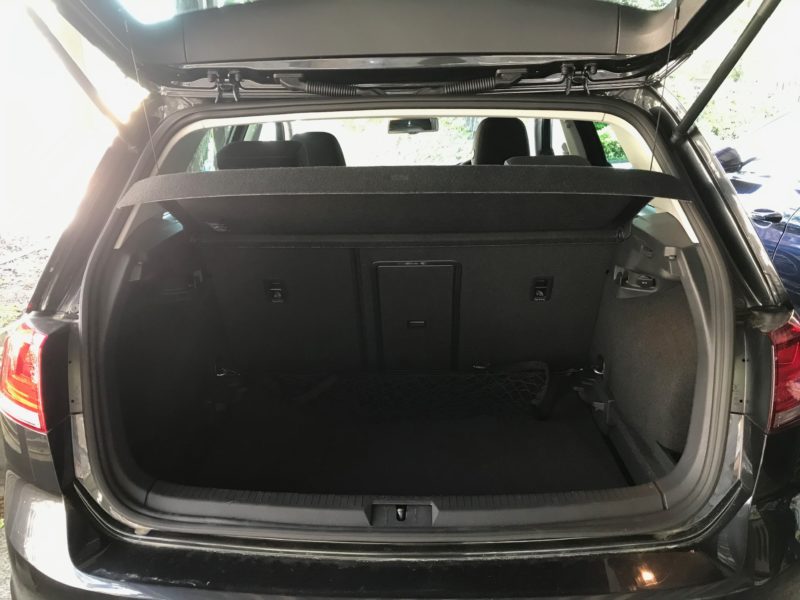
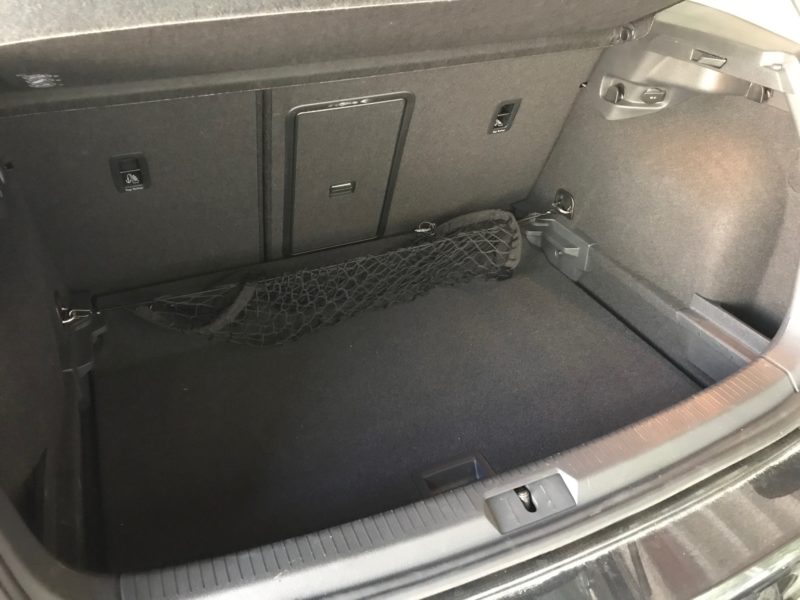
The Golf has plenty of room for luggage. The trunk can fit a large size-L suitcase, and there’s no trouble fitting a stroller, either. We always took the Golf when shopping at Nitori, and we never once ran into a situation where we couldn’t fit everything in.
Poor Resale Value
If there’s one real downside to the Golf, it has to be its resale value. When Volkswagen appraised ours recently, the trade-in offer toward a new car was around 40% of its original price. BMW offered about 25% of the original price. Even with such excellent performance, no mechanical issues, no accident history, and fewer than 30,000 km on the odometer (28,353 km), that’s all it was worth.
Now, for the part you’ve been waiting for (lol): here’s my husband’s verdict on the Golf 7.
My Husband’s Verdict
A Solid, Substantial Feel
The first thing that strikes you about the Golf is its solid feel. You notice it in the weight of the doors and the way they shut, but even the rear doors feel reassuringly well made. There’s no sense that corners have been cut anywhere. (Some Japanese cars, for example, have sturdy front doors but flimsy rear ones.) Out on the road, it feels planted, too, and the rigid body gives you the reassuring sense of being protected by a solid shell.
That solidity really comes into its own at speed on the highway. The car feels incredibly stable. At typical Japanese highway speeds, even pushing along in the passing lane inspires no concern. The Golf is more comfort-oriented than a Porsche, and honestly, I sometimes find it feels even more stable and reassuring than a Porsche, both physically and mentally.
Its arrow-straight stability and well-sorted suspension make high-speed lane changes and cornering feel composed and confident. The brake pedal is easy to modulate, and the brakes provide more than enough stopping power. Even a hard stop from high speed leaves the body stable and composed—a reminder that this car was developed with Germany’s Autobahn in mind. A new car with this kind of performance for around ¥3 million is an absolute bargain.
Engine and Transmission
The engine is Volkswagen’s familiar 1.2-liter downsized turbo, but it delivers plenty of low-end torque and is easy to drive. Drivers accustomed to the torque-converter automatics and CVTs found in many Japanese cars may need time to get used to the Golf’s dual-clutch DSG transmission.
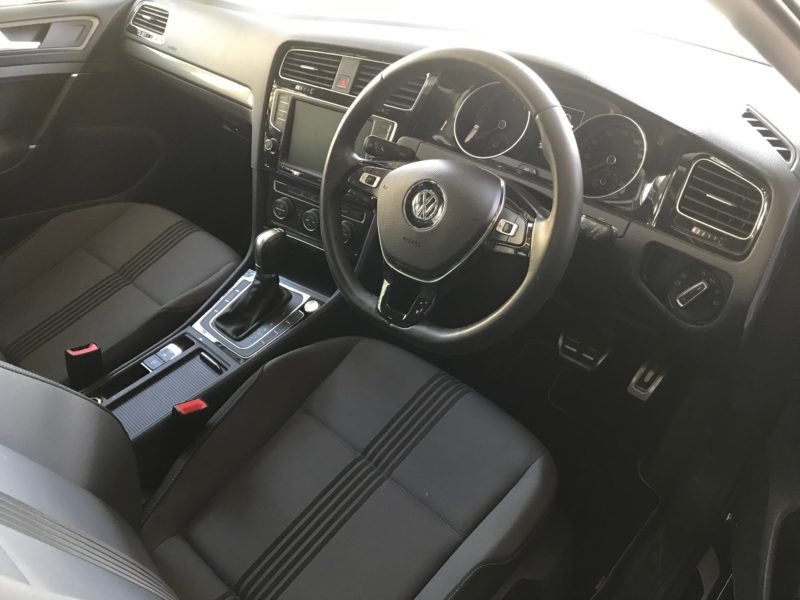
That said, seeing the tachometer needle drop neatly with each gear change, while the car accelerates without any pause, feels just like driving a manual—and I enjoy that sense of involvement. There’s virtually no shift shock; you can hardly tell what gear you’re in without checking the display. You often hear stories about problems or strange noises with this dry-clutch DSG, but our car never had any issues at all.
One drawback of the DSG—and of many modern cars—is that it shifts up earlier than necessary in the interest of fuel economy. In the Golf 7, in particular, it shifts into second almost immediately after pulling away, which can feel a little sluggish when you want to accelerate with more urgency.
In that situation, Sport mode gives you a more suitable shift schedule, so I often drove in S mode.
The Auto Hold function lets you keep the car stationary without holding down the brake pedal. However, if it’s switched on, simply pressing the accelerator to pull away can make the car jerk, so it takes a little getting used to. A light tap on the accelerator releases the Auto Hold brake; once it’s released, you can pull away smoothly.
Apparently, this was improved in the facelifted Golf 7.5.
Even at highway speeds, the engine delivers acceleration that’s hard to believe from a car with just 105 PS. As with many European cars, that’s largely thanks to the way the engine delivers torque and the carefully chosen gear ratios. There’s no frustrating lack of response when accelerating from 100 km/h; it picks up speed just as you’d expect. Don’t underestimate 105 PS: it’s more than enough to keep pace with traffic on a busy weekend in Japan.
Ride Comfort
When it comes to ride comfort, I think the Golf is exceptional for its class. Of course, ride comfort is subjective: some people prefer a soft, floaty ride, while others like something flatter or firmer.
The Golf should appeal to anyone who values a flat, composed ride. I once drove from Tokyo to Osaka with the owner of an older-generation Audi A4 Quattro (sedan), taking turns at the wheel. He was amazed, saying, “The Golf keeps your head steadier, even when you’re going fast. That’s impressive!”
The 1.2-liter Golf has a torsion-beam rear suspension, unlike the 1.4’s multi-link setup. If you drive both back to back, you can tell that the 1.4 rides even more smoothly. But frankly, I don’t think anyone would call the 1.2 uncomfortable. The difference is more that the 1.2 can feel a little bouncy on rough roads or over large bumps.
The Golf Is Easy to Recommend
If you’re considering a car in this class, I can recommend the Golf with complete confidence. But if you never drive on highways, don’t take long trips, and only need a comfortable car for getting around town, I’d suggest looking at something else.
That’s because you’d miss out on the things the Golf does best, and might see it as just another imported car without any particular strengths.
The Golf is for drivers who value the reliability and safety of a car as everyday transport, along with the fundamentals of going, turning, and stopping. For those drivers, I think it could be the perfect car.
このブログが気に入ったらフォローしてね!
Comment ( 0 )
Trackbacks are closed.
No comments yet.