

Former Racer Turned Car Dealer: Why the 911 Is His Top Porsche Pick | Porsche Supporters File Vol. 2: Tatsuya Matsumoto of Auto & House
公開日:2018.06.22


Hello, everyone! I’m Mina, the editor of the “Welcome Home, PORSCHE” blog. In May, we launched “Porsche Supporters File,” an interview series featuring the people who support the Porsche community behind the scenes. For our second installment, I visited Tatsuya Matsumoto of Auto & House Co., Ltd., based in Minami-ku, Kyoto. Matsumoto is a former Super Taikyu endurance racing driver!
Chapter 1: How a Former Racer Sees Porsche

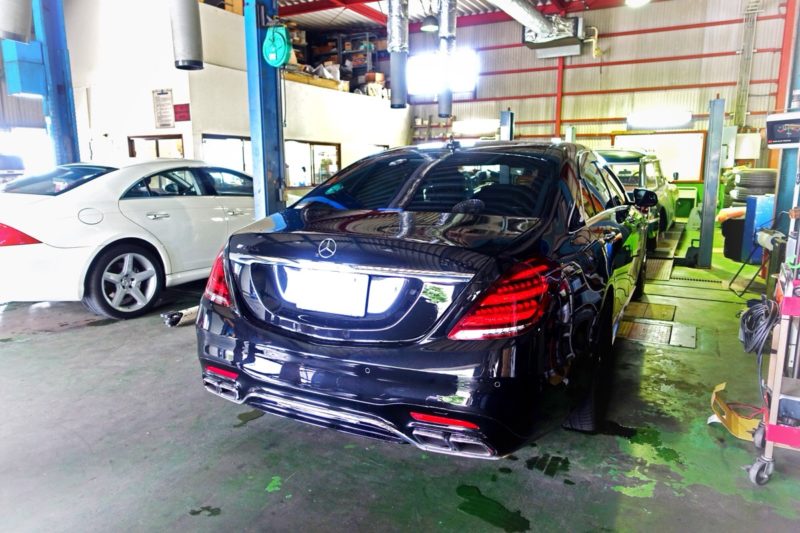
*The workshop is home to a remarkable collection of classic cars, some rarely seen in person.
1-1: About Auto & House
What does Auto & House do?
We sell new and used imported and Japanese cars, carry out inspections, and handle general repairs. The company was established in 1981, making this our 37th year in business. My father founded it when I was just born, after working as a Yanase salesman.
Back when Germany was still divided into East and West, my father secured import channels from Germany and began parallel-importing European cars. Even when the cars had the same specifications, buying through a parallel importer was cheaper than buying from a dealer. Customers appreciated that, and with the times on our side, the business grew. These days, however, there are fewer advantages to parallel imports, and we rarely handle them.
Now, we might source a car directly from Germany if a customer really wants a left-hand-drive model that isn’t sold in Japan.
What kinds of cars do you handle?
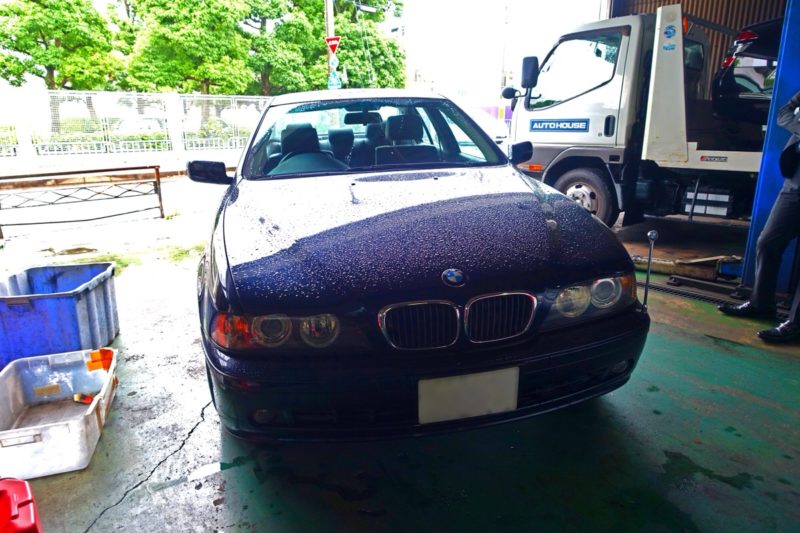
Mercedes-Benz is our main focus, but we also work with a range of other brands, including Porsche, Ferrari, BMW, Bentley, Volkswagen, and Audi. When it comes to sales, for example, customers might ask us, “My son is buying a car—can you find him something good?” or “My repair bills are adding up, so I’d like a new car.” Many of our customers have been with us for years and trust us. We listen to what they’re looking for—perhaps a car with a certain mileage and specification—then source options through dealerships or auctions and recommend the ones that fit.
We also receive requests for repairs and maintenance almost every day. You can see some of our work on Instagram.
What sets Auto & House apart?
I’d say it’s that we don’t just run a service workshop—we also sell new and used cars. One of our strengths is that we can support customers through the entire ownership journey: servicing and inspections after purchase, and even their next car when it’s time to trade up.
This may not exactly be a strength, but many of our customers are presidents or chairpeople of publicly listed companies, as well as business owners. So, when it comes to Mercedes-Benz, for example, we tend to handle larger sedans like the S-Class and E-Class that work both for business and everyday use, rather than the CLA, A-Class, or B-Class.
So the higher-end models sell better—that’s impressive.
Even though we have many loyal customers like that, young people are still moving away from car ownership, and Japan’s car market is still shrinking. I believe we have to run the business with a constant awareness of those challenges.
For example, more local dealerships are investing in their businesses and broadening their lineups. Some started out selling only Toyotas, then gradually added Lexus, Mercedes-Benz, and Audi. It’s becoming less common to see dealers that handle just one manufacturer. In this environment, we have to keep asking ourselves how we can continue to meet customers’ needs and stay in business.
1-2: On Porsche
You’ve driven all kinds of cars. What makes Porsche stand out to you?
I’ve driven a lot of different cars, but I don’t think any other car balances the three essentials—going, stopping, and turning—at as high a level as a Porsche. Some other European cars are fast but leave you unsure about the brakes; others have plenty of power but aren’t especially fun to drive. Some excel in one area but don’t feel well balanced overall. Porsche is different. It’s a real joy to drive.
For everyday use, I might choose a Mercedes-Benz, but when it comes to driving enjoyment, Porsche is the one for me.
Porsche performance is outstanding. What do you think of the design?
Some Italian-car fans apparently say they aren’t keen on Porsche design, but that really comes down to personal taste. I think it’s fantastic that the design has such a strong identity—you can tell at a glance that it’s a Porsche. Japanese cars are often described as hard to identify without their badges, but you can recognize a Porsche from a distance.
The same goes for European brands like BMW and Mercedes-Benz. I think it’s important for a car to have a distinctive face.
Chapter 2: A Love of Cars Led Him to Racing
2-1: What First Sparked His Interest in Cars
When did you first get into cars?
I grew up surrounded by cars, so I think I naturally fell in love with them. My father was already running the company when I was born, so I had plenty of opportunities to be around cars. If I heard that something unusual had arrived, I’d go to the company to see it, or get a ride in it.
F1 began airing on Japanese terrestrial television in 1987, when I was six, and I’ve watched it ever since. When Japan hosted its first F1 Grand Prix, I went to Suzuka Circuit with my father.
I still remember how blown away I was as a kid when I saw an F1 race in person. It was several times more exciting than watching it on TV. I just thought, “Wow!”
Before long, I found myself focusing on the driving itself when I watched races: “Why are they braking there? It looks like they could stay on the throttle!” or “Why are they taking that line?” I’d always loved amusement-park go-karts, so little by little, I started wanting to try racing myself.
It’s amazing that you became a racer after getting interested in racing!
Oh, I don’t know about that! (laughs) My father did rallying, too, and there were a lot of adults around me who raced. I think it was natural for me to start thinking, “I want to race, too.” At some point, I became serious about it and told my father. He said, “If you pass your middle-school entrance exams, you can do it.” (laughs) I studied hard, got in, and started karting at 12.
After graduating from university, I joined Mitsubishi Motors and competed in races including the Super Taikyu series at Fuji Speedway. Then, in 2009, the global financial crisis hit and our sponsors pulled out, so I had to stop racing. After that, I left Mitsubishi Motors and joined my father’s company.
2-2: The Appeal of Racing
What do you find appealing about racing?
I love that it’s a contest where the result is clear: you either win or lose. It’s not a sport where competitors earn points for artistic or technical merit. In the end, whoever crosses the finish line first wins. It’s easy to understand.
Teams plan their strategy in advance, but then they have to respond to all kinds of changing conditions—the weather, the timing of a yellow flag, and more—all while aiming for first place. That’s incredibly exciting. I’ve always been a competitive person, I suppose.
Your son is two. Would you want him to race, too?
No, I wouldn’t. It costs a fortune! (laughs) You could spend enough each year to buy a new Panamera Turbo. I’m truly grateful to my father for letting me race from such a young age, even though it cost that much.
Chapter 3: Matsumoto’s Dream Car and the Future of the Industry
3-1: The Car Matsumoto Wants Most Right Now
If you were buying a car right now, what would you want most?
Without a doubt, a 911. As a former racer, I pay particular attention to braking performance. Because the 911 is rear-engined and rear-wheel drive (RR), its brakes really bite. Most cars have their engines in the front, which puts more load on the front end when you brake and can cause the rear to lift. Even with four brakes, the rear brakes may only be doing about 20 percent of the work.
With an RR layout, the weight is over the rear wheels. When you brake in a 911, the rear stays planted, allowing the brakes to work to their full potential. I think that’s why the car feels so well balanced.
The Panamera and other Porsches are wonderful cars, too, but I tend to think of luxury cars and sports cars as separate categories. So, of course, I’d want the 911—the model that most fully embodies Porsche’s sports-car DNA.
And, sure, Ferraris look great, but driving one around town would make me a little nervous. (laughs) A Porsche is perfectly practical for everyday use, and that’s another big plus.
There are plenty of 911s to choose from. Which one would you want most?
I’ve had the chance to drive a 997 Turbo and a 991 Turbo S, and they were both great. But if there were no budget limit and I could buy anything, I’d want a GT3! (laughs) It just looks fantastic.
3-2: Why People Are Moving Away from Cars
Why do you think people are moving away from car ownership?
I think the biggest reason is the growing range of entertainment options. In the past, there weren’t as many ways to spend your free time, so the idea might have been, “Once I start earning money, I’ll buy a nice car and take my girlfriend out!” That kind of thing has faded.
Another major factor is that public transportation in cities has improved, making it easy to get almost anywhere by train or bus.
And then there’s the cost. Owning a car is expensive. Paying a few thousand yen for a taxi can feel costly, but when you look at the overall picture, selling your cars and relying on taxis can actually be cheaper. I worked it out once, and that was the result. (laughs)
So if people see a car only as a way to get from place to place, they may feel there’s no point in owning one anymore.
People also say we’re moving into an era of car sharing. What do you think?
That’s right. Automakers are putting more effort into car-sharing services, too. I think we’ll see more and more luxury cars available to share. Times Car Rental offers Aston Martin rentals in some areas, and Audi has launched a car-sharing service in Tokyo. I expect these options to keep growing.
Do you think Porsche will survive as people move away from cars?
Yes, I think it will. A while back, Porsche had a difficult time financially when its lineup consisted only of the 911. The company turned things around with the launch of the Cayenne. It then expanded its lineup to meet customers’ needs with models like the Panamera and Macan, and all of them have been successful.
In the past, someone who loved Porsche but wanted an SUV might have said, “Porsche doesn’t make an SUV, so I’ll look at Mercedes-Benz or BMW instead.” Now, it’s a big advantage that customers can find what they’re looking for within the Porsche lineup.
Even so, the SUVs and sedans are built on a foundation of sports-car DNA. I think that’s important: every Porsche is a sports car at heart.
What do you think about the growing shift toward electric cars?
Honestly, as a car enthusiast, I feel a little sad to see more and more cars being developed as EVs. Pressing the accelerator and feeling the car build speed while listening to a great engine note is one of the joys of driving. EVs accelerate, of course, but all you hear is a high-pitched whine, which can feel a little underwhelming.
Hybrids use regenerative braking, so that can feel a little unusual, too. The technology has improved, and the controls feel much more natural now, but the braking response still isn’t quite what I expect. Most people wouldn’t notice that, though, so I don’t think it’s an issue for the average driver. (laughs)
3-3: Matsumoto’s Hopes for the Future
As someone who works in the automotive industry, how would you like to see it develop?
I’d like to help more people become car enthusiasts. If you ask me exactly how I plan to do that, though, I’m not sure I have a good answer! (laughs) But as someone who works with cars, I think the most important thing is to value every customer in front of me and always strive to do the best job I can.
Japan is a small island nation, yet it has 14 automakers if you include truck manufacturers. Once you count the suppliers, I imagine around one in ten people working in Japan has a job connected to the automotive industry in some way. And yet, car culture hasn’t really taken root here. That’s a real shame.
That’s why I’d like to see Japanese automakers, led by Toyota, continue to compete in circuit racing and rallying. They can use those experiences to improve their technology, bring it to production cars, and build even better vehicles—hopefully inspiring more people to become car fans. That would be wonderful. I still have plenty of work to do myself, too!
[A note from Mina, the blog editor]
Matsumoto is a car enthusiast, a former racer, and now works in the automotive business. It was clear from our conversation how much he wants to help keep the car industry thriving. If you live in the Kyoto-Osaka-Kobe area and are looking for a classic car or another special find, why not visit Auto & House? Thank you, Matsumoto!
[About Auto & House]
■ Company: Auto & House Co., Ltd.
■ Representative: Makoto Matsumoto
■ Business activities:
Automotive division
・Sales and repairs of new and used imported cars
・Rental car services
・Insurance agency services
Construction and real estate division
・Real estate sales, brokerage, and leasing
・General construction (residential and commercial buildings)
・Real estate consulting
■ Address: 1-10 Kisshoin Kannondomachi, Minami-ku, Kyoto
■ Phone: 075-661-7201
■ Official website: click here
このブログが気に入ったらフォローしてね!
Comment ( 0 )
Trackbacks are closed.
No comments yet.