

What Experiencing a Typhoon Blackout Taught Me About Electric Cars
公開日:2018.09.06
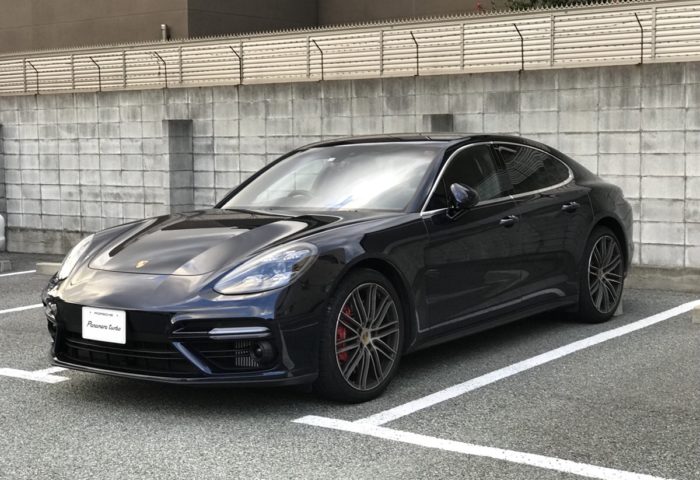

Typhoon Jebi Hits Japan
Typhoon Jebi slammed into Japan on September 4, and “powerful” hardly begins to describe it. Our home lost power at 2 p.m. that day, and the blackout was still ongoing as I wrote this. There was no word yet on when electricity would be restored.(I’m writing this on the Shinkansen at 10 a.m. on September 5 → Later, at 11 a.m., I got word that power had been restored at home.)
It was my first experience of a large-scale, prolonged blackout, and it got me thinking: “If our family car had been an electric vehicle, things might have been even more difficult.”
Preparing for the Typhoon
The day before the typhoon, September 3, JR West announced early that it would suspend train services the following day, repeating the notice over station announcements. My daughter’s kindergarten also decided by the morning of September 3 to close on the 4th. Even the underground shopping district in Osaka’s Umeda area(central Osaka) announced on the 3rd that “we will be closed on the 4th.”
Typhoons had hit the Keihanshin area before, and I’d felt we were seeing more of them than usual this summer. But I’d never seen JR West and major facilities take precautions so far in advance. “This must be a seriously powerful typhoon. We need to be prepared,” I thought.
At the same time, though, I found myself thinking, “Still, typhoons usually veer away from Kansai, and we often escape the worst of them. We’ll probably be fine this time, too.”
The Day the Typhoon Hit
On the 4th, my husband’s company switched to working from home, and my daughter’s kindergarten was closed, so our family of four stayed in to prepare for the typhoon expected that afternoon. But before long, our older daughter started complaining, “I want to play! There’s nothing to do!” So we decided to head to the supermarket that morning. We arrived just after it opened, but…
The parking lot was already backed up with cars, and the checkout lines were longer than I’d ever seen.
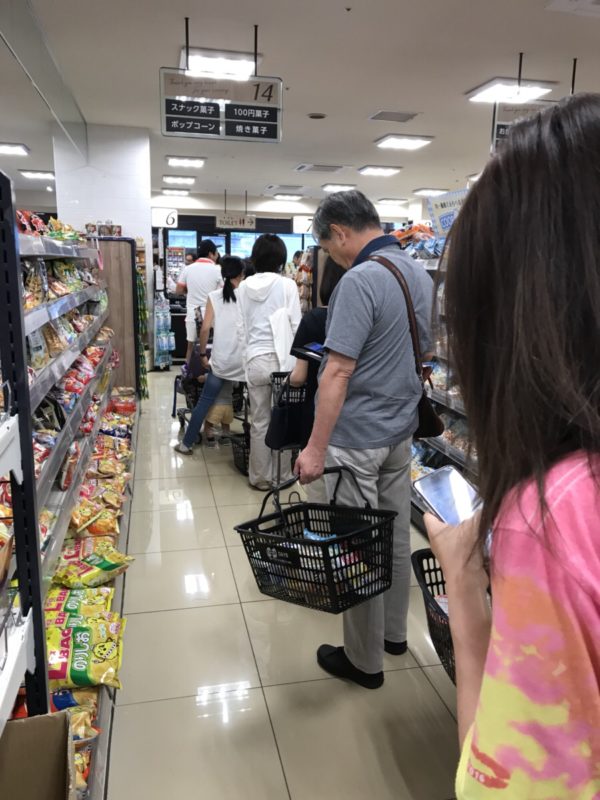
I guess we all have the same idea when a storm is coming.
After lunch, the rain and wind gradually picked up. It was blowing fiercely, but my husband said, “Come on, the last typhoon was worse. The house was shaking.”(I felt it wasn’t as bad as I’d expected, too.) The girls were watching something on the iPad, and I was watching a Discovery Channel feature on the Cayenne(I mean, who puts on a Cayenne special at a time like this… lol)—we were all doing our own thing when, suddenly…
There was a loud “BOOM!” nearby, like something had exploded and short-circuited. The lights went out, and all our electrical appliances stopped at once.
Oh no! A blackout! ((;゚Д゚))
It was just after 2 p.m. “It’ll be back on in a minute or two,” I thought, still taking it easy. But 15 minutes passed, then 30, then an hour…and nothing. We couldn’t turn on the TV to find out what was happening, so I checked Twitter and Facebook. That’s when I learned that power was out across the Keihanshin region.
The Damage Was Far Worse Than a Blackout
Then came a flood of shocking reports: Kansai International Airport was flooded; a tanker had crashed into the airport access bridge; a major fire had engulfed around 100 cars in Nishinomiya; scaffolding had collapsed from a building in Osaka; and the roof of Kyoto Station had been torn away. This time, I thought, things might be really bad. It was the first moment I grasped the full scale of what was happening.
About three hours after the air conditioning stopped, the heat and humidity inside were getting to me. My husband said, “We’d be better off in the car.” So the whole family climbed into our Golf and drove around the neighborhood.
We set off thinking, “At least the air conditioning will keep us cool,” but it didn’t take long to see that something was very wrong. The traffic lights were out, the streetlights were dark, and the convenience stores and supermarkets were all blacked out. Even the traffic light in front of the Porsche dealership we visit was badly bent, with police officers directing traffic by hand.
Dark smoke was billowing up from the coast to the south, and we passed several fire engines. We turned back when we were told the road ahead was dangerous, then drove to a convenience store farther away to buy food(though there were no rice balls or boxed meals left). By the time we got home, it was completely dark—and there was still no sign of the power coming back on.
We dug out a flashlight, opened the windows, and ate sandwiches in the dark, sweating all the while. Then my husband said:
“If the power’s still out tomorrow morning, this is going to be a real problem. No electricity means no charging, no shower, no internet, no air conditioning—and the convenience stores are dark, so we can’t even get food. Everything’s out. Maybe we should get the family to a hotel while we still can.”
A Traffic Jam on the Way to the Hotel
“A hotel? We’re evacuating to a hotel!?”
I hadn’t seen that coming. My husband quickly searched online, found a room available at a hotel in Kobe, and booked it right away. We packed only the essentials—his work things for the next day, clothes for the kids, and our older daughter’s kindergarten bag—and all piled into the Panamera.
With the Hanshin Expressway closed and JR and private railway services suspended across the board, the roads were much busier than usual. The McDonald’s nearby was packed with people looking to charge their phones, the wait at Sukiya was 40 minutes, and we couldn’t find a taxi. After about 40 minutes, we finally made it to the hotel in Kobe.
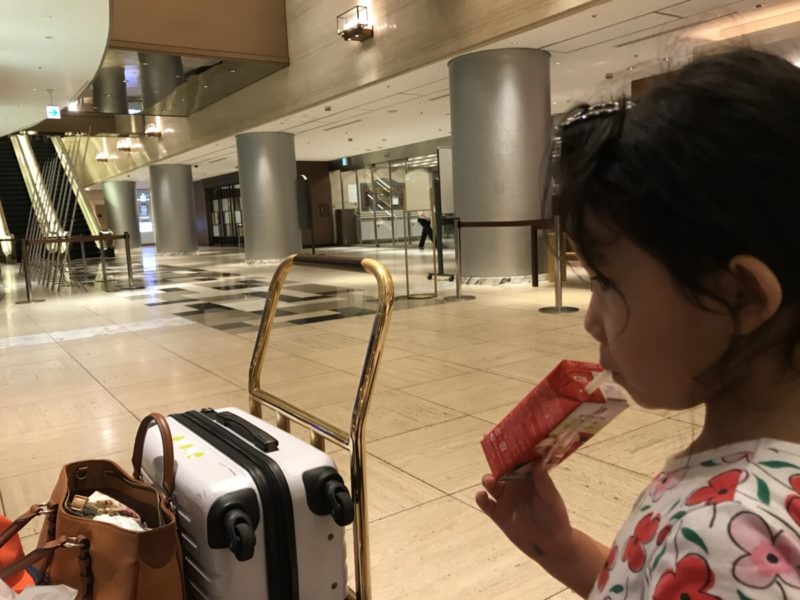
Inside, it was as if nothing had happened. The lights were bright, and the hotel staff greeted us warmly. We were able to spend the night there safely.
What the Blackout Made Me Realize
The experience really drove home just how much of daily life stops when the power goes out. We take electricity for granted, but I gained a whole new appreciation for it—and couldn’t help thinking, “If our family car had been an EV, this could have been even more worrying.”
Even if we never park with the battery completely empty, all the charging stations in our apartment building would almost certainly be out of service. If a blackout hit while the battery was low, we might not be able to go anywhere.
And if we lived in an apartment building with a mechanical parking system, the power outage could leave us unable to get the car in or out at all.(I even saw a post during this typhoon about a Cayman being flooded because its owner couldn’t get it out of a mechanical parking garage during the blackout…)
With all public transportation stopped and no taxis available, the car was the only way to get around. But if the battery were low—or if we couldn’t retrieve the car from the parking garage—we wouldn’t have been able to drive to a convenience store farther away for food or take the family to a hotel, as we did.
Electric vehicles are better for the environment, and I expect to see more of them in the future. But the thought of being unable to move when the power goes out is frightening. It’s probably unlikely to happen, but in a situation like this, I have to admit that a gasoline-powered car(or at least a hybrid) feels more reassuring.
Above all, I hope power is restored throughout Kansai soon.
このブログが気に入ったらフォローしてね!
Comment ( 0 )
Trackbacks are closed.
No comments yet.