

Mazda Spirit Racing Roadster Test Drive: A Boxster Owner’s Take on the Differences
公開日:

コンテンツ
Driving the MSpR Roadster from a Boxster Owner’s Perspective
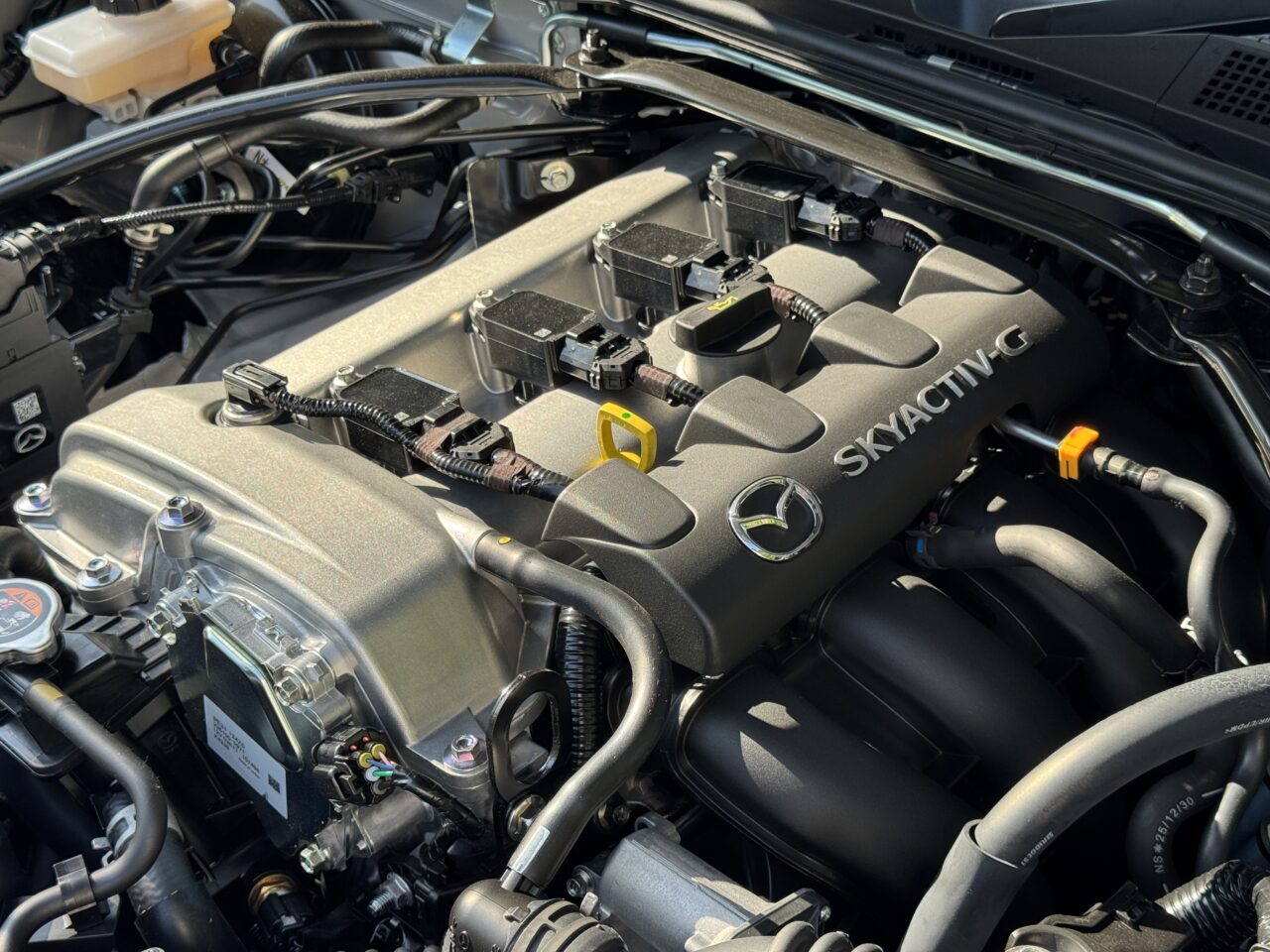
I had the opportunity to drive the Mazda Spirit Racing Roadster, hereafter MSpR Roadster. Since I’m a Boxster owner, I wanted to share some comparisons from that viewpoint. First, let’s review the specs. The 2.0-liter inline-4 produces a peak output of 184 PS at 7000 rpm and maximum torque of 205 Nm at 4000 rpm. This engine is basically the same as the one fitted in the Roadster RF. It’s paired exclusively with a 6-speed manual transmission.
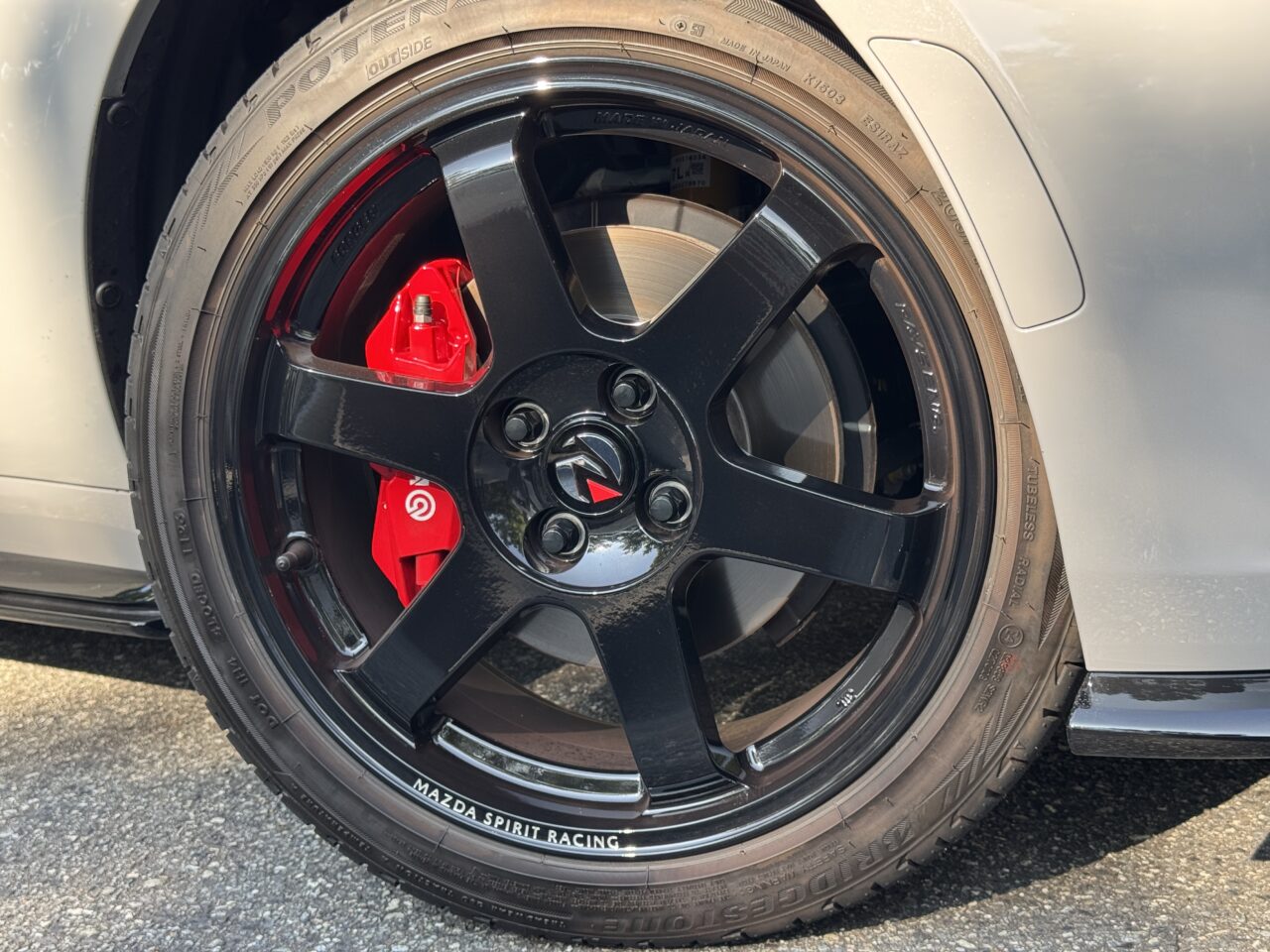
The wheels are 17-inch forged aluminum by Rays, wrapped in 205/45R17 Bridgestone Potenza S001 tires. Lightweight, high-rigidity Brembo aluminum calipers come standard. The suspension features Bilstein dampers with adjustable ride height, also used in the NR-A. And the car weighs just 1,070 kg.
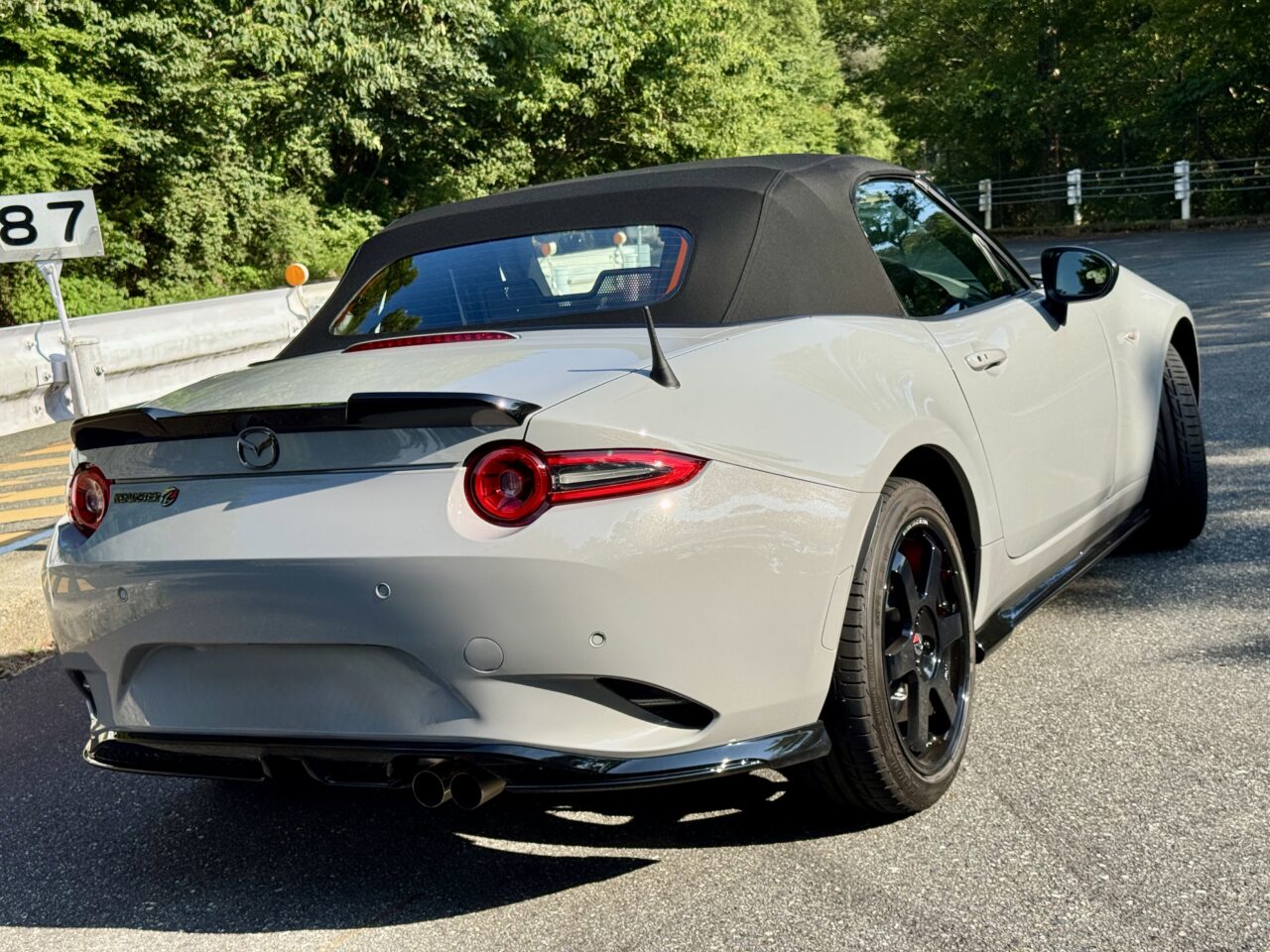
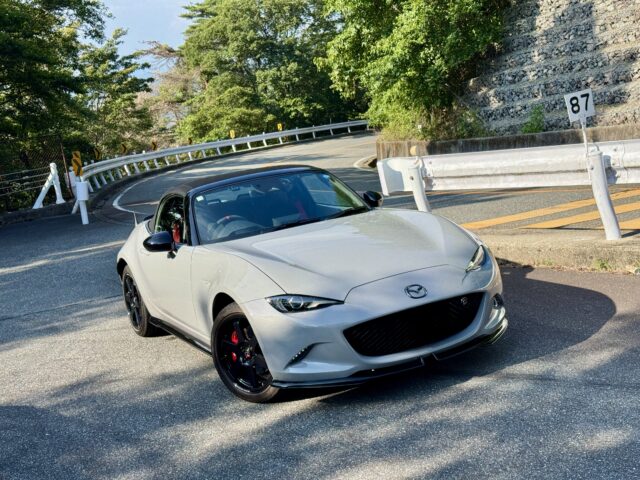
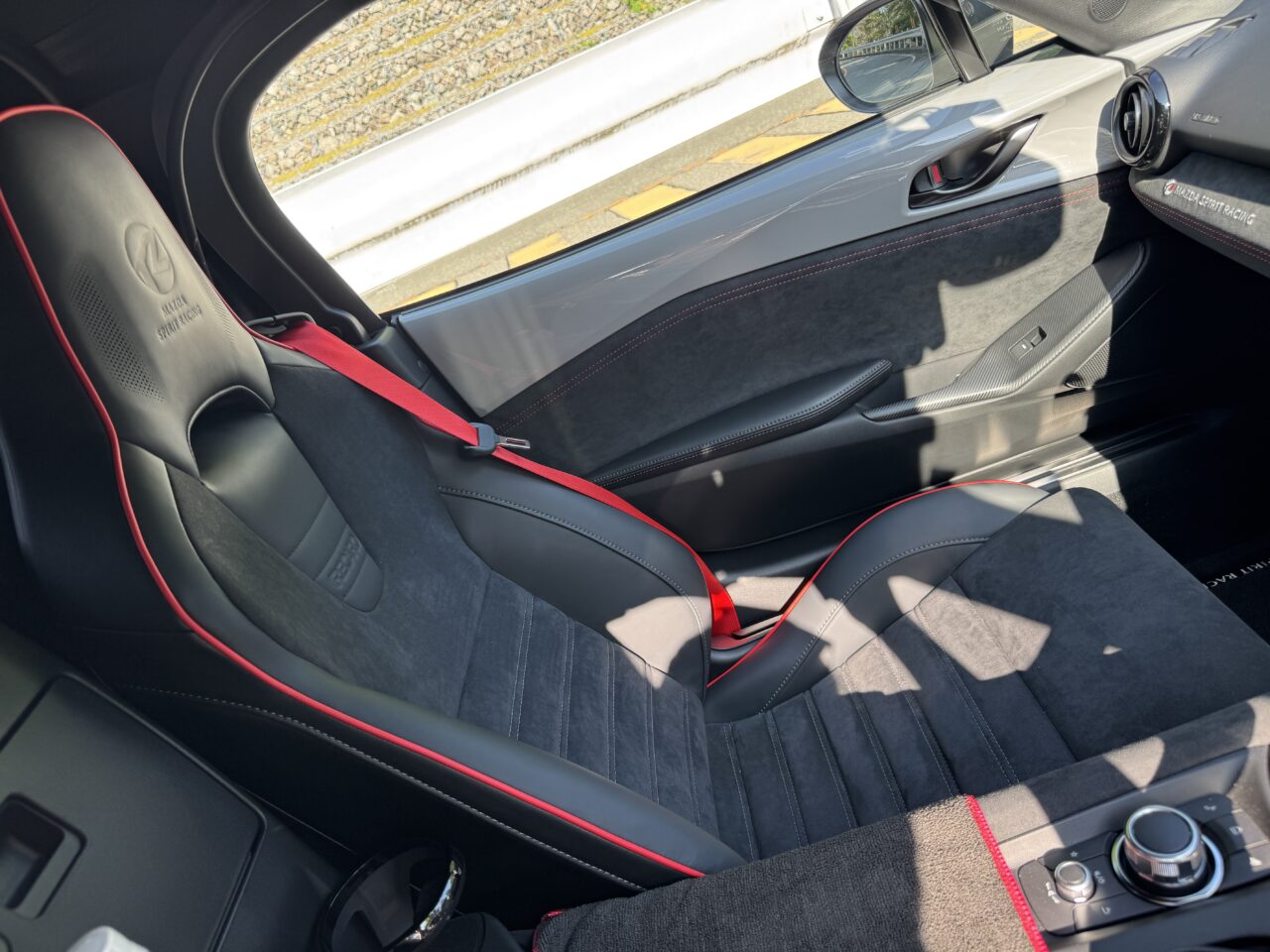
Visually, it only differs from a standard Roadster with an aero kit and rear spoiler. But inside, the impression changes dramatically. It’s fitted with Recaro semi-bucket seats and Alcantara trim. Including the look of the wheels, the car feels worthy of its roughly 5 million yen price tag.
The 2.0-L Naturally Aspirated Engine Clearly Fills the Gap Left by the 1.5-L
Starting the engine reveals a slightly deeper tone. The extra displacement adds a richer voice at ignition. The overall feel once inside is very close to the ND Roadster I’ve driven before. Clutch and shift operations are remarkably smooth and straightforward—easy even for manual transmission beginners. The ease of handling remains impressive.
Acceleration is lively. You can feel a distinct torque boost compared to the 1.5-liter model I previously tested. However, with 184 PS being modest for a 2.0 NA engine, it’s not a brutal acceleration monster. Shifting crisply through 1st, 2nd, and 3rd gears, even pressing the accelerator hard in 3rd doesn’t unleash a dramatic surge. Honestly, I found myself wishing for just a bit more torque. But since this car is designed to thrive in a high-revving powerband, that expectation might be misplaced. Still, I believe this model will satisfy anyone who found the 1.5-liter lacking.
What Stands Out Most Is the Suspension — Firm and Exceptionally Agile
The suspension is where the driving experience really diverges. The chassis feels notably firmer. I’ve driven completely stock ND Roadsters, which typically have softer suspensions and more body roll, relying on shifting weight during cornering. But the MSpR is different. Roll is tightly controlled, yet the car corners sharply. It feels more solid than nimble. It closely resembles the feel of an ND 1.5 S Special Package fitted with HKS suspension that I experienced before.
This particular car hadn’t been driven much and was still essentially factory fresh. The owner plans to drop the ride height by about 2 cm. As is, the car feels a bit tall at the hips. With such a responsive and firm suspension, lowering it would undoubtedly improve balance.
The seats also contribute significantly. Standard ND seats are soft and lack sufficient support, making the driver feel a bit loose. The firm feel of the Recaros enhances control, keeping the body well-supported through corners. The ride feels firm but never uncomfortable.
The Thrill of Progressive Oversteer and Diving Deep into Corners
The car that most closely resembles this one, in my experience, is my own 987 Boxster Spyder. The 981 Boxster GTS tends to have a softer suspension and an understeer-biased character. In contrast, the MSpR Roadster leans towards oversteer, inviting you to really drive it deep into a corner. Its overall character isn’t the same as the 987 Spyder’s, but the light-footedness definitely feels familiar.
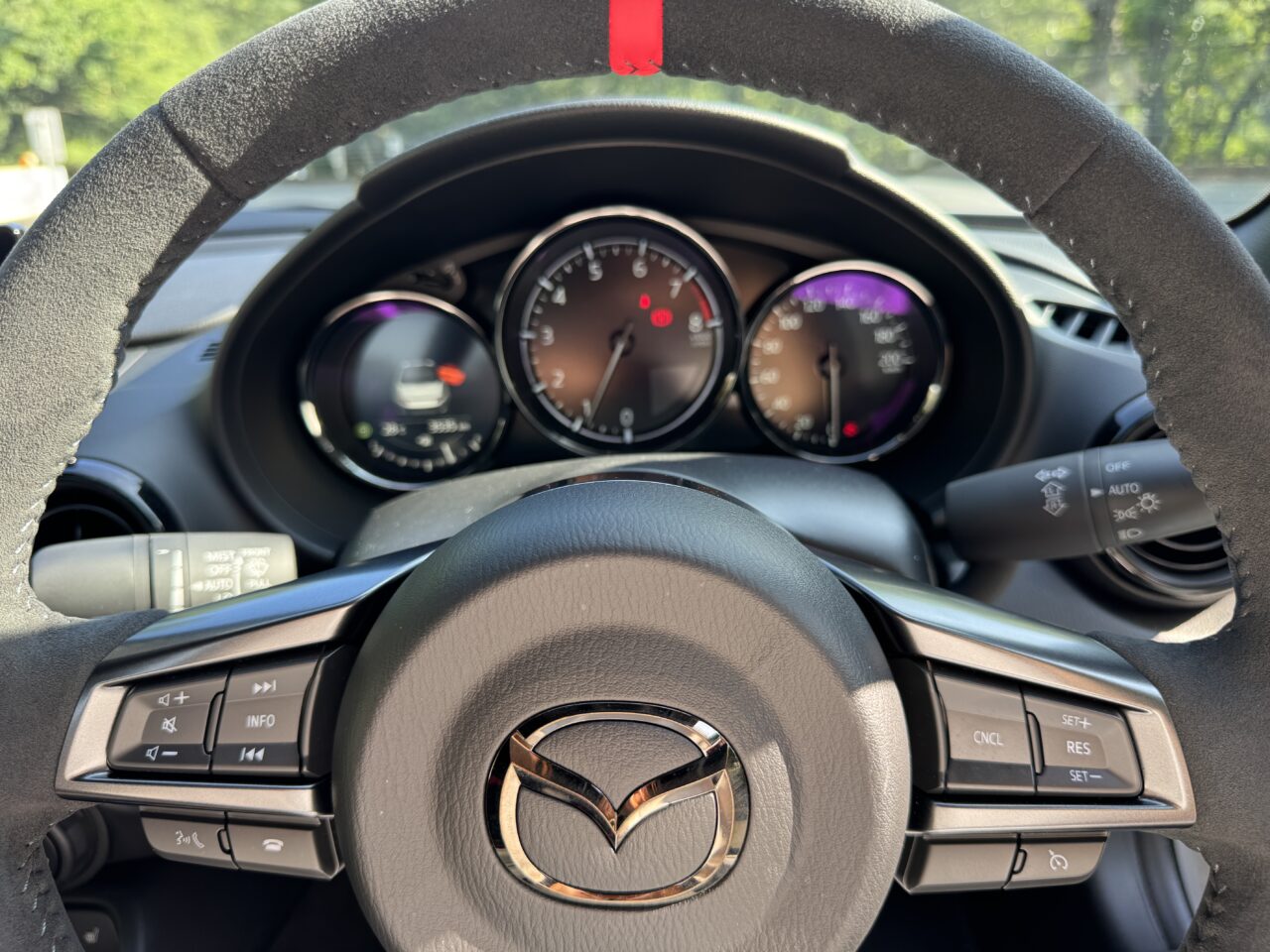
One fascinating aspect is how it behaves mid-corner. Even if you hold the steering angle steady, slight lapses in concentration or light throttle adjustments cause the car to tuck in sharply. This constant shift of weight and behavior is what makes the Roadster truly special. It’s an absolute joy to drive, matching or even exceeding the fun of a Boxster depending on the conditions.
A Key Difference? The Center of Gravity Relative to the Driver
Driving it is fun, but I couldn’t shake the feeling something was fundamentally different from the Boxster. Naturally, the engine layout difference—front-engine rear-wheel drive (FR) versus mid-engine rear-wheel drive (MR)—plays a role. But I sensed there was more to it. After sharpening my focus and gripping the steering wheel, I pinpointed the difference to the position of the center of gravity relative to the driver, purely from my own subjective feel.
Regardless of which Boxster from the 986 to 718 generations I’ve driven, the center of gravity always feels to be around the driver’s navel to waist. By contrast, the Roadster’s center of gravity seems positioned slightly higher, around the chest to shoulder area. That’s why even with the suspension controlling roll well, subtle body sway appears during S-curves or quick steering angle changes. This might be the biggest difference compared to the Boxster. Lowering the ride height by 2 cm could change this impression considerably.
Why Do Porsche Owners Modify Their Roadsters?
Many Porsche owners I know also own Roadsters. The owner of this MSpR is a Porsche driver with a Boxster and Spyder in their garage. Interestingly, none of them leave their Roadsters stock. They adjust settings, add custom parts, and continuously try to bring the car closer to a Porsche driving experience.
Why do they do this? Because the Roadster’s inherent character and potential are clear to them. If the car weren’t interesting as a platform, they wouldn’t bother modifying it. The process of customizing and tuning it toward that Porsche feel is part of the fun—a direct expression of the car’s appeal.
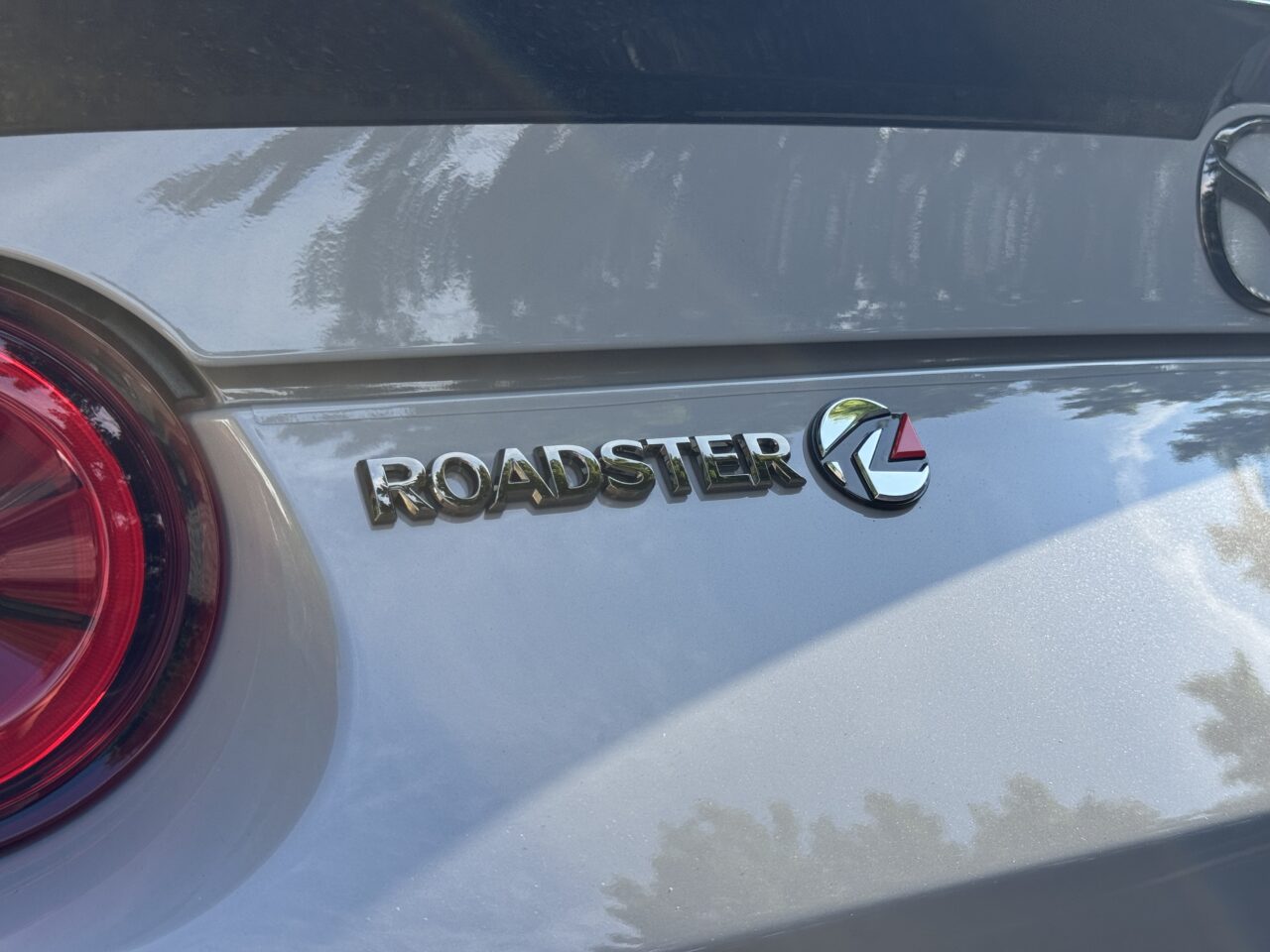
As for me, I’ve been talking about buying a Roadster for a while but haven’t pulled the trigger yet.
If I were to buy one, this MSpR Roadster would be my top choice among the trims I’ve driven. Since only 2,200 were made, new ones may be tough to find. Otherwise, I’d likely pick a used 1.5-liter, install Recaro seats, upgrade the suspension, and customize it thoroughly. For those accustomed to the rigidity and suspension performance of imported sports cars, the Roadster can deliver a satisfying experience above a certain level.
このブログが気に入ったらフォローしてね!
Comment ( 0 )
Trackbacks are closed.
No comments yet.