

My First Test Drive in a Toyota Prius: Pros and Cons Compared with the Panamera
公開日:2017.08.23

The Prius at My Parents’ Home
Yesterday, I got the chance to drive my parents’ Prius for the first time. I only took the wheel for about 20 minutes, after swapping with my father at a highway service area and driving until we exited the expressway. Their Prius is around 10 years old, so it’s getting on a bit. And based purely on its image, I’d always assumed:
Maybe a Prius feels so light that it could get blown off the road… Maybe the accelerator is so unresponsive that nothing happens when you press it…
I’d decided on my own that the Prius must be difficult to drive. But contrary to my expectations, it was actually pretty easy to handle—and felt very well suited to Japanese roads. No wonder it sells so well.
But on the highway, it was a different story.
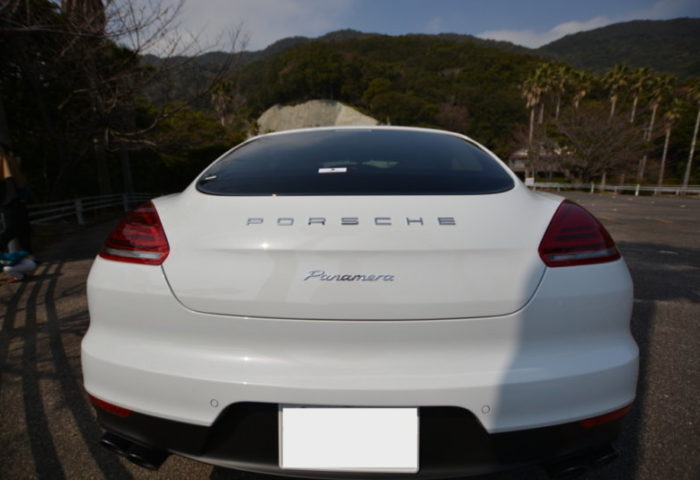
Even if Japanese-market cars aren’t designed for the kind of high-speed driving you see on the Autobahn in Germany (most Japanese drivers spend more time on city streets and in traffic than flying down the Autobahn), I still felt uneasy. So today, I’m sharing what stood out to me when I compared the Prius with my Panamera. (The Prius isn’t even a four-door sedan in the same class, so comparing it with a Panamera is pretty unfair in the first place.)
The Prius: The Downsides
First, the downsides of the Prius:
1. 100 km/h felt like the limit
If I were driving a Prius on the highway, I’d want to keep it to around 100 km/h (though, to be fair, even 100 km/h is over the legal speed limit in some places). A newer Prius or a higher trim might feel different, but at that speed, the steering started to feel unsettled, and the car’s side-to-side movement made me nervous.
2. Changing lanes felt scary
I tried changing lanes with the same steering input I’d use in the Panamera, but the Prius didn’t move smoothly at all, which made the maneuver feel pretty scary. (My driving technique may have been part of the problem, too.)
3. Not much acceleration
It was especially noticeable when merging. Even with my foot deep into the accelerator, the car didn’t pick up speed as much as the engine noise suggested it would. I thought, “I can merge smoothly now!”—using the Panamera as my point of reference—but the Prius didn’t accelerate as expected, and I ended up making the car behind me brake. Well, that’s to be expected.
4. Other drivers kept cutting in
Maybe I was leaving too much room to the car ahead, but other drivers cut in front of me pretty often—and seemed to dart in suddenly. That’s not something I’d normally experience in the Panamera.
The Prius: The Upsides
On the plus side:
1. Easy to maneuver
Pulling out of the service-area parking lot, I was struck by how effortlessly the Prius turned in tight spaces. It handled so nimbly that I almost wanted to spin around in circles for no reason. I could see it being easy for anyone to drive, including less confident drivers.
2. Easy to park
Of course, the Prius is shorter and narrower than the Panamera, making it much easier to park. Even if there are cars on both sides or the space is tight, as long as there’s an open spot, you can park without much trouble. That’s handy.
3. Great fuel economy
My parents said that even their older Prius averages around 19 km/L. Getting that kind of mileage despite city driving and traffic is impressive. (My Panamera gets around 5–6 km/L around town.)
So, even though it’s something we already know, the drive confirmed that:
For mostly city driving, the Prius is a great choice. But if you spend a lot of time on the highway, the Panamera is by far the better fit.
(Well, that’s obvious, haha.)
このブログが気に入ったらフォローしてね!
Comment ( 0 )
Trackbacks are closed.
No comments yet.