

My Brother’s Abarth 595C Has Arrived: What Does a Porsche Owner Think?
公開日:2021.03.04

Exploring the Abarth 595C’s Performance
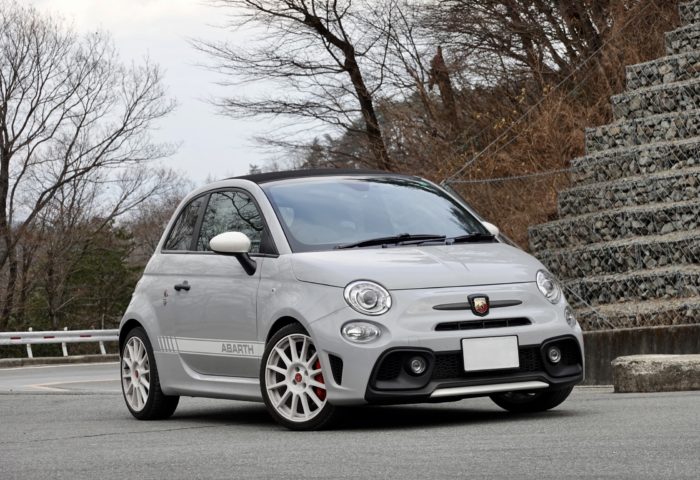
I switched to Sport mode and took on some tight corners. The throttle response sharpened, and the car felt noticeably more powerful. It’s rare for Sport mode to make such an obvious difference.
Given the car’s compact size and short wheelbase, I’d expected it to be nimble and dart around like a go-kart. Surprisingly, though, its handling is tuned more for stability.
Steering effort is on the heavier side, and even while cornering, there’s a strong self-centering force that constantly wants to bring the wheel—and the car—back to straight ahead. That’s the complete opposite of the McLaren 650S I used to own.
So, it doesn’t feel as quick or agile as its looks might suggest.
On the other hand, the tires have a reassuringly strong connection to the road, so you can push through corners with confidence. I tried switching TTC (Torque Transfer Control) off and on, but couldn’t feel much difference while driving a little briskly on public roads.
The 595C is much sportier than an ordinary compact car, but it’s probably not as edgy or unpredictable as its looks might lead you to expect.
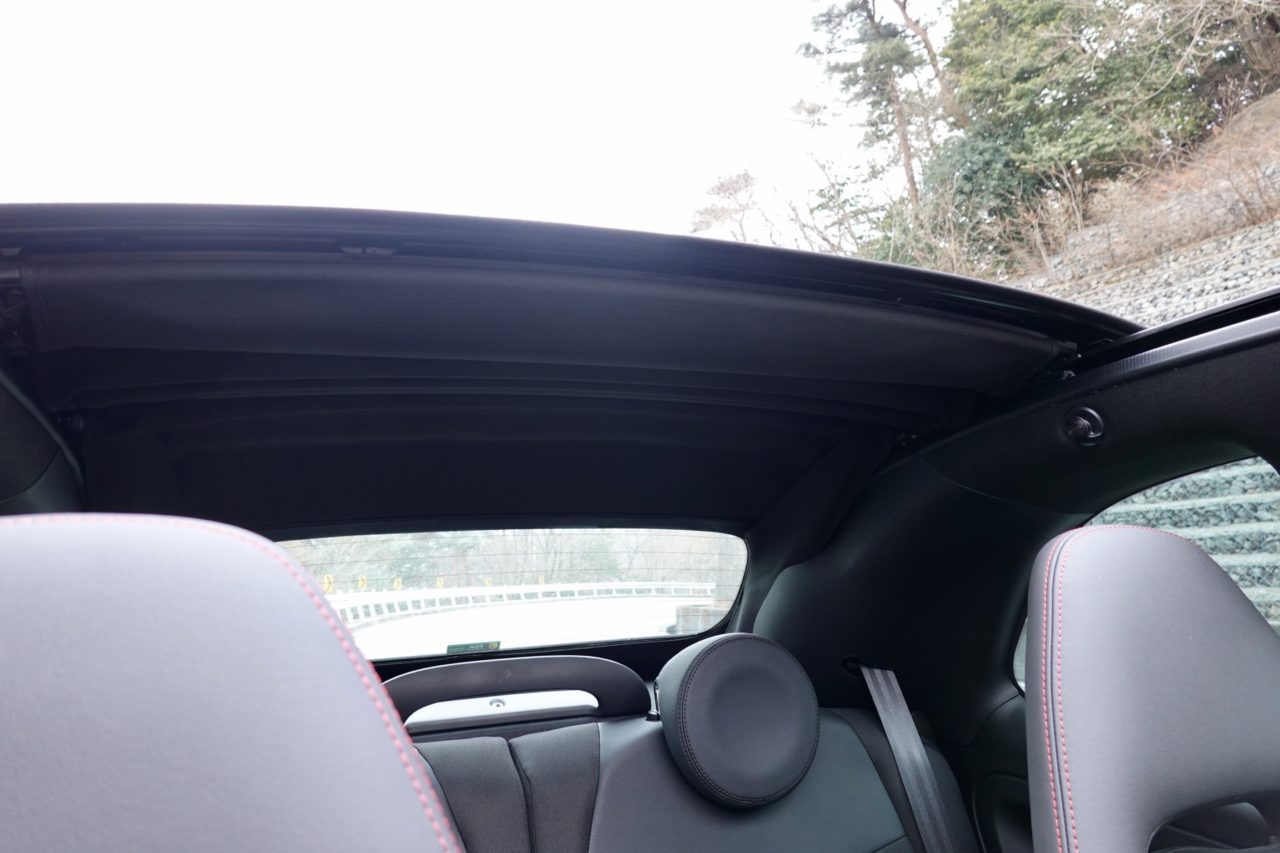
Partway through the drive, I opened the roof. The sense of openness is fantastic. You can hear more of the engine from above, and since the Akrapovič exhaust sounds better from outside the car, it suits this open-top setup perfectly.
The roof appears to open in two stages, but with it fully open, there’s a fair amount of wind buffeting. For a more comfortable drive, it’s probably best to stop at the intermediate position.
From there, I continued along the winding roads and headed onto the expressway. The wheelbase is just 2,300 mm. By comparison, the Honda N-WGN has a 2,520 mm wheelbase, so the Abarth’s is shorter than that of a Japanese kei car.
I’d heard that Abarths were stable at highway speeds, but to be honest, I wasn’t entirely convinced.
Then I drove it on the expressway, and it was a real eye-opener.
Its straight-line stability is remarkable for such a short-wheelbase car. Even at the kind of speeds you’d use to keep pace in the passing lane, it never feels nervous. It tracks arrow-straight. This isn’t quite the same kind of stability you get from a long-wheelbase car, where the length helps it hold its line. Instead, it feels as though the suspension setup is what keeps the car tracking straight.
Earlier, I mentioned how strongly the steering self-centers on winding roads and urges the car to go straight. That same setup really comes into its own on the expressway. You can clearly feel through the steering wheel how the front tires want to track straight ahead.
On a gentle curve, if you make only a slight steering input, you have to consciously hold that steering angle; otherwise, the car seems to want to straighten out.
That’s just how strong its straight-line stability is.
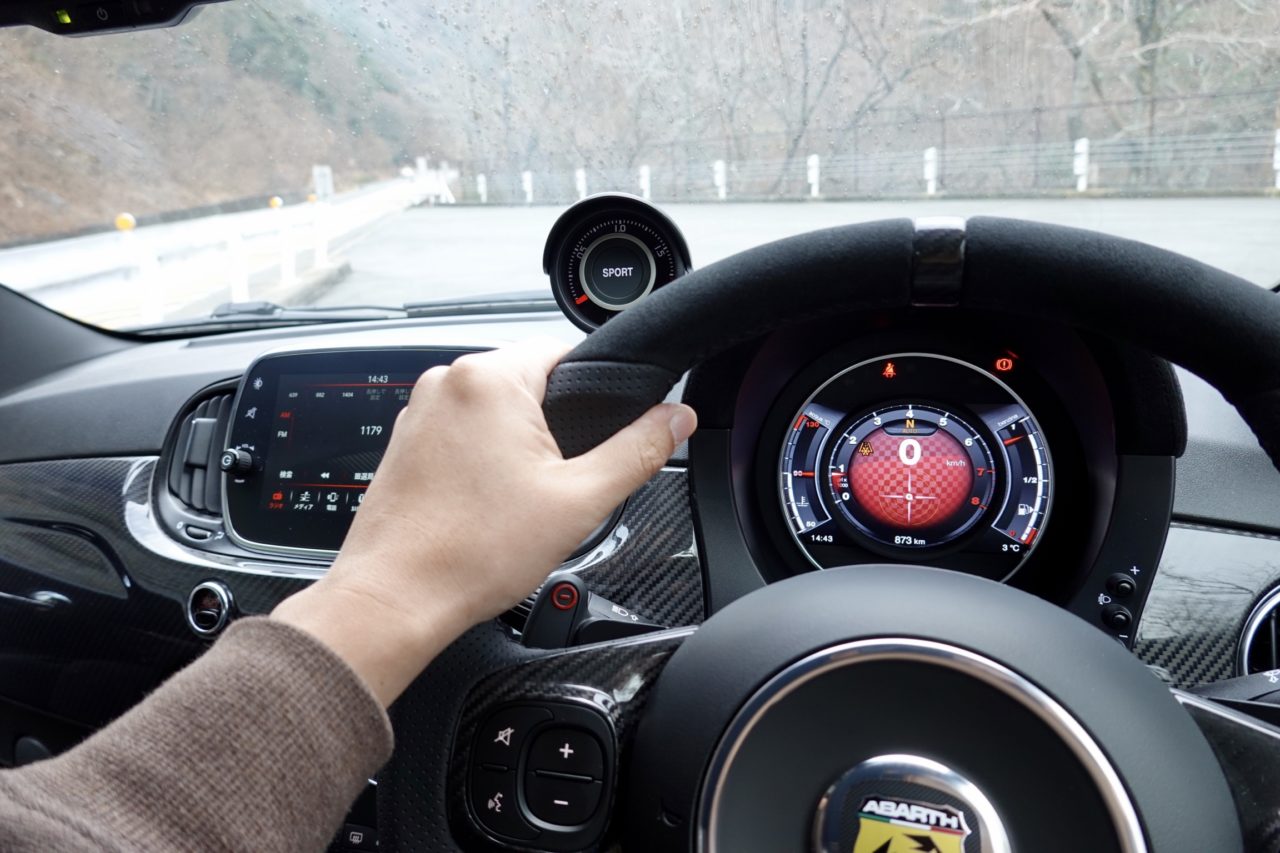
Even when cruising at a brisk pace, the Abarth never seems to struggle. For such a small car, it cruises effortlessly at highway speeds and keeps up with the traffic ahead. It may be about the size of a kei car, but its stability is in a completely different league.
It may sound like an exaggeration, but the difference feels as big as that between a car and a bicycle.
I have to admire the engineering that gives a car with such an incredibly short wheelbase this kind of straight-line stability. It’s a car bred for the autostrada, after all.
I must have driven for about an hour and a half. At first, the ride felt stiff, but before I knew it, that stiffness had turned into a satisfying part of the experience. The Abarth left me feeling like I’d really driven—“Ah, that was a proper drive.” By the end, I even felt refreshed.
The Abarth 595C definitely has something that can’t be summed up by ride comfort or convenience alone.
このブログが気に入ったらフォローしてね!
Comment ( 0 )
Trackbacks are closed.
No comments yet.