

Porsche Discusses Development Progress on the Next-Generation 718 EV
Published: 2024.12.05

コンテンツ
The Latest on Porsche 718 EV Development
News that Porsche is developing electric versions of the 718 Boxster and Cayman is exciting for many EV fans. I’m particularly interested in the 718 EV—and, to be honest, I’m more eager to see it than the later-model 992.
But reports that Porsche is revisiting its electrification plans have raised questions about the future of the 718 EV. Against that backdrop, Michael Steiner, Porsche’s head of research and development, has shared some intriguing details about the project.
According to Steiner, the electric 718 Boxster and Cayman are being developed on a dedicated platform. By drawing on motorsport technology, Porsche aims to deliver the performance expected of true sports cars.
Designed with Handling in Mind
One reason the current 718 series is so highly regarded is its excellent handling.
That character comes mainly from two factors: a lightweight design and the weight distribution of its mid-engine layout.
For the 718 EV, Porsche is reportedly working to keep the battery compact and light by maximizing the efficiency of its regenerative braking system. Even more intriguing is how the battery will be positioned. Rather than laying it flat beneath the floor like in a typical EV, Porsche is said to be using a distinctive arrangement known as a “core” layout.
With this setup, the battery sits behind the seats, preserving a center of gravity similar to that of the conventional, combustion-engine 718. Steiner explained:
“By bringing the center of gravity as close to the driver as possible, we improve the car’s overall suppleness and agility. The result is a balanced, easy-to-handle car.”
The layout also allows the driver to sit lower, Steiner said, helping deliver the kind of driving feel you expect from a sports car.
Braking Lessons from Formula E
To make its dedicated EV platform a success, Porsche needed to maximize efficiency and keep the battery small.
Steiner said the team paid particular attention to blending regenerative braking with conventional brakes, aiming to achieve both efficiency and strong braking performance.
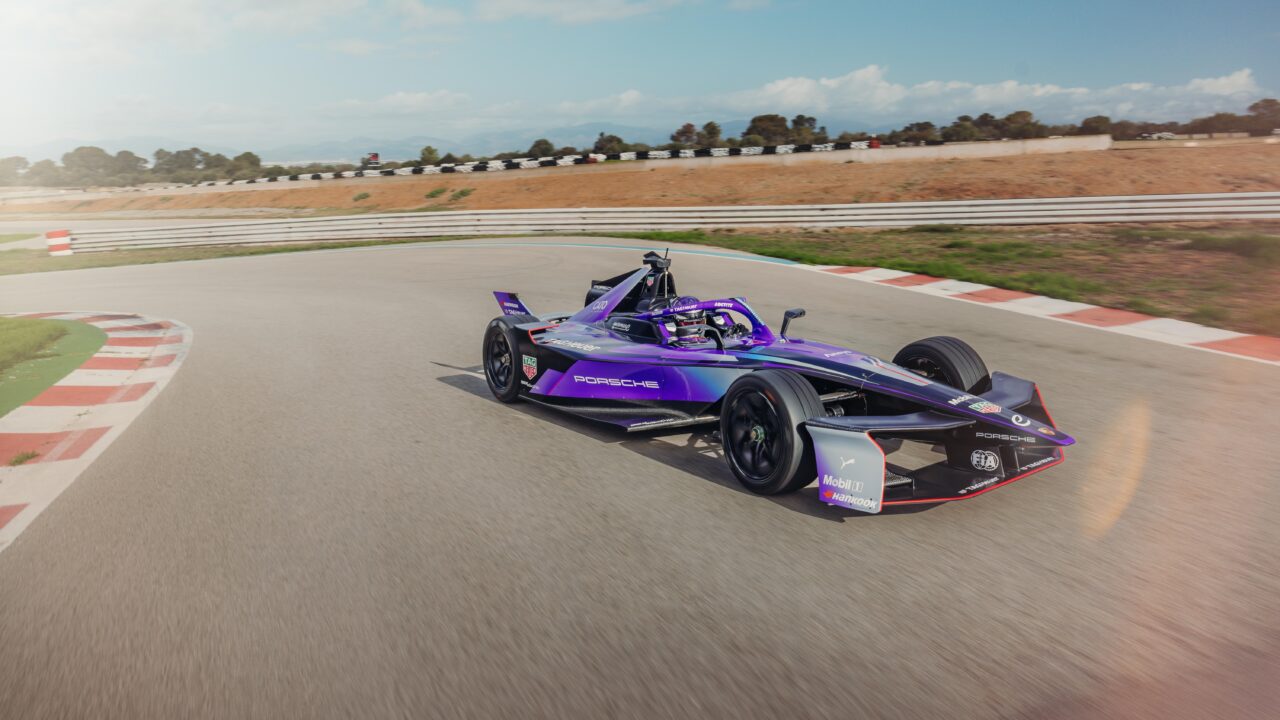
As a result, the 718 EV will not offer a one-pedal driving system. Steiner explained:
“If you ask racing drivers, none of them would choose a one-pedal system. What matters is being able to control regenerative and conventional braking seamlessly through the same pedal. If the brake pedal doesn’t feel right when you’re cornering, you can’t trust the car’s stability.”
Steiner said refining brake feel through corners is one of the “lessons learned in Formula E.”
Braking Tuned for Sporty Driving
According to Steiner, a one-pedal braking system can engage regenerative braking earlier than is ideal for performance driving. By routing all braking control through the brake pedal itself, drivers can make the “modulations they need and feel what’s happening through the road and steering,” he said.
“You can control the car with both the brake and the accelerator,” Steiner added.
Porsche is drawing on motorsport technology as it develops the 718 EV, with a clear focus on preserving the qualities of a traditional sports car in an electric vehicle. Even in the electric era, Porsche’s sports-car spirit looks set to endure. I can’t wait to see the 718 EV make its debut.
If you enjoy this blog, follow along.
Comment ( 0 )
Trackbacks are closed.
No comments yet.