

Which Options Are Must-Haves When Buying a Porsche Panamera?
公開日:2018.03.23
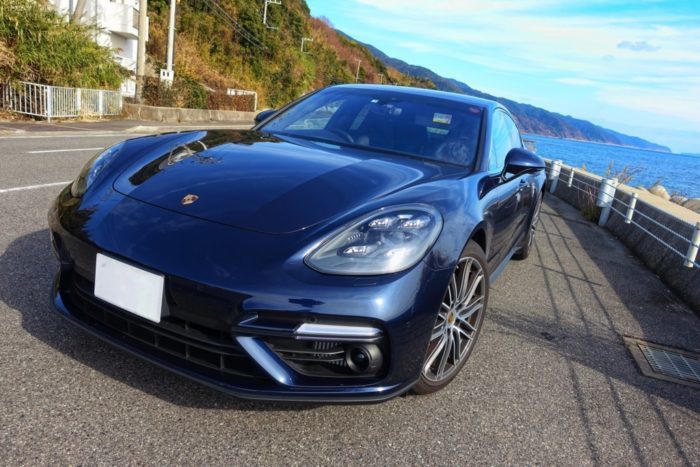

How the Previous and New Panamera Compare
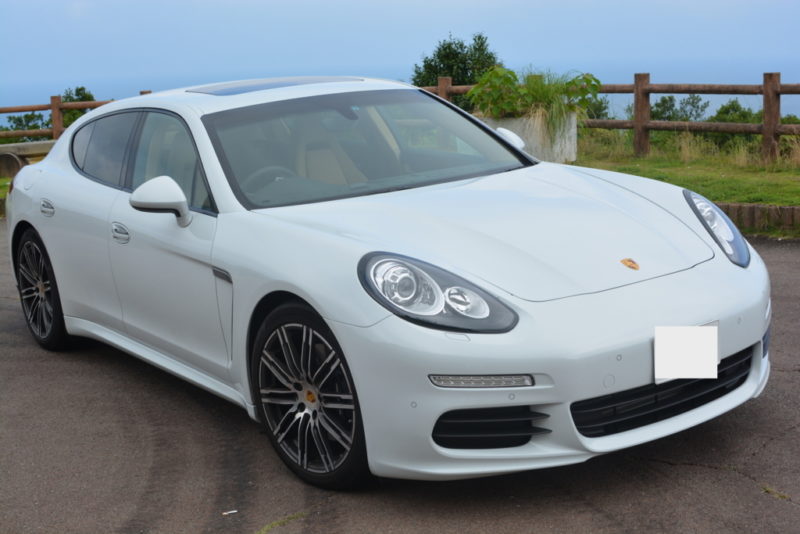
Our first Panamera arrived in February 2016: a facelifted 970 Panamera Edition in Carrara White. It had a naturally aspirated engine with wonderfully smooth acceleration, and even with its conventional steel springs, it rode beautifully. It was such a fantastic car that my husband and I thought, “There’s no way the new Panamera could top this.”
In October 2017, we said goodbye to the Panamera Edition and welcomed a new Panamera Turbo into our home. Unlike the Edition, it had a turbocharged engine and air suspension. From the moment I pressed the accelerator, it felt completely different. Rather than simply being an evolution of the Panamera, it felt like an entirely new car.
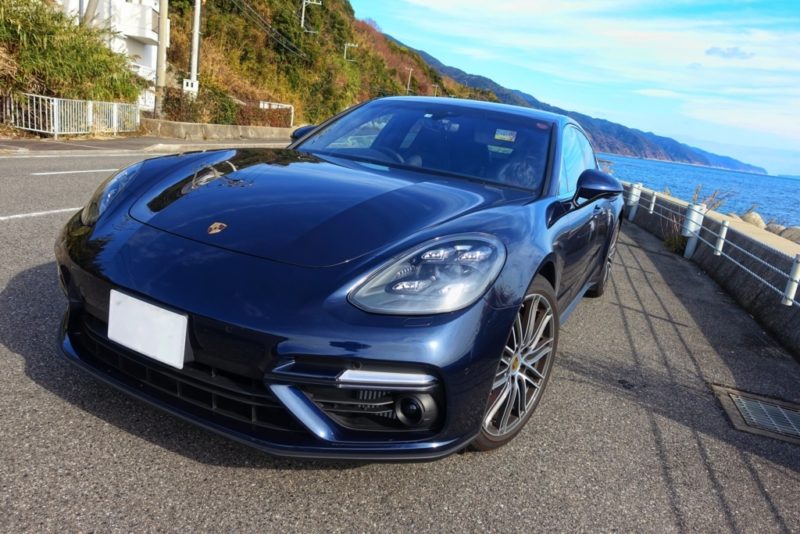
Looking back at the two cars side by side, you can also see how much more refined the design became. The earlier Panamera’s styling—especially at the rear—wasn’t always well received. The British motoring show Top Gear even described it as “a drowned 911.” (That’s a bit harsh… haha.) Still, I liked the earlier car’s design, too. It had a certain warmth to it.
That’s a long introduction, but after two years of Panamera ownership, I’d like to share the options I’ve found truly worthwhile. The best choices depend a lot on whether you use your car mainly for everyday driving or for spirited performance. Today, I’m looking at them from the perspective of everyday use.
Our New Porsche Panamera Turbo: Specification and Options
I previously shared the specification of our new Panamera Turbo on this blog, including the options and their prices. Looking at that list again is a good reminder of just how expensive this car is. You can read the original article here.
→ Related article: What’s Spec’d on Our New Porsche Panamera Turbo, Due for Delivery in October?
Here’s a quick summary of the specification. Of all the options, the ones my husband was adamant about ordering were rear-axle steering, the Sport Chrono Package, the Sport Exhaust System, seat ventilation, and Adaptive Cruise Control with Traffic Jam Assist.
■ Exterior color: Night Blue Metallic
■ Interior color: Black
■ Exterior: LED Matrix Headlights, privacy glass, soft-close doors
■ Transmission/chassis: PDK, rear-axle steering, Sport Chrono Package, Sport Exhaust System
■ Wheels: 21-inch 911 Turbo Design wheels
■ Wheel accessories: Porsche crest wheel center caps
■ Interior: standard seats, seat ventilation, Lane Change Assist, Adaptive Cruise Control with Traffic Jam Assist, storage package, cupholder covers, smoker package
■ Carbon interior: Carbon Interior Package
The Porsche Panamera Option I Wouldn’t Go Without
Most options are things you can live without, but that make the car even better if you have them. Of the options listed above, the one I’m especially glad we chose for everyday driving is rear-axle steering, in the transmission/chassis category.
What is rear-axle steering?
Rear-axle steering is a system that turns the rear wheels. Porsche fans may remember the Weissach axle used on the Porsche 928. That system helped stabilize the car in corners by steering the outside wheel toward toe-in. The modern rear-axle steering system works differently: electric actuators adjust the toe-control links, allowing the rear wheels to turn either inward or outward almost instantly. At low speeds in tight corners, the rear wheels turn opposite to the front wheels, improving responsiveness and making the car easier to maneuver. At higher speeds, including during cornering and lane changes, the rear wheels turn in the same direction as the front wheels to improve stability.
Source: CarTube, a community for sharing information about cars and classic cars
I’m no expert on the technical details, so I only have a general understanding of how the system works. But this part of the explanation—“At low speeds in tight corners, the rear wheels turn opposite to the front wheels, improving responsiveness and making the car easier to maneuver”—perfectly matches my experience.
Why Does the Panamera Need Rear-Axle Steering?
The reason is simple: the Panamera is a big car, while parking spaces and roads in Japan can be narrow. Our previous Panamera Edition didn’t have rear-axle steering, which made parking a real challenge. In tight spaces, I often had to make several corrections before finally getting into the spot.
The same was true on roads where I had to make a U-turn or take a hairpin bend. Even when I started turning from far out, I’d often think, “Wow, I still didn’t make it!” Then I’d have to back up and try again.
Our new Panamera has rear-axle steering, so I rarely have to worry about that now. When I’m nervous about whether a U-turn is possible and turn the wheel as far as it’ll go, the car may initially feel as though it’s taking a wide line—but then it suddenly turns incredibly sharply. The other day, I looked in the rearview mirror and saw that the Prius behind me was the one struggling to make the turn.
Parking is usually a one-shot job, too—even for me, who can’t exactly claim to be a great driver. I believe ParkAssist, including a 360-degree camera view, comes standard on all Panameras, which certainly helps. But rear-axle steering makes a big difference as well.
What Parking with Rear-Axle Steering Looks Like
I took a few photos of the Panamera parking one day, so here’s a look at how it went. I think this was at the Umie shopping center in Kobe. The parking spaces at Umie are wider than at a typical car park, making them relatively easy to use. But if there are cars on both sides or the aisle is narrow, rear-axle steering is a must-have.
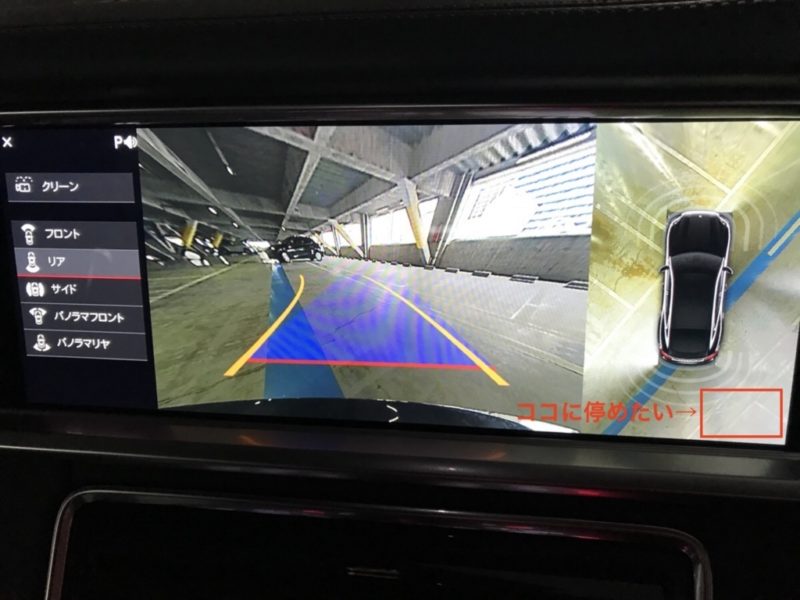
If you start pulling in at this angle, you’d normally have to make a correction partway through. With front-wheel steering alone, turning from here would take you on a much wider arc. But with rear-axle steering, the rear wheels turn too, so I could keep pulling in at this angle…
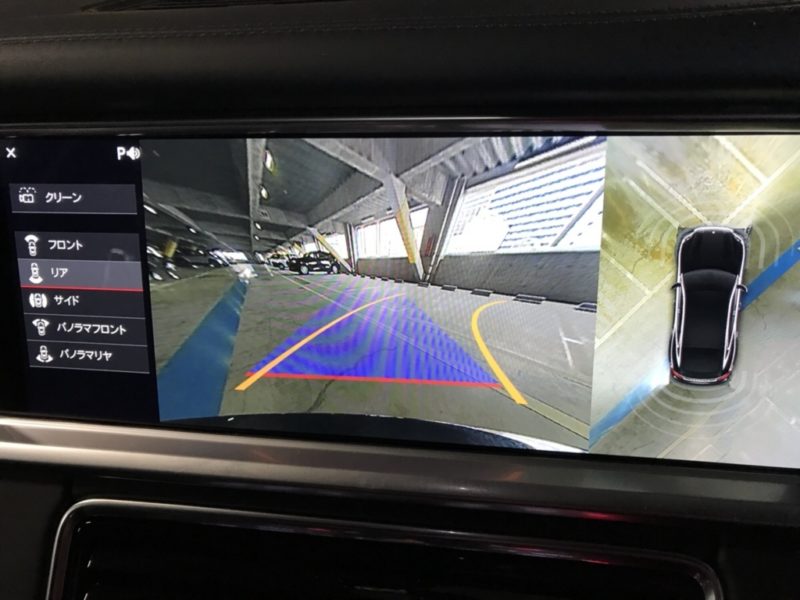
…I was moving the car little by little to take these photos, and got so caught up in photographing it that I turned too late. (That’s my excuse.) As you can see, the rear tire was clearly out of line with the parking-space marking. Still, I trusted the Panamera’s rear-axle steering and kept going without making a correction.
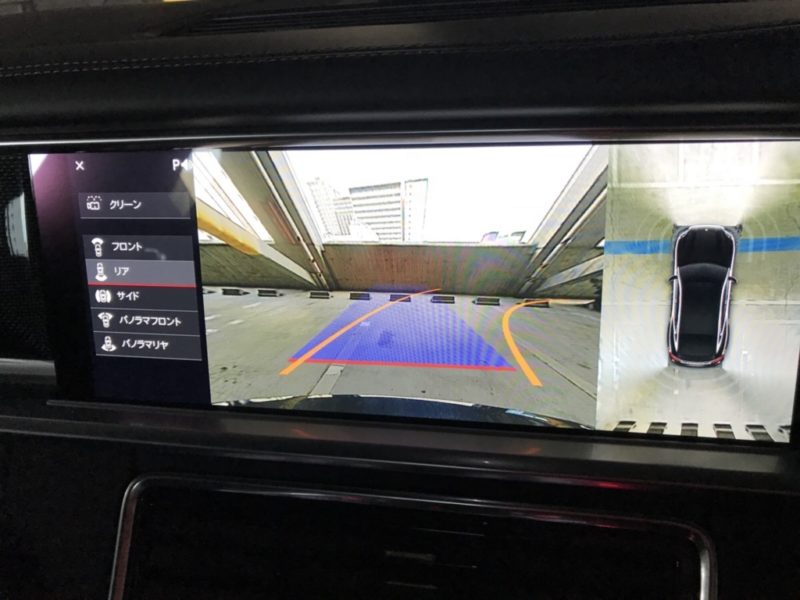
Even so, it’s pretty far off, isn’t it? (Haha.) I turned the wheel to the right to bring the car closer to that side, then turned the wheel again. Despite starting the parking maneuver so badly out of line, I got into the space in one go—without pulling forward to try again.
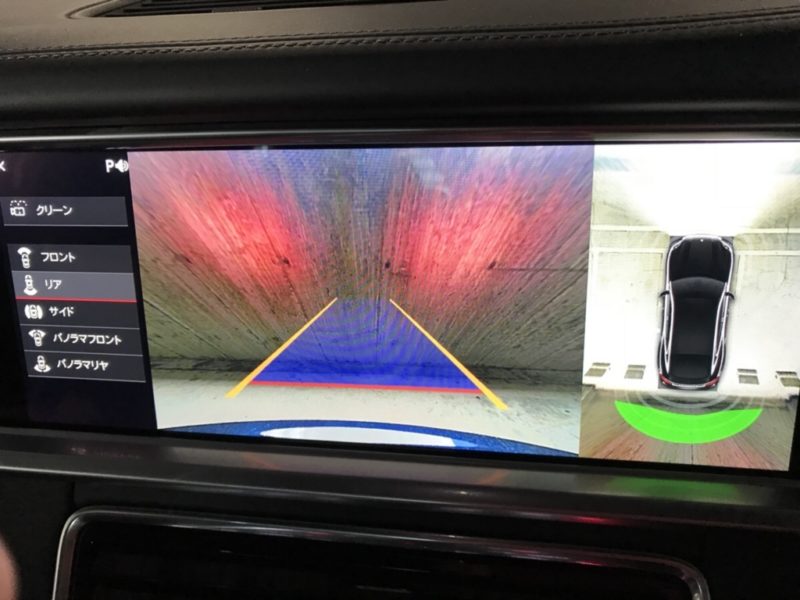
The Panamera is a big car, so it does fill the space from line to line. This time, the spots around me were empty, so it didn’t matter how I parked. But usually, the spaces around you are occupied, and there’s often not much room in front. Maneuvering a car this large can be genuinely difficult—and if you hit something, it’s a real “Oh my God” moment.
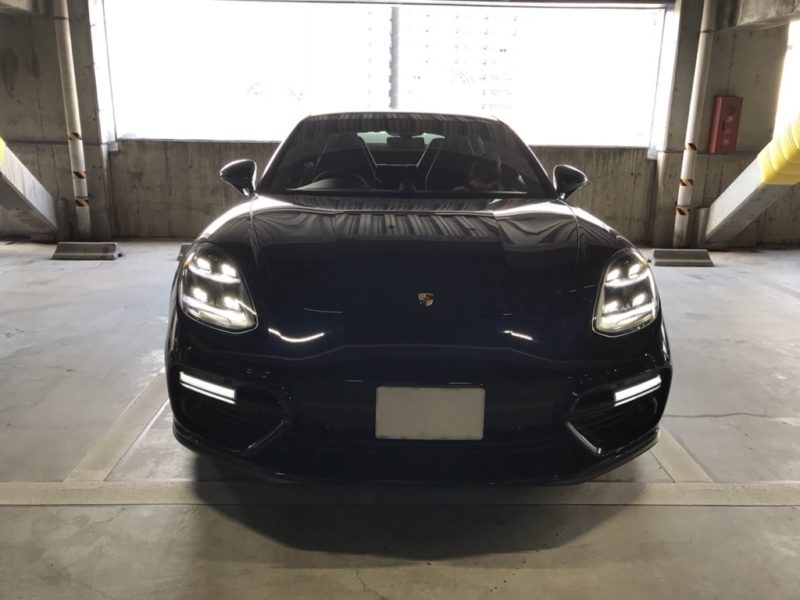
What About the Other Porsche Panamera Options?
I don’t use Adaptive Cruise Control or Lane Change Assist very often. (That may be because I don’t spend much time on the highway.) And when I’m driving a Panamera Turbo, I want to drive it myself and enjoy its acceleration and sharp handling.
My husband, on the other hand, spends more time on the highway and says he uses Adaptive Cruise Control often. He’s written about it here.
→ Related article: Is Adaptive Cruise Control on the New Panamera Really That Useful?
→ Related article: Like Self-Driving? Trying Traffic Jam Assist in the Porsche Panamera
Next time, I’d like to look at Panamera options from the perspective of enjoying the drive. I haven’t really put Sport Plus mode and the other performance settings through their paces yet, so I’m planning to take the car out on Royu Driveway and test them before writing about it.
I did write that follow-up article later. ↓↓↓
→ Related article: Driving Royu Driveway in the Panamera Turbo’s Sport Plus Mode
このブログが気に入ったらフォローしてね!
Comment ( 0 )
Trackbacks are closed.
No comments yet.