

Testing the Porsche 911 Carrera 4 GTS on Track: How Does the AWD 911 Compare with the Rear-Engined Version?
公開日:

コンテンツ
Taking the 911 Carrera 4 GTS to the Track
The other day, I took part in a track day hosted by 911Days magazine. The venue was Fuji Speedway, a circuit I’ve driven many times before at driving schools and track events.
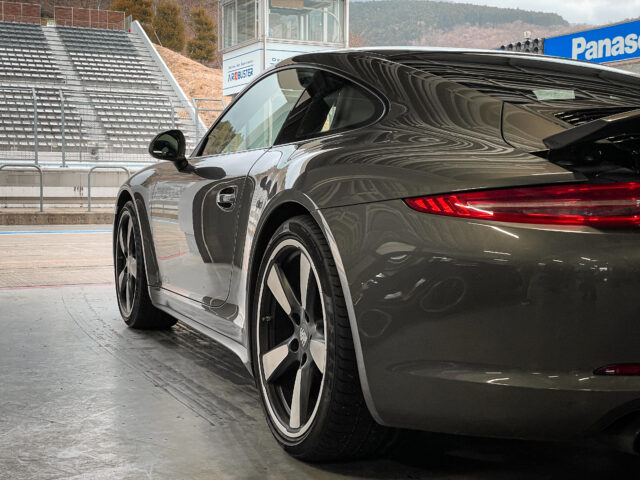
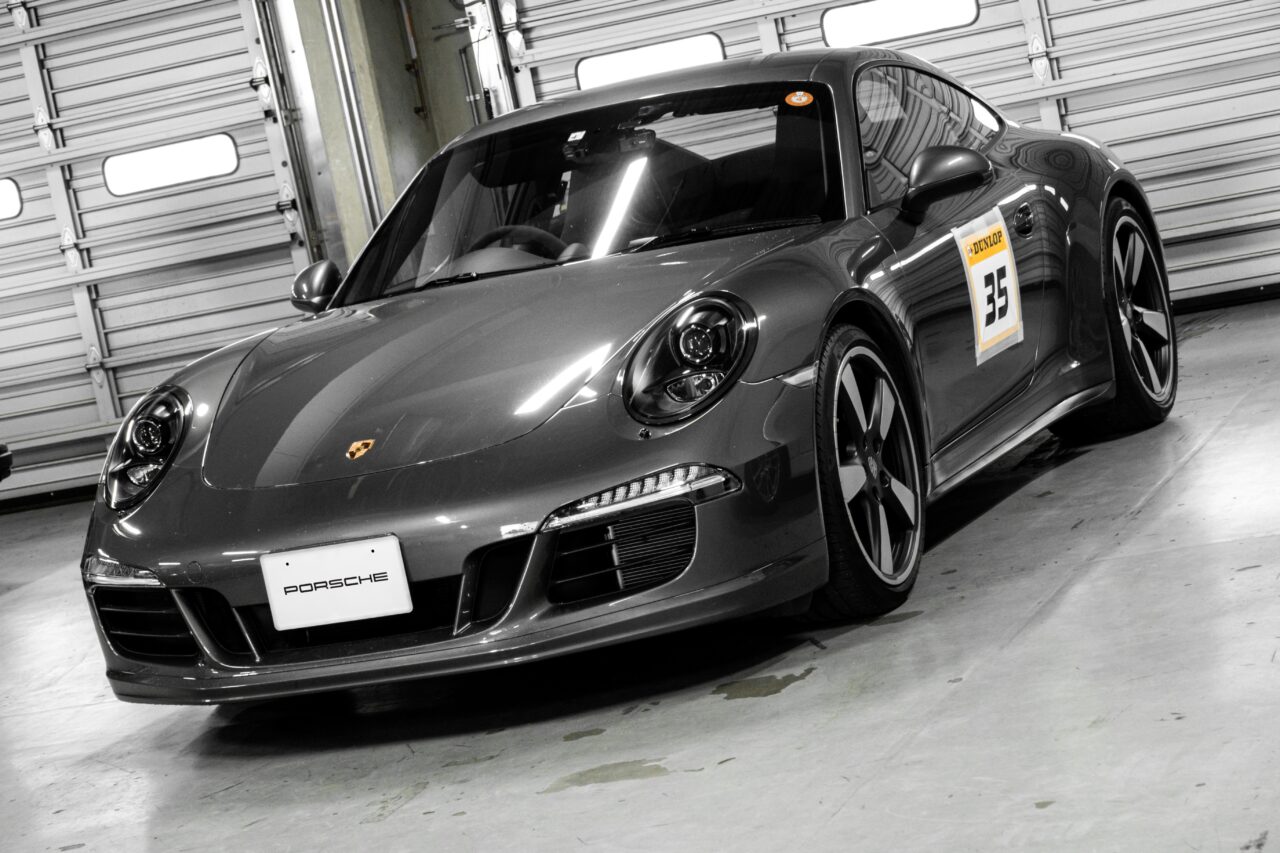
This time, I brought along a pre-facelift 991 Carrera 4 GTS. It pairs all-wheel drive with the last naturally aspirated 3.8-liter engine offered in the Carrera.
I’d driven rear-engine and mid-engine Porsches on track before, but never an AWD Porsche. That was exactly why I chose this one.
I pulled into the pits, where a lineup of gorgeous Porsches was on display, and asked WRP to check the tire pressures and retighten the wheel bolts.
When the time came, I lined up in the pit lane and waited eagerly for the green light.
I raised the rear wing and switched on Sport Plus mode. For my first run, I deliberately left the transmission in automatic.
My younger daughter joined me for the sighting lap, giving me a chance to reacquaint myself with the track. She’d been playing Gran Turismo right up until the day before, and was thrilled, exclaiming, “It’s just like the game!” and “There aren’t any cones on the track!”
How the Carrera 4 GTS Feels on Track
After dropping my daughter off, it was time to get serious.
I spent a lap warming up the tires, then gradually picked up the pace on the second. By around the third lap, I was at full throttle.
The sound of the GTS’s 3.8-liter naturally aspirated engine at full tilt was incredible. I found myself thinking, “Can it really be this loud?!” as I charged down the straight.
The previous-generation GT3 is thunderous at high revs, but it’s no louder than the GTS. In fact, the GTS sounded louder from behind the wheel.
The GT3 still wins for its explosive top-end, the exhilaration it delivers, and the volume and quality of its exhaust note. But the GTS makes its presence felt from the midrange, and that’s a real pleasure. Even accelerating out of low- and medium-speed corners feels fantastic. (For the full effect, be sure to watch the highlight video on Twitter with headphones.)
めちゃくちゃ楽しかった!また来年も来るぞ!しかし、音が気持ちいい。これで白飯三杯いける😄 pic.twitter.com/rPrLNOokKW
— Hiro@ポルシェがわが家にやってきた (@boxster_gts) March 20, 2022
The 981 Boxster GTS from the same era is also loud, but its note gets a little raspy toward the top of the rev range. The pre-facelift 991 GTS, by contrast, holds its voice all the way to the redline.
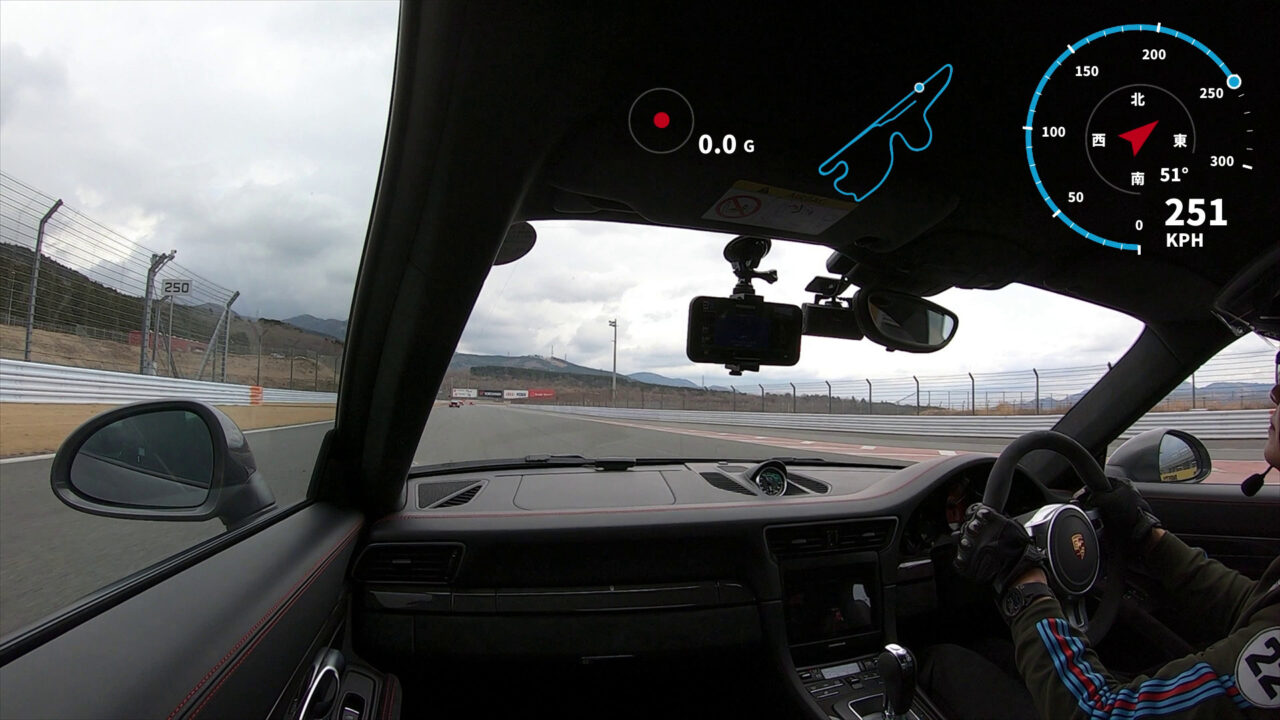
GPS data showed a top speed of around 250 km/h on the main straight.
I felt I could brake a little later, so there was still room to improve. Then came the full-braking zone. As always, Porsche brakes are easy to modulate. I adjusted the pressure delicately as I turned toward Turn 1, then followed my usual routine: half throttle until the car was pointing straight. The car felt more composed than I’d expected.
Once the front was aimed toward the exit, I got on the throttle a little earlier. That’s the benefit of all-wheel drive. Unlike in a typical 911, I could open the throttle a beat sooner and power out of the corner without the rear getting twitchy.
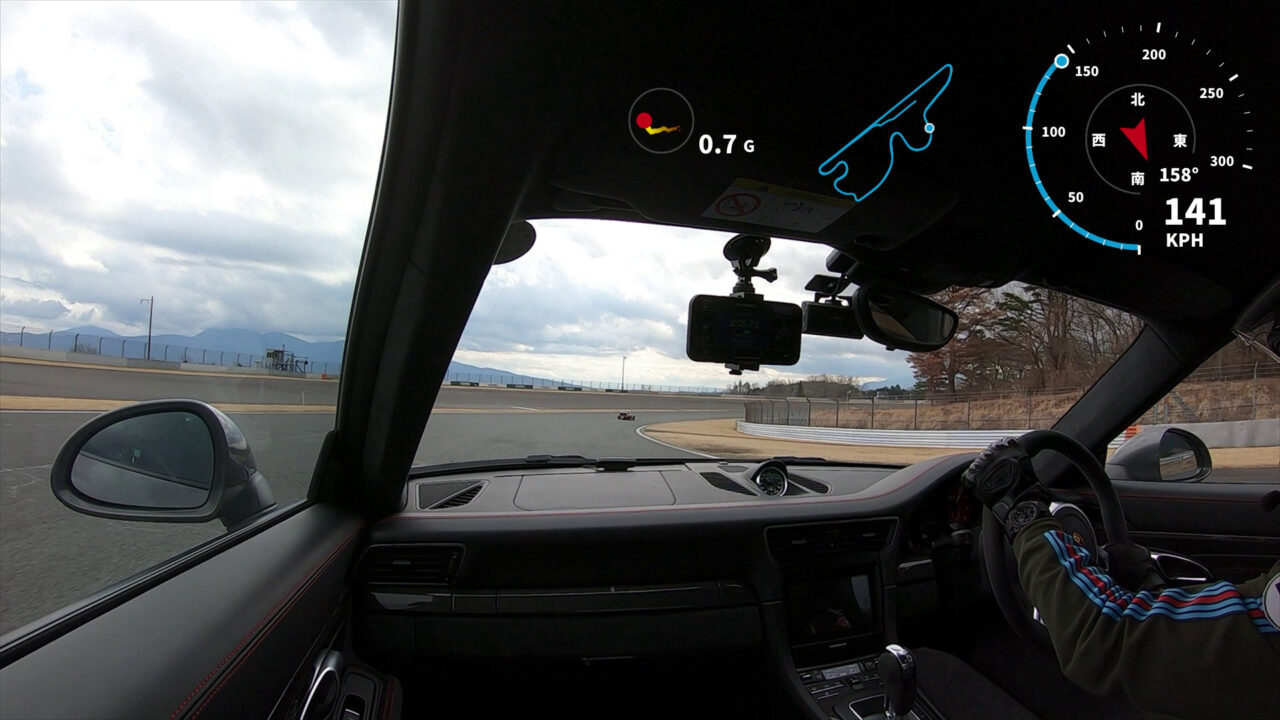
From Coca-Cola Corner, I headed into the 100R.
In the 981 Boxster GTS, I can really feel the limits of the body’s rigidity here, along with a strong tendency for the rear to drift wide. The Carrera 4 GTS, on the other hand, consistently tends toward understeer and is very easy to control. You’d never think so on public roads, but at circuit speeds the Carrera 4 has a noticeable overall bias toward understeer.
I eased off the throttle to load up the front, tucked in, and entered Advan Corner in second gear. The exit was more stable than in either a 992 Carrera or a 981 Boxster. It’s still easy to lose control if you’re rough with the throttle, but even an amateur like me could get on the power with confidence.
Then I accelerated hard toward Dunlop Corner. After braking hard and dropping to second, I accelerated along a fairly straight line from the middle of the track. I clipped the inside at Turn 13 and headed toward GR Supra Corner. From there to the final Panasonic Corner, smooth throttle inputs were still essential, but the car was far easier to drive than either a rear-engine or mid-engine Porsche.
Above all, it felt reassuringly stable and not at all intimidating.
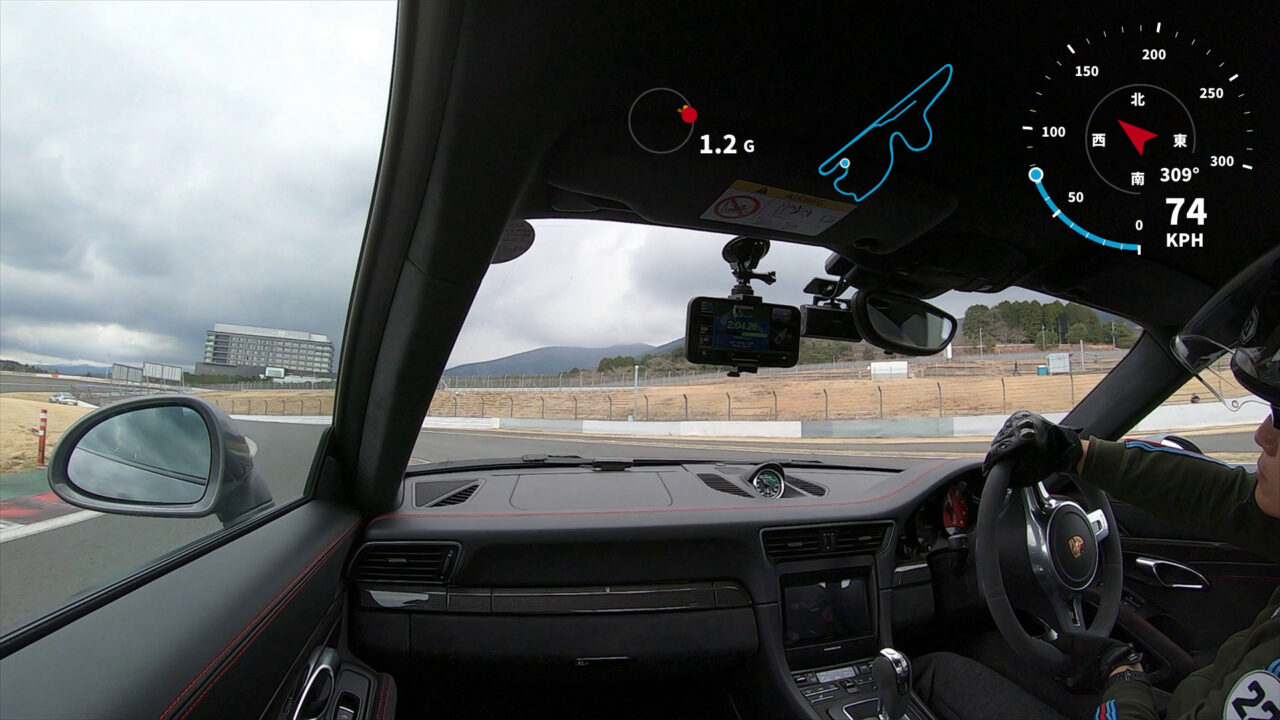
I powered out of the final corner and went full throttle.
With Sport Plus engaged, shifting near the redline brought a little more shock than in the latest 992 PDK. Even so, the shifts were quick.
How It Compares with the 992 and 981
As I crossed the timing line, the GPS lap time was slower than I’d expected. With 60 cars on track, a clear lap was out of the question. Still, I’d felt composed and confident, yet the times weren’t particularly impressive.
What was going on?
From the driver’s seat, it felt like I was lapping quickly and consistently, but the stopwatch told a different story. The old tires and the extra weight of the AWD system may have been limiting cornering speed.
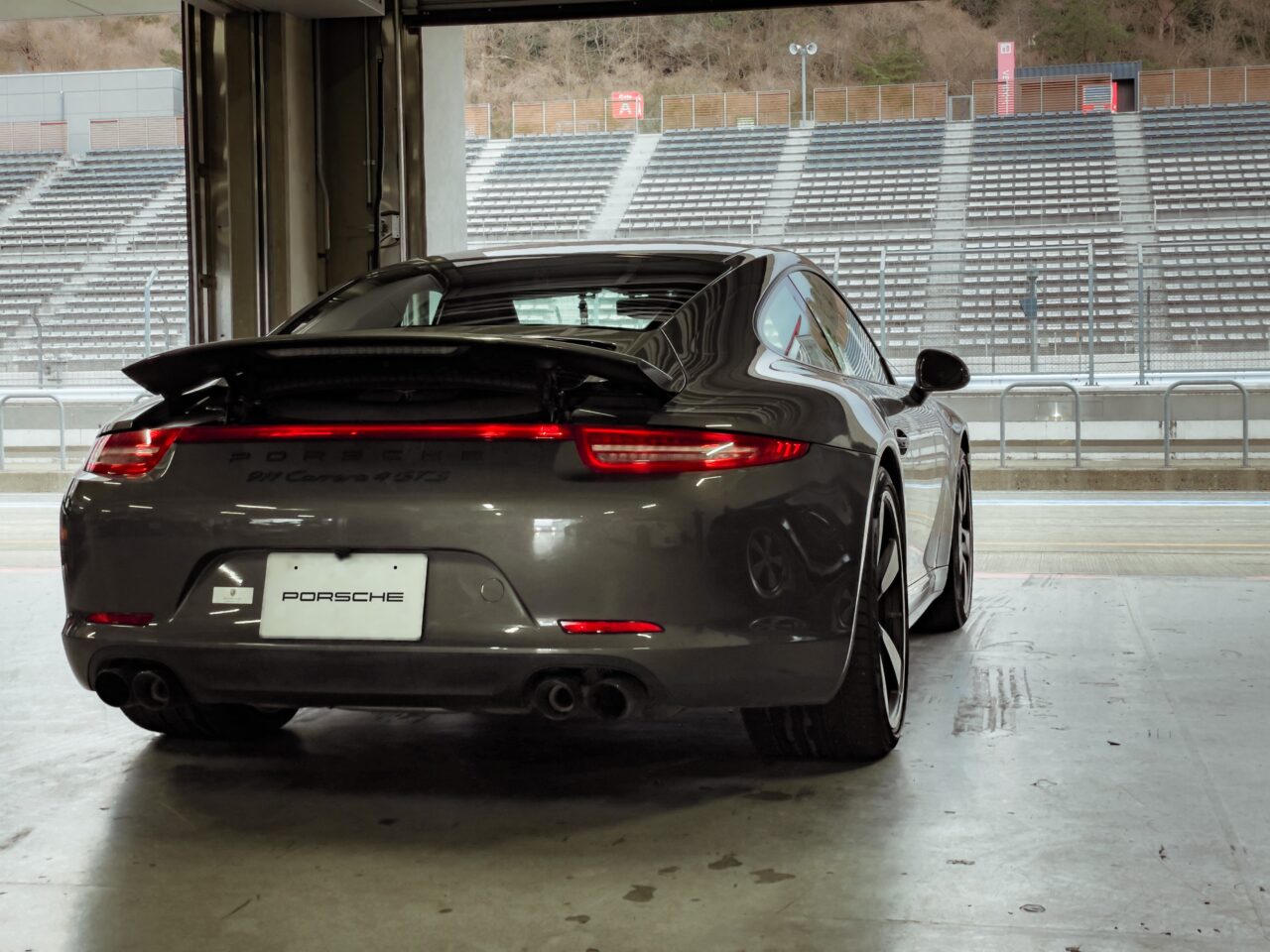
I compared the data with a previous session at Fuji Speedway in a 992 Carrera Cabriolet. Both sessions involved mixed traffic, so they weren’t directly comparable, but the 992 Carrera Cabriolet was around four seconds faster. Its GPS-recorded top speed was 261 km/h, compared with 254 km/h for the Carrera 4 GTS.
The Carrera 4 GTS was about a second quicker per lap than the 981 Boxster GTS, which reached a GPS-recorded top speed of around 244 km/h.
The comparison suggests that the Boxster is quicker through the corners, while the 992 is dramatically faster both on corner entry and under acceleration. The latest Porsche really is the best. Despite having less horsepower, the 992’s turbocharged power and modern chassis make it astonishingly fast.
As the laps added up, the five-year-old Pirelli P Zeros began to give up. As the tires faded, even the Carrera 4’s remarkable stability started to fray. The car began to slide in places, which felt unsettling, but that’s where all-wheel drive came into its own. A little throttle and torque were enough to bring the car back into line with ease. It was a very different feeling from the Porsches I’d driven before.
I went out for a second session and pushed the car much harder. Traffic ahead kept me from getting a clear lap, so I couldn’t set the time I wanted. Even so, it was a valuable day for learning the differences between AWD, rear-engine, and mid-engine Porsches.
Where the Carrera 4 Fits In
Would I say the Carrera 4 GTS is fun to drive on track? For me, the answer is a little complicated.
If pure driving excitement is the goal, I think a rear-engine or mid-engine Porsche is more fun. Feeling the rear tires work for traction, making subtle throttle adjustments to keep the car balanced, and driving with just a hint of nervous anticipation is thrilling.
A GT3, in particular, is much more demanding and truly tests your skill. It can feel as if the car is asking, “Are you sure you can handle me?” Get on the throttle too abruptly and the rear quickly makes its presence felt. Getting the most out of the car also requires a real feel for weight transfer. That challenge is exactly what makes the GT3 so addictive on track.
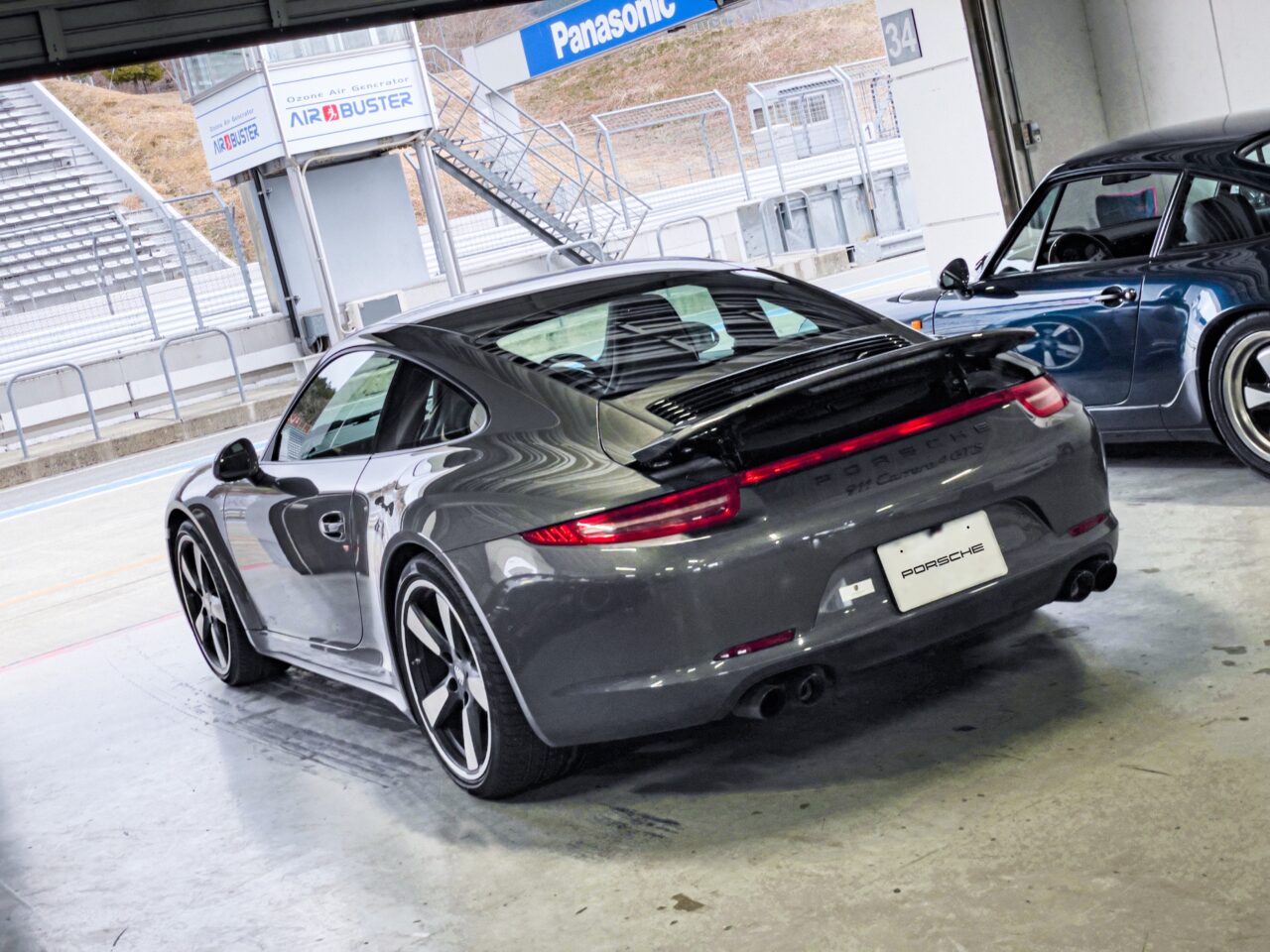
This time, the Carrera 4 felt like a bit of a secret weapon on track. Its driver aids take care of a lot, making it far less demanding mentally and forgiving of the occasional mistake.
That’s why I’d recommend it especially to beginners. Whoever’s behind the wheel, lap times are likely to be more consistent, with respectable pace throughout. And on a wet circuit, I suspect the Carrera 4 would have a decisive advantage.
But drivers who enjoy communicating more directly with the car and wrestling it into submission, as well as more experienced drivers, may find a rear-engine or mid-engine Porsche more rewarding.
The Carrera 4 family is clearly focused on speed and comfort on the road, as well as grand-touring capability. It sits at the opposite end of the spectrum from the GT3, and makes sense as a junior sibling to the Turbo models. After this track day, that impression was clearer than ever.
このブログが気に入ったらフォローしてね!
Comment ( 0 )
Trackbacks are closed.
No comments yet.