

Porsche Center-Lock Wheels: Should They Be Used on Everyday Cars?
Published: 2024.11.20

コンテンツ
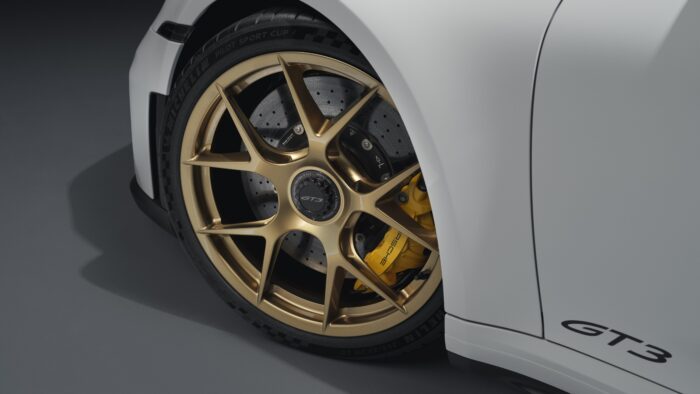
Porsche Center-Lock Wheel Recall
Porsche has announced a recall involving center-lock wheel bolts on certain models.
The recall covers certain 2024 model-year cars, including the 911 (992) and 718 (982) GT models. A total of 1,851 vehicles worldwide are affected.
The bolts in certain production batches were not manufactured to specification. If tightened incorrectly, they could break, potentially causing a wheel to loosen or even come off while the car is being driven.
The bolts were reportedly made by Hirschvogel, a supplier based in Bavaria. The company also supplies engine fasteners, although it appears to be relatively little known outside the industry.
The History and Growing Use of Center-Lock Wheels
Center-lock wheels have been used in motorsport since its early days. For Porsche, their history goes back to the 908 race car of 1968.
They were adopted in racing to speed up pit stops, eliminating the need to line up multiple bolt holes and handle several fasteners. Race cars typically use removable pins to prevent the fastener from loosening. Road cars, by contrast, use a self-locking mechanism—a simple bolted connection—to avoid the risk of someone taking a pin as a souvenir.
Once reserved for limited-production models such as the Carrera GT and 997 2RS, center-lock wheels later became available as an option on the 997 GT3 and Turbo. Their use expanded with the 991 GT3, and today they’re fitted not only across the GT range—including the Speedster, GT3, GT4, and Spyder RS—but also on GTS and Turbo versions of the 911 and Panamera.
The Drawbacks of Center-Lock Wheels
The main drawback of center-lock wheels isn’t that they rely on a single fastening point; it’s the extra complexity involved in working with them. Their safety, on the other hand, has been demonstrated across many vehicles and is generally not considered a major concern.
Center-lock wheels may appeal to owners who want something special, but they can be inconvenient for drivers who actually take their cars to the track. For example, swapping tires between sessions or replacing a worn tire can be more involved.
With conventional five-lug wheels, you can borrow a socket or torque wrench from someone in the next pit and do the job yourself. Center-lock wheels require specialized tools, and the work reportedly takes two people.
The process for changing a center-lock wheel generally goes like this:
1. Raise the car and remove the center cap.
2. Release the locking pin.
3. Use a special socket and a 3/4-inch breaker bar to loosen the fastener, which is tightened to 600 Nm.
4. Have someone firmly press the brake pedal while you do this.
5. Remove the wheel and fit the replacement.
6. Apply grease at six points across the four parts of the center-lock fastener.
7. Use a specialized 3/4-inch-drive torque wrench rated for 600 Nm.
8. Tighten to 600 Nm, loosen by one-sixth of a turn, then tighten again to 600 Nm ± approximately 30 Nm.
9. Check that the locking pin is properly engaged, then refit the center cap.
By comparison, a conventional five-bolt wheel is easy to change on your own with standard tools and a basic torque wrench.
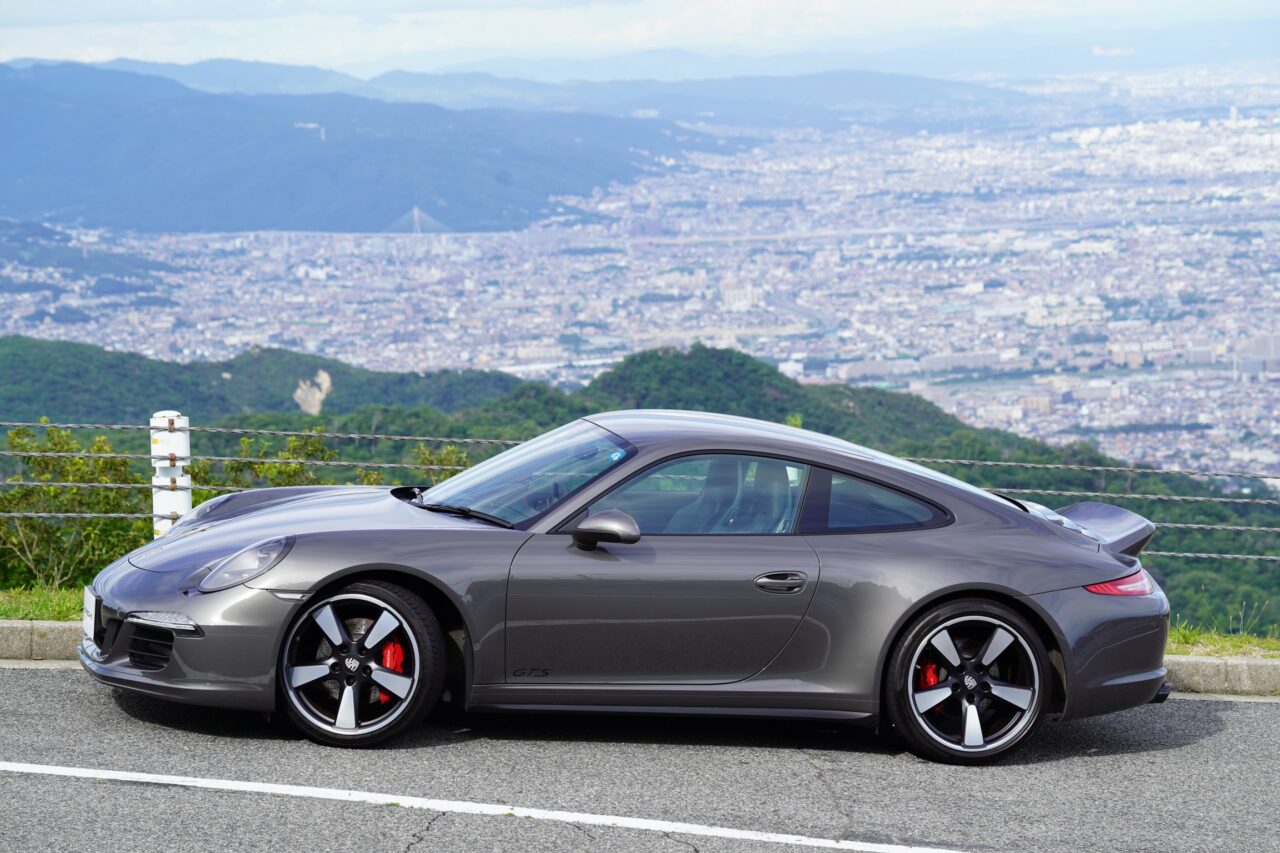
I’m not a fan of the extra hassle, so center-lock wheels aren’t something I’d actively choose. If you get a flat on a public road, roadside assistance may not be able to fix it, and you may have no choice but to have the car towed. Tire shops equipped to handle center-lock wheels are also limited, making them inconvenient and potentially costly to maintain. And if you want to switch to a different wheel design, your options are much more limited.
That’s why I went out of my way to buy a 991 GTS with five-lug wheels.
Should Center-Lock Wheels Be Used on Road Cars?
Center-lock wheels are more work for anyone changing them, can make owners uneasy when the job is left to a mechanic unfamiliar with the system, and require expensive specialized tools. They can offer an advantage in rotational inertia, but it’s fair to question how much that benefit matters to anyone who isn’t a professional driver.
In other words, center-lock wheels may be for people who want their car to look like it goes to the track; for those who really do track their cars, five-lug wheels are more practical.
Still, many customers want center-lock wheels precisely because they’re “derived from race cars.” The technology fits Porsche’s motorsport-inspired brand image, and there’s clearly demand for it. Center-lock wheels also help distinguish different models within the lineup.
That doesn’t mean center-lock wheels are bad. The right choice depends on how you plan to use your Porsche. On models such as the GTS and Turbo S, buyers can choose between center-lock and five-lug wheels when ordering. If practicality is your priority, go for five-lug wheels; if style matters more, center-lock wheels may be the way to go.

If you enjoy this blog, follow along.
Comment ( 0 )
Trackbacks are closed.
No comments yet.