

5 Reasons Many Buyers Choose the Mercedes-Benz S-Class Over the Porsche Panamera
公開日:2017.06.26
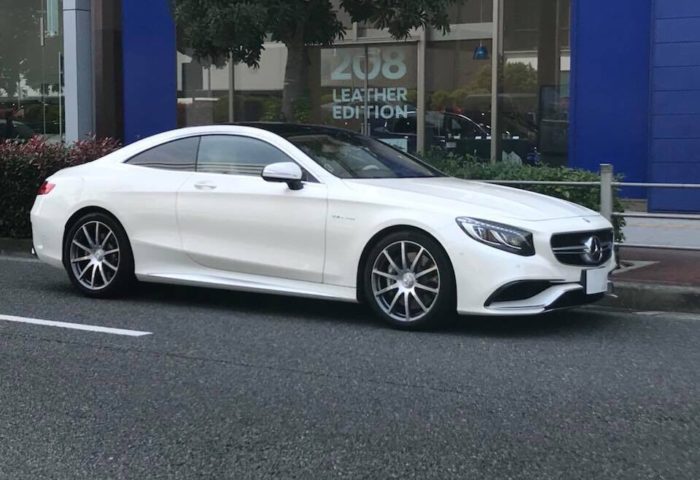

Panamera vs. S-Class
One day, I found myself wondering: “The Panamera is such a great car—so why do so many people buy the Mercedes-Benz S-Class, a car in the same class?”
Recently, Porsche Japan President Toshifumi Shimizu appeared on a TV program hosted by motoring journalist Goro Okazaki and said, “Sales of the new Panamera are strong.” Perhaps the Panamera has become more popular with the 971 generation than it was with the 970. Even so, I see far more S-Classes out on the road. My impression was that “for every Panamera, there must be about 15 S-Classes…” But when I looked into it, I came across these figures for Mercedes-Benz and Porsche’s vehicle sales:
In 2016, Mercedes-Benz set a new annual sales record for the sixth year in a row, selling 2,228,367 new vehicles worldwide. Meanwhile, Porsche sold 237,778 vehicles in 2016, its best result ever.
Wait—what?! That’s a difference of an entire digit! (;゚Д゚)
That explains why you don’t see many Porsches on the road—not just Panameras. I haven’t looked up the sales figures for the Mercedes-Benz S-Class and Porsche Panamera specifically, but the simple takeaway is that “there are roughly ten times as many Mercedes-Benz vehicles on the road as Porsches.”
5 Reasons Buyers Choose the S-Class Over the Panamera
Now that we’ve seen the difference in overall sales, I started wondering why so many people buy an S-Class instead of a Panamera. I’m no motoring journalist or professional reviewer, of course—this is just the perspective of a Porsche fan who doesn’t know all that much about how cars are built (I know, I know).
① Brand Recognition
I’ve heard people say in all sorts of places that “Mercedes-Benz used to be seen as the car successful people drove—and everyone aspired to own one.” And considering that Mercedes-Benz once focused mainly on sedans, before compact models like the A-Class and B-Class came along, it’s easy to see why the S-Class still stands as a clear symbol of status and success.
The Panamera, by contrast, is a relatively new Porsche model, first produced in 2009, and it’s still not widely recognized. Once, when I mentioned the Panamera, someone asked, “Wait, did you say Primera?” That made me realize just how unfamiliar the car still is to many people.
② How Often People See Them
This may overlap with brand recognition, but there’s a concept often discussed in advertising: the mere-exposure effect. In simple terms, “the more often we encounter a product or service, the more positively we tend to feel about it.” So perhaps people are more drawn to the S-Class, which they see around town all the time, than to the Panamera—a car they know less about and see less often.
③ A Preference for “Luxury Ride Comfort”
It’s not unusual to see S-Class owners being driven by a chauffeur while they relax in the back seat. With its spacious rear seats and comfort that feels like settling into a sofa, the S-Class is surely an excellent choice not only for personal travel but also for transporting important VIP clients.
The Panamera is often called a luxury sedan and compared with the S-Class, but I see them as very different cars. Porsche is, first and foremost, a sports-car maker. The Panamera was developed as a sports car, with a luxurious ride added to the mix; its core character is still sporty. That’s why each rear seat is a separate, sport-oriented seat, and why, despite its exceptional luxury, the suspension feels firmer than the S-Class.
When you look at it that way, far more people probably prioritize luxury over the combination of luxury and driving enjoyment. That may be why the S-Class ends up being the more popular choice.
④ The Wait for Delivery
Porsches are largely built to order, so they’re well known for long waits between placing an order and taking delivery. When our family ordered a new Panamera, we were told, “Six months at the earliest—probably ten months.” Each dealership has a set allocation, and Porsche’s factories also close for about six weeks in the summer. Even if you want your car sooner, there’s not much you can do but wait. If you “want a luxury sedan as soon as possible,” the S-Class may be the better option because you could get one sooner.
⑤ Porsche Doesn’t Discount
At other dealerships, it’s common to hear, “If you decide this month, we can take ¥●● off the price!” When I visited BMW, for example, I was quoted a discounted price. Porsche, on the other hand, rarely offers discounts. One salesperson explained, “We can’t use ‘We’ll give you a discount!’ as a sales tactic, so we can’t sell cars the way other dealers normally do.”
May Porsche Always Be Porsche
That said, I do find myself thinking, “If people are buying the S-Class, why don’t more of them consider the Panamera?” But Porsche can continue building such outstanding cars because its production and sales strategy balances supply with demand and maintains high profitability.
Rather than relying on high-volume, low-margin sales, Porsche’s high profitability allows it to invest in technology development and build even better cars. (In 2017, Porsche reportedly made ¥1.94 million in profit per vehicle, compared with ¥560,000 for BMW, ¥210,000 for Toyota, and ¥360,000 for Subaru. Ferrari, incidentally, made ¥12 million.)
So, while I’m not wishing the Panamera would sell as well as the S-Class, I do think more people should know how wonderful it is. That’s what I find myself thinking these days.
I later wrote about my experience owning a Mercedes-Benz AMG S63 Coupe.
→My Experience Owning the Mercedes-Benz AMG S63 4MATIC Coupe (C217)
→Which Do You Prefer? How the AMG S63 4MATIC Coupe (C217) and Panamera Turbo (971) Compare
このブログが気に入ったらフォローしてね!
Comment ( 0 )
Trackbacks are closed.
No comments yet.