

I Asked Porsche Japan’s Product Specialist About the New 911 (992)
Published: 2019.06.26
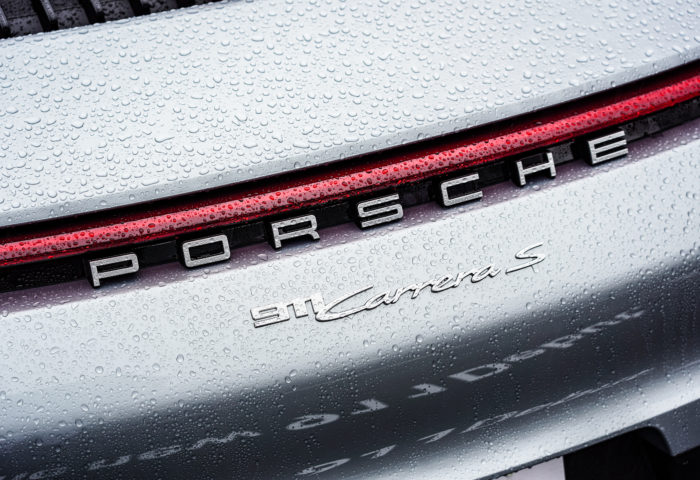

Today, I’m sharing a report written by my husband. We hope you enjoy it!
At Porsche Sportscar Together Day at Fuji Speedway, I had the pleasure of meeting Alex, a product specialist at Porsche Japan, for the first time. My wife had apparently met him several times, but I hadn’t had the chance before—and I’d been hoping to meet him and talk about Porsche.
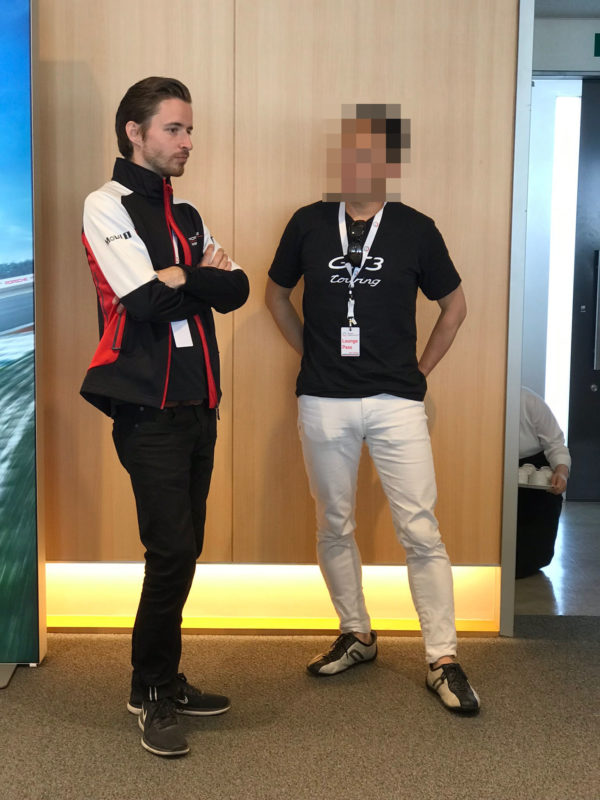
Alex gave me a detailed look at the new 911, explaining its design and engineering as we examined the car in person. Here are a few highlights from our conversation.
The New 911 (992)
Rear Design
It was my first time seeing the car in person, and my initial reaction was:
It looks so much better than it does in photos!
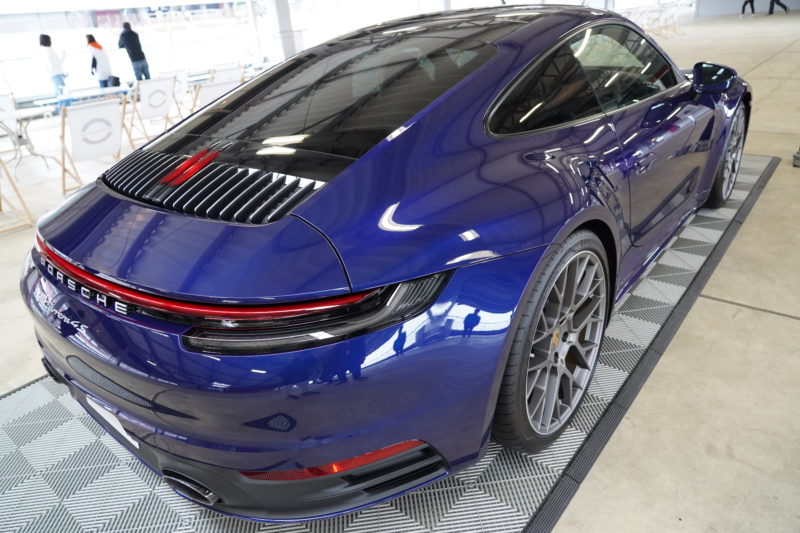
Online photos had given me the impression that the new 911 looked a little bulky—almost as if it had put on a few pounds (laughs). But seeing it in person changed my mind completely.
The rear is beautifully balanced. From eye level, the surfaces flowing from the roof to the rear window and C-pillars, then on to the rear spoiler, appear almost flat. This makes the whole car look low and poised, as if ready to pounce. I’d expected the rear to look rounder and heavier, but it doesn’t at all.
Look at it from a lower angle, though, and the rear fenders flare out dramatically. The 911’s famous wide rear end is still very much here. Following drivers will recognize it as a 911 at a glance, and from behind the wheel, you can still see those muscular rear fenders in the side mirrors. That view just feels unmistakably 911.
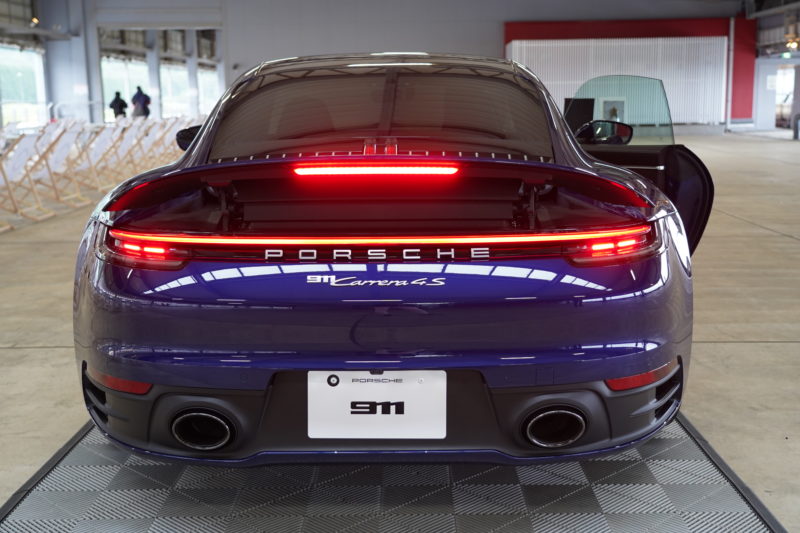
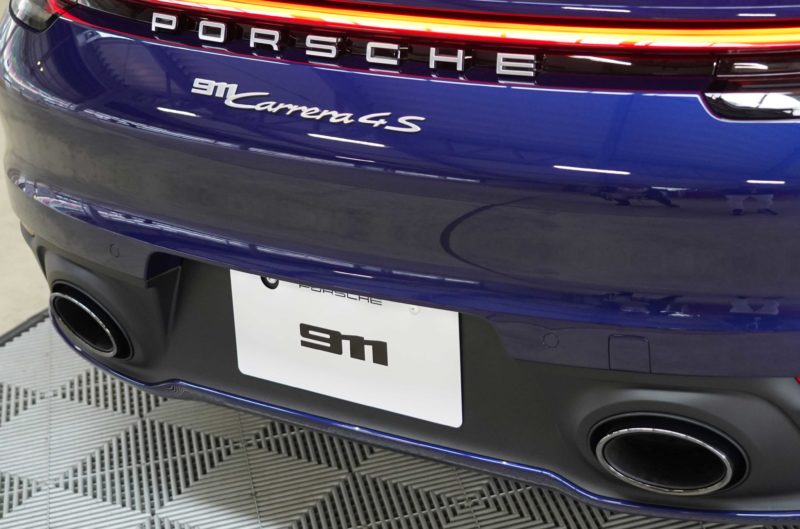
One of the most distinctive features of the 992 is its full-width rear light strip. It was inspired by the rear trim on classic 964 and 930 models, but uses LEDs. When illuminated, the strip shines at exactly the same brightness from end to end.
Alex explained that finding a supplier capable of achieving perfectly even illumination across such a wide light strip was no easy task. In the end, just one supplier could deliver the result Porsche wanted, and the company adopted its technology.
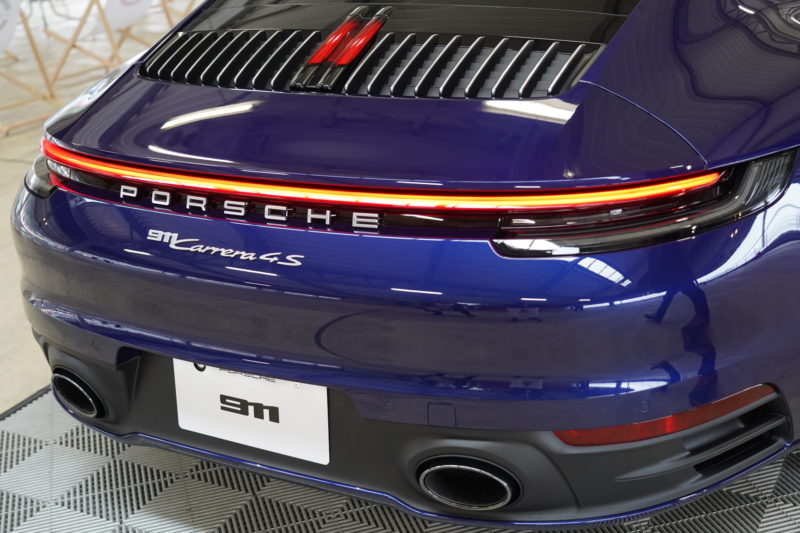
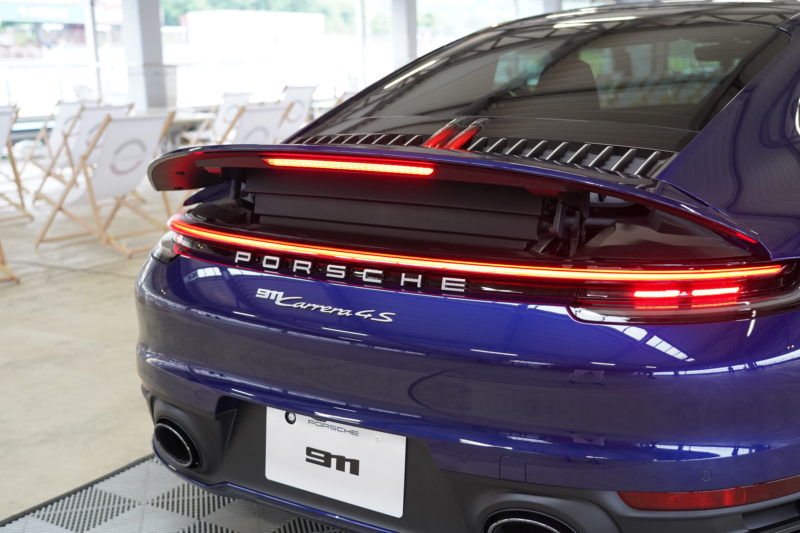
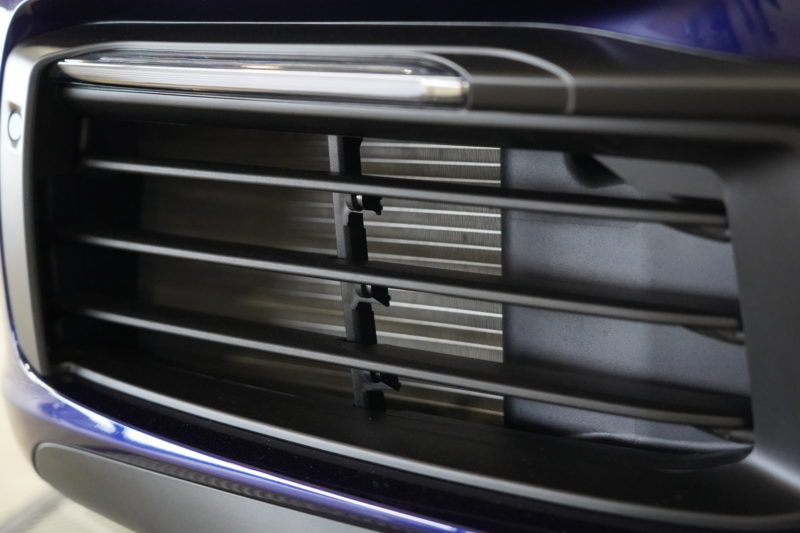
The rear spoiler is larger than the previous generation’s. It rises at 90 km/h (56 mph), then angles up further into its performance position at speeds above 150 km/h (93 mph). The front cooling-air flaps also adjust continuously to conditions such as temperature, load, and speed, helping optimize fuel economy and aerodynamics at higher speeds. Alex added that they also work in conjunction with Wet Mode.
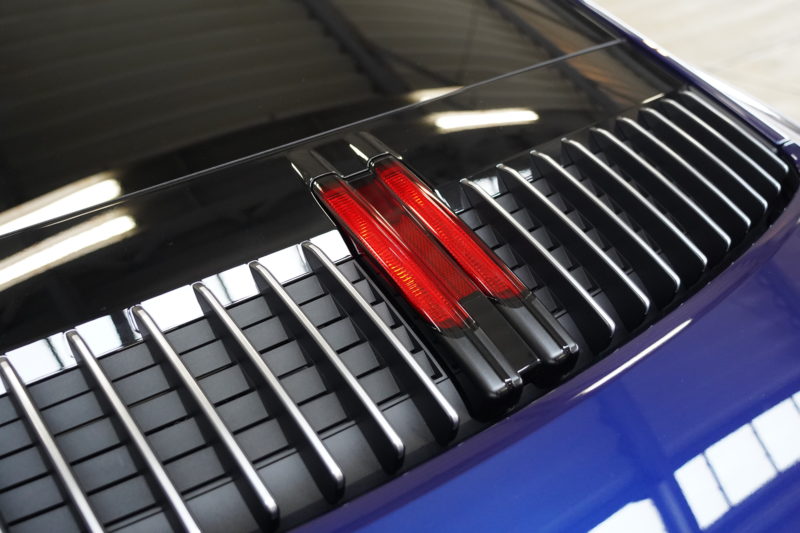
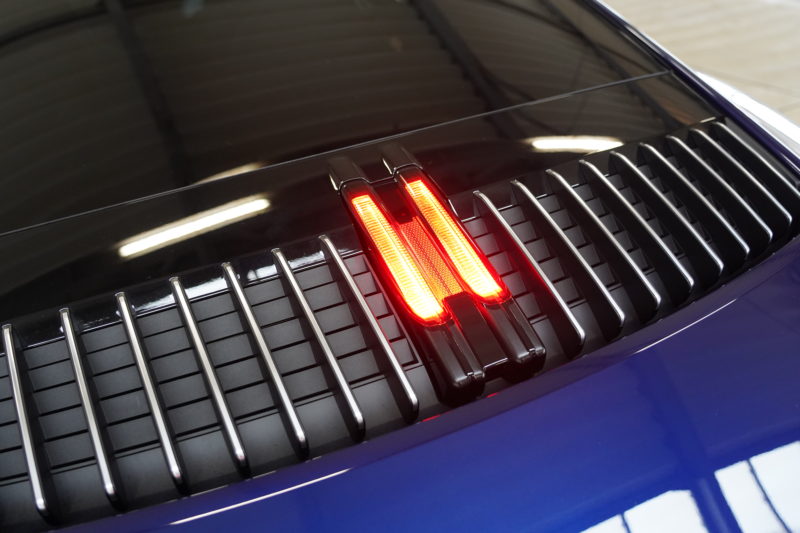
The high-mounted brake light also presented a challenge during development. U.S. regulations apparently require the high-mounted brake light to appear as a single illuminated unit. But as you may know, the light is styled to resemble the pause button on an audio player—and the center section doesn’t light up. That could have meant it failed to meet the requirement.
Alex said U.S. inspections use cameras to assess the light mechanically. Porsche tested different reflectors and carefully positioned them to make the lamp pass inspection while preserving the appearance of a gap in the middle.
Front Design
Looking at the front, I could sense something of an air-cooled 911 in its character. Alex explained that the hood design draws inspiration from air-cooled models such as the 964. It’s less rounded and has a slightly squarer shape.
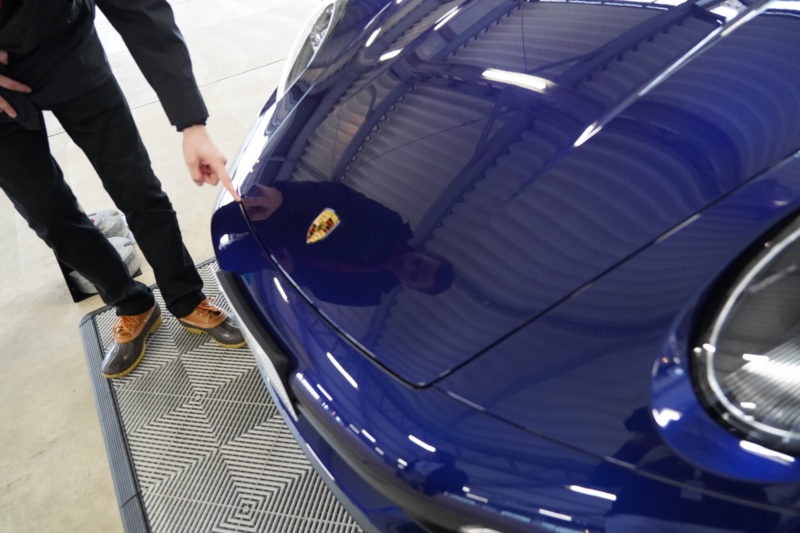
The signature bulge of the 911’s front fenders—sometimes compared to a woman’s legs—is still there on the 992. But as Alex explained, the crown of each fender is slightly flattened rather than forming a simple curve. That flatter contour continues into the headlights, giving them a more distinctive shape than a simple oval.
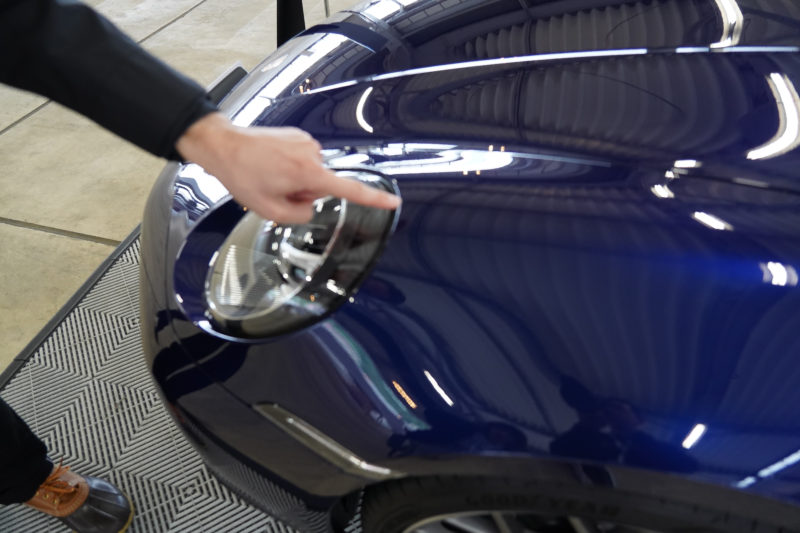
Sorry this photo is a little out of focus.
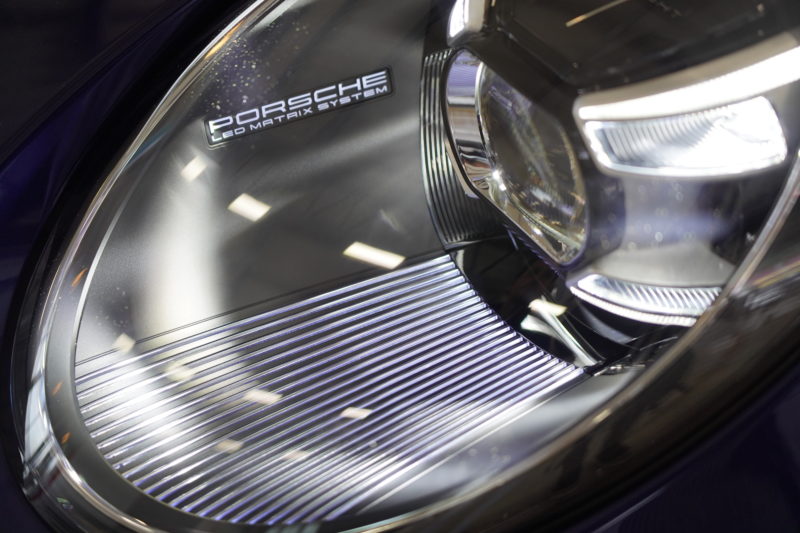
This display car was fitted with the optional LED Matrix headlights. Like the Panamera, the headlights feature a Porsche logo inside, which looks fantastic. When switched on, the light reflects off the lines inside the lamp, creating a beautiful pattern.
It’s hard to make out in the photo, but Wet Mode sensors are located inside the front fenders. Alex explained that, unlike the rain sensors on the windshield of many cars, these detect water near the tires. That means they can respond even after the rain has stopped, when the road is still wet.
When the system detects rain, Wet Mode alerts the driver via an indicator that it may be a good idea to switch modes, but the decision to activate it is left to the driver. Giving the driver the final say feels very Porsche.
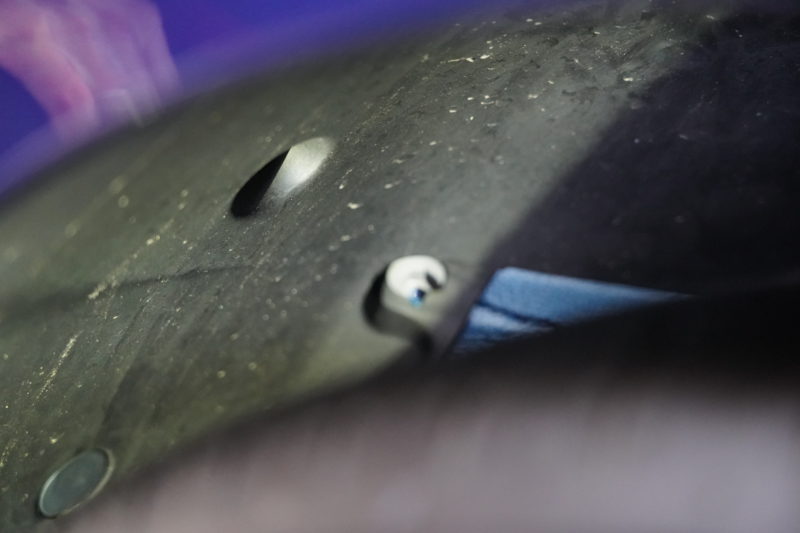
It’s hard to see, but the round object at the lower left is the sensor.
Interior
I also had a chance to sit inside and get a feel for the cabin. One detail I personally care about is the smell, and it has the same 911 scent as the 991 generation. It’s hard to describe, so I’ll spare you the attempt—but the 911 has a distinctive scent that’s a little different from the Boxster’s, and I really like it.
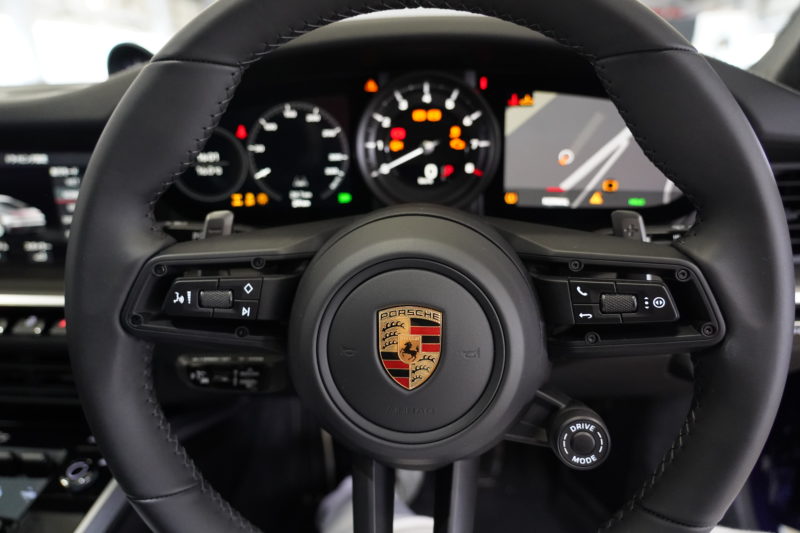
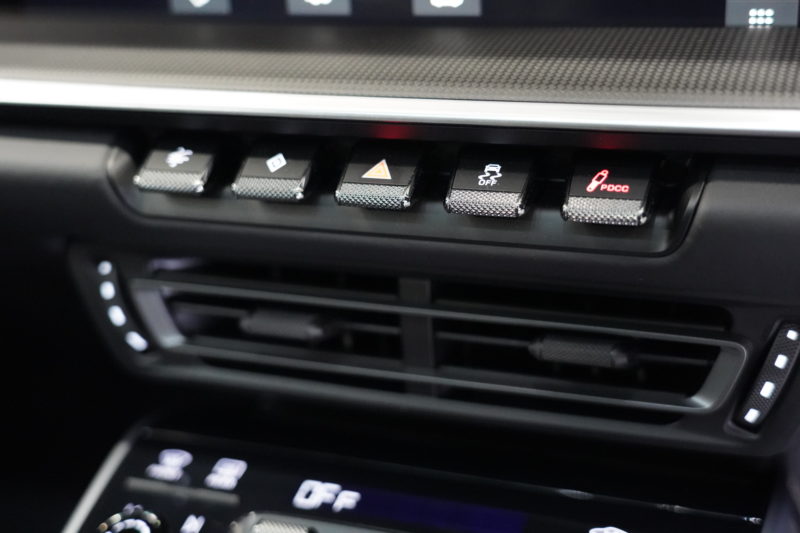
In a word, the overall impression is “mini Panamera.” The cabin’s horizontal lines also give it a hint of the air-cooled era. I especially like the center-console switches: they feel a little retro, and they’re easy to use.
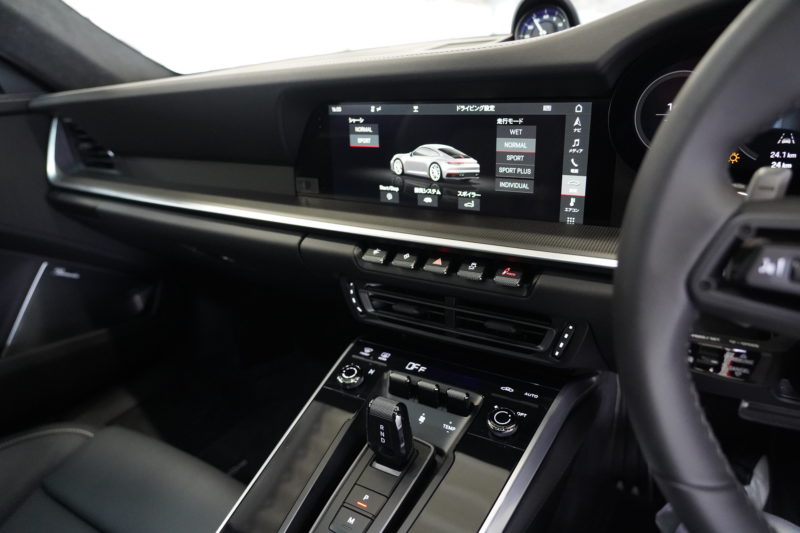
The PCM display is larger, and its menu layout and basic operation follow the Panamera’s system. I was a little unsure of it at first when I took delivery of my Panamera, but now I find it easy to use. Customize the home screen to suit your preferences, and you should have no trouble finding what you need.
Does the Japanese-Spec 911 Have a GPF?
After Alex had walked me through the exterior and interior, I asked him a question I’d been wondering about.
“Does the Japanese-spec 911 come with a GPF (gasoline particulate filter)?”
“Japanese models don’t have one, so you should be able to enjoy a great sound!” he replied. (Added August 4, 2021: It appears that the GPF was fitted to Japanese models starting with the 2021 model year.) Just hearing that made me even more interested in the 992.
“If a manual-transmission model comes out, is there a chance it’ll be sold in Japan?”
“Probably not. It would be difficult because of fuel-economy regulations, and PDK is more popular than a manual in Japan. That said, it could come here in a limited-edition model,” he said.
He didn’t specify what he meant by a limited edition, but I imagine he was referring to special models such as the GT3.
I also had the chance to record the new 992 starting up, so here it is. I only had my iPhone with me, so the audio quality isn’t great—but I hope it gives you a sense of the sound. In person, it’s much more dramatic.
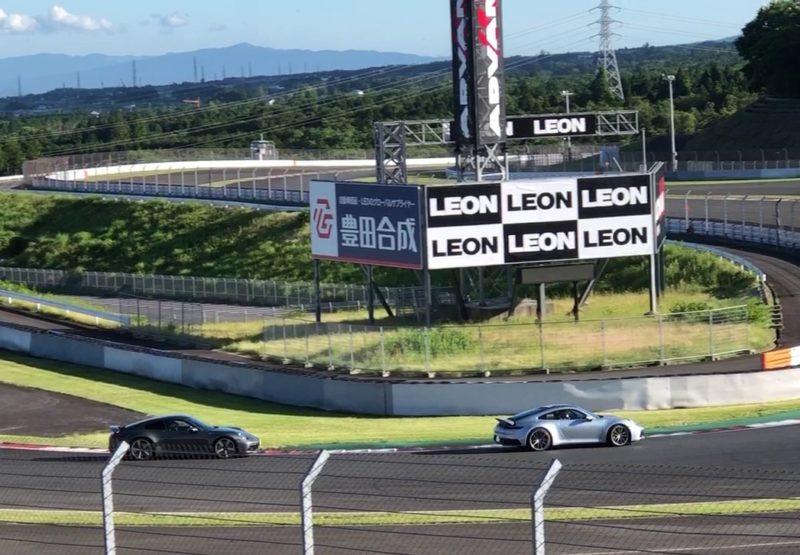
Later, I also saw the 992 taking part in a demonstration run at Fuji Speedway alongside cars such as the GT3. The GT3 was, of course, much louder, but I should add that the 992 sounded excellent too.
That’s just some of what I learned from Alex. I heard a few more fascinating details, which I hope to share another time.
What really struck me is how much care Porsche puts into the smallest details. As someone who provides products and services to customers through my own work, I found the experience both educational and inspiring.
Thanks again, Alex!
If you enjoy this blog, follow along.
Comment ( 0 )
Trackbacks are closed.
No comments yet.