

Is an EV Trip to Hokkaido Safe from Running Out of Charge? My First FLASH Charging Experience!
公開日:2026.08.10
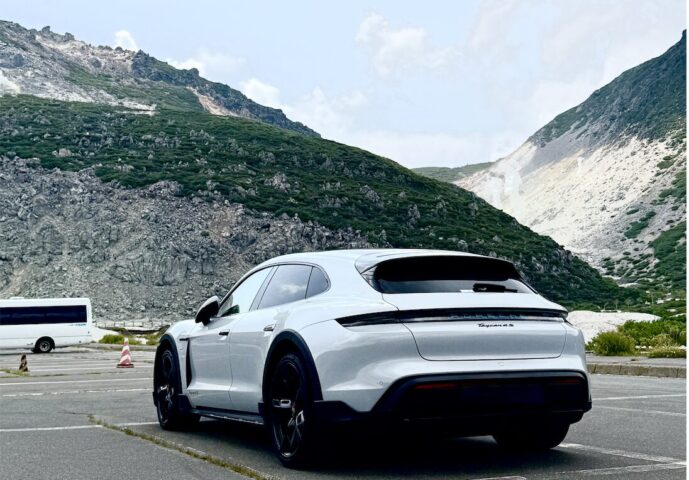

Continuing from last time, here are my impressions of traveling through Hokkaido in a Taycan.
When you hear about traveling by EV (electric vehicle), many might worry about running out of charge. So this time, I want to share my firsthand impressions after crossing Hokkaido both east-west and north-south in an EV.
To cut to the chase, there were absolutely no issues—way better than I imagined. The trip was comfortable throughout.
コンテンツ
No Planning at All—and Still No Problems
Two years ago, when we had just purchased the Taycan, we were still unfamiliar with long-distance EV driving. Back then, there were fewer charging stations, so we carefully researched and planned where to charge in advance.
Being a bit of a worrier, I used to panic whenever the charge dropped below 50%, thinking, “I need to charge right now!” But I learned that even with just a few percent left, you can still keep driving comfortably. Eventually, I relaxed to “Charging once it drops below 10% should be fine.”
I also took a quick look at GoGoEV, Japan’s largest EV and plug-in hybrid charging station sharing site, which showed that Hokkaido has a surprisingly large number of charging points.
So I figured, this time on our Hokkaido trip, there was no need to meticulously pre-check charging spots.
How Many Times Did We Charge Over 1,200km?
During the entire roughly 1,200 km journey, we stopped to charge at the following stations:
・BMW CHAdeMO: 1 time
・PCA: 3 times
・Highway PA CHAdeMO: 2 times
・FLASH: 1 time
*Note: PCA is a charging network combining 90kW to 150kW CHAdeMO fast chargers for Audi, Volkswagen, and Porsche EV owners, now also available to Lexus owners. It recently switched from a time-based billing system to a pay-per-kWh pricing.*
You might think, “Charging this often sounds inconvenient compared to refueling a gas car.” But we never fully charged every time.
Most charges coincided with bathroom breaks or grabbing a snack at highway rest areas, which mainly had 50kW chargers. Other times, we topped up for just 30 minutes while my husband waited in the car as I shopped for breakfast near a Volkswagen dealership.
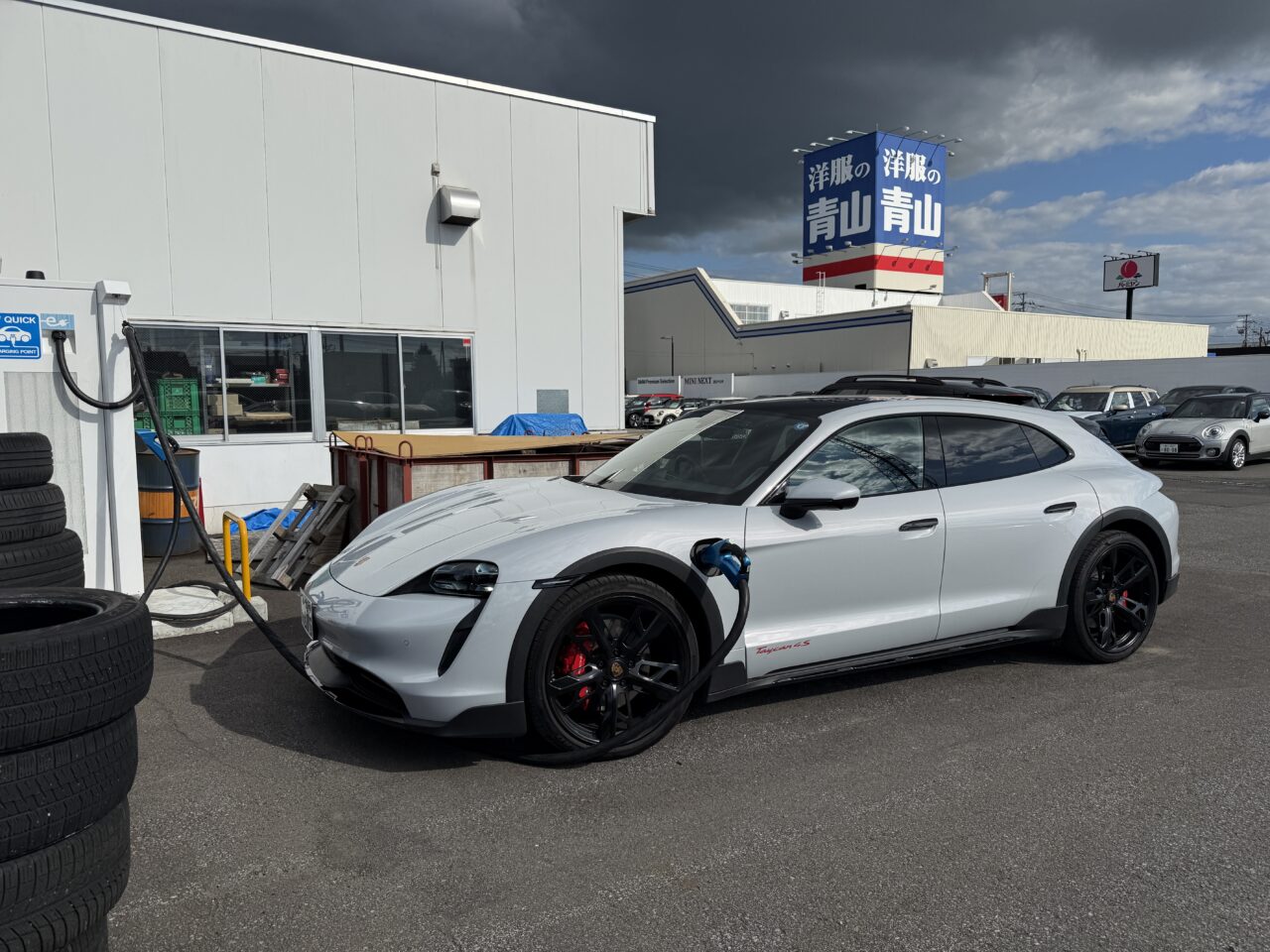
While gas cars encourage “always fill the tank,” EVs shift the mindset to “recovering a few tens of percent is enough.” The EV travel style becomes “topping up a bit as you go,” such as charging in between legs when “you know you’ll cover a long distance tomorrow.”
Convenient PCA and the Surprisingly Great “FLASH”
When we really needed a solid charge, PCA (Porsche Charging Service) was very reliable. Although I don’t usually subscribe to it, I signed up just for this Hokkaido trip. PCA chargers are typically installed at Porsche Center group dealerships and have the major advantage of not being restricted by the common “30-minute charging limit.”
In Sapporo, while I met with friends, my family comfortably charged the Taycan at the Porsche Center and enjoyed the amenities—a huge plus.
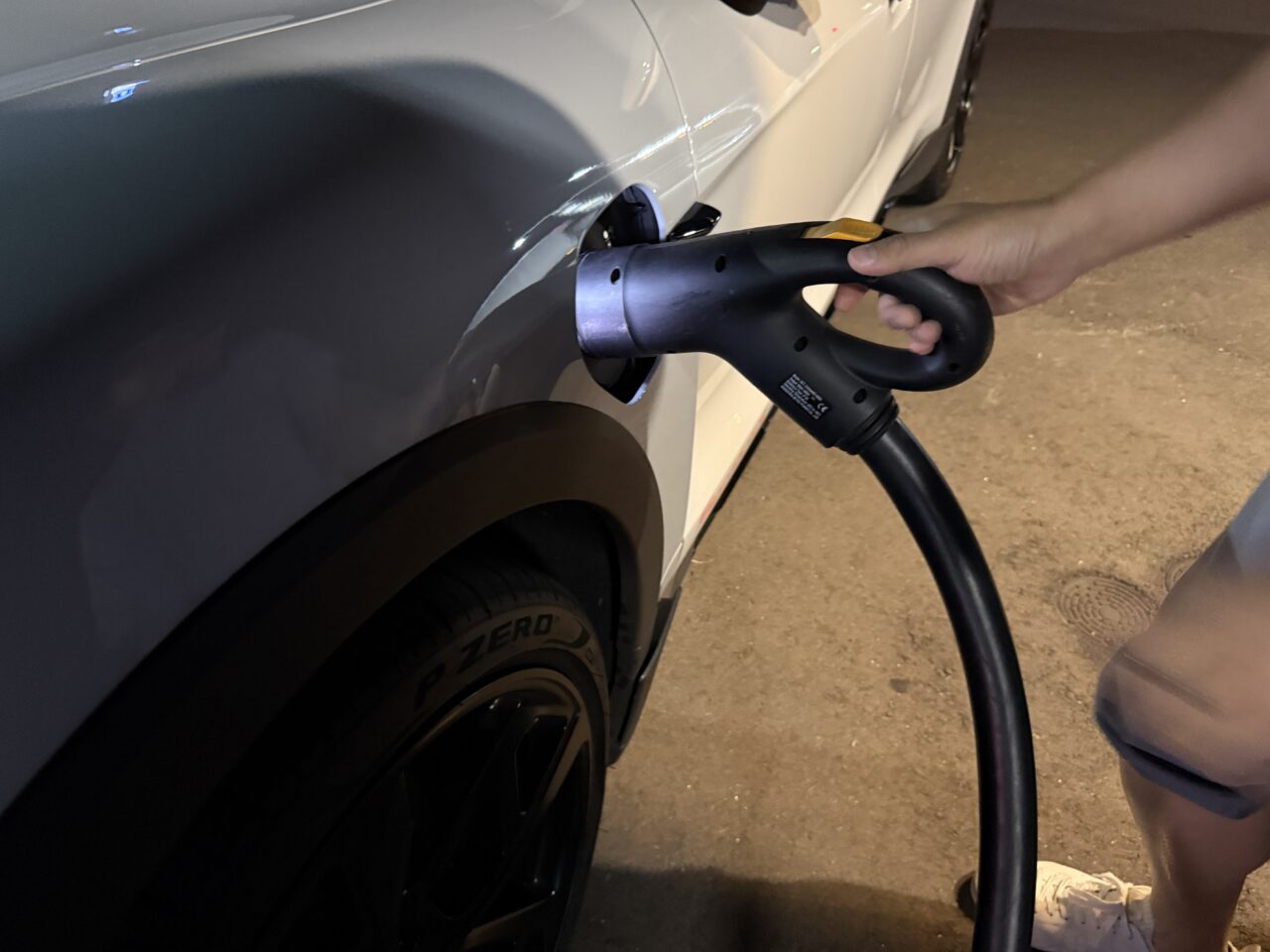
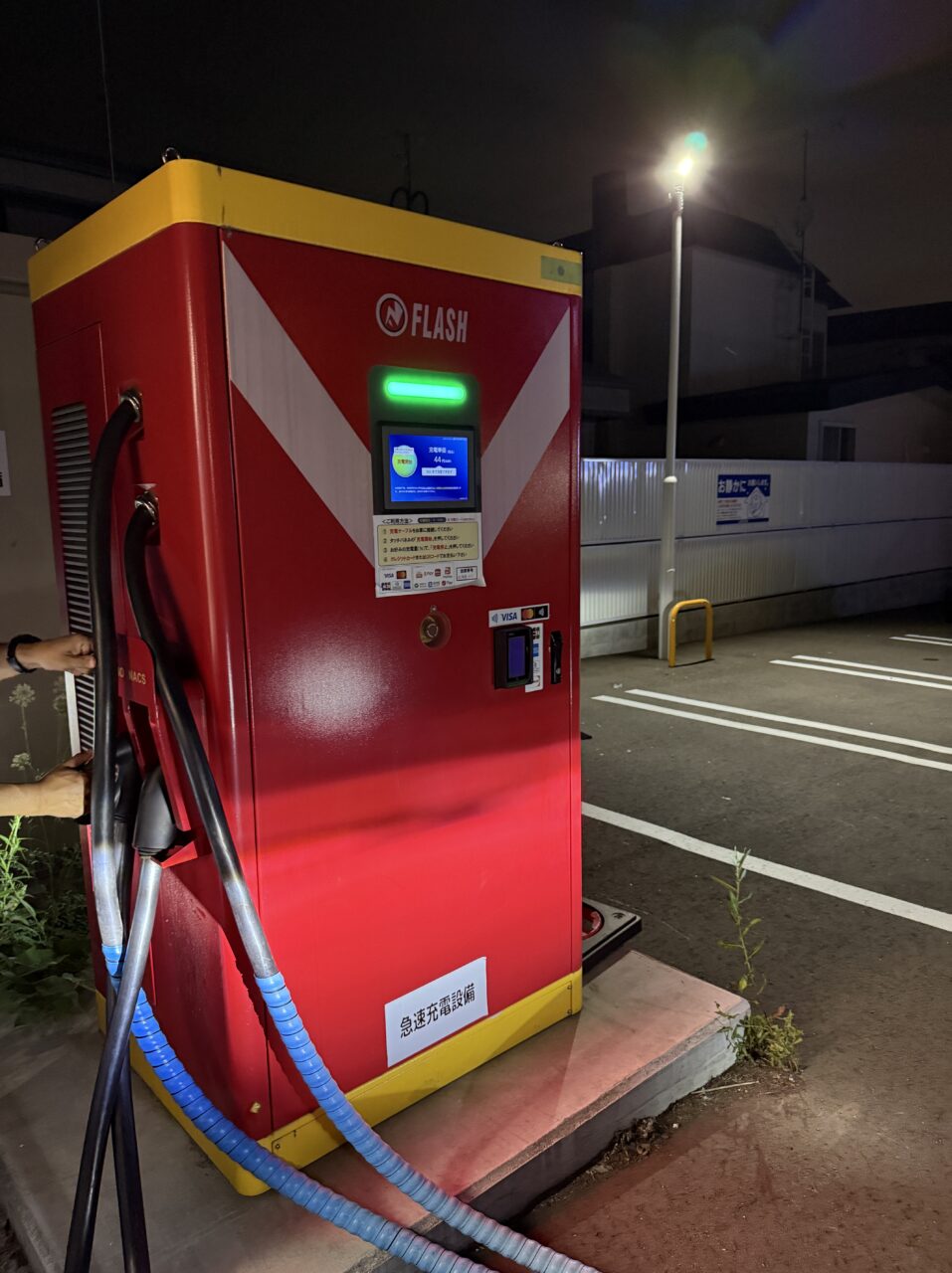
On the way to our hotel in Sapporo via Otaru, I had my first experience with a FLASH charger. FLASH offers 240kW output and supports both CHAdeMO and NACS connectors.
Its best feature? You don’t need to register or install an app beforehand. Simply use a credit card or QR code payment on the spot for a rapid charge—which turned out to be incredibly convenient.
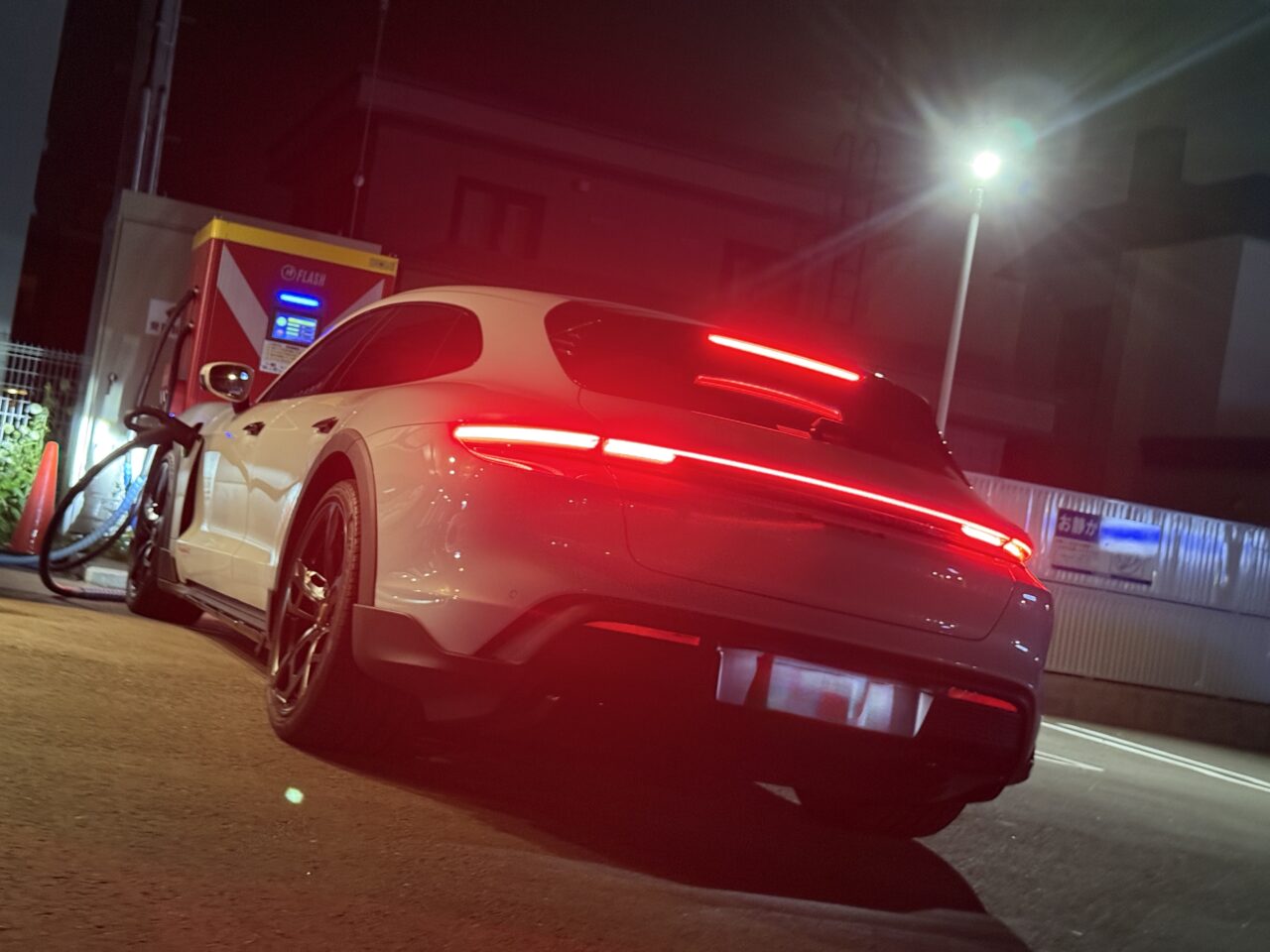
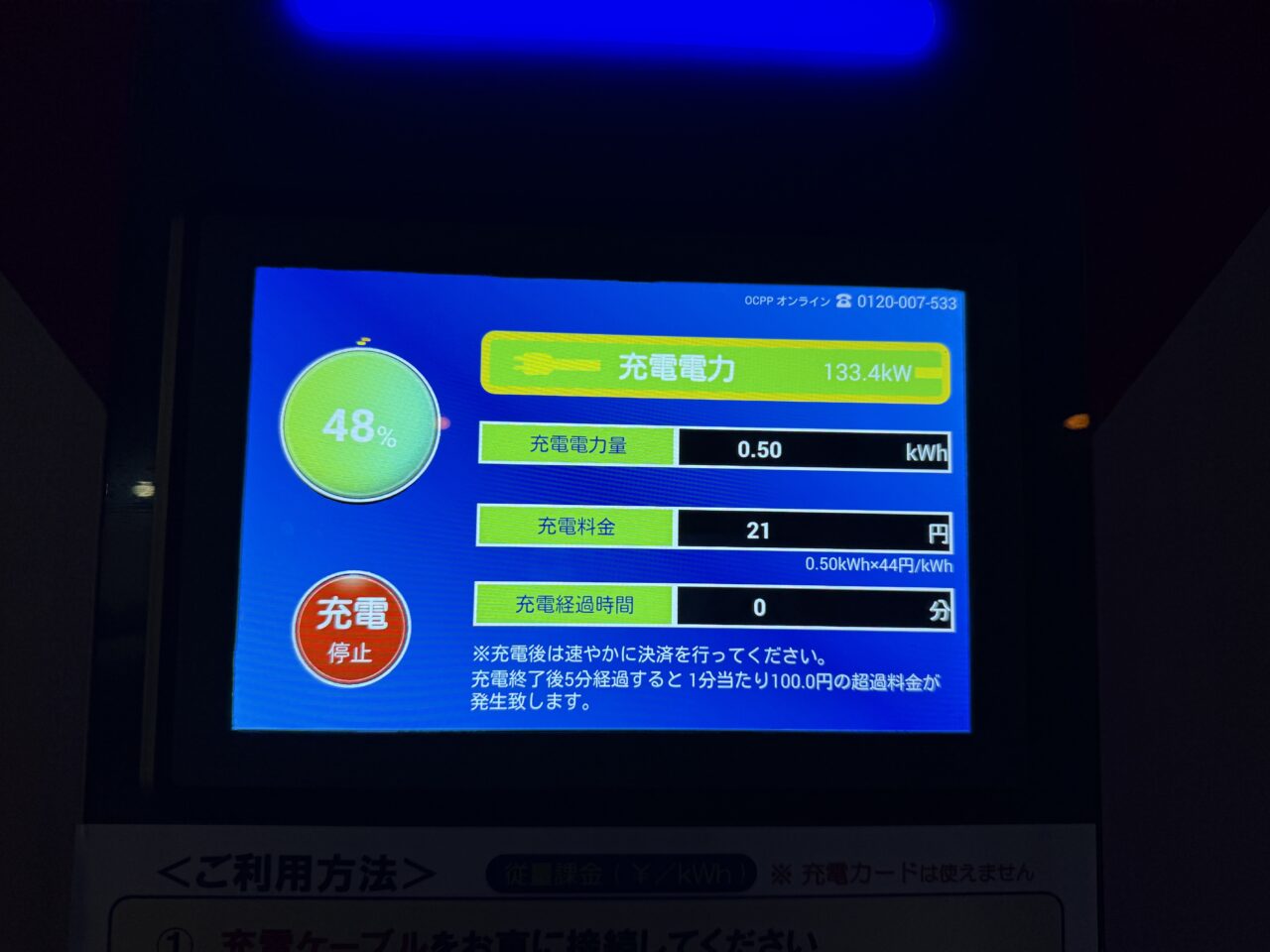
Charging was fast, operation was simple, and the cost was low (44 yen/kWh).
For the Taycan, the output stayed around 135kW continuously. Fast, easy, and affordable—I honestly wish FLASH chargers would spread to many more locations!
Conclusion: No Need to Worry About EV Travel in Hokkaido
Interestingly, we never had a single CHAdeMO error during this trip. From past experience, CHAdeMO chargers often threw errors two out of three times, which was frustrating, but not this time.
My husband’s tip? “Make sure to firmly click the connector in all the way.” (Though those cables sure remain heavy to handle…)
One surprising observation was how rare EVs were in Hokkaido. We didn’t see other Teslas or Taycans around. Tesla’s limited Supercharger network in Hokkaido probably plays a part. It seems gasoline cars still dominate the region.
However, driving the highways toward Obihiro and Kushiro, I noticed gas stations are actually spaced far apart, so missing a refueling opportunity could be just as concerning for gas cars.
Our Taycan’s full charge range is about 390 km, which was more than sufficient for a Hokkaido trip.
For anyone worried that an EV trip in Hokkaido sounds too challenging, I want to assure you there’s really nothing to fear.
The driving experience is enjoyable, and charging infrastructure is steadily improving.
I highly recommend taking your EV for a drive through Hokkaido!
このブログが気に入ったらフォローしてね!
Comment ( 0 )
Trackbacks are closed.
No comments yet.