

Why You Shouldn’t Take Test-Drive Reviews at Face Value
公開日:2020.10.21


A Few Thoughts on Test-Drive Reviews
We publish quite a few test-drive reviews of Porsche models and cars from other brands on this blog, so it may seem a little odd for us to say this. But I’ve always felt that it’s best not to take any single test-drive review as the whole truth.
That’s because one test drive can reveal only one side of a car.
One person might say the ride is firm, while another calls it smooth. One driver might find the power just right, while someone else feels it comes up short.
It’s not unusual for people to drive the same car and come away with completely opposite impressions.
That doesn’t mean either person is wrong or being dishonest. People experience things differently, and even small variations in a car can have a big impact on how it feels. In other words, two people can drive what seems to be the same car and come away with very different opinions.
So today, I’d like to take a closer look at why that happens.

Everyone Has Different Tastes
We all have our own likes and dislikes. I have a sweet tooth, so I might think, “This cake is delicious!” only for my mother to tell me, “It’s way too sweet—I can’t eat it.” It happens all the time. (Laughs.)
The same goes for cars. People who love Porsche may naturally be a little biased toward the brand, just as Toyota fans tend to favor Toyota. And beyond brand loyalty, it’s only natural for all of us to see things through our own subjective lens.
So even when people drive the same car, their impressions and interpretations can differ quite a bit.
We’re Used to Different Cars
The cars we drive every day vary enormously. They might be domestic or imported, sports cars, sedans, SUVs, or compact cars—the list goes on. We absorb the feel of our regular cars without even realizing it, and that experience often becomes our baseline. As a result, it can shape how we judge a car on a test drive.
For example, if you’re used to a relatively luxurious sedan, a base 911 might feel very firm. But if your everyday car has a sportier, stiffer suspension, you might find that same base 911 feels supple.
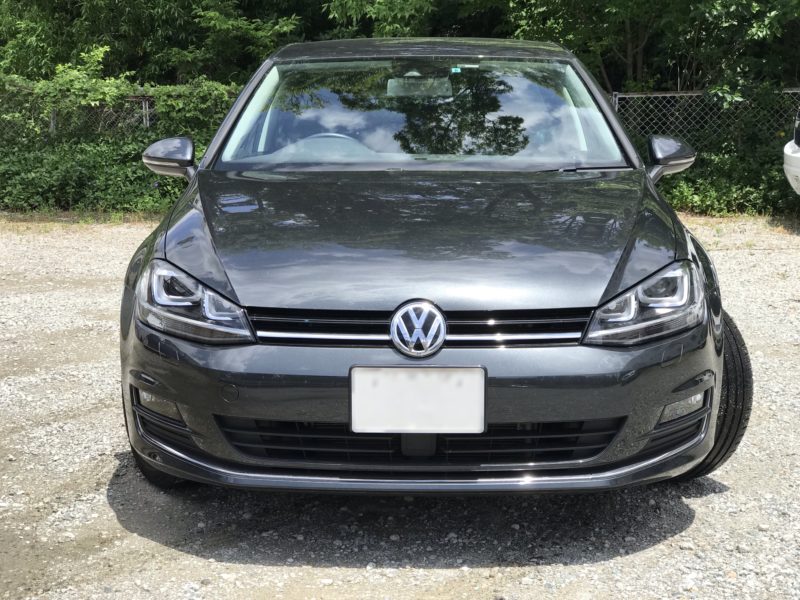
Here’s another example from our own experience. We used to own a Golf 7, and my husband and I often praised it, saying, “The Golf rides well, drives beautifully, and is a genuinely great car.” But after test-driving the new Cayenne at the time, we were struck by how exceptionally smooth its ride was. When we got back into the Golf on the way home, it suddenly felt harsh and unsettled, with a much rougher ride.
After a while, though, the Cayenne’s ride faded from memory, and we found ourselves thinking, “The Golf really does ride well after all.”
That experience showed me just how much our impressions can be influenced by the car we usually drive—or the one we drove most recently.
Specifications, Options, and Mileage All Make a Difference
It’s often said, but a car’s character can change significantly depending on its tires. When my husband replaced the tires on his Boxster—from Goodyear to Michelin—he was surprised by how much the car’s handling and ride changed. Even the same tire can feel different depending on its inflation pressure.
Specifications and options can also have a major effect on how the same model drives and rides. With Porsche, the ride can change depending on whether the car has PASM, PDCC, or PCCB, while the engine note can sound very different with or without the Sport Exhaust.
And Porsche, in particular, is said to change with mileage. A car with 300 km on the clock can feel very different from one with 30,000 km—not only in how supple it feels, but also in how settled the engine seems and even in its sound.
So if two people, A and B, say they’ve test-driven the same model, that doesn’t necessarily mean they drove identical cars. It’s only natural for their opinions to differ when the cars’ specifications, options, tires, or mileage aren’t exactly the same.
Gather Opinions from Multiple Reviews
With all that in mind, let’s return to the point I made at the beginning: it’s important to remember that no single review tells the whole story. If there’s a model you’re interested in, it’s worth reading and watching plenty of reviews from different people to build a fuller picture. Of course, experiencing the car for yourself is best—but that isn’t always possible, especially with limited-edition models.

My husband has this to say about how differently people can rate the same car after a test drive:
Honestly, people really do have very different opinions. That’s why I watch and read reviews from all kinds of people around the world, in Japan and overseas, on YouTube and elsewhere. Some people describe the car exactly the way I would, while other reviews make me think, “Huh, that’s an interesting way to look at it.” It’s a tough one.
When I write a review, I try not to stop at simply saying the ride is “comfortable.” I try to explain it through comparisons or analogies—like saying it rides better than a particular car—whenever I can. That makes it easier to get the point across.
That’s so true. The more you learn about cars, the more fascinating—and complex—they become.
このブログが気に入ったらフォローしてね!
Comment ( 0 )
Trackbacks are closed.
No comments yet.